

Loading, please wait...
Loading, please wait...

Unhealthy drinking patterns significantly elevate perioperative morbidity, yet healthcare teams frequently miss them during routine clinical evaluations. Standard preoperative questionnaires often fail because patients underreport their intake or clinicians lack adequate time during acute surgical consultations. Consequently, automated risky alcohol use detection from narrative electronic health records has emerged as a vital strategy for modern surgical care. Clinical notes frequently conceal crucial lifestyle histories, behavioral assessments, and collateral reports that never reach structured billing codes. Natural language processing bridges this documentation gap by systematically screening narrative text to safeguard patient outcomes before major surgical interventions.
Surgeons and anesthesiologists recognize that heavy alcohol intake triggers serious physiological vulnerabilities during the perioperative timeline. Specifically, chronic alcohol exposure impairs cardiac function, blunts systemic immune responses, and causes significant hepatic dysregulation. Patients with unmanaged alcohol dependence face heightened odds of developing post-surgical surgical site infections, severe anastomotic leaks, and prolonged intensive care stays. Moreover, unexpected acute withdrawal syndrome remains a catastrophic postoperative complication that requires rapid escalation of sedative therapy.
Despite these severe risks, conventional screening tools such as paper-based questionnaires frequently miss hazardous drinkers. Clinicians routinely encounter time pressures during busy outpatient clinics, leading to incomplete or hurried lifestyle evaluations. Furthermore, many patients minimize their true drinking habits because social stigma surrounds substance misuse. Unstructured clinical notes, however, frequently record subtle indicators across scattered outpatient visits, psychiatric notes, and emergency department admissions. By implementing automated algorithms, healthcare networks can identify high-risk patients long before they enter the operating room. Early identification allows clinical teams to initiate medically supervised detoxification protocols, adjust anesthetic drug selections, and coordinate multidisciplinary addiction support. Therefore, natural language processing provides an essential safety net that transforms scattered narrative text into actionable clinical intelligence.
Developing clinical machine learning algorithms often presents severe technical obstacles when classifying psychiatric or behavioral conditions. Most notably, severe alcohol use disorder represents a relatively small proportion of the broader surgical population. In typical hospital cohorts, non-drinkers and low-risk social consumers overwhelmingly outnumber patients with active dependence. Standard supervised algorithms trained on such imbalanced data frequently prioritize the majority classes while ignoring rare high-risk cohorts. Consequently, conventional machine learning models tend to misclassify risky drinkers as low-risk individuals, creating dangerous clinical blind spots.
To overcome severe class imbalances, researchers developed an innovative multistage pipeline that leverages intermediate human annotation artifacts. Instead of relying solely on final diagnostic patient labels, the modeling strategy captures detailed intermediate evidence recorded during the manual chart curation process. Six trained annotators reviewed extensive clinical narratives under strict expert-designed guidelines to establish consistent ground-truth boundaries. The system fine-tuned a transformer model, BioClinicalBERT, to replicate these nuanced section-level annotations across millions of text tokens. This auto-annotator transforms unstructured clinical narratives into dense, twenty-six-dimensional probability vectors for every encounter section. As a result, the pipeline provides deep contextual representations that capture ambiguous clinical nuances far better than standard keyword scrapers.
Patient health trajectories evolve dynamically across multiple clinical encounters, requiring predictive models to account for chronologically accumulating medical evidence. In this novel architecture, researchers coupled the BioClinicalBERT auto-annotator with a bidirectional long short-term memory neural network. The long short-term memory network sequentially evaluates ordered feature vectors across three full years of clinical documentation per patient. Consequently, the recurrent architecture preserves longitudinal context, recognizing both chronic consumption patterns and recent escalations in alcohol consumption.
This sequential framework effectively mirrors how experienced clinicians assimilate historical records over extended timelines. For instance, the system evaluates previous emergency admissions alongside subsequent primary care notes to build a comprehensive risk assessment. The recurrent layers successfully identify subtle clinical shifts, such as recent relapse markers or progressive organ dysfunction. Furthermore, the bidirectional structure processes narrative sequences in forward and backward directions, ensuring that earlier documentation gains context from later follow-up visits. This temporal modeling design prevents isolated or transient entries from distorting the overall clinical risk profile. Ultimately, deep sequential learning converts disjointed medical encounters into a coherent timeline of behavioral health, delivering reliable predictive insight for surgical teams.
Rigorous validation demonstrated that the multistage pipeline achieves exceptional diagnostic accuracy across diverse patient cohorts. Human annotators initially achieved strong overall agreement across narrative records, although complex dependence cases presented occasional interpretive challenges. When evaluated on held-out patient validation cohorts, the bidirectional long short-term memory classifier produced a weighted-average F-score of 0.86. The model demonstrated remarkable discrimination across risk tiers, securing an area under the curve score of 0.97 for non-drinkers and 0.90 for probable alcohol dependence.
When investigators collapsed the four ordinal tiers into a practical binary high-versus-low risk tool, the model achieved 92 percent overall accuracy. This binary operational metric holds immense value for rapid triage protocols in fast-paced surgical preadmission clinics. Notably, the model maintained consistent diagnostic performance across biological sexes without needing dedicated sex-stratified algorithmic adjustments. The classifier most commonly confused high-risk patients with adjacent categories, reflecting natural gray areas that challenge even seasoned clinicians. Nevertheless, this deep learning framework significantly outperforms manual chart audits in speed and consistency. Hospital systems can reliably deploy such algorithms to flag at-risk surgical candidates automatically, ensuring that anesthesia teams receive timely notifications well ahead of scheduled operative procedures.
Integrating automated artificial intelligence systems into routine hospital workflows offers immense promise for surgical optimization and patient safety. Perioperative teams can leverage these algorithmic risk flags to prompt targeted interventions before elective procedures commence. For example, surgical clinics can immediately administer confirmatory standardized tools such as the AUDIT-C when algorithms detect high-risk drinking markers. Furthermore, identifying unmanaged alcohol dependence allows surgical specialists to schedule elective operations after completing formal detoxification programs.
Beyond scheduling adjustments, automated risk stratification significantly informs intraoperative and postoperative management strategies. Anesthesiologists can proactively anticipate hemodynamic instability, altered anesthetic metabolism, and increased analgesic requirements in dependent patients. In addition, critical care teams can initiate prophylactic symptom-triggered benzodiazepine protocols to prevent life-threatening delirium tremens in surgical wards. On a broader health systems level, integrating natural language processing into electronic records reduces administrative documentation burdens on frontline clinicians. Instead of reading hundreds of unstructured progress notes, healthcare teams receive automated decision support within standard electronic dashboards. Ultimately, combining advanced artificial intelligence with focused perioperative interventions substantially enhances surgical quality, prevents avoidable hospital readmissions, and saves vital healthcare resources.
Natural language processing models parse unstructured clinical text by analyzing syntactic patterns, clinical vocabulary, and linguistic context across diverse medical encounters. The multi-stage pipeline filters clinical notes for substance-related keywords, applies transformer-based language models to generate probability vectors, and processes sequential notes using recurrent neural networks. Consequently, the automated algorithm uncovers historical drinking patterns, family reports, and behavioral notes that standard structured billing codes frequently overlook during routine preoperative evaluations.
High-risk alcohol use significantly impairs immune competence, blunts cardiovascular stability, and disrupts hepatic metabolism during surgical stress. Consequently, affected individuals face elevated risks of wound infections, anastomotic breakdown, prolonged bleeding, and extended intensive care admissions. Furthermore, abrupt cessation of alcohol intake upon hospital admission can precipitate severe acute alcohol withdrawal or delirium tremens. Preoperative identification allows anesthesia teams to institute prophylactic sedation, optimize fluid balance, and adjust anesthetic agent dosing before surgical incision.
Severe alcohol use disorder occurs infrequently in general surgical populations, creating extreme dataset imbalances that hinder traditional classification algorithms. By capturing intermediate section-level annotations generated by human expert reviewers, the modeling pipeline enriches the training feature space beyond simple patient-level diagnostic labels. This granular supervision trains the transformer model to recognize subtle narrative indicators of substance misuse. Consequently, the sequential classification network achieves higher diagnostic sensitivity for rare, high-severity clinical classes without sacrificing general classification accuracy.
Disclaimer: This content is for informational and educational purposes only and should not be considered medical advice. Refer to the latest local and national guidelines for clinical practice.
References

Read summarized clinical updates, watch expert medical content, and earn CME certifications right from your smartphone.
Open your smartphone camera to scan and install.





A validated natural language processing pipeline leverages clinical notes and intermediate annotations to identify risky alcohol use across surgical patients, offering automated preoperative risk stratification.
Today

The GESS-AEEM consensus establishes a clear clinical implementation framework for testosterone therapy in postmenopausal women with hypoactive sexual desire disorder, focusing on transdermal dosing, precise laboratory monitoring, and safety communication.
Yesterday
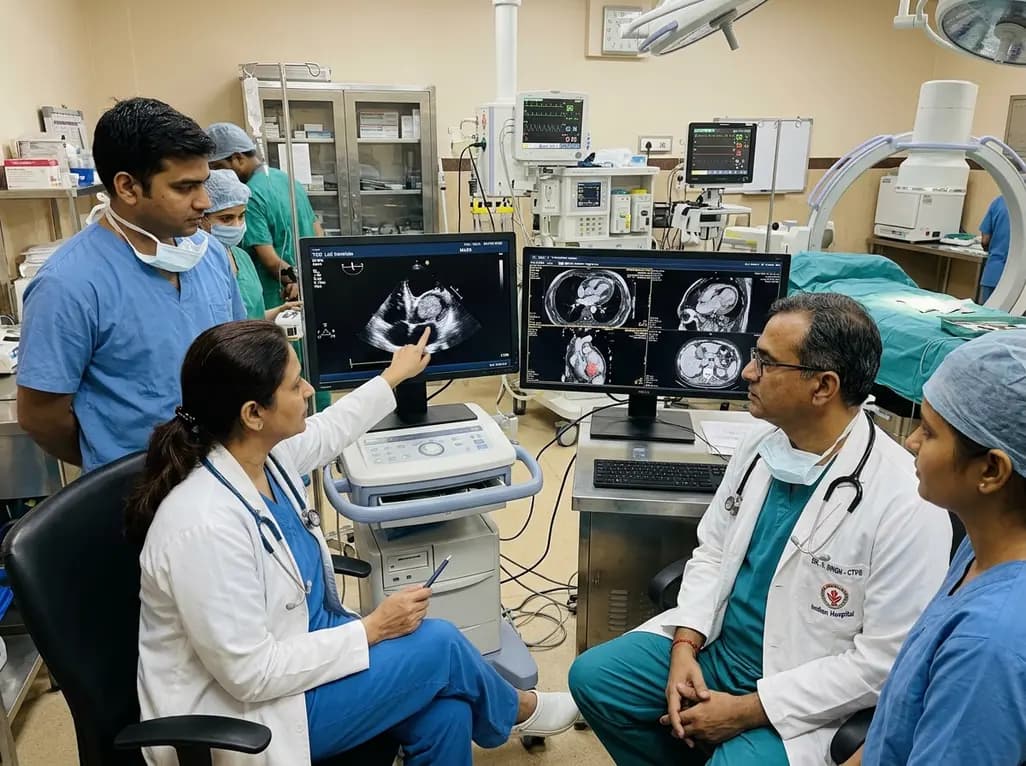
A rare case of an asymptomatic left ventricular hemangioma highlights the vital role of multimodal imaging in differentiating vascular tumors from thrombus. Complete surgical resection under transesophageal echocardiography guidance prevents thromboembolism and delivers optimal outcomes.
Today

A landmark study evaluates long-term quality of life in adolescents and adults with brachial plexus birth injury. Severe functional limitation and limited access to care significantly worsen outcomes, underscoring the urgent need for persistent, multidisciplinary management across adult healthcare transitions.
Today

An analysis of 1,000 posts by macro- and mega-influencers on Instagram and TikTok revealed that 78.5% contained nutrition misinformation, while only 24% of creators held valid credentials. This article examines the clinical risks of viral dietary fads and provides actionable guidance for healthcare professionals.
Today
