.webp&w=384&q=75)

Loading, please wait...
Loading, please wait...

Fostering a positive autistic identity serves as a crucial psychological buffer against chronic anxiety and depression in neurodivergent youth. Autistic adolescents frequently confront substantial social marginalization and stigma that impair their developing self-concept. Consequently, clinicians must recognize that identity consolidation during adolescence profoundly shapes long-term resilience. When young people view neurodivergence through a deficit lens, self-esteem often plummets. In contrast, affirming peer spaces allow individuals to construct authentic pride and belonging. Therefore, child health professionals are reconsidering traditional behavioral frameworks to prioritize identity-affirming support systems.
Furthermore, the transition to adolescence involves rapid shifts in peer dynamics and heightened self-awareness. Autistic teenagers often employ exhausting masking behaviors to navigate neurotypical expectations. As a result, chronic social camouflaging precipitates profound psychological burnout and internal distress. By reframing autism as a valid neurotype rather than an inherent personal flaw, clinicians can help patients dismantle internal stigma. Group environments offer particularly fertile ground for this reframing because they normalize shared developmental experiences. Ultimately, establishing community solidarity helps adolescents construct protective boundaries against societal prejudice.
A recent pioneering investigation evaluated a six-week group program specifically co-designed with autistic adolescents. Rather than imposing top-down clinical priorities, investigators collaborated directly with eight autistic youths during curriculum development. This participatory design ensured that weekly discussion topics directly mirrored the lived priorities of neurodivergent youth. Subsequently, the research team recruited sixteen autistic adolescents aged thirteen to sixteen years, alongside their dedicated caregivers. The cohort displayed meaningful gender diversity, including ten females, five males, and one non-binary participant. This broad demographic representation is vital because female and non-binary presentations often experience delayed clinical recognition.
In addition, researchers gathered robust psychometric measures before and immediately following the six-week intervention. They assessed self-esteem using the validated Rosenberg Self-Esteem Scale. Facilitators also tracked overall psychological wellbeing through the Warwick-Edinburgh Mental Wellbeing Scale. To capture changes in social connection, investigators administered the Multidimensional Social Identification Scale. Concurrently, the study monitored recruitment rates, retention figures, attendance consistency, and survey completion to evaluate operational feasibility. Facilitators also collected structured session ratings and conducted in-depth post-group interviews to determine intervention acceptability.
The intervention demonstrated remarkable operational feasibility across all evaluated clinical parameters. Notably, the study achieved an exceptional retention rate, registering an attrition rate of only 6.25 percent. Such minimal drop-out rates remain unusually rare in adolescent psychosocial research, where disengagement frequently hampers trials. Caregivers and youth consistently completed assessment batteries, confirming excellent data completeness throughout the six weeks. Moreover, qualitative thematic analysis revealed that participants universally valued the shared peer environment. Autistic adolescents reported that meeting peers with similar experiences significantly decreased their longstanding feelings of isolation.
Additionally, session feedback underscored high acceptability regarding both content depth and facilitator responsiveness. Thematic findings emphasized three interconnected pillars: mutual lived experience, genuine social connection, and adaptive delivery formats. Participants specifically praised the flexible pacing and sensory-friendly meeting arrangements. Furthermore, caregivers observed noticeable improvements in their children's conversational openness at home. Many parents noted that their adolescents displayed renewed confidence when discussing daily social challenges. Consequently, these findings confirm that neurodiversity-affirming interventions can engage young people successfully when clinicians eliminate traditional pedagogical rigidities.
Traditionally, pediatric post-diagnostic pathways focus almost exclusively on deficit remediation and social skill training. However, evidence increasingly suggests that teaching neurotypical imitation can inadvertently increase masking and anxiety. By contrast, identity-affirming group programs address the existential and developmental needs of youth directly following diagnosis. Receiving an autism diagnosis frequently triggers questions regarding personal competence and societal value. Therefore, structured post-diagnostic groups provide adolescents with a safe framework to explore what neurodivergence means for their future. This proactive psychological framing prevents the internalization of harmful ableist stereotypes before they cause clinical depression.
Furthermore, integrating participatory co-design models represents a fundamental paradigm shift for psychiatric outpatient clinics. Medical professionals often design therapeutic groups without consulting the target population, which diminishes participant buy-in. When clinicians co-develop agendas alongside autistic youth, the resulting curriculum reflects genuine daily struggles. For example, co-designed discussions often tackle sensory overload, burnout prevention, and personal boundaries, rather than forced social behaviors. Thus, pediatric services can enhance clinical efficacy while respecting patient autonomy. Ultimately, post-diagnostic care must evolve from prescriptive behavioral management into empowering, collaborative developmental support.
Physicians, pediatricians, and child psychiatrists can translate these feasibility findings into actionable improvements within routine clinical workflows. First, practitioners should actively screen for internal stigma and social isolation during adolescent consultations. When discussing diagnostic findings, clinicians must frame autism using neutral, non-pathologizing language that emphasizes neurodiversity. In addition, medical teams should establish referral partnerships with community-based, neurodivergent-led peer networks. Healthcare providers can also organize psychoeducational workshops that welcome adolescent input during program planning. By validating diverse communication preferences, clinical teams help autistic youth engage without fear of criticism.
Second, healthcare organizations must adapt their physical and structural environments to minimize sensory distress. Clinicians can introduce flexible seating, dimmable lighting, and quiet breakout rooms for adolescent group sessions. Moreover, providers should actively involve caregivers in parallel educational modules to align home expectations with neuro-affirming principles. When parents understand the protective value of authentic identity, they reinforce positive self-worth outside the clinic. Consequently, adolescents experience coherent social support across domestic, educational, and medical environments. Thus, investing in accessible, strengths-based group care transforms routine clinical encounters into transformative developmental milestones.
Cultivating a positive autistic identity buffers adolescents against depression, social anxiety, and minority stress. When autistic youth view their differences through an affirming neurodiversity framework, they internalize fewer negative stereotypes. Consequently, they experience higher self-esteem and form stronger interpersonal relationships with peers. In addition, positive self-identity significantly reduces the perceived need for exhausting social camouflaging. Therefore, fostering pride and authentic belonging protects against chronic psychological burnout and emotional distress across adolescence.
Co-design ensures that clinical interventions reflect the genuine needs and preferences of autistic adolescents rather than external clinical assumptions. Collaborating directly with neurodivergent youth helps researchers create relatable discussion topics, acceptable communication channels, and comfortable sensory environments. Furthermore, this participatory process fosters mutual trust and enhances participant engagement, directly leading to minimal study attrition. Ultimately, co-designed programs validate patient agency, empowering adolescents to become active contributors to their own developmental and therapeutic journeys.
Clinicians can accommodate diverse communication needs by offering flexible participation channels, including verbal dialogue, written notes, and digital polling. In addition, facilitators should establish explicit sensory accommodations, such as dimmable lighting, structured breakout spaces, and predictable session outlines. Allowing natural movement or tactile fidgets helps participants regulate their attention effectively. Consequently, removing rigid expectations around eye contact and standard social cues creates an accessible environment where all autistic adolescents can participate comfortably.
Disclaimer: This content is for informational and educational purposes only... Refer to the latest local and national guidelines for clinical practice.
References

Read summarized clinical updates, watch expert medical content, and earn CME certifications right from your smartphone.
Open your smartphone camera to scan and install.





A feasibility study demonstrates that a co-designed six-week group intervention successfully fosters positive autistic identity and self-esteem in adolescents. With an attrition rate of only 6.25%, the findings highlight the clinical value of identity-affirming, post-diagnostic peer support.
Today
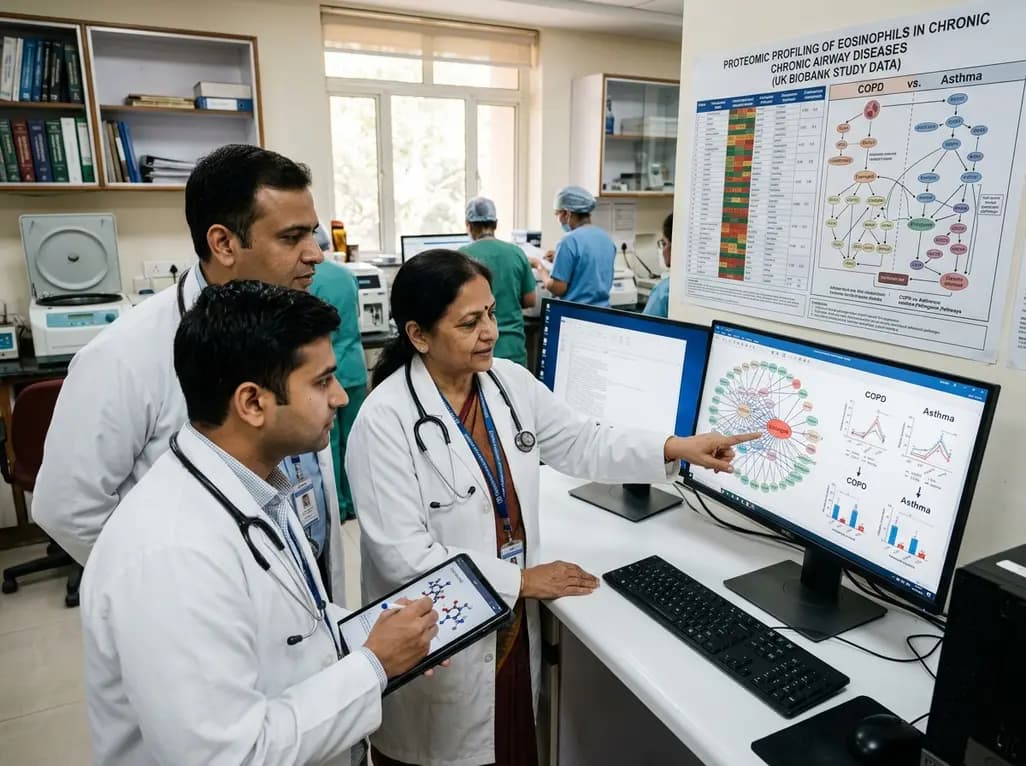
A large-scale UK Biobank proteomic study reveals that eosinophils play a unidirectional, causal role in COPD via expansive 378-protein networks, distinct from Th2 allergic pathways in asthma. These findings provide critical mechanistic clarity for clinical phenotyping and targeted biologic therapies.
Today

Maternal anaemia contributes to nearly half of pregnancy-related fatalities across India. To prevent complications, Uttar Pradesh has added single-dose parenteral iron to its essential medicines list. This clinical transition aims to restore haemoglobin rapidly and protect high-risk mothers across rural facilities.
Today

A multi-expert study shows pairwise deep learning accurately assesses echocardiographic rotational alignment in apical four-chamber views, outperforming pointwise regression. This technique improves automated image quality control and standardizes functional cardiac assessment.
Today

A longitudinal study of 1,055 chronic low back pain patients reveals that higher patient activation fosters constructive pain medication attitudes, reduces disability, and decreases short- and long-term opioid use through collaborative, multimodal care.
Today

A landmark cross-sectional study in Asian adults with type 2 diabetes identifies novel urinary metabolites linked to mild cognitive impairment. Elevated urinary sucrose and altered metabolites highlight non-invasive pathways for early cognitive risk stratification and targeted metabolic management.
Today
