.webp&w=384&q=75)

Loading, please wait...
Loading, please wait...

Clinicians have long recognized the complex diagnostic challenges surrounding chronic obstructive airway disorders. Consequently, evaluating the pathogenic contribution of eosinophils in COPD has sparked intense clinical debate. In typical bronchial asthma, eosinophils function as established drivers of allergic type 2 inflammation. However, their biological significance in chronic obstructive pulmonary disease appears far more multifaceted. A major investigation utilizing the UK Biobank cohort now provides critical mechanistic clarity. By evaluating 302,370 participants, researchers examined how circulating eosinophil levels influence chronic respiratory disease trajectories over a 13.5-year follow-up period. Furthermore, the investigators incorporated extensive high-throughput proteomic profiling across 32,121 individuals to decode underlying circulating protein networks. The findings demonstrate that elevated baseline blood eosinophil counts significantly increase the prospective risk of developing COPD, asthma, and asthma-COPD overlap. Therefore, eosinophils represent far more than passive bystander cells in progressive airflow obstruction. Instead, they actively engage in discrete pathological cascades that distinguish progressive airway remodeling from pure bronchospastic allergy. For physicians managing patients with overlapping clinical phenotypes, these findings emphasize the necessity of precise biomarker interpretation during routine outpatient assessments.
Observational associations often suffer from confounding factors such as tobacco smoke exposure, ambient air pollution, and respiratory infections. To establish definitive causality, the researchers conducted bidirectional two-sample Mendelian randomization analyses. This genetic approach revealed a striking distinction between the two pulmonary conditions. In asthma, the analyses demonstrated clear bidirectional causality between eosinophil abundance and disease pathogenesis. Thus, active asthmatic inflammation stimulates persistent eosinophil proliferation, while elevated eosinophils simultaneously exacerbate airway hyperresponsiveness. In contrast, the investigators observed a strictly unidirectional causal relationship between eosinophils and chronic obstructive pulmonary disease. Specifically, elevated eosinophil counts directly increased incident COPD vulnerability. However, pre-existing COPD pathology did not causally drive subsequent elevations in circulating eosinophils. This critical finding challenges the assumption that eosinophilia simply mirrors non-specific systemic inflammation in damaged parenchyma. Furthermore, multivariable Cox proportional hazards models corroborated these genetic insights throughout the prolonged follow-up period. Hence, baseline eosinophil elevations actively promote destructive parenchymal changes rather than merely responding to tissue damage. Understanding this directional difference helps clinicians appreciate why eosinophil-targeted therapies yield variable treatment responses across distinct respiratory phenotypes.
To dissect the molecular pathways driving these discrepancies, researchers analyzed baseline Olink proteomic data from 32,121 participants. The resulting circulating proteomic architecture uncovered profound biological differences between the two pulmonary disorders. Notably, the eosinophil-associated protein interaction network in COPD spanned 378 distinct plasma proteins. In comparison, the corresponding network in asthma encompassed only 70 proteins. This dramatic quantitative difference underscores that eosinophil biology in COPD extends substantially beyond classic Th2 cytokine cascades. In asthma, eosinophils primarily interact with canonical allergic mediators, driving localized mucosal edema and bronchial hyperreactivity. Conversely, eosinophil networks in COPD engage broad systemic pathways governing extracellular matrix turnover, inflammatory cell recruitment, and vascular remodeling. Exploratory mediation analyses further reinforced these molecular distinctions. The identified proteomic signature statistically accounted for 87.8% of the association between blood eosinophils and incident COPD risk. Meanwhile, the proteomic signature mediated 59.1% of the association in asthma. Consequently, these findings indicate that eosinophils participate in extensive non-Th2 inflammatory cascades within chronic airflow limitation. This vast proteomic network highlights novel molecular candidates that could serve as targeted therapeutic endpoints.
These proteomic and epidemiological revelations carry substantial implications for contemporary respiratory management. Historically, clinicians classified eosinophilic COPD as a variant presenting with asthma-like features. However, the discovery of a distinct 378-protein network confirms that eosinophil-driven COPD represents a unique pathophysiological entity. In routine practice, blood eosinophil counts currently guide decisions regarding inhaled corticosteroid intensification to prevent severe exacerbations. Additionally, emerging monoclonal antibodies targeting interleukin-5 pathways demonstrate clinical utility in select cohorts. Nevertheless, many patients with elevated eosinophil levels continue to experience progressive lung function decline despite standard anti-inflammatory regimens. The UK Biobank proteomic data explain why broad anti-Th2 therapies may only partially resolve eosinophil-mediated lung damage in COPD. Because the disease recruits broad inflammatory and matrix-degrading pathways, targeted blockade of single Th2 cytokines might leave alternative destructive pathways active. Therefore, clinicians must adopt more comprehensive biomarker strategies when evaluating refractory airway disease. Combining cell counts with broader proteomic signatures could soon refine risk stratification. Ultimately, this approach will help pulmonologists select tailored therapeutic regimens that address both classic eosinophilic inflammation and broader tissue destruction.
In the Indian healthcare landscape, differentiating asthma from COPD presents unique clinical challenges. Widespread exposure to biomass fuel emissions, severe outdoor air pollution, and post-tubercular structural damage frequently produce mixed airway pathologies. Consequently, Indian practitioners frequently encounter patients displaying features of asthma-COPD overlap alongside fluctuating peripheral eosinophilia. Applying findings from large-scale proteomic studies provides vital perspective for managing these high-risk individuals. Because eosinophils exert direct, causal damage in COPD through non-Th2 pathways, clinicians cannot simply assume that high eosinophil levels indicate misdiagnosed adult-onset asthma. Instead, healthcare providers must perform comprehensive baseline evaluations, including serial absolute eosinophil counts and quality-assured spirometry. Moreover, recognizing that COPD does not stimulate secondary eosinophil increases reinforces the value of early blood testing. Identifying elevated eosinophil counts prior to irreversible structural decline allows timely escalation of inhaled corticosteroids according to established clinical guidelines. Furthermore, as novel biologic therapies become increasingly accessible across Indian tertiary centers, accurate cellular and proteomic profiling will optimize cost-effective treatment allocation. Thus, integrating modern molecular insights into everyday clinical workflows empowers physicians to deliver personalized, proactive respiratory interventions across diverse Indian populations.
Mendelian randomization analyses confirm that eosinophils demonstrate a bidirectional causal relationship in asthma, where disease activity and cell proliferation mutually amplify each other. In contrast, eosinophils display a strictly unidirectional causal effect in COPD. Elevated blood eosinophils directly increase the prospective risk of developing COPD. However, established COPD pathology does not drive secondary eosinophil increases, demonstrating that eosinophils act as primary causal contributors rather than reactive inflammatory markers.
The eosinophil-associated proteomic network in COPD spans 378 proteins, compared to only 70 proteins in asthma. This substantial expansion occurs because eosinophils in COPD participate in complex non-Th2 biological pathways. While asthmatic eosinophilia primarily drives localized mucosal inflammation and bronchospasm through standard allergic mediators, eosinophilic activity in COPD triggers broad systemic networks governing tissue remodeling, extracellular matrix degradation, and cellular recruitment across the damaged pulmonary architecture.
Clinicians should measure baseline absolute blood eosinophil counts alongside spirometry to identify treatable inflammatory traits. In COPD, elevated counts indicate a heightened risk of future exacerbations and predict a favorable clinical response to inhaled corticosteroids. Additionally, stable peripheral eosinophilia can guide the selection of targeted biologic therapies in severe refractory disease, helping physicians tailor pharmacological management rather than relying solely on non-specific bronchodilator therapy.
Disclaimer: This content is for informational and educational purposes only... Refer to the latest local and national guidelines for clinical practice.
References

Read summarized clinical updates, watch expert medical content, and earn CME certifications right from your smartphone.
Open your smartphone camera to scan and install.





A large-scale UK Biobank proteomic study reveals that eosinophils play a unidirectional, causal role in COPD via expansive 378-protein networks, distinct from Th2 allergic pathways in asthma. These findings provide critical mechanistic clarity for clinical phenotyping and targeted biologic therapies.
Today

Maternal anaemia contributes to nearly half of pregnancy-related fatalities across India. To prevent complications, Uttar Pradesh has added single-dose parenteral iron to its essential medicines list. This clinical transition aims to restore haemoglobin rapidly and protect high-risk mothers across rural facilities.
Today
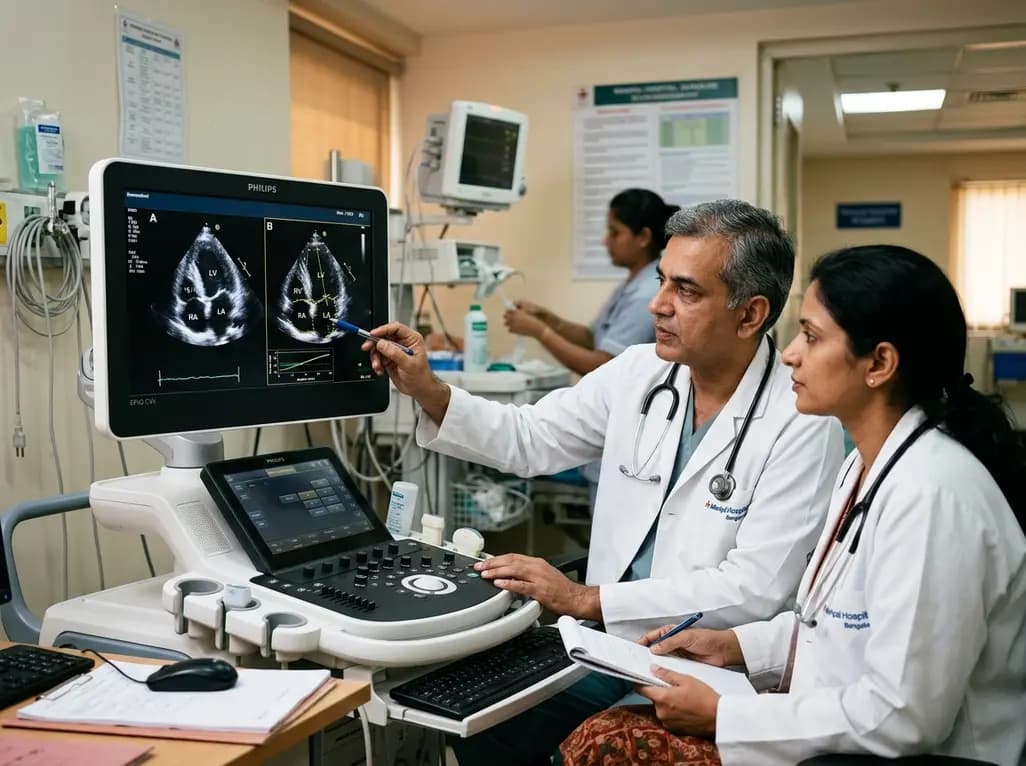
A multi-expert study shows pairwise deep learning accurately assesses echocardiographic rotational alignment in apical four-chamber views, outperforming pointwise regression. This technique improves automated image quality control and standardizes functional cardiac assessment.
Today

A longitudinal study of 1,055 chronic low back pain patients reveals that higher patient activation fosters constructive pain medication attitudes, reduces disability, and decreases short- and long-term opioid use through collaborative, multimodal care.
Today

A landmark cross-sectional study in Asian adults with type 2 diabetes identifies novel urinary metabolites linked to mild cognitive impairment. Elevated urinary sucrose and altered metabolites highlight non-invasive pathways for early cognitive risk stratification and targeted metabolic management.
Today
