.webp&w=384&q=75)

Loading, please wait...
Loading, please wait...

Managing chronic low back pain remains one of the most complex clinical challenges in musculoskeletal medicine. Clinicians regularly care for individuals who feel overwhelmed by persistent symptoms and confusing medication regimens. In this clinical landscape, fostering patient activation in pain management provides an evidence-based pathway toward sustainable recovery. Patient activation measures a person's knowledge, skills, and overall confidence in navigating their healthcare journey. When patients feel genuinely equipped to take charge, their clinical trajectory changes markedly. They understand why therapies are prescribed, recognize when to seek clinical guidance, and actively commit to personal rehabilitation goals. Conversely, individuals with low activation often adopt passive coping styles, report higher functional disability, and experience prolonged analgesic reliance. Recent clinical research indicates that empowering patients fundamentally transforms how they perceive therapeutic regimens, particularly regarding pain medications. Therefore, primary care and spine specialists must evaluate activation early during patient visits. Medical teams can shift the narrative away from passive pill consumption by assessing behavioral readiness. Consequently, addressing these psychological drivers allows physicians and nurses to optimize pain relief while minimizing long-term pharmacological risks.
Patient perceptions regarding analgesics substantially dictate treatment adherence and long-term therapeutic success. Many individuals living with spinal discomfort hold deep-seated misconceptions about their pharmacotherapy. For example, some patients assume that using medication signifies personal weakness or that meaningful pain control is entirely unachievable. Other individuals mistakenly believe that compliant patients should suffer silently without burdening their medical team. In contrast, highly activated individuals demonstrate constructive attitudes toward their analgesic regimens. They recognize that pain medications serve as temporary tools within a broader rehabilitative framework rather than singular curative solutions. Furthermore, activated individuals communicate their concerns openly, monitor side effects diligently, and participate collaboratively in clinical decisions. These constructive attitudes counteract the destructive cycles of kinesiophobia and catastrophizing that often exacerbate spinal pain. When clinicians cultivate self-efficacy, patients replace passive helplessness with practical problem-solving strategies. Thus, elevating activation resolves critical cognitive misconceptions alongside behavioral deficits. Rectifying these erroneous beliefs is vital because misconceptions frequently spur medication hoarding, abrupt discontinuations, or unmonitored dose escalations. By establishing open dialogue, clinicians build a durable foundation for patient safety.
A comprehensive longitudinal investigation examined the direct relationship between activation levels, analgesic attitudes, and clinical outcomes among 1,055 adults with chronic low back pain. Researchers monitored participants across four distinct time points: 30 days, 3 months, 6 months, and 12 months. The research team utilized the Patient Activation Measure, the Short Barriers Questionnaire, and the Oswestry Disability Index to capture patient-reported outcomes. The study revealed striking disparities between activation cohorts over time. Patients demonstrating low baseline activation were significantly more likely to report opioid use at 30 days and 3 months. Additionally, these low-activation participants reported substantially greater pain-related functional disability throughout follow-up. In contrast, patients with high activation consistently demonstrated reduced short-term and long-term opioid consumption. Furthermore, activated participants routinely rejected defeatist beliefs regarding analgesic therapy. They strongly disagreed that pain medication cannot control symptoms, that patients should hide their distress, or that analgesics must be hoarded for catastrophic crises. These prospective findings prove that activation directly predicts long-term functional autonomy and safer medication habits.
The longitudinal data illuminate why maladaptive attitudes toward analgesics perpetuate prolonged opioid reliance. When individuals believe that pain control is hopeless or that they must hoard medication, they frequently consume pills erratically. Erratic dosing schedules accelerate analgesic tolerance, heighten the risk of opioid-induced hyperalgesia, and elevate dependence potential. Furthermore, individuals who conceal their discomfort miss crucial opportunities for therapeutic optimization, ultimately presenting to clinics during severe crises. In contrast, high patient activation dismantles these destructive behavioral feedback loops. Activated patients understand that pharmacotherapy works best when paired with exercise, ergonomic adjustments, and pacing techniques. Consequently, they view prescription analgesics as adjunctive aids rather than lifelong necessities. They proactively discuss breakthrough symptoms, request appropriate dose titration, and welcome structured tapering plans once physical functioning improves. Conversely, patients with low activation often feel powerless against spinal discomfort, viewing dose escalation as their only coping option. Clinicians must identify these cognitive vulnerabilities early during routine evaluations. By actively dismantling misconceptions, medical teams safeguard patients against long-term opioid misuse.
Improving patient activation requires deliberate, multimodal non-pharmacological interventions integrated across nursing and multidisciplinary outpatient care. Healthcare professionals cannot assume that patient empowerment develops without targeted support. Therefore, clinical teams should implement motivational interviewing during clinical consultations. This conversational approach helps patients articulate personal values, resolve ambivalence, and embrace positive behavioral changes. Additionally, collaborative goal setting enables patients to establish achievable milestones for daily mobility and spinal conditioning. Clinicians must also manage prognostic expectations realistically by clarifying that complete pain abolition is rare, whereas substantial functional improvement is entirely achievable. Furthermore, providing clear medication counseling demystifies drug mechanisms, side effects, and safe tapering parameters. For nursing teams and primary care doctors, routinely assessing activation allows timely risk stratification. Staff can deliver tailored educational resources to patients demonstrating lower self-management confidence. By prioritizing psychosocial support and structured education, healthcare organizations foster autonomous, well-informed individuals. This proactive strategy ultimately decreases reliance on chronic opioids and enhances long-term spine health.
Higher patient activation significantly decreases short-term and long-term opioid reliance among patients suffering from chronic low back pain. Activated individuals understand that medications are merely supportive components of a comprehensive rehabilitative plan. Consequently, they engage in active self-management strategies, such as physical therapy and pacing, rather than relying exclusively on analgesics. They also communicate openly with prescribers, which prevents unmonitored dosage escalations and facilitates safe medication tapering.
Common maladaptive beliefs include assumptions that medications cannot control pain, that good patients avoid discussing their discomfort, and that analgesics should be hoarded for severe episodes. These cognitive barriers discourage open clinical dialogue and lead to erratic medication consumption. Patients endorsing these attitudes experience higher pain-related functional disability and are substantially more likely to remain on long-term opioid therapy compared to their activated peers.
Clinicians can effectively bolster activation by incorporating motivational interviewing, establishing collaborative functional goals, and managing symptom expectations. Healthcare providers should deliver transparent medication education that clarifies the exact purpose and duration of prescribed analgesics. Furthermore, validating patient concerns and encouraging active problem-solving transforms passive care recipients into empowered partners. This collaborative framework enhances treatment adherence, promotes non-pharmacological modalities, and reduces long-term pharmacological risks.
Disclaimer: This content is for informational and educational purposes only and should not be construed as medical advice. Always seek the guidance of a qualified healthcare professional regarding any medical condition or treatment options. Refer to the latest local and national guidelines for clinical practice.
References

Read summarized clinical updates, watch expert medical content, and earn CME certifications right from your smartphone.
Open your smartphone camera to scan and install.





A longitudinal study of 1,055 chronic low back pain patients reveals that higher patient activation fosters constructive pain medication attitudes, reduces disability, and decreases short- and long-term opioid use through collaborative, multimodal care.
Today
A randomized controlled trial compared conventional cold snare polypectomy with submucosal injection for 3-9 mm polyps. Both techniques demonstrated exceptionally low incomplete resection rates, though injection lowered the need to convert to endoscopic mucosal resection when forced pull was avoided.
Today

Maternal anaemia contributes to nearly half of pregnancy-related fatalities across India. To prevent complications, Uttar Pradesh has added single-dose parenteral iron to its essential medicines list. This clinical transition aims to restore haemoglobin rapidly and protect high-risk mothers across rural facilities.
Today
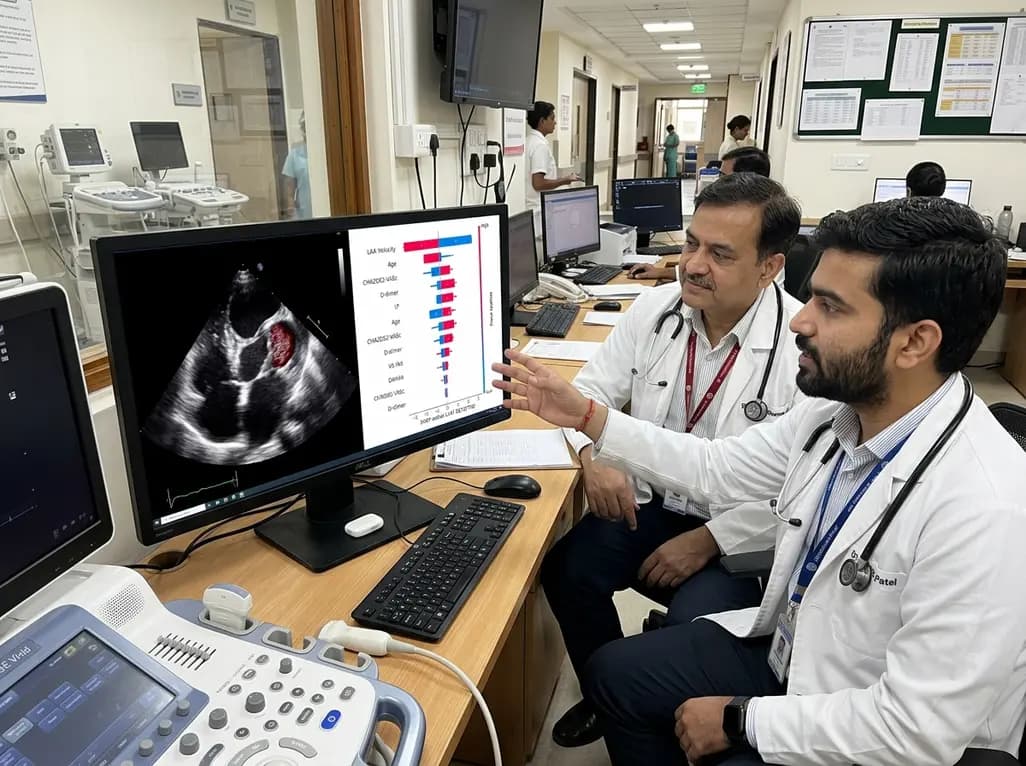
A study demonstrates an explainable machine learning framework integrating clinical and echocardiographic metrics to predict left atrial appendage thrombus in non-valvular atrial fibrillation, utilizing SHAP analysis for clinical interpretability.
Today

A landmark cross-sectional study in Asian adults with type 2 diabetes identifies novel urinary metabolites linked to mild cognitive impairment. Elevated urinary sucrose and altered metabolites highlight non-invasive pathways for early cognitive risk stratification and targeted metabolic management.
Today
