

Loading, please wait...
Loading, please wait...

Inflammatory bowel disease presents distinct clinical trajectories across different age brackets. Pediatric-onset disease typically demonstrates extensive intestinal involvement and aggressive progression compared to adult-onset illness. Emerging translational research demonstrates that the pediatric IBD microbiome plays an indispensable role in driving these divergent manifestations. Evaluating patients within a population-based inception cohort offers unprecedented clarity because it eliminates common confounding factors such as long-term drug exposure and chronic nutritional depletion.
Consequently, profiling newly diagnosed, treatment-naive cohorts provides an unadulterated baseline of intestinal microbial dysbiosis. Recent evidence from the IBSEN III inception cohort meticulously characterizes these taxonomic distributions. Researchers compared treatment-naive pediatric patients with adult counterparts living in the same geographic region. Therefore, clinicians can now dissect whether distinct microbial communities drive early-onset mucosal aggression or whether shared mechanisms unite all forms of inflammatory colitis.
Despite notable clinical variations, several overarching taxonomic disruptions appear across all age groups. Specifically, both pediatric and adult individuals with active intestinal inflammation display a profound loss of alpha diversity. Beneficial commensals, particularly obligate anaerobes belonging to the phylum Firmicutes, show marked depletion during mucosal flares. In contrast, facultative anaerobes expand significantly across inflamed mucosal surfaces regardless of patient age.
Furthermore, depletion of short-chain fatty acid producers, including Faecalibacterium prausnitzii and Roseburia species, represents a universal signature of gut inflammation. These butyrate-producing organisms maintain intestinal barrier integrity and induce anti-inflammatory regulatory T cells. Because this depletion occurs universally, researchers consider mucosal dysbiosis a core hallmark of inflammatory pathogenesis. Thus, therapeutic strategies aiming to restore fundamental taxonomic balance remain broadly applicable across the entire lifespan.
Nevertheless, the inception cohort data reveal critical distinctions between young patients and adults. Pediatric cohorts exhibit a more pronounced expansion of pro-inflammatory Gammaproteobacteria, especially members of the Enterobacteriaceae family. Because children possess a developing immune system and a less mature intestinal ecosystem, their mucosal defenses react aggressively to mucosal colonizers. Consequently, the pediatric gut exhibits severe ecological volatility during initial presentation.
Moreover, while adult patients frequently exhibit subtle, chronic microbial alterations accumulated through decades of environmental influences, pediatric patients demonstrate sudden, stark microbial collapses. Children present with dramatic reductions in Bifidobacterium species and unclassified Clostridiales lineages. Importantly, these specific losses correlate with extensive pan-enteric phenotypes in pediatric Crohn’s disease. Therefore, age at onset fundamentally dictates the severity of mucosal community collapse, explaining why children often present with rapid clinical decompensation.
Beyond simple taxonomic identity, functional metagenomics reveals deep metabolic remodeling inside the inflamed pediatric bowel. Specifically, researchers observed widespread upregulation of bacterial pathways responsible for oxidative stress responses and bacterial virulence factors. Microbes in pediatric patients activate nutrient-scavenging pathways, such as iron acquisition and nitrate respiration. As a result, enteropathogens easily outcompete protective commensal microbes in an inflamed environment.
Additionally, functional pathway analysis reveals significant deficits in bile acid deconjugation and tryptophan metabolism among pediatric patients. Tryptophan metabolites act as vital ligands for mucosal aryl hydrocarbon receptors, which sustain epithelial repair and antimicrobial peptide synthesis. When gut microbes fail to produce these protective metabolites, mucosal healing halts completely. Consequently, profound microbial metabolic dysfunction directly amplifies chronic mucosal injury in young individuals.
These microbial insights offer immense practical relevance for gastroenterologists and pediatricians managing patients in India. Notably, India faces a rapidly escalating incidence of both pediatric and adult inflammatory bowel disease amid ongoing urbanization. However, distinguishing pediatric IBD from common infectious diarrheas, enteric pathogens, or gastrointestinal tuberculosis remains an everyday diagnostic challenge. Recognizing unique microbial disruption patterns helps refine differential diagnosis in complex presentations.
Furthermore, dietary patterns in India differ substantially from Western populations, influencing baseline microbial enterotypes. Pediatric diets rich in refined carbohydrates and low in diversified plant fibers accelerate gut dysbiosis. Indian clinicians can leverage these findings to support evidence-based dietary interventions, such as exclusive enteral nutrition (EEN) or the Crohn’s Disease Exclusion Diet (CDED). These therapies modulate the gut microbiome directly, re-establishing mucosal homeostasis without relying exclusively on early systemic immunosuppression.
Looking ahead, integrating microbiome profiling into routine inception diagnostics represents a promising frontier for precision medicine. Early microbial signatures can predict which pediatric patients will develop complicated, stricturing, or penetrating disease phenotypes. Therefore, risk stratification algorithms based on baseline metagenomic markers will assist clinicians in identifying children who require prompt biologic intervention. This proactive approach prevents progressive tissue damage and growth failure.
Simultaneously, therapeutic strategies are expanding beyond traditional anti-inflammatory pharmacotherapy toward microbiome-directed interventions. Novel live biotherapeutic products, refined fecal microbiota transplantation protocols, and targeted postbiotics are currently entering rigorous clinical trials. By replacing deficient microbial metabolites, clinicians hope to restore long-term gut immune tolerance. Thus, combining targeted biologics with microbiome restoration will define the next standard of care in pediatric gastroenterology.
Pediatric-onset IBD typically displays a more severe and volatile disruption of gut microflora than adult disease. Children demonstrate pronounced blooms of Enterobacteriaceae alongside severe depletion of protective Bifidobacterium and short-chain fatty acid producers. Furthermore, pediatric patients exhibit deeper functional metabolic derangements, including impaired bile acid metabolism and enhanced oxidative stress pathways, mirroring their more aggressive clinical phenotype.
Treatment-naive inception cohorts capture microbial ecology at the precise moment of diagnosis before confounding variables arise. Long-term medical therapies, including systemic corticosteroids, immunomodulators, biologics, and frequent antibiotic exposures, drastically alter gut microbiota composition. By studying newly diagnosed individuals within a defined geographic population, researchers isolate true disease-associated dysbiosis signatures from therapy-induced secondary changes.
Yes, specific baseline microbiome signatures correlate strongly with disease severity and long-term prognosis. Severe depletion of butyrate-producing commensals combined with extensive colonization by virulent Gammaproteobacteria correlates with extensive pan-colonic disease, steroid refractoriness, and early treatment escalation. Accordingly, profiling microbial biomarkers at diagnosis holds immense potential to guide individualized risk stratification and timely personalized interventions.
Disclaimer: This content is for informational and educational purposes only and should not be considered as medical advice. Healthcare professionals should exercise their independent clinical judgment. Refer to the latest local and national guidelines for clinical practice.
References

Read summarized clinical updates, watch expert medical content, and earn CME certifications right from your smartphone.
Open your smartphone camera to scan and install.





Pediatric-onset inflammatory bowel disease presents unique clinical challenges. A landmark inception cohort study reveals distinct and shared gut microbiome signatures between pediatric and adult IBD, highlighting key taxonomic shifts, metabolic changes, and clinical implications for personalized management.
Today
Arteriovenous graft failure often stems from recurrent intragraft stenosis driven by cannulation injury. A 5-year study evaluates interwoven nitinol stents, demonstrating robust target lesion patency, crush resistance, and access circuit salvage in failing hemodialysis grafts.
Today

A recent survey reveals significant gaps in antenatal providers' adherence to pregnancy oral health guidelines despite positive attitudes. Integrating regular oral screenings, clinician education, and interprofessional dental referrals during prenatal care is crucial to prevent adverse pregnancy outcomes.
Today

A cross-sectional study in Bangladesh demonstrates that an explainable stacking ensemble machine learning model achieves 98.37% accuracy in cardiovascular disease detection. Using local clinical and behavioral data, the model highlights cholesterol, rhythm abnormalities, and blood pressure as leading predictors.
Today

Laser-based powder bed fusion of Ti6Al4V enables custom orthopedic implants. Recent research reveals that heat treatment modulates ductility and wettability, while surface powder morphology drives mesenchymal cell attachment, highlighting crucial design factors for long-term osseointegration.
Today
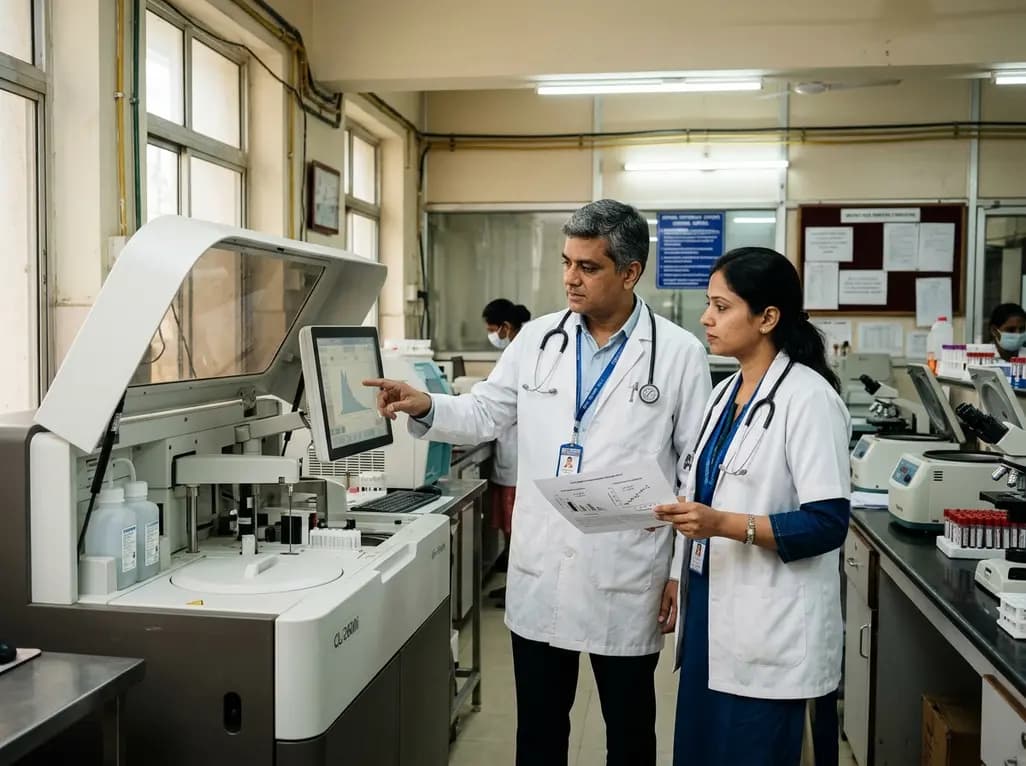
A multicenter study evaluated the CL-2600i immunochemistry analyzer across 640 serum samples, testing endocrinology, infectious disease serology, sepsis markers, and fertility panels. The system demonstrated high analytical trueness, repeatable results with CVs under 5%, and strong correlation with routine platforms.
Today
