

Loading, please wait...
Loading, please wait...

Maintaining functional vascular access remains a formidable challenge for clinicians managing patients with end-stage renal disease on hemodialysis. Arteriovenous grafts frequently fail because repetitive needle cannulation triggers neointimal hyperplasia and progressive intragraft narrowing. Although plain balloon angioplasty restores initial blood flow, rapid recoil and recurrent stenosis often compromise the conduit within months. Consequently, interventionalists increasingly utilize interwoven nitinol stents to achieve durable structural support and prevent recurrent luminal collapse. Recent five-year clinical data offer valuable insights into the long-term patency, mechanical resilience, and procedural safety of this endovascular salvage strategy.
Synthetic arteriovenous grafts serve as crucial lifelines when patients exhaust opportunities for native arteriovenous fistulas. However, these prosthetic conduits endure relentless mechanical trauma from regular hemodialysis sessions. Repeated needle punctures disrupt the pseudointimal lining and induce localized vessel wall shear stress. Consequently, smooth muscle cells and inflammatory fibroblasts proliferate vigorously, causing exuberant neointimal hyperplasia. Furthermore, standard balloon angioplasty fractures fibrotic tissue without neutralizing the persistent stimulus of repeated puncture. As a result, elastic recoil occurs rapidly, leading to recurrent intragraft narrowing within three months. This rapid recurrence pattern causes elevated venous line pressures, inadequate dialysis clearance, and eventual thrombotic occlusion. Moreover, frequent repeat angioplasty procedures exhaust patient endurance and escalate vascular access costs. Interventionalists traditionally faced limited salvage options because conventional stents carry substantial risks of needle damage or crushing. Therefore, treating intragraft stenosis demands resilient scaffolds that actively resist external compressive forces while maintaining long-term luminal patency.
Traditional laser-cut metallic stents often deform permanently or fracture when subjected to repeated dialysis needle puncture within the cannulation zone. In contrast, interwoven nitinol stents provide superior mechanical resilience tailored for high-stress vascular environments. These specialized devices feature continuous helically braided nitinol wires that lack rigid welded intersections. Consequently, the interwoven design delivers exceptional outward radial resistive force while retaining natural longitudinal flexibility. Moreover, this biomimetic mesh absorbs dynamic compressive loads without undergoing plastic deformation. When dialysis needles enter the stented segment, the superelastic nitinol wires deflect aside smoothly and return to their original configuration upon needle removal. Therefore, regular cannulation does not induce structural crushing, strut fracture, or luminal flattening. In addition, the stent conforms effortlessly to tortuous graft anatomy across mobile joints like the elbow. Thus, this unique mechanical behavior prevents geometric kink deformities and establishes reliable luminal support inside failing synthetic hemodialysis circuits.
Recent long-term clinical findings confirm the extended therapeutic durability of interwoven nitinol scaffolds in salvage hemodialysis interventions. In a cohort of 58 patients tracked for up to five years, interwoven stenting demonstrated exceptional technical success and durable access preservation. Specifically, primary target lesion patency remained high at six and twelve months, significantly exceeding outcomes achieved by repetitive balloon angioplasty alone. Furthermore, cumulative secondary circuit patency proved that timely endovascular maintenance successfully keeps failing grafts functional for multiple years. Interventional teams recorded very low rates of repeat procedures at the stented intragraft target site. Although secondary lesions can still develop at outflow venous anastomoses, the treated intragraft conduit remains structurally stable. In addition, effective stabilization of the cannulation segment dramatically minimizes the incidence of sudden catastrophic graft thrombosis. Consequently, durable graft preservation spares vulnerable dialysis patients from requiring central venous catheters, thereby decreasing systemic sepsis risks and preserving hospital resources.
Hemodynamic instability during dialysis treatments significantly affects the functional survival of vascular access circuits. Specifically, intradialytic hypotension, marked by a sharp decrease in systolic blood pressure during fluid ultrafiltration, critically compromises graft perfusion. When systemic arterial perfusion drops, blood flow velocity through the synthetic graft decreases toward stasis thresholds. Consequently, sluggish flow triggers platelet activation and precipitates acute thrombotic graft occlusion. In conduits already compromised by recurrent stenosis, transient hypoperfusion frequently results in complete access failure. Furthermore, repeated hypotensive episodes cause cumulative organ ischemia and destabilize vascular remodeling. Therefore, nephrologists must proactively prevent blood pressure drops by optimizing dry weight targets, adjusting dialysate sodium, and modulating antihypertensive therapy. Interwoven metallic scaffolds provide a wide, stable conduit that reduces internal resistance and preserves baseline blood flow velocity. Accordingly, maintaining robust hemodynamic stability during dialysis sessions synergizes with endovascular scaffolds to maximize long-term circuit survival.
Achieving optimal therapeutic outcomes requires strict adherence to procedural guidelines and specialized vascular access nursing techniques. Operators must first conduct meticulous angiographic evaluations to assess graft caliber and measure the precise length of the target stenosis. Notably, accurate stent sizing is critical because interwoven nitinol devices alter their longitudinal length depending on deployed diameter. Excessive device elongation reduces wire density, which impairs outward radial support and reduces crush resistance. Therefore, interventionalists deploy the stent using precise, controlled release techniques to achieve complete wall apposition. Following successful implantation, seamless communication between the angiosuite and dialysis nurses ensures optimal long-term access preservation. Specifically, dialysis nurses should rotate needle puncture sites across the entire stented segment to avoid repetitive localized trauma. Moreover, using shallow insertion angles minimizes mechanical contact with stent wires. Consequently, standardized interdisciplinary protocols preserve both stent integrity and access usability, ensuring reliable hemodialysis delivery for years.
Yes, dialysis needles can safely cannulate grafts supported by interwoven nitinol stents without causing structural failure. Unlike rigid laser-cut metal stents that crush or fracture when punctured, the helical interwoven nitinol wire mesh dynamically deflects around the advancing needle. After needle extraction, the superelastic wires spring back into their original anatomical configuration. Consequently, patients safely undergo routine thrice-weekly dialysis access without compromising the structural integrity or radial patency of the deployed vascular scaffold.
Interventionalists should consider stenting when an arteriovenous graft develops early recurrent intragraft stenosis within three months of successful balloon angioplasty. Furthermore, stenting remains indicated for significant elastic recoil where angioplasty fails to resolve at least fifty percent luminal narrowing. While repeat angioplasty alone leads to escalating failure rates and tissue fatigue, placing an interwoven nitinol scaffold provides durable radial force. This timely intervention effectively prevents immediate vessel recoil and dramatically prolongs functional dialysis circuit patency.
Intradialytic hypotension sharply reduces arterial perfusion pressure, causing blood flow velocity across the arteriovenous graft to decline rapidly. Even within a widely patent stented conduit, acute hypoperfusion promotes blood stasis, platelet adhesion, and sudden vascular thrombosis. Therefore, frequent hypotensive episodes undermine the mechanical benefits achieved by endovascular stenting. Nephrologists must systematically manage dialysis ultrafiltration rates, optimize fluid balance, and adjust medications to maintain hemodynamic stability and protect the salvaged vascular circuit over long-term follow-up.
Disclaimer: This content is for informational and educational purposes only and does not constitute medical advice, diagnosis, or treatment. Healthcare professionals should exercise independent clinical judgment. Refer to the latest local and national guidelines for clinical practice.
References

Read summarized clinical updates, watch expert medical content, and earn CME certifications right from your smartphone.
Open your smartphone camera to scan and install.





Arteriovenous graft failure often stems from recurrent intragraft stenosis driven by cannulation injury. A 5-year study evaluates interwoven nitinol stents, demonstrating robust target lesion patency, crush resistance, and access circuit salvage in failing hemodialysis grafts.
Today

A recent survey reveals significant gaps in antenatal providers' adherence to pregnancy oral health guidelines despite positive attitudes. Integrating regular oral screenings, clinician education, and interprofessional dental referrals during prenatal care is crucial to prevent adverse pregnancy outcomes.
Today

A cross-sectional study in Bangladesh demonstrates that an explainable stacking ensemble machine learning model achieves 98.37% accuracy in cardiovascular disease detection. Using local clinical and behavioral data, the model highlights cholesterol, rhythm abnormalities, and blood pressure as leading predictors.
Today
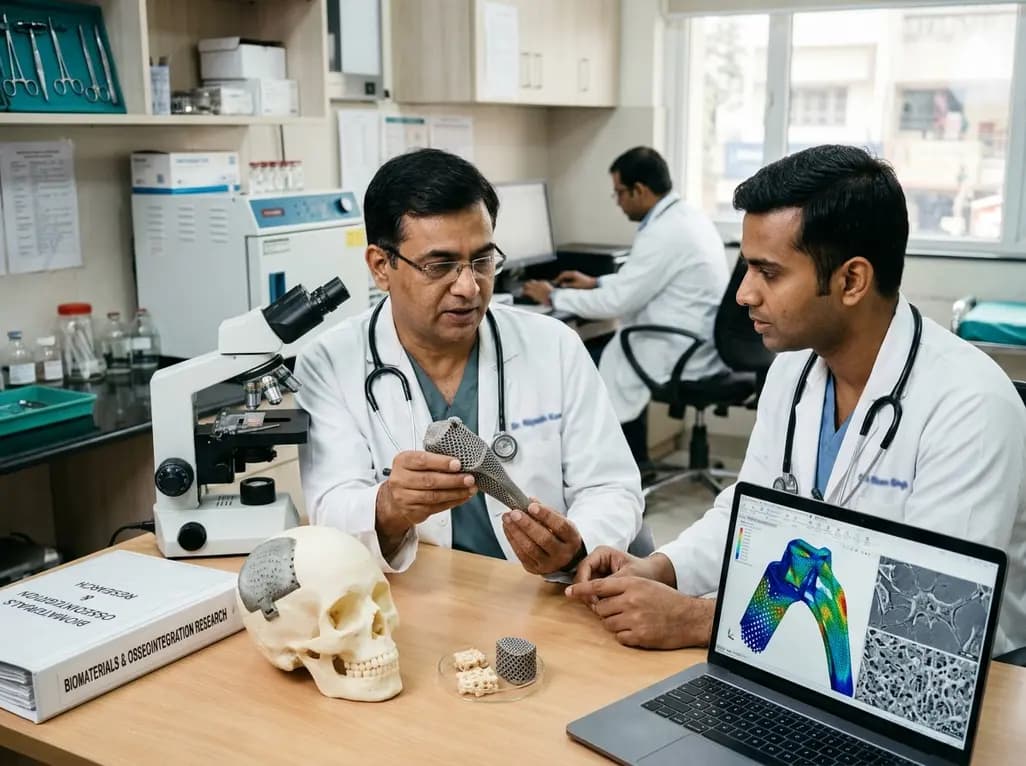
Laser-based powder bed fusion of Ti6Al4V enables custom orthopedic implants. Recent research reveals that heat treatment modulates ductility and wettability, while surface powder morphology drives mesenchymal cell attachment, highlighting crucial design factors for long-term osseointegration.
Today
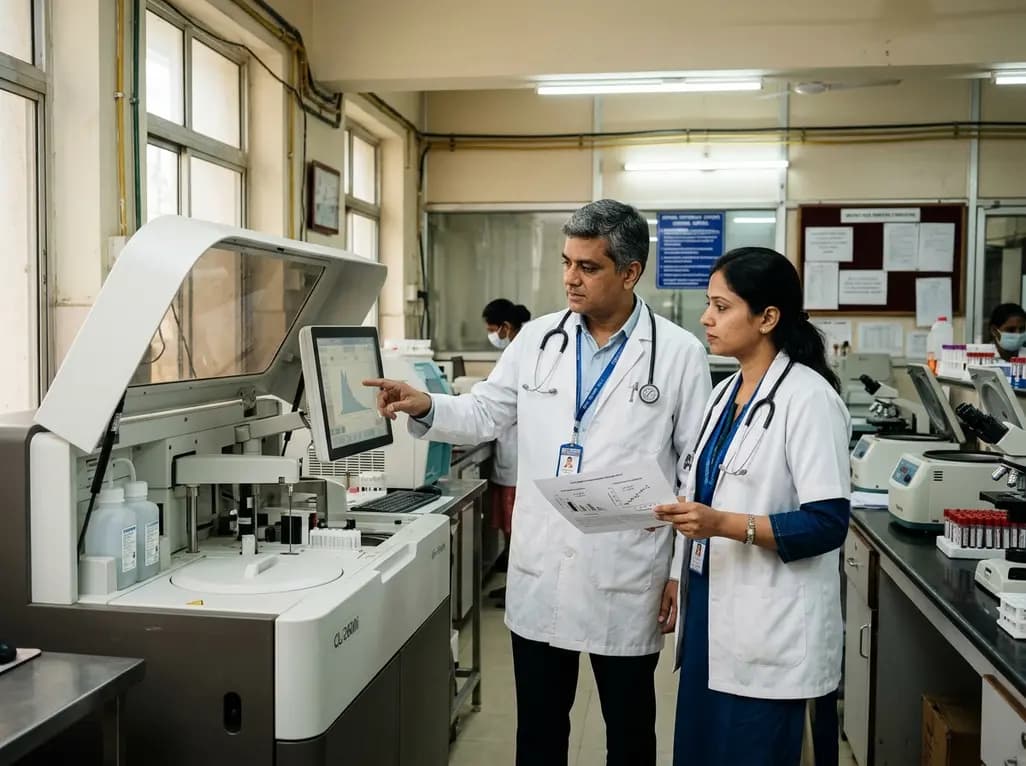
A multicenter study evaluated the CL-2600i immunochemistry analyzer across 640 serum samples, testing endocrinology, infectious disease serology, sepsis markers, and fertility panels. The system demonstrated high analytical trueness, repeatable results with CVs under 5%, and strong correlation with routine platforms.
Today
