.webp&w=384&q=75)

Loading, please wait...
Loading, please wait...

Pediatric ECMO implementation serves as a vital rescue therapy for children facing refractory heart or respiratory failure. Despite its life-saving potential, the complexity of this modality requires specialized infrastructure and highly trained personnel. A recent cross-sectional survey evaluated the knowledge levels and practice patterns of 151 pediatric intensivists across Saudi Arabia and the Gulf region to identify critical barriers to effective care.
The study results revealed that ECMO services were available in only 42.4% of institutions, predominantly within pediatric cardiac intensive care units. Most intensivists reported that perfusionists manage the circuits, while cardiac surgeons handle the majority of cannulations. Surprisingly, knowledge scores were consistently low among the participants. Only 9.9% of the surveyed intensivists scored between 60% and 80%, indicating a significant deficit in theoretical and practical understanding. However, those with prior specialized training or those working in ECMO-capable centers demonstrated notably higher scores.
The survey identified several systemic challenges that hinder successful pediatric ECMO implementation. Specifically, 72% of respondents highlighted inadequate nursing staff training as a major hurdle. Furthermore, 68% pointed to a lack of medical staff training, while 60% cited limited equipment availability. Because ECMO is a resource-intensive therapy, these gaps can significantly impact patient outcomes. Consequently, there is a pressing need for structured educational programs and simulation-based training to bridge the competency gap. Hospitals must also prioritize multidisciplinary collaboration to ensure that surgical and medical teams work seamlessly during cannulation and maintenance.
Improving ECMO outcomes requires more than just purchasing equipment. Therefore, institutions should focus on developing standardized protocols and fostering a culture of continuous learning. Clinicians must seek out formal certification and regular workshops to maintain their skills. Additionally, establishing regional referral networks can help centralize expertise and improve access for patients in smaller centers. By addressing these barriers, the medical community can better utilize this advanced technology to save young lives.
The most significant barriers include a lack of specialized training for medical and nursing staff, limited availability of equipment, and insufficient cardiothoracic surgical support.
In most centers surveyed, perfusionists (98.5%) primarily manage the ECMO circuits, while cardiac surgeons usually perform the cannulation procedures.
Disclaimer: This content is for informational and educational purposes only and does not constitute medical advice or a professional recommendation. The information provided is based on a specific study and may not reflect global variations in practice. Always consult institutional protocols and professional medical organizations for specific clinical decisions. Refer to the latest local and national guidelines for clinical practice.
References
1. AlGhobaishi A et al. Survey of pediatric extracorporeal membrane oxygenation knowledge and practice among pediatric intensivists in Saudi Arabia and selected Gulf countries. Perfusion. 2026 May 11. doi: 10.1177/02676591261452066. PMID: 42109185.
2. Ramanathan K, et al. Extracorporeal membrane oxygenation in India: Current status and future directions. Indian Journal of Critical Care Medicine. 2020;24(12):1161-1163.
3. Barbaro RP, et al. Collaborative Quality Improvement in Extracorporeal Membrane Oxygenation. ASAIO Journal. 2021;67(9):965-969.

Read summarized clinical updates, watch expert medical content, and earn CME certifications right from your smartphone.
Open your smartphone camera to scan and install.





A survey of pediatric intensivists in the Gulf region highlights significant gaps in ECMO knowledge and identifies training and equipment as major barriers....
5 months ago

Failing to account for competing events like mortality in longitudinal geriatric studies produces biased risk estimates and misleading inferences. This review highlights key methodological principles, insights from the Precipitating Events Project, and practical approaches for clinical research appraisal.
Today

A study in JAMIA Open shows lightweight open-source reasoning LLMs achieve up to 95% sensitivity and accelerate evidence synthesis screening by nearly twentyfold, presenting a cost-effective, scalable AI solution for biomedical research and systematic reviews.
Today
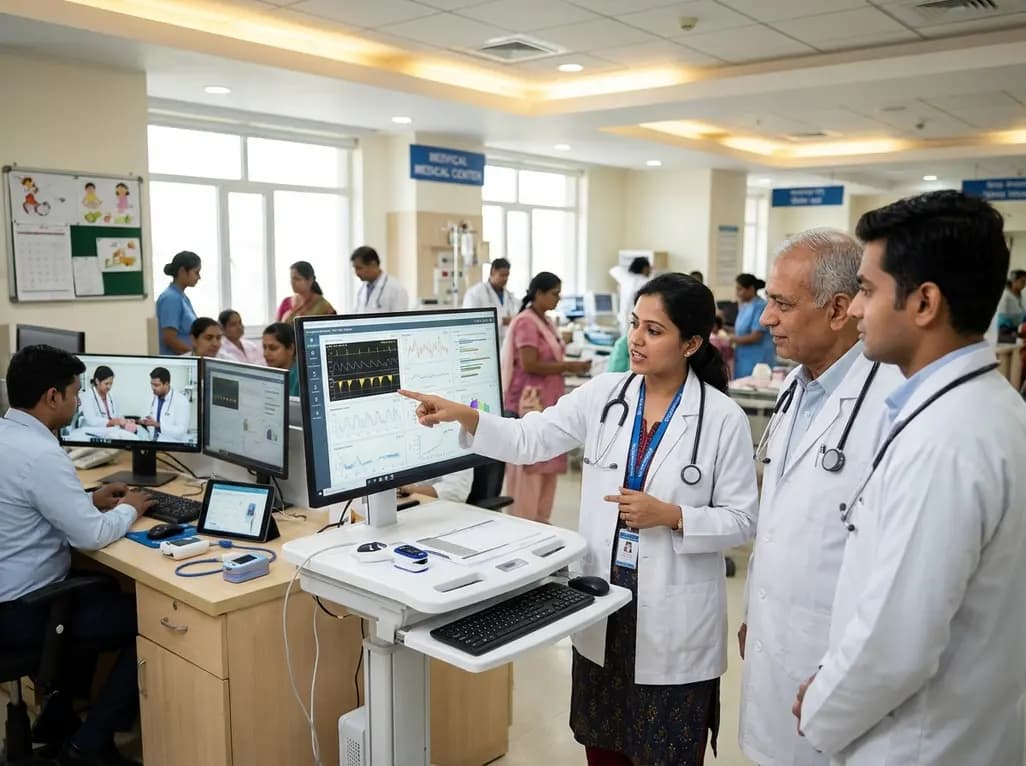
A landmark study details how an enterprise pediatric remote patient management model expanded from a single cardiology pilot to 16 diverse specialty programs by combining centralized digital operations with specialty clinical leadership.
Today

A comparative review of tension band wiring and intramedullary screw fixation in thumb metacarpophalangeal arthrodesis, evaluating union rates, hardware complications, and clinical outcomes.
Yesterday
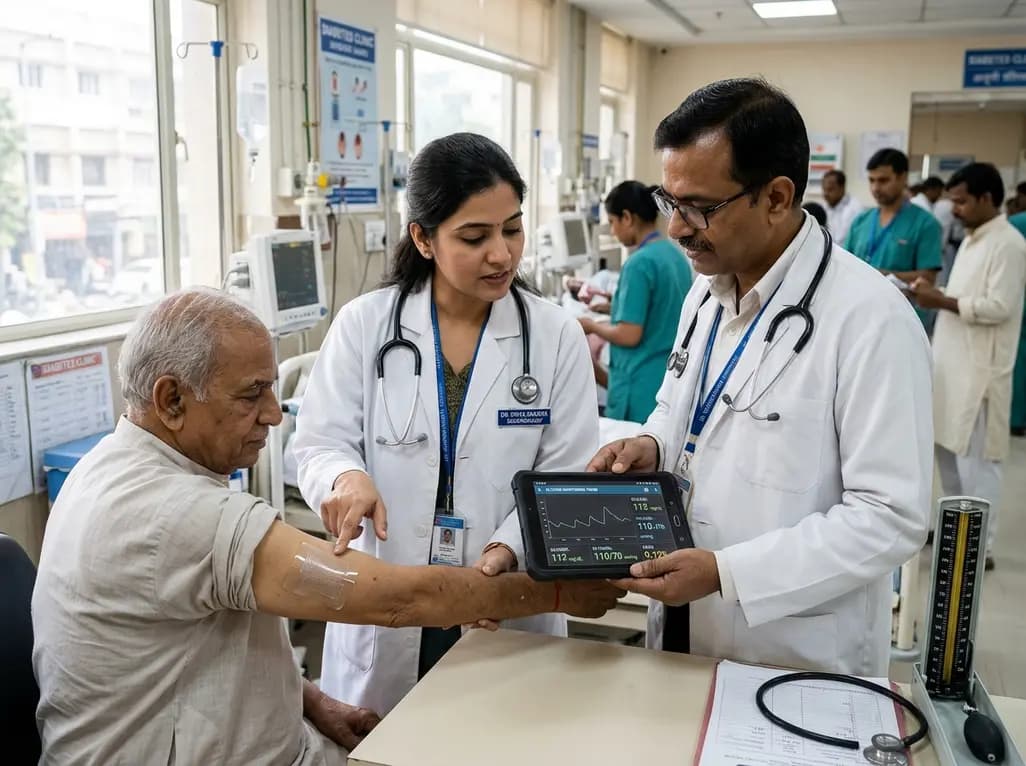
A breakthrough ultrathin multimodal sensor decouples physical hemodynamic monitoring from disposable electrochemical calibration, achieving long-term wearable glucose prediction with 81.36% accuracy and a 9.12% MARD. This offers a robust, drift-free solution for outpatient metabolic surveillance.
Today
