.webp&w=384&q=75)

Loading, please wait...
Loading, please wait...

Photon-counting detector CT (PCD-CT) is transforming oncologic imaging because it provides superior spatial resolution as well as spectral information. Specifically, the detection of PCD-CT liver metastases has significantly improved because of spectral reconstruction. This technology allows clinicians to utilize virtual monoenergetic images (VMI) as well as iodine maps so that they can better distinguish lesions from healthy tissue. Consequently, recent research confirms that these reconstructions significantly enhance the visibility of colorectal liver metastases (CRLM).
Moreover, a retrospective study involving 117 patients analyzed 227 CRLM for the purpose of finding the best imaging settings. Researchers compared VMI energy levels from 40 to 90 keV against scanner-generated iodine maps. In addition, they calculated contrast-to-noise ratios and iodine concentrations. Furthermore, they found that low-energy reconstructions provide much better contrast than conventional imaging. While the 40 keV VMI achieved the highest contrast-to-noise ratio (CNR), iodine maps offered the highest parenchyma-to-lesion ratio (PLR). Therefore, these tools provide complementary data for the purpose of precise staging.
Although quantitative data favored 40 keV, subjective clinical preference often differs because of image noise. Three radiologists evaluated the best reconstructions and consequently found that 50 keV VMIs provided the clearest visibility. This preference occurs because 40 keV images, despite having high contrast, often contain more image noise. Additionally, higher keV levels significantly reduce CNR values. However, the study suggests using both iodine maps and low-keV VMIs in order to maximize diagnostic confidence.
In conclusion, PCD-CT technology offers a major step forward for liver imaging. Since it captures spectral data, it simplifies the identification of subtle hypoattenuating lesions. Finally, integrating these spectral reconstructions into routine protocols will likely improve the management of patients with metastatic colorectal cancer.
Quantitative data shows 40 keV has the highest CNR, but radiologists often prefer 50 keV for better subjective clarity and balanced noise levels.
Iodine maps maximize the parenchyma-to-lesion ratio (PLR) because healthy liver tissue concentrates more iodine than metastatic lesions, creating a starker contrast.
Experts recommend using both reconstructions complementarily to improve overall diagnostic confidence and the characterization of subtle hypoattenuating lesions.
Disclaimer: This content is for informational and educational purposes only. It does not constitute professional medical advice, diagnosis, or treatment. Always seek the advice of your physician or other qualified healthcare provider with any questions you may have regarding a medical condition. Refer to the latest local and national guidelines for clinical practice.
References
Moos M et al. Analysis of colorectal liver metastases in photon-counting detector CT - optimizing imaging through spectral reconstruction. Cancer Imaging. 2026 May 07. doi: undefined. PMID: 42098885.
Singh P et al. Technical challenges and benefits of photon counting detector computed tomography. IJMPH. 2024. doi: 10.18203/2394-6040.ijcmph20242192.
Wrazidlo R et al. Photon-counting detector CT shows promise for reducing oncology imaging dose. Medical Buyer. 2022.

Read summarized clinical updates, watch expert medical content, and earn CME certifications right from your smartphone.
Open your smartphone camera to scan and install.





A study on PCD-CT optimization for colorectal liver metastases reveals that low-keV VMIs and iodine maps significantly improve lesion detection and visibili...
5 months ago
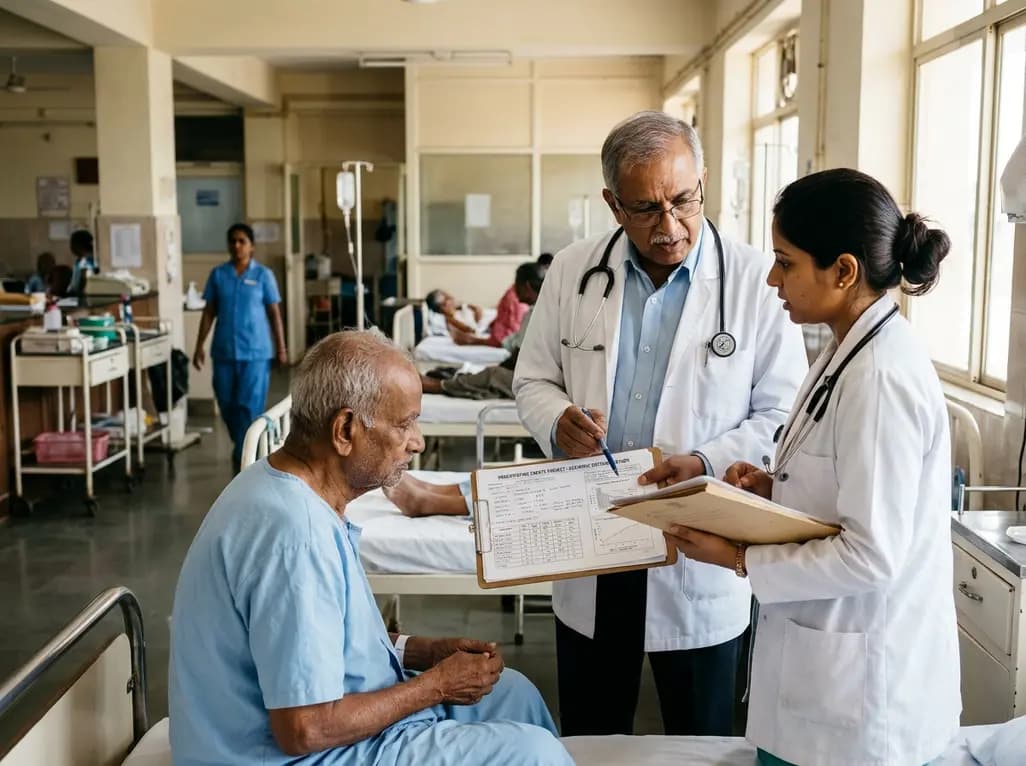
Failing to account for competing events like mortality in longitudinal geriatric studies produces biased risk estimates and misleading inferences. This review highlights key methodological principles, insights from the Precipitating Events Project, and practical approaches for clinical research appraisal.
Today

A study in JAMIA Open shows lightweight open-source reasoning LLMs achieve up to 95% sensitivity and accelerate evidence synthesis screening by nearly twentyfold, presenting a cost-effective, scalable AI solution for biomedical research and systematic reviews.
Today
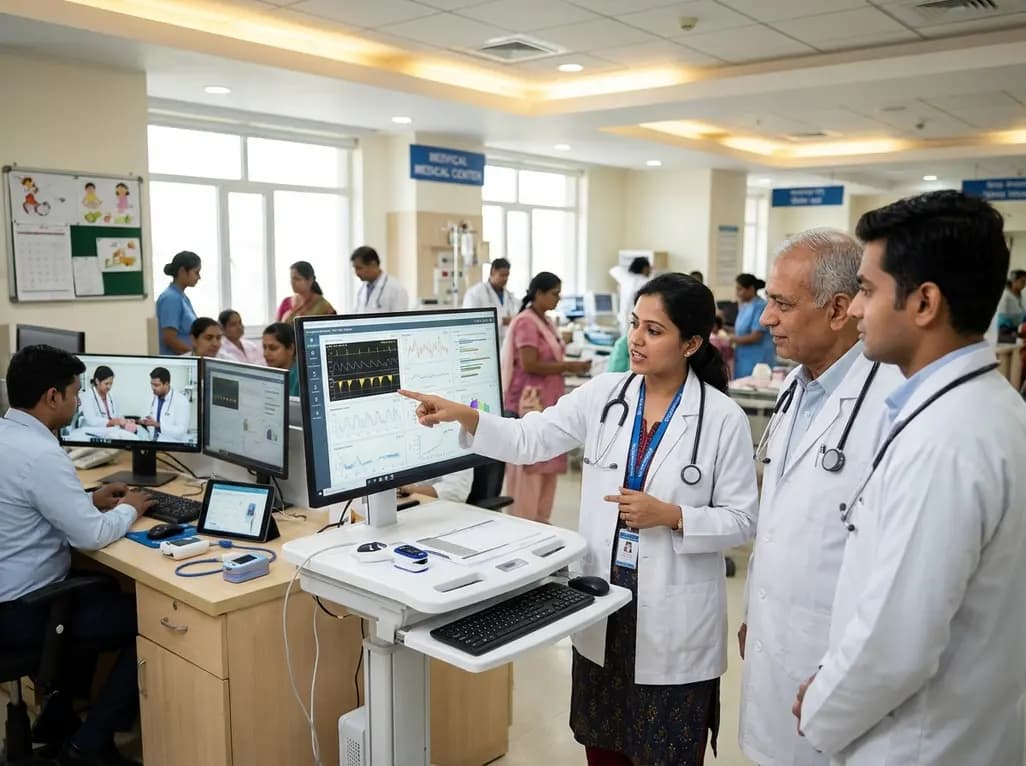
A landmark study details how an enterprise pediatric remote patient management model expanded from a single cardiology pilot to 16 diverse specialty programs by combining centralized digital operations with specialty clinical leadership.
Today
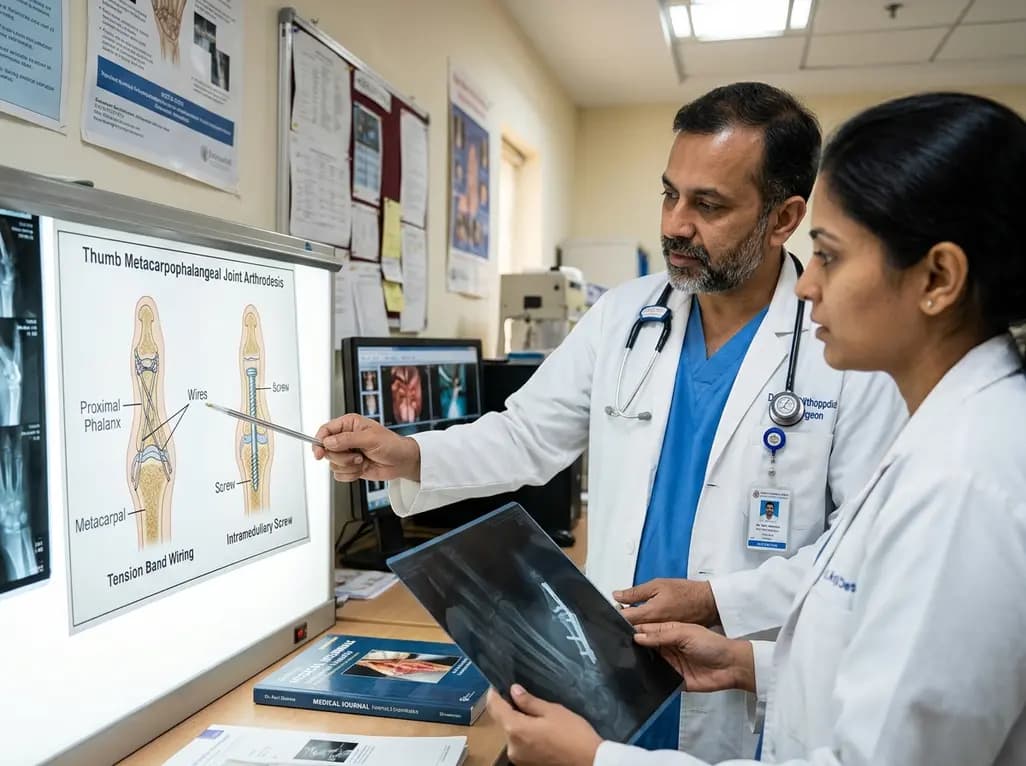
A comparative review of tension band wiring and intramedullary screw fixation in thumb metacarpophalangeal arthrodesis, evaluating union rates, hardware complications, and clinical outcomes.
Yesterday
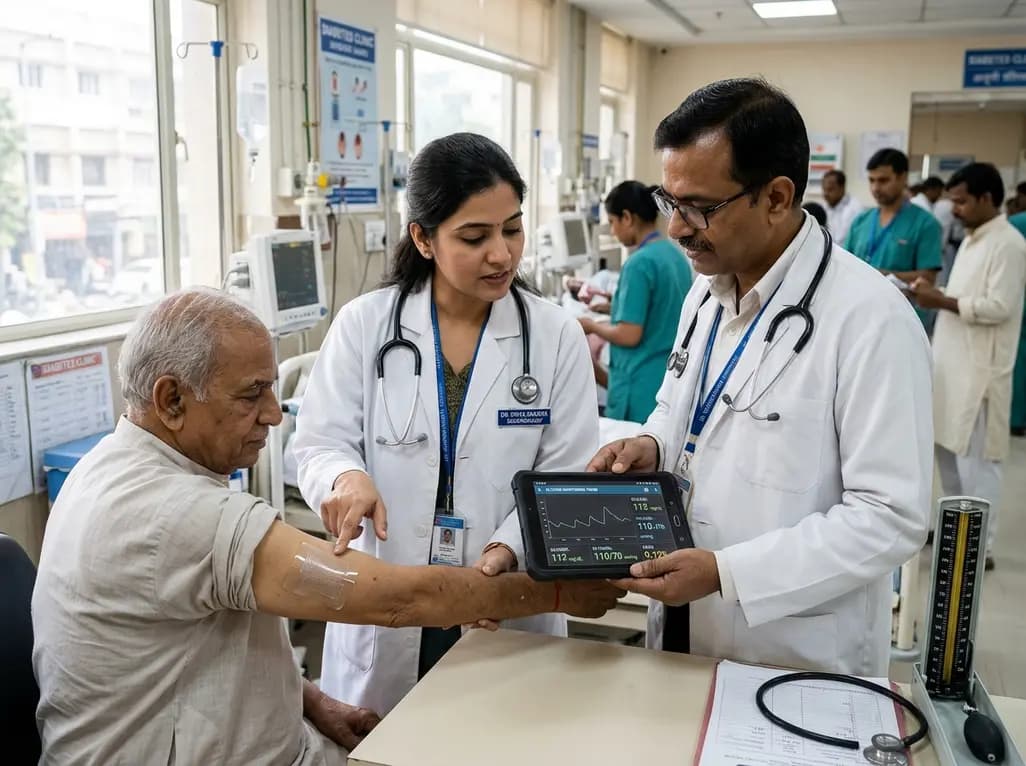
A breakthrough ultrathin multimodal sensor decouples physical hemodynamic monitoring from disposable electrochemical calibration, achieving long-term wearable glucose prediction with 81.36% accuracy and a 9.12% MARD. This offers a robust, drift-free solution for outpatient metabolic surveillance.
Today
