

Loading, please wait...
Loading, please wait...

The escalating burden of chronic diseases and cancer diagnostics has created an acute workforce shortage in diagnostic laboratories worldwide. To alleviate this strain, modern medicine increasingly explores generative artificial intelligence and natural language processing. Recent cross-sectional research offers profound insights into the adoption of LLMs in pathology among practicing specialists. Diagnostic complexity continues to expand rapidly across clinical oncology and histopathology. Therefore, laboratory specialists actively seek technological aids to optimize workflow efficiency, streamline structured reporting, and accelerate clinical correlations. However, transitioning digital tools from conceptual enthusiasm to hands-on diagnostic application demands thorough evaluation. Consequently, understanding how clinicians perceive these emerging capabilities remains vital for successful health informatics deployment.
A striking revelation from national survey data is the significant gap between conceptual knowledge and clinical execution. Although nearly three-quarters of certified pathologists demonstrate awareness of artificial intelligence tools, only one-quarter actively employ them in routine practice. Among available platforms, ChatGPT remains the most recognized and frequently tested conversational agent. Pathologists readily acknowledge the theoretical promise of generative language technologies for administrative tasks and preliminary literature synthesis. Nevertheless, hands-on clinical utilization lags noticeably behind initial curiosity. This implementation deficit stems largely from a lack of validated, pathology-specific software interfaces directly embedded within laboratory information systems. Furthermore, many diagnostic laboratories still operate without standardized institutional guidance regarding permitted generative artificial intelligence workflows. Without structured organizational support, individual specialists hesitate to experiment with unvetted tools during active diagnostic evaluations. Consequently, bridging this widespread awareness-adoption divide requires healthcare institutions to transition from passive acceptance toward proactive technological facilitation. By establishing tailored demonstration environments, diagnostic centers can effectively demystify these advanced computational tools.
Multivariable statistical evaluations highlight several distinct professional and demographic factors that drive adoption willingness among laboratory physicians. Pathologists with higher educational attainment and advanced seniority, such as attending physicians and chief pathologists, demonstrate substantially higher enthusiasm for deploying digital assistants. Specifically, senior clinicians face immense pressure to deliver rapid consultations, guide interdisciplinary tumor boards, and lead translational research projects. In addition, professionals working demanding schedules exceeding 43 hours per week show significantly higher eagerness to adopt workflow automation tools. For these overworked practitioners, generative models offer an appealing opportunity to offload repetitive clerical tasks and literature searches. Conversely, physicians who examine moderate annual slide volumes, between 1000 and 3000 cases, report notably less interest in adopting novel software platforms. These intermediate volume practitioners frequently balance routine diagnostic demands without the extreme administrative overhead endured by senior leadership. Therefore, organizational leaders must recognize that willingness to adopt computational solutions is not uniform across ranks. Tailoring technological training to specific professional tiers can cultivate organic uptake effectively.
Interestingly, clinician experience directly shapes how diagnostic specialists view clinical performance. Active users evaluate direct clinical applications much more critically than nonusers, particularly when handling patient records, analyzing diagnostic histories, and interpreting complex disease mechanisms. When pathologists examine raw patient data, they understand that minor semantic errors can distort critical staging conclusions or therapeutic choices. Consequently, experienced users exhibit measured skepticism regarding the unguided clinical deployment of LLMs in pathology. In stark contrast, user perceptions regarding academic research, medical manuscript preparation, and educational curriculum development remain uniformly optimistic across user groups. Specialists find immense utility in using generative agents to draft scientific abstracts, refine language, organize pathology teaching modules, and create training vignettes for residents. This distinct dichotomy highlights an important clinical reality. While generative models excel at contextual synthesis and educational curation, their autonomous diagnostic precision remains unverified in high-stakes environments. Diagnostic physicians therefore demand rigorous domain-specific validation and retrieval-augmented verification mechanisms before trusting digital assistants with definitive specimen evaluations.
The survey results reveal prominent disparities across geographic tiers that mirror broader systemic challenges in healthcare modernization. Clinicians practicing within fourth-tier or lower-tier metropolitan districts display significantly less willingness to incorporate generative tools into daily practice. In resource-constrained secondary and community hospitals, fundamental digital infrastructure frequently lags behind tertiary academic medical centers. Many smaller pathology laboratories operate with legacy microscopes, fragmented information systems, and limited digital slide scanning hardware. Consequently, introducing sophisticated computational algorithms into environments lacking basic digital readiness creates operational friction rather than genuine clinical value. In addition, rural and small-town practitioners often lack access to specialized institutional informatics training and technical mentorship. This regional divide threatens to widen diagnostic discrepancies between metropolitan tertiary institutes and peripheral diagnostic units. Therefore, health policymakers and professional societies must ensure equitable distribution of modern digital infrastructure. Providing decentralized technical education, subsidized digital resources, and cloud-based diagnostic support can prevent peripheral practitioners from falling behind during rapid technological transitions.
Integrating artificial intelligence into diagnostic workflows introduces serious ethical and regulatory dilemmas that warrant careful institutional oversight. Pathologists consistently cite model opacity, patient privacy preservation, and academic integrity as their paramount ethical apprehensions. Because commercial models operate as proprietary black-box systems, clinicians cannot easily interrogate the underlying computational reasoning behind generated textual outputs. In high-stakes oncology reporting, inexplicable recommendations create profound liability and diagnostic safety risks. Furthermore, uploading identifiable specimen records, surgical notes, or genomic data into public cloud platforms risks severe patient confidentiality violations. To resolve these legitimate anxieties, institutions must establish robust algorithmic governance frameworks before clinical deployment. Transparent reporting standards, on-premise model hosting, local data anonymization protocols, and rigorous peer-review practices represent essential safeguards. Moreover, healthcare leaders must prioritize developing domain-specialized medical models trained on validated histopathologic corpora and standardized synoptic nomenclatures. Linking language models directly with digital pathology whole-slide scanners enables real-time report completion and quality control auditing. By harmonizing technological innovation with meticulous clinical supervision, pathology laboratories can dramatically elevate diagnostic precision, reduce clinician burnout, and protect patient outcomes.
Generative language models streamline routine diagnostic pathology by automating structured report generation, summarizing complex patient records, and cross-referencing clinical staging criteria. Furthermore, they help laboratory staff draft synoptic diagnostic templates, search relevant scientific literature, and prepare teaching files for medical trainees. When integrated into digital workflows, these computational assistants reduce clerical documentation time, thereby allowing certified pathologists to focus their attention on complex microscopic evaluation and critical patient consultations.
Practicing pathologists remain cautious because generic language models occasionally generate inaccurate statements, fabricate references, and lack transparent clinical reasoning. In diagnostic surgical pathology, subtle errors in histologic classification, biomarker status, or margin descriptions can lead to inappropriate oncologic interventions. Active users recognize that while models process natural language effectively, they lack contextual medical intuition. Consequently, laboratory specialists insist on comprehensive manual verification before incorporating any artificial intelligence output into formal patient reports.
Laboratory directors can address ethical dilemmas by implementing clear institutional policies that enforce patient data de-identification, secure local network hosting, and mandatory clinician oversight. Additionally, leadership should provide formal training on responsible artificial intelligence utilization, academic integrity standards, and algorithmic hallucination detection. By mandating transparent documentation and validating model accuracy against accredited laboratory benchmarks, institutions safeguard patient confidentiality while fostering a secure, trustworthy digital diagnostic environment.
Disclaimer: This content is for informational and educational purposes only and does not constitute medical advice, diagnosis, or treatment. It is not intended to replace independent clinical judgment or professional medical consultations. Healthcare professionals must exercise their clinical acumen when evaluating and applying research findings. While efforts are made to ensure accuracy, medical knowledge evolves rapidly, and readers should verify information through multiple sources. Mention of specific products, medications, or techniques does not imply endorsement. Refer to the latest local and national guidelines for clinical practice.
References

Read summarized clinical updates, watch expert medical content, and earn CME certifications right from your smartphone.
Open your smartphone camera to scan and install.





A national survey reveals that while over 73% of pathologists recognize large language models, practical clinical adoption remains cautious. Explore key drivers, regional disparities, and ethical considerations influencing generative artificial intelligence implementation across modern laboratory medicine.
Today
A national cross-sectional survey reveals marked disparities in infectious disease diagnostic capacity across hospital tiers, underscoring the urgent need for integrated referral networks and enhanced point-of-care testing to improve outbreak detection and patient outcomes.
Today

The GESS-AEEM consensus establishes a clear clinical implementation framework for testosterone therapy in postmenopausal women with hypoactive sexual desire disorder, focusing on transdermal dosing, precise laboratory monitoring, and safety communication.
Yesterday
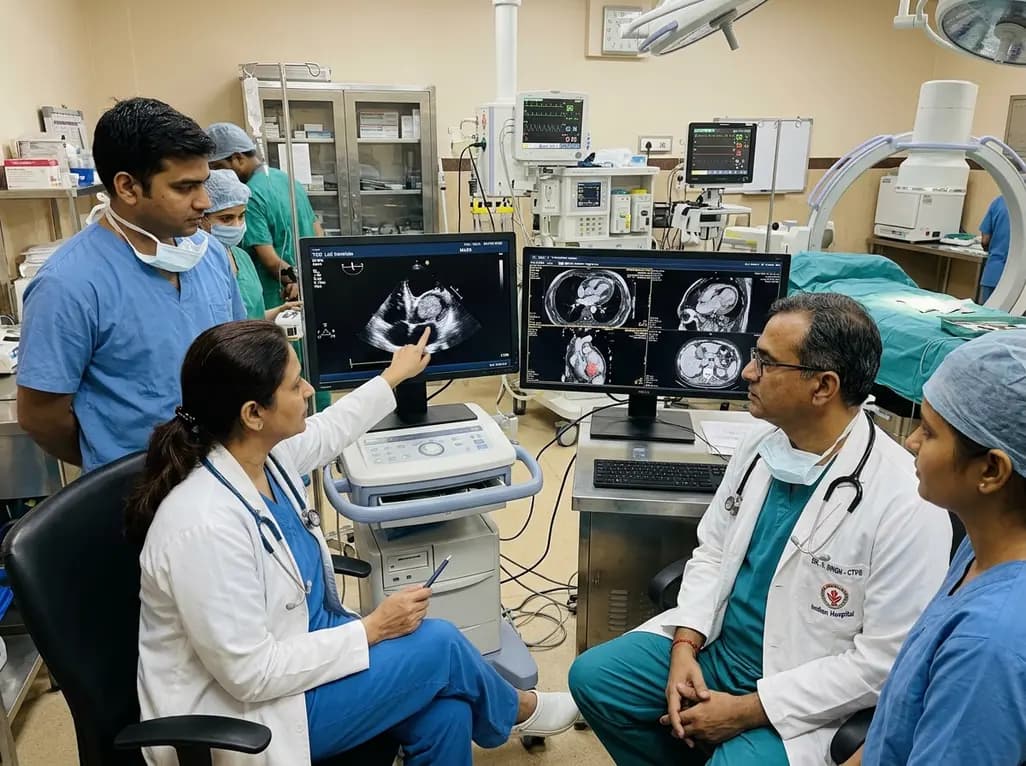
A rare case of an asymptomatic left ventricular hemangioma highlights the vital role of multimodal imaging in differentiating vascular tumors from thrombus. Complete surgical resection under transesophageal echocardiography guidance prevents thromboembolism and delivers optimal outcomes.
Today
A landmark study evaluates long-term quality of life in adolescents and adults with brachial plexus birth injury. Severe functional limitation and limited access to care significantly worsen outcomes, underscoring the urgent need for persistent, multidisciplinary management across adult healthcare transitions.
Today
An analysis of 1,000 posts by macro- and mega-influencers on Instagram and TikTok revealed that 78.5% contained nutrition misinformation, while only 24% of creators held valid credentials. This article examines the clinical risks of viral dietary fads and provides actionable guidance for healthcare professionals.
Today
