.webp&w=384&q=75)

Loading, please wait...
Loading, please wait...

Modern healthcare facilities face growing challenges when managing pharmaceutical supply chains across distributed outpatient settings. In particular, establishing an effective perpetual medication inventory remains critical for balancing immediate clinical demand with financial sustainability. Ambulatory clinics frequently handle expensive medications, yet they often lack real-time visibility into product movement. Automated dispensing cabinets solve this challenge in hospital inpatient units, but high capital costs restrict their outpatient deployment. Consequently, healthcare organizations must explore innovative, lightweight tracking solutions that minimize carrying costs without disrupting nursing workflows.
Ambulatory care clinics deliver specialized treatments that require immediate access to high-value pharmaceuticals. However, managing these supplies without centralized automation creates significant operational hurdles for clinical staff. Most outpatient facilities rely on periodic manual inventory counts to track usage and place purchase orders. Unfortunately, manual auditing consumes valuable nursing time and frequently introduces human counting errors.
Furthermore, outpatient clinics experience variable patient appointment schedules, making demand forecasting exceptionally difficult. When clinic managers lack accurate consumption data, they often overcompensate by stockpiling excessive safety stock. This practice ties up substantial capital in on-hand inventory and dramatically increases the risk of medication expiration before administration.
Additionally, stockouts of vital therapies can delay essential patient care, creating clinical dissatisfaction and administrative friction. While inpatient hospital units routinely utilize computerized automated dispensing cabinets, ambulatory centers rarely justify such massive capital investments. Consequently, clinical leaders require agile, cost-effective technologies that provide real-time supply visibility without imposing complex operational demands on clinic personnel.
To bridge this technological gap, innovative passive tracking platforms offer real-time operational visibility without heavy infrastructure demands. A passive bin-based inventory model utilizes integrated optical light sensors installed within modular storage bins. When a clinician opens a bin to retrieve or restock a medication package, the sensor detects ambient light variations.
Subsequently, the system records the precise timestamp and transaction details automatically without requiring barcode scanning or manual keyboard entry. This passive logging mechanism preserves standard nursing workflows while collecting granular utilization data across diverse clinic locations.
Moreover, the software incorporates artificial intelligence algorithms to evaluate dispensing velocity, shelf life, and seasonal demand patterns. These intelligent algorithms generate tailored recommendations for optimal inventory holding levels and reorder triggers. Importantly, the platform functions autonomously without requiring direct integration into complex electronic health record systems. This standalone capability eliminates extensive software configuration costs and accelerates cross-facility implementation. As a result, healthcare administrators gain immediate visibility into medication movements while eliminating manual tracking burdens for bedside caregivers.
A recent prospective ten-week investigation evaluated a passive bin-based tracking system across two ambulatory clinics within a large academic medical center. Researchers tracked selected high-cost medications to determine whether automated algorithmic recommendations could reduce on-hand inventory valuation. Throughout the trial, the passive system accurately logged 3,454 individual medication dispenses.
To ensure measurement fidelity, pharmacy personnel validated system accuracy through manual cycle counts twice weekly. The collected data demonstrated wide variations in average days of supply on hand, revealing significant baseline stock imbalances across clinic rooms. Following the implementation of algorithmic recommendations, total inventory valuation decreased by approximately $34,000 in average wholesale price terms.
Although this valuation reduction did not reach statistical significance due to sample volume limitations, it demonstrated meaningful real-world capital optimization. Meanwhile, the modified MAS-NAS nursing satisfaction survey yielded mixed results, highlighting that staff require targeted orientation when adapting to automated tracking environments. Ultimately, the study confirmed that passive optical sensors reliably capture high-volume clinic transactions and identify opportunities for waste reduction in resource-intensive specialty clinics.
Transitioning toward an automated perpetual medication inventory requires careful operational planning and continuous multidisciplinary collaboration. Healthcare administrators must align pharmacy leaders, clinic managers, and frontline nursing personnel around shared inventory optimization goals. Because clinical teams prioritize patient care above administrative logging, inventory solutions must remain non-intrusive.
Passive sensor systems minimize user friction by eliminating redundant data entry steps during busy clinic hours. However, successful adoption still demands comprehensive change management and transparent communication regarding inventory goals. Pharmacy teams should regularly review AI-generated reorder thresholds to ensure that proposed reductions in holding stock never compromise clinical readiness.
Furthermore, cross-functional committees must establish standardized replenishment routines between central distribution pharmacies and decentralized outpatient storage areas. When nurses understand how accurate inventory tracking prevents unexpected medication stockouts, their engagement with the system improves substantially. Additionally, incorporating regular audit feedback helps refine algorithmic models to accommodate shifting clinical practices. By embedding automated tracking seamlessly into daily routines, health systems cultivate a resilient supply chain culture that protects financial resources while supporting timely drug administration.
The growing shift toward decentralized outpatient care demands advanced supply chain strategies across all healthcare sectors. As specialized biological agents and high-cost therapies become standard in ambulatory practices, manual supply tracking will become obsolete. Passive tracking technology represents a promising middle ground between cost-prohibitive automated dispensing cabinets and error-prone manual spreadsheets.
Future developments will likely incorporate enhanced machine learning models that integrate external supply chain volatility, vendor lead times, and clinic scheduling data. These advanced analytics will enable predictive ordering that dynamically adjusts inventory levels ahead of anticipated surges in patient visits.
Moreover, scaling these lightweight models across multi-site health networks will allow system-wide medication rebalancing, preventing costly drug expirations by transferring excess stock to high-demand clinics. Researchers must conduct larger, multi-center trials over extended durations to establish statistically robust cost-benefit metrics and validate long-term clinical satisfaction. As technology evolves, smart inventory systems will play an essential role in driving healthcare operational excellence, safeguarding medication accessibility, and optimizing pharmaceutical expenditure.
A passive bin-based model utilizes optical light sensors placed directly inside storage compartments to monitor stock levels. When staff members retrieve or replace a medication container, the sensors immediately detect changes in light exposure. Consequently, the internal software logs the transaction in real time. Advanced analytical algorithms then interpret these passive signals to calculate stock levels, identify reorder thresholds, and optimize inventory without requiring direct electronic health record connectivity.
Ambulatory clinics frequently handle specialty pharmaceuticals with unpredictable patient demand patterns. Unlike inpatient wards that rely on expensive automated dispensing cabinets, outpatient clinics often depend on periodic manual counts. Therefore, clinics suffer from limited stock visibility, which leads to excessive safety stock, product expiration, and increased financial carrying costs. Implementing cost-effective automated monitoring models directly addresses these operational hurdles while maintaining necessary clinical supply availability.
Implementing perpetual medication inventory systems allows healthcare institutions to maintain precise visibility over high-cost pharmaceuticals. By tracking real-time usage data, administrators can substantially decrease overall inventory valuation on hand and reduce product waste from expiration. Furthermore, automated replenishment recommendations prevent stockouts and eliminate rush orders. Consequently, clinical departments preserve working capital while ensuring that essential medications remain immediately available for daily patient administration.
Disclaimer: This content is for informational and educational purposes only and does not constitute medical advice or establish a doctor-patient relationship. Healthcare professionals should make clinical decisions based on their independent professional judgment. Refer to the latest local and national guidelines for clinical practice.
References

Read summarized clinical updates, watch expert medical content, and earn CME certifications right from your smartphone.
Open your smartphone camera to scan and install.





A recent prospective study evaluated a passive bin-based perpetual medication inventory model in academic ambulatory clinics. Utilizing light sensors and AI algorithms without EHR integration, the system tracked 3,454 dispenses, offering actionable insights for cost reduction and inventory control.
4 weeks back

A comprehensive integrative multi-omic study combines NHANES epidemiology, Mendelian Randomization, and transcriptomic analysis to uncover complex causal associations, metabolic pathways, and novel machine learning diagnostic biomarkers linking gastric cancer and diabetes.
Today
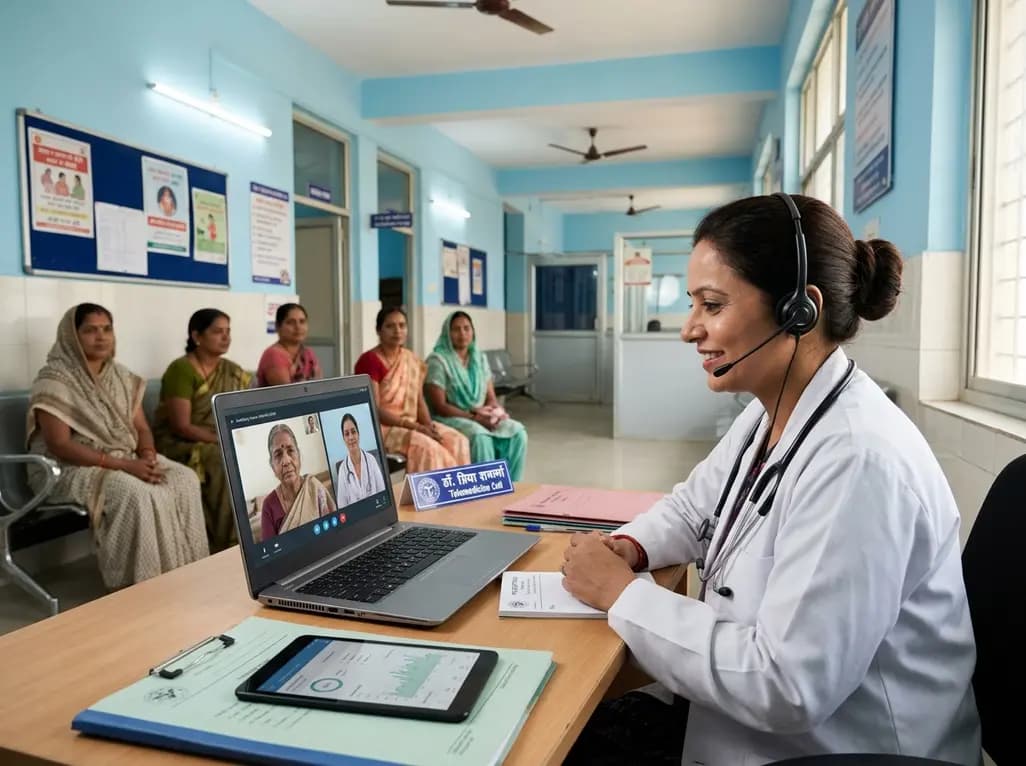
India's national digital health service achieved a historic milestone of fifty crore virtual consultations. Notably, female patients account for over fifty-seven percent of utilisation, demonstrating improved healthcare accessibility for remote communities, chronic disease management, and primary triage.
Today
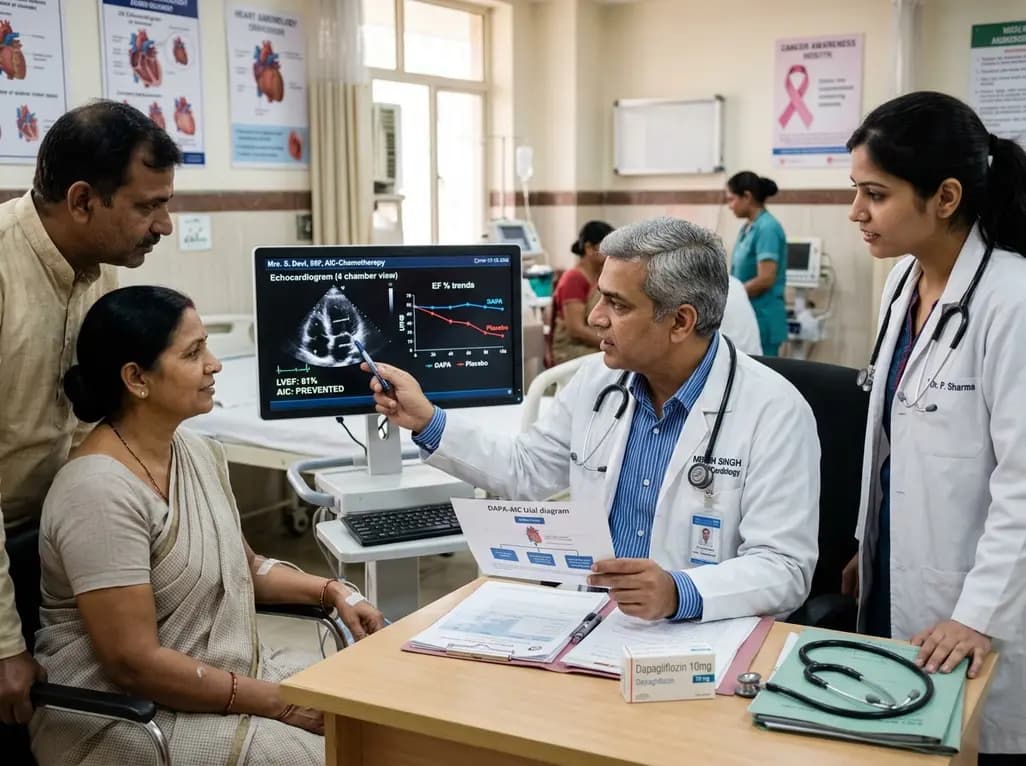
The phase II DAPA-AIC trial demonstrates that dapagliflozin 10 mg daily significantly preserves left ventricular ejection fraction compared to placebo over four months in adults undergoing anthracycline chemotherapy, highlighting a potential preventive strategy in cardio-oncology.
Today
A scoping review reveals severe gaps in long-term assistive technology provision following humanitarian emergencies. Addressing post-disaster rehabilitation requires systematic follow-up, workforce training, and integration into national health systems to sustain mobility and recovery.
Today
An interim propensity score-matched study comparing SASI vs OAGB demonstrates equivalent short- and mid-term outcomes. Both bariatric procedures achieved substantial excess weight loss and 100% medication-free blood glucose control at 18 months, underscoring the metabolic efficacy of both techniques.
Today
