.webp&w=384&q=75)

Loading, please wait...
Loading, please wait...
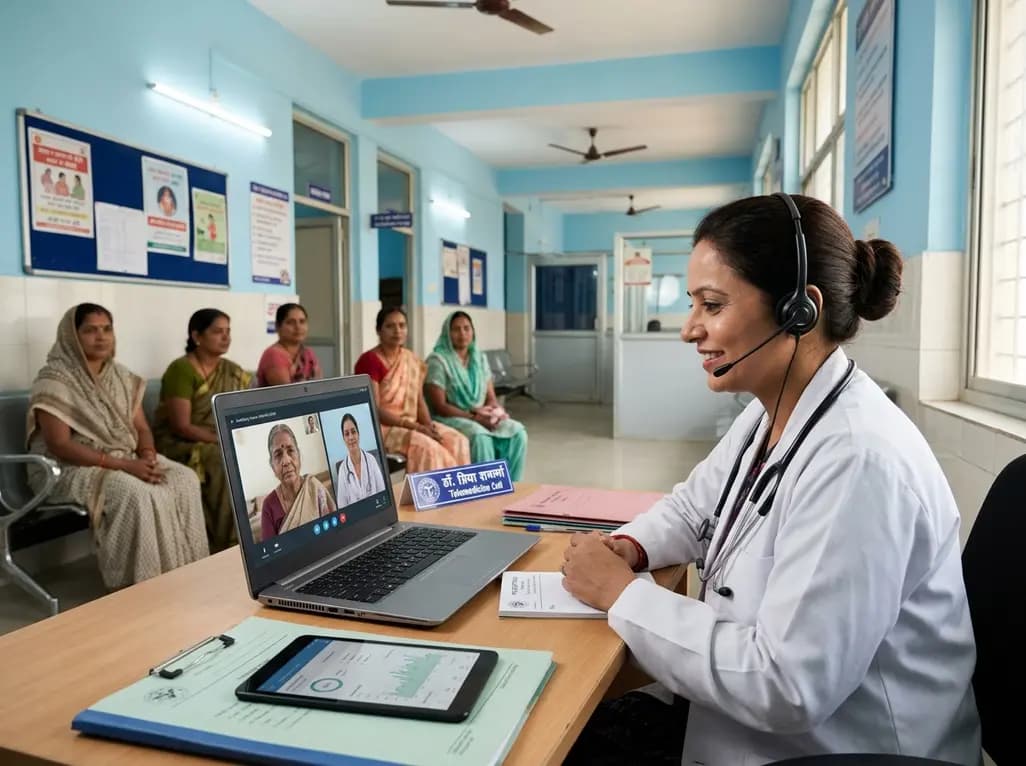
India has attained a momentous milestone in public health delivery. The country officially recorded over fifty crore virtual doctor-patient interactions through its national digital health platform. Specifically, eSanjeevani telemedicine services have bridged extensive geographical chasms, connecting rural populations to qualified doctors seamlessly. Recent government data reveals that female patients constitute 57.14 percent of all consultations nationwide. In addition, older citizens utilize these virtual clinics with remarkable frequency. Consequently, digital health infrastructure is reshaping how families in peripheral regions access medical triage, treatment, and follow-up care.
The national platform operates through an extensive hub-and-spoke delivery design. More than 1.42 lakh Ayushman Arogya Mandirs function as primary peripheral spokes across every state. Meanwhile, 19,473 specialized medical hubs supervise clinical decisions and coordinate patient management. Furthermore, the network integrates 901 dedicated online outpatient departments to handle outpatient volume efficiently. A committed workforce of 2,41,923 registered healthcare practitioners provides continuous medical support through this architecture.
Consequently, the platform processes between 2.5 and 3 lakh patient consultations every day. In fact, record utilization reached a peak of 6,30,315 consultations on a single day. Therefore, digital consulting is no longer merely a crisis backup mechanism. Instead, it serves as an indispensable pillar of everyday primary care delivery. Crucially, the platform supports fifteen languages, including fourteen regional Indian vernacular tongues alongside English. This multilingual accessibility directly empowers community health officers and rural families to communicate symptoms without language barriers.
Historically, rural women in India confronted immense logistical barriers when attempting to visit tertiary healthcare facilities. Domestic responsibilities, financial constraints, and limited transport often delayed critical clinical evaluations. However, eSanjeevani has dramatically simplified access by bringing expert consultations to village health centres. As a result, women currently account for 57.14 percent of all platform consultations across India.
This demographic trend carries profound clinical implications for preventive medicine. For instance, community healthcare workers now screen pregnant women, nursing mothers, and young girls much earlier. Moreover, local practitioners can immediately consult remote obstetricians for antenatal monitoring, anemia protocols, and reproductive tract infections. Consequently, early clinical recognition diminishes maternal complications before acute emergencies arise. In addition, women gain confidential spaces to discuss gynecological complaints without facing social hesitation. By decentralizing specialty knowledge, the digital platform reinforces health autonomy and improves chronic disease detection among underserved female cohorts.
Elderly populations also exhibit exceptional engagement with virtual clinical interfaces. Recent ministry statistics indicate that patients aged 46 years and above account for 40.15 percent of total consultations. More specifically, senior citizens aged 60 and older represent 16.25 percent of all visits. Thus, telemedicine proves remarkably beneficial for managing age-related morbidity across aging communities.
Elderly individuals often suffer from osteoarthritis, generalized frailty, cardiovascular disorders, and metabolic syndromes. Frequent travel across bumpy rural roads causes severe physical distress for these individuals. Through assisted telemedicine at village centers, older patients obtain regular blood pressure reviews and blood glucose tracking without long journeys. Furthermore, physicians can adjust chronic medications, assess therapy compliance, and order routine laboratory screenings electronically. Because families save valuable time and transit expenses, treatment continuity improves substantially. Therefore, secondary prevention remains uninterrupted, shielding vulnerable geriatric patients from preventable organ failure and acute hospitalizations.
Technological advancement continues to elevate the clinical reliability of public telemedicine workflows. Notably, authorities incorporated an Artificial Intelligence-powered Clinical Decision Support System directly into the provider interface. This indigenous algorithm earned the prestigious Gold Award under the National Awards for e-Governance. As a result, primary providers receive automated, evidence-based suggestions regarding diagnostic algorithms and standard treatment regimens during consultations.
Furthermore, the government recently integrated eSanjeevani with the national Emergency Response Support System, known widely as ERSS-112. This connection provides rapid triage whenever rural clinicians identify alarming clinical presentations. If a practitioner detects acute coronary syndromes, severe sepsis, or respiratory distress, emergency personnel can initiate urgent ambulance dispatch immediately. Simultaneously, premier institutions like AIIMS Jodhpur, AIIMS Jammu, and AIIMS Patna provide dedicated specialist tele-OPDs. Consequently, patients in remote territories receive tertiary-level guidance while remaining close to their homes.
For modern medical practitioners in India, these milestones signal an irreversible transformation in clinical workflow patterns. Physicians must recognize that digital consultations now form an essential component of the continuum of care. Therefore, clinicians working in district hospitals and academic hubs must master structured virtual communication techniques. Careful documentation within digital health records protects medicolegal integrity and preserves clinical continuity across transitions.
Moreover, physicians should routinely integrate Ayushman Bharat Health Account identifiers during consultations. Longitudinal electronic records allow subsequent consultants to evaluate past lab reports, imaging findings, and medication histories accurately. Similarly, clinicians must maintain vigilance regarding red flag symptoms that necessitate urgent physical examination. Telemedicine acts as a vital bridge, but practitioners must know when to recommend in-person transfer. By combining empathetic telemedicine skills with algorithmic safety checks, physicians can significantly advance universal health coverage nationwide.
Q1: What major milestone has the eSanjeevani platform recently achieved?
The eSanjeevani national telemedicine service successfully crossed the historic milestone of fifty crore virtual consultations across all 36 Indian states and union territories. The platform regularly facilitates between 2.5 to 3 lakh patient consultations each day. Furthermore, it operates through a network comprising over 1.42 lakh peripheral primary healthcare spokes and nearly 19,500 clinical specialty hubs nationwide.
Q2: Why is the high proportion of female consultations clinically significant?
Women account for 57.14 percent of all eSanjeevani consultations, highlighting improved healthcare accessibility for historically marginalized female populations. This widespread usage allows community providers to detect nutritional deficiencies, antenatal complications, and gynecological disorders earlier. Consequently, virtual clinics overcome distance barriers and transport expenses, promoting timely therapeutic intervention and improving maternal and reproductive health outcomes across rural Indian communities.
Q3: How does the platform assist healthcare providers in making accurate clinical decisions?
The platform incorporates an advanced Artificial Intelligence-powered Clinical Decision Support System to guide clinicians during remote consultations. This tool offers evidence-based diagnostic suggestions and standardized treatment recommendations aligned with national clinical protocols. Additionally, integration with the Emergency Response Support System ensures that critical patients receive rapid emergency dispatch and tertiary referrals whenever life-threatening symptoms appear.
Disclaimer: This content is for informational and educational purposes only. It does not constitute medical advice or replace professional judgment. Refer to the latest local and national guidelines for clinical practice.
References

Read summarized clinical updates, watch expert medical content, and earn CME certifications right from your smartphone.
Open your smartphone camera to scan and install.





India's national digital health service achieved a historic milestone of fifty crore virtual consultations. Notably, female patients account for over fifty-seven percent of utilisation, demonstrating improved healthcare accessibility for remote communities, chronic disease management, and primary triage.
Today
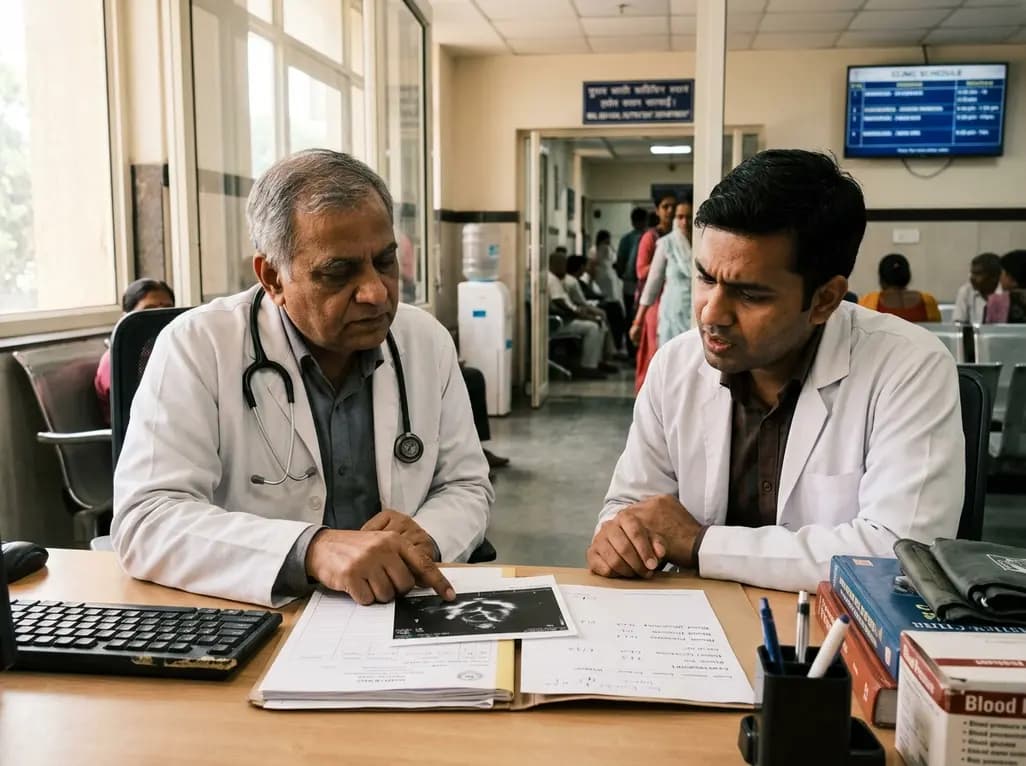
Advances in pediatric cardiology have allowed most patients with congenital heart defects to reach adulthood. However, acquired cardiovascular risk factors like hypertension and diabetes now significantly drive late mortality in adult congenital heart disease, requiring proactive cardiometabolic intervention.
Today
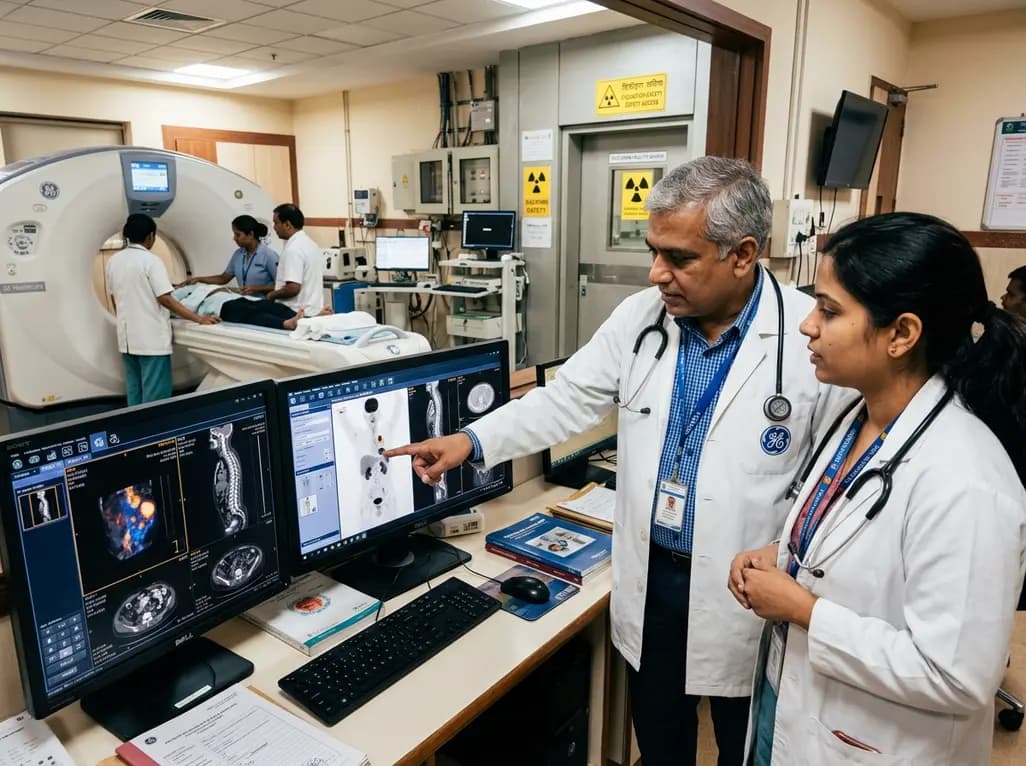
GE HealthCare has agreed to acquire Sofie Biosciences in a 945 million dollar all-cash transaction. The deal secures global rights to the investigational pan-cancer tracer FAPI-74 and expands cyclotron manufacturing infrastructure to accelerate precision theranostics and clinical molecular imaging workflows.
Today
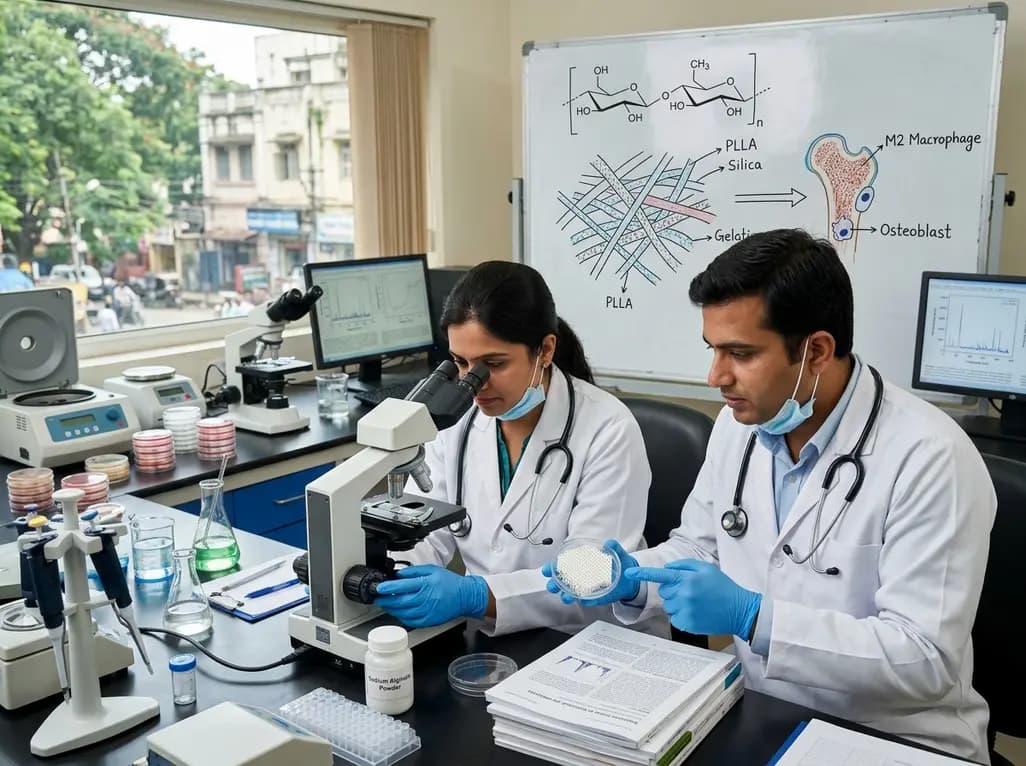
Dual-nanofiber interpenetrating network scaffolds combining silica and PLLA/gelatin nanofibers with sodium alginate achieve complementary mechanical stability, immunomodulatory M2 macrophage polarization, and enhanced osteogenesis for advanced bone repair.
Today
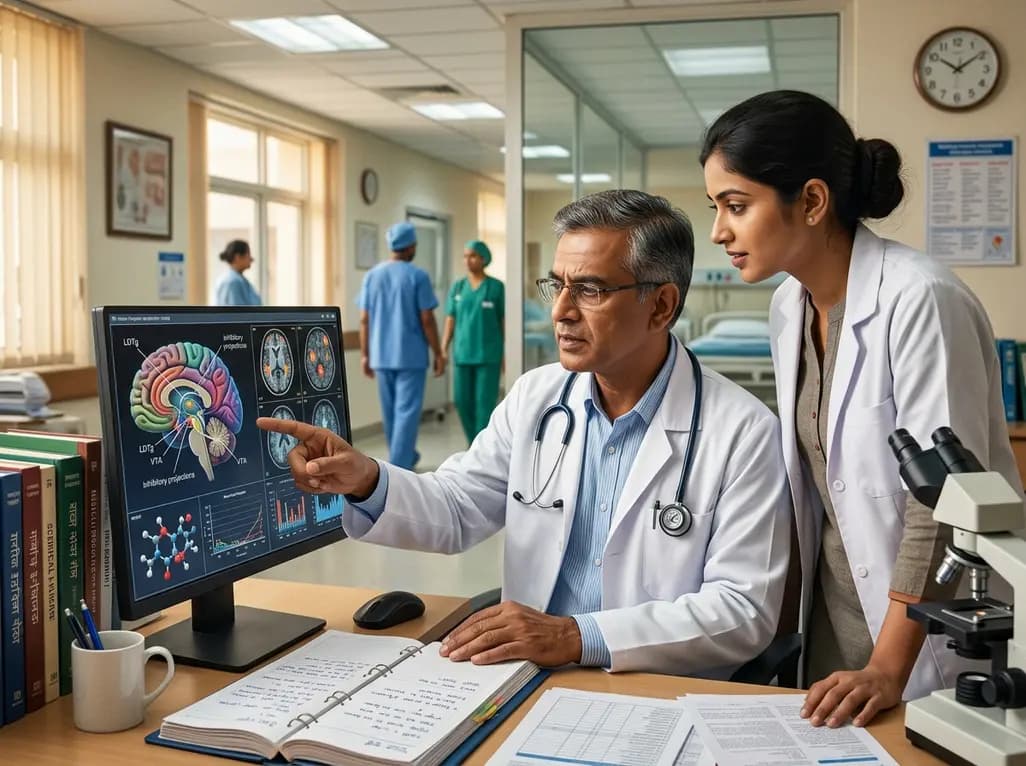
New research reveals that amylin receptor signalling in the laterodorsal tegmental nucleus controls food intake through inhibitory projections to the ventral tegmental area. This study demonstrates how midbrain reward circuits regulate feeding, presenting crucial targets for next-generation obesity pharmacotherapy.
Today
