.webp&w=384&q=75)

Loading, please wait...
Loading, please wait...

Epidemiologists and clinicians continue to investigate the complex intersection between metabolic disorders and gastrointestinal malignancies. Recent multi-omic research provides critical insights into the connection between gastric cancer and diabetes. By integrating observational data, causal genetic inference, and transcriptomic profiling, investigators have begun unraveling the paradoxical biological pathways linking these two widespread global conditions.
Initially, large-scale observational registries have long suggested complex correlations between metabolic syndrome and oncogenesis. In this multi-cohort investigation, researchers analyzed cross-sectional information from the National Health and Nutrition Examination Survey across nearly a decade of data collection. Consequently, the epidemiological analysis confirmed a statistically significant association between glycemic dysregulation and stomach malignancies. However, conventional observational trials often struggle with unmeasured confounding factors, socioeconomic biases, and reverse causality. For instance, common lifestyle determinants such as smoking, high salt consumption, and physical inactivity independently elevate both metabolic and oncologic risks. Furthermore, chronic hyperinsulinemia and persistent systemic inflammation alter epithelial integrity in the digestive tract. Therefore, clinicians must distinguish between direct biological consequences and shared environmental exposures. Thus, researchers require more robust causal inference tools to delineate the authentic molecular relationship. While observational findings strongly link glycemic dysfunction to neoplastic transformations, they cannot definitively prove whether diabetes directly drives tumor formation. Understanding this distinction remains essential for physicians who manage complex multimorbid patients in daily clinical practice.
To overcome the limitations of observational data, investigators deployed two-sample Mendelian Randomization to assess potential causal interactions. Mendelian Randomization relies on naturally randomized germline genetic variants as instrumental variables, effectively mimicking randomized clinical trials. Consequently, this methodology minimizes classical confounding and prevents reverse causation bias. Surprisingly, the genetic instrumental analysis indicated an inverse causal relationship, suggesting that diabetes may actually reduce the risk of gastric cancer. While this finding appears counterintuitive given the recognized oncogenic effects of hyperinsulinemia, similar protective signals have emerged in recent European and Asian genomic analyses. Furthermore, genetic liabilities toward elevated fasting glucose do not always mirror lifetime exposure to clinical hyperglycemia. Researchers hypothesize that altered gastric cellular metabolism, shifts in mucosal immune surveillance, or genetic pleiotropy might explain this protective signal. Moreover, antidiabetic therapies such as metformin demonstrate established antiproliferative properties that frequently confound observational registries. Therefore, genetic causal inference provides a nuanced counterpoint to traditional epidemiological assumptions, encouraging medical researchers to explore underlying cellular mechanisms rather than relying purely on statistical correlations.
Beyond genetic inference, the investigators analyzed mRNA expression profiles from the Cancer Genome Atlas and Gene Expression Omnibus datasets. They conducted differential gene expression analyses alongside Weighted Gene Co-expression Network Analysis to illuminate shared functional architecture. Furthermore, Gene Ontology and Kyoto Encyclopedia of Genes and Genomes pathway enrichment analyses revealed critical biological networks bridging both conditions. Specifically, these investigations highlighted perturbations in cell cycle control, chronic inflammatory signaling, and extracellular matrix remodeling. In addition, the transcriptomic data demonstrated significant enrichment in lipid metabolic pathways and intracellular kinase cascades. Consequently, altered metabolic homeostasis appears to modify the gastric microenvironment, influencing how mucosal cells respond to chronic cellular stress. Weighted co-expression networks identified distinct gene modules that function coordinately during malignant transformation. Moreover, these shared transcriptional networks demonstrate that metabolic disturbances deeply reprogram gastric epithelial behavior. Thus, integrating functional genomics with epidemiological data uncovers intermediate biological mechanisms that simple clinical phenotyping often overlooks.
To translate transcriptomic discoveries into practical clinical utilities, the authors leveraged advanced machine learning algorithms. Specifically, feature selection models isolated six distinct diagnostic genes that accurately differentiate malignant gastric tissues from normal mucosa. In addition, machine learning prioritized two robust prognostic genes that effectively predict long-term clinical survival. These algorithms demonstrated remarkable discriminatory precision across independent validation cohorts, underscoring their diagnostic reliability. Furthermore, the identified genetic signature reflects core molecular shifts in metabolic regulation and tumor progression pathways. Consequently, clinicians may eventually utilize these biomarkers to improve early-stage detection protocols and refine risk stratification. Currently, early gastric cancer often escapes detection because early stages present with vague, non-specific abdominal symptoms. Therefore, objective molecular classifiers could dramatically alter the diagnostic pathway for high-risk patients. While tissue biopsies remain the gold standard, integrating transcriptomic biomarker panels could optimize surveillance schedules. Nevertheless, these computational models still require extensive prospective validation across diverse ethnic groups before entering routine laboratory practice.
These computational and genomic findings carry meaningful considerations for practicing clinicians, oncologists, and gastroenterologists. Although Mendelian Randomization suggests an unexpected protective genetic effect, physicians must not neglect routine oncologic vigilance in diabetic patients. In daily practice, patients with type 2 diabetes frequently exhibit shared risk factors for gastrointestinal malignancies, including visceral obesity, chronic inflammation, and sedentary habits. Furthermore, clinicians must remain alert to red-flag symptoms such as unexplained weight loss, early satiety, progressive dysphagia, and iron deficiency anemia. Consequently, clinicians should evaluate persistent dyspeptic symptoms thoroughly, particularly in regions with high gastric cancer incidence. In addition, optimizing metabolic control remains fundamental to reducing long-term cardiovascular and microvascular morbidity regardless of cancer risk. Therefore, healthcare teams must maintain balanced clinical management strategies that address both metabolic regulation and comprehensive cancer prevention. Collaborative care between endocrinologists and oncologists guarantees that patients receive holistic assessments that integrate metabolic optimization with timely diagnostic evaluations.
Observational epidemiological studies often show a positive association between diabetes and gastric cancer due to shared risk factors like obesity and inflammation. However, recent Mendelian Randomization studies reveal an inverse genetic relationship, suggesting diabetes-related traits may decrease gastric cancer risk. Consequently, researchers believe metabolic alterations and pharmaceutical treatments, such as metformin, might modulate cellular pathways differently. Clinicians therefore evaluate individual patient risk profiles carefully rather than assuming simple causality.
Mendelian Randomization evaluates lifetime genetic predisposition, isolating inherited genetic variants from external confounders such as diet and socioeconomic factors. Consequently, this method can uncover unexpected biological associations. Genetic factors that influence glucose metabolism might also suppress specific oncogenic pathways or alter gastric mucosal proliferation. Furthermore, these results underscore that clinical diabetes involves multifaceted metabolic environments. Clinicians should view these findings as hypothesis-generating evidence that requires detailed wet-lab biological validation.
Machine learning models identified six diagnostic genes and two prognostic genes by analyzing transcriptomic datasets from tumor tissues. Diagnostic genes help differentiate early malignant cellular changes from normal gastric epithelium, potentially improving timely clinical detection. Conversely, prognostic genes provide critical information regarding expected patient survival and tumor behavior. Although these biomarkers demonstrate excellent predictive power in silico, healthcare providers must await further clinical trials before integrating them into standard diagnostic workflows.
Disclaimer: This content is for informational and educational purposes only... Refer to the latest local and national guidelines for clinical practice.
References

Read summarized clinical updates, watch expert medical content, and earn CME certifications right from your smartphone.
Open your smartphone camera to scan and install.





A comprehensive integrative multi-omic study combines NHANES epidemiology, Mendelian Randomization, and transcriptomic analysis to uncover complex causal associations, metabolic pathways, and novel machine learning diagnostic biomarkers linking gastric cancer and diabetes.
Today

India's national digital health service achieved a historic milestone of fifty crore virtual consultations. Notably, female patients account for over fifty-seven percent of utilisation, demonstrating improved healthcare accessibility for remote communities, chronic disease management, and primary triage.
Today
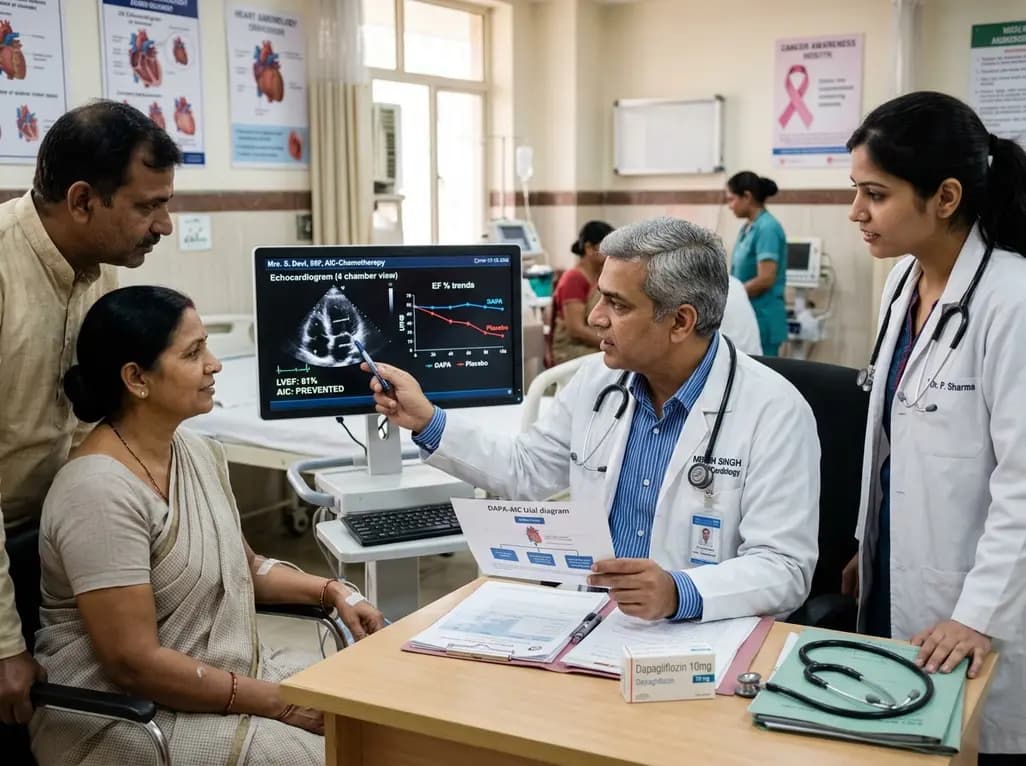
The phase II DAPA-AIC trial demonstrates that dapagliflozin 10 mg daily significantly preserves left ventricular ejection fraction compared to placebo over four months in adults undergoing anthracycline chemotherapy, highlighting a potential preventive strategy in cardio-oncology.
Today
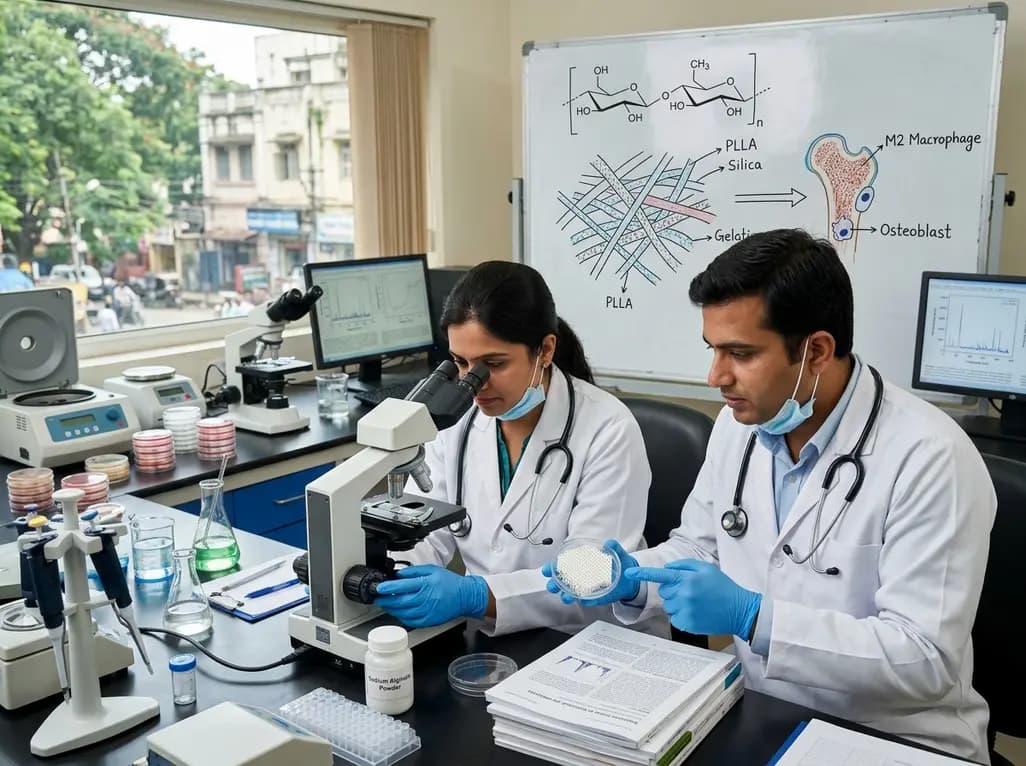
Dual-nanofiber interpenetrating network scaffolds combining silica and PLLA/gelatin nanofibers with sodium alginate achieve complementary mechanical stability, immunomodulatory M2 macrophage polarization, and enhanced osteogenesis for advanced bone repair.
Today
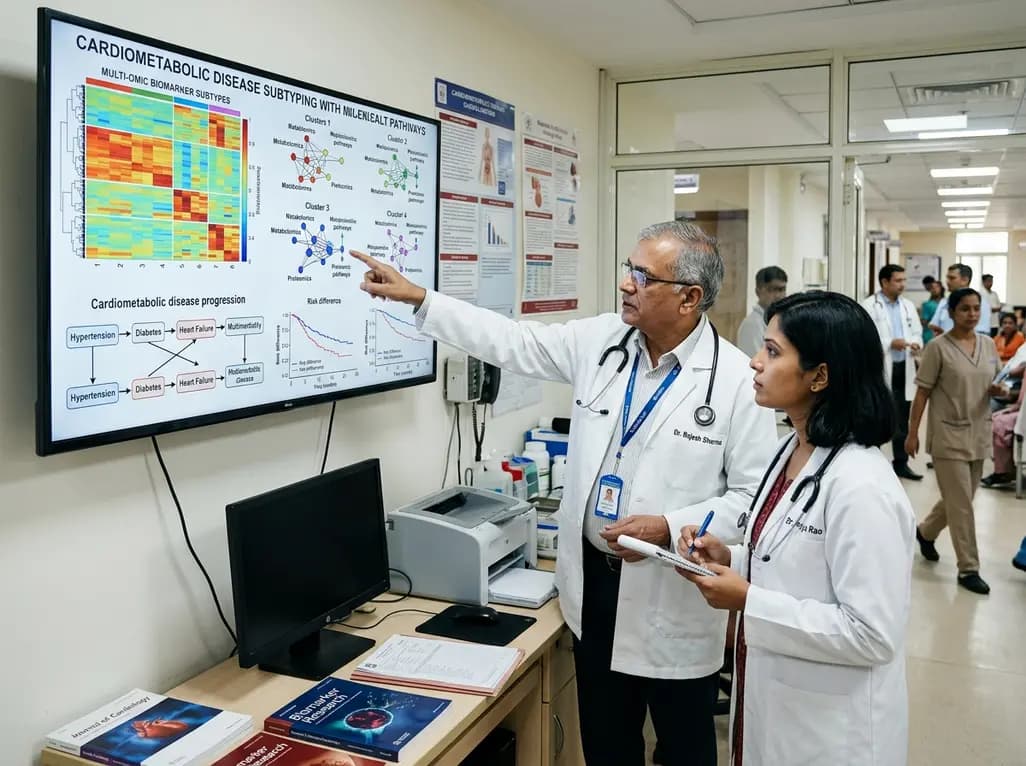
A large UK Biobank study identified four routine biomarker subtypes that predict cardiometabolic disease progression to multimorbidity. Integrating multi-state modelling, metabolomics, and proteomics revealed distinct biological pathways, offering new avenues for tailored clinical risk stratification.
Today
