.webp&w=384&q=75)

Loading, please wait...
Loading, please wait...

Anthracycline antineoplastic drugs remain foundational agents in curative chemotherapy protocols worldwide. Clinicians routinely prescribe doxorubicin, epirubicin, and daunorubicin for breast cancer, aggressive lymphomas, sarcomas, and acute leukemias. However, anthracycline cardiotoxicity represents a major dose-limiting adverse effect that severely compromises long-term survivorship. Reactive oxygen species production, topoisomerase II-beta inhibition, and mitochondrial injury drive progressive cardiomyocyte loss. Consequently, many patients experience insidious ventricular remodeling and irreversible myocardial dysfunction months or years after completing treatment.
Early identification of cardiac strain is critical because late-stage cardiomyopathy carries a very dismal prognosis. Traditional cardioprotective interventions, such as dexrazoxane, neurohormonal antagonists, and beta-blockers, offer valuable benefits in selected high-risk cohorts. Nevertheless, cardiotoxicity rates remain substantial across diverse patient populations. Therefore, cardio-oncology teams urgently require proactive, well-tolerated therapies that preserve cardiac functional reserve without reducing chemotherapy efficacy. Clinicians increasingly look toward metabolic and systemic interventions to protect vulnerable myocardium during active antineoplastic infusions.
Furthermore, standard surveillance techniques often detect injury only after substantial functional decline occurs. This therapeutic window underscores the urgent necessity for primary prevention during chemotherapy administration.
The DAPA-AIC trial was designed as a randomized, double-blind, placebo-controlled phase II study to assess cardioprotection during chemotherapy. Researchers enrolled 94 adult cancer patients who were scheduled to receive standard anthracycline-based systemic regimens. Participants were assigned in a 1:1 ratio to receive either oral dapagliflozin at 10 mg once daily or an identical matching placebo. The intervention began alongside chemotherapy and continued for a total duration of 4 months. Ultimately, 90 patients completed the comprehensive four-month follow-up evaluation and were included in the primary complete-case analysis.
Investigators specified the primary study endpoint as the 4-month left ventricular ejection fraction (LVEF), assessed via standardized transthoracic echocardiography. To ensure rigorous statistical evaluation, the authors evaluated between-group LVEF differences using an analysis of covariance (ANCOVA) model adjusted for baseline ejection fraction values. Additionally, secondary and exploratory endpoints tracked cardiac biomarker changes, including troponin and natriuretic peptides, alongside the transmitral early-to-late flow velocity ratio (E/A ratio). This rigorous methodology minimized bias and provided clear insights into early functional and structural changes during cytotoxic therapy.
Moreover, investigators implemented continuous adverse event surveillance to document safety throughout the four-month follow-up window.
The trial demonstrated significant preservation of myocardial function in the active treatment arm. Specifically, patients receiving dapagliflozin maintained a significantly higher adjusted 4-month LVEF compared to those receiving placebo. Statistical ANCOVA modeling revealed an adjusted mean difference of 2.40 percentage points favoring dapagliflozin, with a 95% confidence interval spanning from 1.25 to 3.54 percentage points. This positive difference reached clear statistical significance and showed that dapagliflozin effectively attenuated subclinical systolic decline during anthracycline exposure.
Moreover, exploratory analyses provided additional reassurance regarding ventricular filling dynamics and myocardial stress markers. Patients receiving dapagliflozin exhibited more stable transmitral E/A ratios over the four-month follow-up period than control participants. In addition, cardiac biomarker elevations occurred less frequently in the dapagliflozin group, indicating reduced subclinical cellular necrosis and lower wall tension. Importantly, dapagliflozin was well tolerated throughout the study period. Investigators observed no excess of serious adverse events, severe hypotension, or ketoacidosis, confirming the feasibility of SGLT2 inhibition in this vulnerable oncologic cohort.
Consequently, these robust findings establish that early pharmacologic intervention can mitigate early chemotherapy-induced myocardial functional depression.
Sodium-glucose cotransporter-2 (SGLT2) inhibitors exert diverse pleiotropic cardioprotective actions that extend far beyond glycemic regulation. In preclinical models of anthracycline toxicity, dapagliflozin significantly reduces systemic inflammation and downregulates myocardial NF-kappa-B activation. Furthermore, the drug suppresses reactive oxygen species generation, thereby mitigating the catastrophic mitochondrial fragmentation induced by doxorubicin. Consequently, cardiomyocytes maintain vital ATP production and preserve structural membrane stability during peak chemotherapy concentrations.
In addition to suppressing oxidative cascades, dapagliflozin improves myocardial energetics by promoting ketone oxidation over inefficient glucose utilization. This metabolic shift provides an energy-efficient fuel source for stressed cardiac myocytes. Simultaneously, dapagliflozin reduces intracellular calcium overload and inhibits sodium-hydrogen exchanger-1 activity, preventing pathological hypercontractility and subsequent cell death. SGLT2 inhibition also diminishes epicardial adipose tissue inflammation and limits interstitial fibrotic remodeling. Together, these multifaceted physiological pathways establish a resilient cellular environment that resists anthracycline-mediated structural and functional deterioration.
Therefore, targeting metabolic and oxidative pathways represents an effective biologic strategy to protect cardiomyocytes during antineoplastic therapy.
The burden of malignancies requiring anthracycline-based therapy, such as breast cancer and non-Hodgkin lymphoma, continues to expand rapidly across India. In Indian clinical practice, patients often present at younger ages and carry co-existing cardiometabolic risk factors, including type 2 diabetes, metabolic syndrome, and hypertension. These prevalent comorbidities substantially amplify the baseline risk of anthracycline cardiotoxicity. Therefore, discovering affordable and readily available cardioprotective therapies holds immense translational value for oncology centers and cardiology clinics throughout the country.
Dapagliflozin is widely accessible across India, enjoys widespread generic availability, and possesses a well-established safety profile in cardiology and nephrology practice. Integrating SGLT2 inhibitors into multidisciplinary cardio-oncology protocols could offer an accessible strategy to prevent treatment-related left ventricular dysfunction. However, Indian clinicians must ensure comprehensive baseline evaluation, careful renal monitoring, and vigilant patient education regarding hydration and genital hygiene. Collaborative care models connecting oncologists and cardiologists remain essential to optimize antineoplastic dosing while safeguarding long-term cardiovascular health in survivorship cohorts.
Accordingly, institutional cardio-oncology registries in India should actively capture outcomes to inform regional clinical pathways.
While the findings of the DAPA-AIC study provide exciting proof-of-concept evidence, several important clinical questions require exploration in larger phase III randomized trials. First, investigators must determine whether the 2.40 percentage point preservation in LVEF translates into tangible reductions in overt clinical heart failure and cardiovascular hospitalizations over long-term follow-up. Second, the optimal duration of SGLT2 inhibitor therapy remains undefined. Future protocols should examine whether treatment must continue beyond chemotherapy completion to prevent late-onset ventricular remodeling.
Furthermore, upcoming studies must evaluate whether dapagliflozin provides equal cardioprotective efficacy across diverse antineoplastic protocols, including regimens incorporating HER2-directed monoclonal antibodies. Researchers should also determine whether combining SGLT2 inhibitors with standard neurohormonal blockers, such as angiotensin receptor-neprilysin inhibitors or beta-blockers, yields synergistic cardioprotection. As ongoing clinical trials report results in coming years, cardio-oncology societies will synthesize this evidence into standardized guidelines. Until then, these promising findings highlight a pivotal step forward in oncology care.
Ultimately, prospective multicenter studies will define whether routine SGLT2 inhibition becomes standard supportive care during cancer treatment.
The primary outcome evaluated in the DAPA-AIC trial was the adjusted left ventricular ejection fraction at four months of follow-up. Patients treated with dapagliflozin ten milligrams daily achieved a statistically significant preservation of systolic function compared to those assigned to placebo. The adjusted mean difference between the two study arms was 2.40 percentage points favoring dapagliflozin. Consequently, this outcome confirms that early SGLT2 inhibition helps attenuate subclinical cardiac functional decline during anthracycline-based chemotherapy regimens.
Dapagliflozin protects myocardial tissue through multiple non-glycemic cardioprotective pathways. The drug significantly decreases myocardial oxidative stress and downregulates nuclear factor-kappa B inflammatory signaling triggered by anthracyclines. Furthermore, it preserves mitochondrial integrity and promotes myocardial ketone oxidation, which enhances cellular energy efficiency. Dapagliflozin also inhibits the cardiac sodium-hydrogen exchanger, thereby reducing toxic intracellular calcium overload. Together, these coordinated actions shield cardiomyocytes against drug-induced apoptosis, reduce wall tension, and prevent adverse structural remodeling during active cancer chemotherapy.
Currently, major oncology and cardiology guidelines do not mandate universal SGLT2 inhibitor therapy for all cancer patients receiving anthracyclines. While the DAPA-AIC findings offer encouraging proof-of-concept evidence, clinicians await results from larger ongoing phase III clinical trials to establish long-term clinical benefits. Nevertheless, multidisciplinary cardio-oncology teams increasingly consider SGLT2 inhibitors for selected patients who present with pre-existing diabetes, elevated cardiovascular risk, or early biomarker elevation, balancing individual cardioprotective benefits against drug tolerance.
Disclaimer: This content is for informational and educational purposes only... Refer to the latest local and national guidelines for clinical practice.
References
Saeed HA et al. Dapagliflozin for attenuating early anthracycline-associated cardiac changes (DAPA-AIC): a randomized, double-blind, placebo-controlled trial. Future Sci OA. 2026 Dec undefined. doi: 10.1080/20565623.2026.2741250. PMID: 42836855.
Cardinale D, Iacopo F, Cipolla CM. Cardiotoxicity of Anthracyclines. Front Cardiovasc Med. 2020;7:26. doi: 10.3389/fcvm.2020.00026.
Lyon AR, López-Fernández T, Couch LS, et al. 2022 ESC Guidelines on cardio-oncology developed in collaboration with the European Hematology Association (EHA), the European Society for Therapeutic Radiology and Oncology (ESTRO) and the International Cardio-Oncology Society (IC-OS). Eur Heart J. 2022;43(41):4229-4361. doi: 10.1093/eurheartj/ehac244.

Read summarized clinical updates, watch expert medical content, and earn CME certifications right from your smartphone.
Open your smartphone camera to scan and install.





The phase II DAPA-AIC trial demonstrates that dapagliflozin 10 mg daily significantly preserves left ventricular ejection fraction compared to placebo over four months in adults undergoing anthracycline chemotherapy, highlighting a potential preventive strategy in cardio-oncology.
Today

India's national digital health service achieved a historic milestone of fifty crore virtual consultations. Notably, female patients account for over fifty-seven percent of utilisation, demonstrating improved healthcare accessibility for remote communities, chronic disease management, and primary triage.
Today
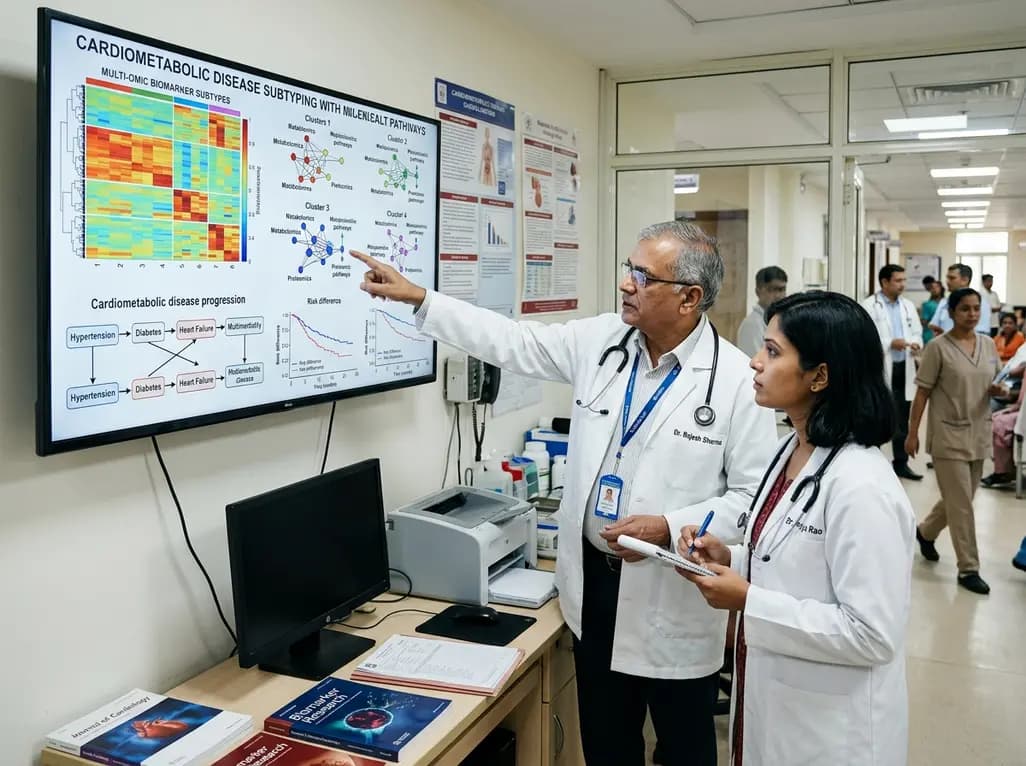
A large UK Biobank study identified four routine biomarker subtypes that predict cardiometabolic disease progression to multimorbidity. Integrating multi-state modelling, metabolomics, and proteomics revealed distinct biological pathways, offering new avenues for tailored clinical risk stratification.
Today

Dual-nanofiber interpenetrating network scaffolds combining silica and PLLA/gelatin nanofibers with sodium alginate achieve complementary mechanical stability, immunomodulatory M2 macrophage polarization, and enhanced osteogenesis for advanced bone repair.
Today

Researchers at IISER Berhampur have engineered a covalent organic framework immunosensor that detects urinary NGAL. This novel nanotechnology platform distinguishes diabetic nephropathy from other renal conditions, enabling rapid, minimally invasive stratification and earlier clinical intervention for patients.
Today
