.webp&w=384&q=75)

Loading, please wait...
Loading, please wait...

In acute disaster scenarios, humanitarian agencies rapidly deploy emergency interventions to save lives. However, long-term assistive technology provision remains severely constrained once international attention recedes. Unfortunately, vulnerable survivor populations rarely receive the extended rehabilitation care they require. A recent comprehensive scoping review highlights a profound gap in evidence and practice following acute emergencies. Most published studies evaluate short-term disaster relief rather than sustainable rehabilitation pathways. Consequently, patients who sustain traumatic musculoskeletal injuries or spinal trauma face persistent disability without vital support. When relief teams depart, local healthcare facilities inherit severe resource constraints. These facilities cannot maintain specialized equipment or provide structured device adjustments. Therefore, healthcare providers must recognize that initial device handovers represent only the first step in a complex recovery journey. Clinicians and emergency responders must prioritize continuity of care to avoid leaving affected individuals stranded in under-resourced communities.
To analyze the systemic deficiencies in crisis recovery, researchers increasingly utilize the WHO-GATE 5P framework. This person-centered model evaluates five interdependent domains: People, Policy, Products, Provision, and Personnel. In post-disaster environments, each of these domains reveals substantial vulnerabilities. First, the People domain shows that displaced individuals frequently navigate severe information deficits regarding their rights. Second, the Policy domain often lacks clear government mandates linking humanitarian response with national health insurance. Furthermore, inadequate procurement protocols jeopardize the Products domain by importing fragile equipment that fails in rugged terrain. Additionally, the Provision domain suffers because standardized clinical pathways for maintenance and repair rarely exist in refugee settlements. Finally, severe shortages in the Personnel domain cripple local capacity. Orthopedic surgeons and prosthetists encounter extreme workload burdens when external volunteer organizations depart. Thus, applying the 5P framework enables clinicians to recognize that sustainable device utilization demands comprehensive system strengthening rather than isolated donations.
Existing literature demonstrates that post-emergency programs heavily concentrate on physical mobility aids. Specifically, prostheses, orthoses, and wheelchairs constitute the vast majority of documented aid interventions following major earthquakes. Orthopedic trauma teams rightly prioritize rapid mobilization to prevent pulmonary complications and pressure injuries. However, this narrow clinical focus unintentionally neglects other critical functional impairments. Sensory, cognitive, and communication aids receive negligible representation in disaster recovery literature. For example, survivors with traumatic brain injuries or blast-induced hearing loss rarely obtain appropriate assistive tools. Moreover, children with developmental delays and older adults with visual deficits experience substantial marginalization during resource distribution. When clinicians overlook these sensory requirements, patients experience profound social isolation and educational exclusion. In addition, aid agencies frequently supply mobility devices without personalizing cushion contours or limb sockets. Consequently, poorly fitted wheelchairs cause severe secondary pressure ulcers, while misaligned prosthetic limbs induce chronic musculoskeletal pain. Medical teams must therefore expand clinical assessments beyond basic ambulation to address holistic functional independence.
Surviving a humanitarian disaster requires adapting to severely damaged physical environments. Unfortunately, destruction of roads, paved walkways, and accessible housing directly impairs the real-world utility of assistive equipment. Even high-grade wheelchairs quickly become unusable when navigating unpaved, debris-strewn refugee camp corridors. Furthermore, economic hardship severely restricts device longevity across vulnerable households. Families facing food insecurity cannot purchase replacement tires, bearings, or prosthetic suspension liners. Meanwhile, local supply chains rarely stock compatible spare parts for foreign-manufactured donations. As a result, patients frequently abandon advanced devices after minor mechanical failures. In addition, persistent cultural stigma and low community awareness compound these logistical challenges. Many families conceal injured relatives due to prevailing misconceptions regarding acquired disabilities. Hence, healthcare personnel encounter significant hurdles when tracking patients across transient settlements. Clinicians must actively collaborate with community health workers to establish routine outreach initiatives. By addressing domestic architecture and environmental barriers simultaneously, rehabilitation teams can safeguard ongoing functional participation for every patient.
To overcome repetitive cycles of emergency fragmentation, international agencies must align with national social protection programs. One-off device distributions create temporary relief but fail to build lasting institutional resilience. Instead, humanitarian missions must invest in local clinical infrastructure from the onset of crisis relief. For instance, global partners should sponsor certified training programs for regional prosthetists, orthotists, and occupational therapists. This educational investment establishes a self-sustaining workforce that remains long after non-governmental organizations withdraw. Additionally, national ministries must integrate assistive technology registries into primary healthcare documentation systems. When primary care physicians monitor device fitting during routine consultations, they prevent preventable pressure injuries and stump complications. Furthermore, establishing modular repair workshops within district health centers dramatically reduces device abandonment rates. Evidence shows that community-based rehabilitation models successfully bridge the gap between emergency triage and lifetime care. By harmonizing disaster response mechanisms with universal health coverage goals, healthcare systems guarantee that survivors preserve dignity and independence across their lifespans.
Doctors working in emergency and orthopedic disciplines play an indispensable role in shaping long-term rehabilitation trajectories. During acute disaster triage, surgical teams must consider future assistive technology needs before executing limb amputations or fracture fixations. For example, preserving residual limb length directly dictates whether a patient can comfortably tolerate a prosthetic socket later in life. Moreover, early consultation with rehabilitation professionals ensures that patients receive pre-prosthetic conditioning and gait training before discharge. Physicians should also counsel families regarding ongoing maintenance requirements and secondary skin complications. Because patient displacement often severs contact with regional hospitals, clinical teams should establish mobile follow-up protocols and digital registry tracking. Furthermore, interdisciplinary collaboration between surgeons, physiotherapists, and community workers promotes coordinated patient advocacy. When clinicians actively champion accessible post-emergency care, they transform immediate survival into sustained physical and social empowerment. Ultimately, integrating proactive planning into acute trauma workflows safeguards functional independence for disaster survivors worldwide.
Assistive technology provision frequently becomes fragmented because acute humanitarian aid prioritizes immediate survival over protracted rehabilitation. International non-governmental organizations often deliver one-off device donations without establishing local repair workshops or supply chains. Consequently, when external funding ceases and humanitarian personnel withdraw, patients lose access to crucial maintenance services. In addition, poor coordination between disaster agencies and national ministries prevents the smooth integration of follow-up care into primary healthcare systems.
The WHO-GATE 5P framework guides comprehensive rehabilitation programs by organizing interventions across five core pillars: People, Policy, Products, Provision, and Personnel. Instead of merely distributing physical hardware, this model ensures that policy regulations fund long-term care and secure affordable, rugged products. Furthermore, it establishes structured clinical service pathways and trains local healthcare workers. This holistic alignment empowers clinicians to address underlying socio-economic barriers, thereby preventing device abandonment and fostering sustainable functional recovery.
Healthcare teams can prevent device abandonment by conducting comprehensive, patient-centered assessments before prescribing assistive devices. Clinicians must verify that equipment matches the user's specific domestic environment, physical condition, and terrain. In addition, medical staff should provide structured education on daily maintenance, skin checks, and pressure relief techniques. Establishing community-based outreach teams and modular local repair centers further ensures that patients receive timely replacements, socket adjustments, and ongoing psychosocial encouragement.
Disclaimer: This content is for informational and educational purposes only... Refer to the latest local and national guidelines for clinical practice.
References

Read summarized clinical updates, watch expert medical content, and earn CME certifications right from your smartphone.
Open your smartphone camera to scan and install.





A scoping review reveals severe gaps in long-term assistive technology provision following humanitarian emergencies. Addressing post-disaster rehabilitation requires systematic follow-up, workforce training, and integration into national health systems to sustain mobility and recovery.
Today
A comprehensive integrative multi-omic study combines NHANES epidemiology, Mendelian Randomization, and transcriptomic analysis to uncover complex causal associations, metabolic pathways, and novel machine learning diagnostic biomarkers linking gastric cancer and diabetes.
Today
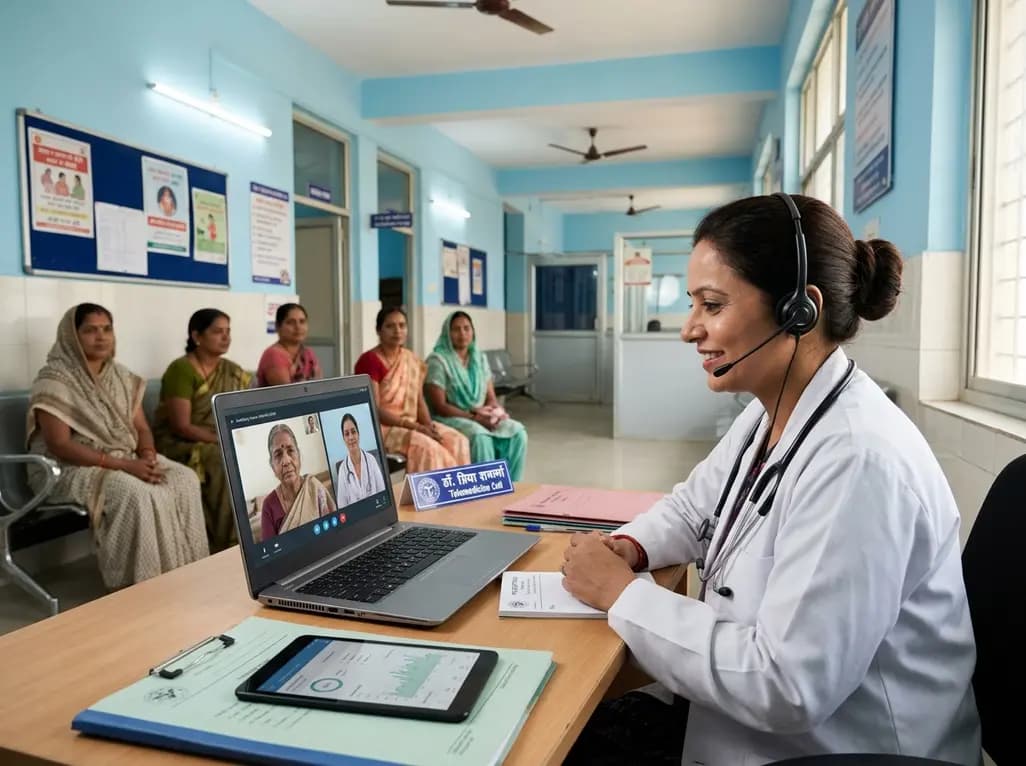
India's national digital health service achieved a historic milestone of fifty crore virtual consultations. Notably, female patients account for over fifty-seven percent of utilisation, demonstrating improved healthcare accessibility for remote communities, chronic disease management, and primary triage.
Today
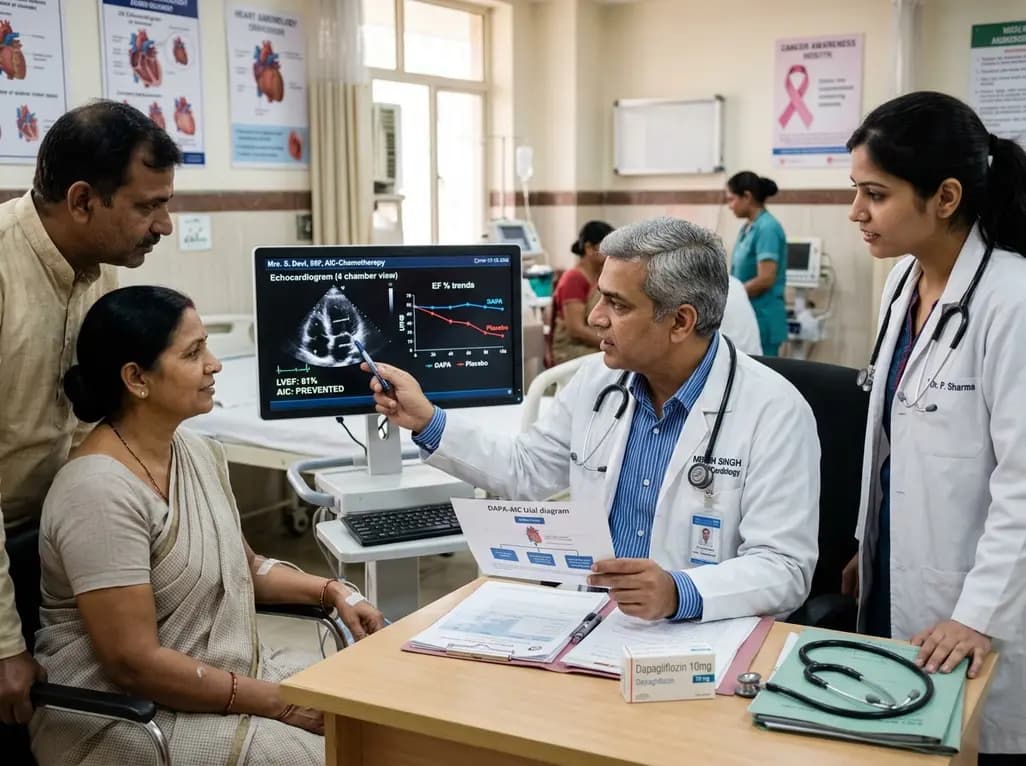
The phase II DAPA-AIC trial demonstrates that dapagliflozin 10 mg daily significantly preserves left ventricular ejection fraction compared to placebo over four months in adults undergoing anthracycline chemotherapy, highlighting a potential preventive strategy in cardio-oncology.
Today
An interim propensity score-matched study comparing SASI vs OAGB demonstrates equivalent short- and mid-term outcomes. Both bariatric procedures achieved substantial excess weight loss and 100% medication-free blood glucose control at 18 months, underscoring the metabolic efficacy of both techniques.
Today
