.webp&w=384&q=75)

Loading, please wait...
Loading, please wait...

Neurology has witnessed intense debate regarding how clinicians should define and stage neurodegenerative disorders. Recently, researchers proposed a Parkinson's disease biological definition to transition diagnosis from clinical observation to biomarker detection. This movement mirrors recent diagnostic shifts in Alzheimer's disease, where fluid and imaging biomarkers guide early identification. Specifically, investigators advocate using alpha-synuclein seeding amplification assays to detect pathological aggregated protein before classical motor signs appear. However, movement disorder specialists warn that adopting purely biological criteria creates significant practical problems. In a landmark commentary, Cardoso and Schmidt emphasize that current biological frameworks confuse clinical understanding without offering concrete therapeutic advantages. Consequently, physicians face a major dilemma when interpreting positive biomarker tests in asymptomatic individuals. Pathological protein deposition does not always correlate directly with clinical parkinsonism or progressive neurodegeneration. Therefore, clinicians must critically evaluate the scientific validity and clinical utility of these proposed biological frameworks. While molecular characterization remains essential for exploratory laboratory research, clinical diagnostic criteria must continue to guide patient care effectively.
The core rationale behind modern biological classification systems rests on alpha-synuclein aggregation assays. These advanced seeding assays detect minute quantities of misfolded alpha-synuclein in cerebrospinal fluid, skin biopsies, and olfactory mucosa. Consequently, investigators have attempted to classify individuals into distinct biological stages based solely on assay results. However, alpha-synuclein pathology exhibits profound biological complexity that simple binary assays cannot capture. Misfolded alpha-synuclein occurs across multiple distinct clinical syndromes, including multiple system atrophy, dementia with Lewy bodies, and pure autonomic failure. Furthermore, post-mortem neuropathological analyses demonstrate that many cognitively unimpaired elderly individuals harbor extensive Lewy bodies without showing motor dysfunction. Therefore, detecting aggregated alpha-synuclein through seeding amplification does not provide disease-specific diagnostic certainty. In addition, seeding assays do not reliably quantify total pathological burden or rate of protein spread across neural networks. Thus, relying on biomarker positivity alone risks mischaracterizing diverse pathological entities under a single diagnostic label. Clinicians must recognize that cellular pathology represents only one facet of neurodegeneration.
Two prominent frameworks recently emerged in the medical literature: the SynNeurGe criteria and the Neuronal Synuclein Disease Integrated Staging System. Although both frameworks attempt to formalize biomarker-driven staging, they struggle with clinical heterogeneity. For example, some patients exhibiting classic levodopa-responsive parkinsonism lack detectable alpha-synuclein aggregates on seeding assays. Conversely, individuals carrying genetic mutations such as PRKN or LRRK2 often present with distinct pathological phenotypes that diverge from classic Lewy pathology. Therefore, defining Parkinson's disease purely through synuclein positivity excludes important clinical patient subsets. Moreover, biological definitions frequently conflate disease presence with disease liability. As a result, healthy individuals who test positive for alpha-synuclein aggregation might receive an alarming diagnosis years before manifesting symptoms. Such diagnostic labeling causes substantial psychological distress, socio-economic burdens, and unnecessary clinical anxiety. Consequently, clinical guidelines established by the Movement Disorder Society emphasize that clinical syndrome evaluation remains the gold standard for definitive diagnosis. Physicians must maintain clear distinctions between subclinical biological vulnerability and established manifest neurological disease.
Proponents argued that biological staging would accelerate drug development by identifying ideal candidates for clinical trials. Nevertheless, empirical data show that biological definitions fail to predict individual clinical trajectory or functional prognosis. Two patients with identical alpha-synuclein biomarker profiles can experience completely disparate disease progressions and symptom severities. For instance, one individual may maintain functional independence for decades, while another develops rapid cognitive decline and postural instability. Furthermore, alpha-synuclein aggregation assays cannot function as reliable surrogate endpoints in therapeutic trials. Because current assays measure seeding propensity rather than total pathological burden, a reduction in assay positivity does not guarantee neuroprotection. Consequently, regulatory agencies and clinical trialists cannot substitute molecular assay readouts for validated clinical outcome measures. In addition, therapeutics targeting protein aggregation might modify assay results without delivering meaningful functional improvements to patients. Therefore, trial designs must continue prioritizing patient-centered clinical endpoints, functional scales, and validated motor assessments to evaluate therapeutic efficacy accurately.
In diverse healthcare environments like India, adopting costly biomarker-based diagnostic definitions creates immense practical challenges. Advanced cerebrospinal fluid assays and specialized neuroimaging modalities remain inaccessible to most public and regional hospital centers. Consequently, premature integration of biological definitions could widen disparities in neurological care between urban centers and rural settings. Furthermore, widespread biomarker screening in private settings could lead to misdiagnosis and expensive off-label interventions for asymptomatic patients. Indian neurologists frequently manage high patient volumes with limited diagnostic resources, making clinical examination indispensable. Therefore, clinicians must focus on thorough history taking, motor symptom assessment, and levodopa responsiveness. Moreover, genetic background and environmental exposures in South Asian cohorts exhibit unique characteristics that existing Western biomarker cohorts have not fully evaluated. Emphasizing clinical diagnostic competence ensures equitable, cost-effective, and accurate medical care across all healthcare tiers. Health authorities should therefore support standardized clinical training while fostering accessible research infrastructure.
To achieve genuine scientific progress, the neurological community must separate biological research exploratory frameworks from clinical practice definitions. Research criteria certainly benefit from incorporating genetic markers, neuroimaging, and protein seeding assays to stratify study cohorts. However, clinical definitions must remain anchored in observable signs, patient symptoms, and functional disability. Moreover, premature replacement of syndromic definitions creates widespread confusion among general practitioners, neurologists, patients, and healthcare policymakers. International consensus bodies like the International Parkinson and Movement Disorder Society advocate for a balanced, integrative approach. This strategy supports biological exploration in laboratory studies without compromising clinical diagnostic clarity at the bedside. In addition, future research should explore multi-modal biomarker panels that integrate metabolic, inflammatory, and neurodegenerative markers simultaneously. By maintaining this rigorous clinical distinction, healthcare providers can protect patients from premature labeling while continuing to support essential translational investigations.
Biological definitions rely on alpha-synuclein seeding assays that lack complete disease specificity. These assays detect aggregated protein across several distinct disorders and asymptomatic individuals. Furthermore, biological markers fail to predict individual disease progression, creating diagnostic confusion and clinical uncertainty without improving patient outcomes.
Current alpha-synuclein assays measure protein seeding capability rather than quantitative pathological burden. Consequently, changes in assay results do not reliably correlate with clinical or functional improvements. Regulatory bodies therefore require clinical trials to utilize validated motor and functional outcomes rather than unvalidated biomarker endpoints.
Physicians should continue diagnosing Parkinson's disease based on established clinical criteria. Diagnosis requires identifying bradykinesia accompanied by rest tremor, rigidity, or both, supported by positive levodopa responsiveness. Biomarkers currently serve exploratory research roles and should not replace syndromic clinical evaluation in daily medical practice.
Disclaimer: This content is for informational and educational purposes only and does not substitute for professional medical advice, diagnosis, or treatment. Healthcare professionals should exercise their independent clinical judgment. Refer to the latest local and national guidelines for clinical practice.
References

Read summarized clinical updates, watch expert medical content, and earn CME certifications right from your smartphone.
Open your smartphone camera to scan and install.





A critical analysis of proposed biological definitions for Parkinson's disease, evaluating the limitations of alpha-synuclein seeding assays and the necessity of maintaining syndromic clinical diagnosis in neurological practice.
4 weeks back

A bioengineered oral nanozyme microsupplement converts pathological ROS into a protective polydopamine hydrogel shield. By curbing neutrophil extracellular traps and balancing T cells, this platform outperforms standard 5-ASA in preclinical colitis models, opening new paths for sustained remission.
Today

India experiences an exponential rise in robotic-assisted procedures, with Delhi NCR leading system installations and clinical volume. Discover how multidisciplinary surgical adoption, remote telesurgery breakthroughs, and standardized international consensus guidelines are shaping surgical care nationwide.
Today
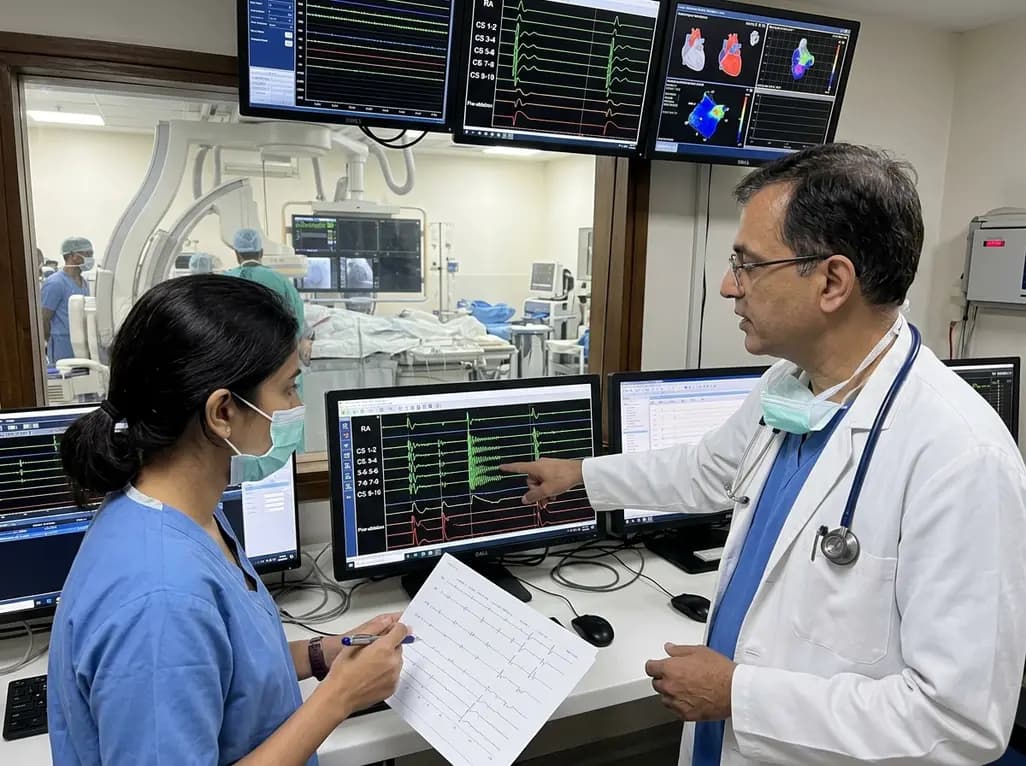
Radiofrequency catheter ablation of the cavotricuspid isthmus successfully terminates typical atrial flutter. This article reviews the mechanisms driving coronary sinus electrogram changes, wavefront activation pathways, and clinical criteria to verify bidirectional block during electrophysiology studies.
Today
A study comparing four knee flexion strength tests after ACL reconstruction using hamstring tendon autografts reveals marked variability in limb symmetry indices. Clinicians must recognize that different strength testing modalities yield divergent return-to-sport clearance rates.
Today

A breakthrough study leverages natural language processing to accurately identify incident medication-related osteonecrosis of the jaw and track antiresorptive drug holidays from clinical narratives in electronic health records, advancing osteoporosis pharmacovigilance and dental safety.
Yesterday
