.webp&w=384&q=75)

Loading, please wait...
Loading, please wait...

Paediatric rheumatologic emergencies are rare but potentially fatal conditions that require rapid clinical recognition and intervention. These emergencies may serve as the first manifestation of an underlying rheumatic disease, often appearing in children without any prior diagnosis. Because they frequently present with nonspecific constitutional or organ-specific symptoms, they pose a significant diagnostic challenge for clinicians. Consequently, understanding the clinical spectrum is essential for improving patient outcomes and survival rates in tertiary care settings.
A retrospective cohort study conducted over three years at a tertiary paediatric rheumatology centre in western India recently evaluated these critical situations. The researchers analyzed the clinical characteristics and outcomes of children presenting with acute rheumatological crises. Furthermore, the study compared patients with known pre-existing conditions against those presenting for the first time. The findings emphasize that early recognition remains the most critical factor in preventing permanent organ damage or death.
Identifying warning signs is vital for the timely management of paediatric rheumatologic emergencies. Common presentations include persistent unexplained fever, multisystem involvement, and acute respiratory or renal distress. Moreover, children with systemic lupus erythematosus (SLE) or systemic-onset juvenile idiopathic arthritis (sJIA) are at a higher risk for developing Macrophage Activation Syndrome (MAS), a life-threatening hyperinflammatory state. Therefore, clinicians must maintain a high index of suspicion when traditional anti-infective therapies fail to produce a response.
In addition to MAS, other emergencies such as acute pulmonary haemorrhage, central nervous system (CNS) vasculitis, and cardiac tamponade require immediate multidisciplinary care. The Indian study suggests that children without a prior diagnosis often face longer delays in receiving targeted immunosuppressive therapy. Consequently, establishing clear warning protocols can help bridge the gap between initial presentation and definitive rheumatologic care.
The outcomes of these emergencies depend heavily on the speed of diagnosis and the initiation of aggressive supportive care. For instance, the use of high-dose corticosteroids or biologics can be life-saving if administered during the early stages of a flare. Additionally, the study highlights that patients managed in specialized centres show better short-term outcomes due to available intensive care and sub-specialty expertise. Ultimately, education regarding the diverse clinical spectrum of these rare conditions is necessary for all front-line paediatric healthcare providers.
Most cases present with prolonged high-grade fever, skin rashes, joint swelling, and evidence of multi-organ dysfunction, such as kidney injury or respiratory distress. These symptoms can often mimic severe sepsis.
Macrophage Activation Syndrome (MAS) is a hyperinflammatory condition that causes rapid multi-organ failure. It is frequently associated with systemic juvenile idiopathic arthritis and requires immediate immunosuppression to prevent mortality.
Yes. Many rheumatologic emergencies, such as vasculitis or SLE-related complications, can occur as the very first sign of the disease, even if the child has never experienced prior joint pain or stiffness.
Disclaimer: This content is for informational and educational purposes only and does not constitute medical advice. Always seek the advice of a qualified healthcare provider with any questions regarding a medical condition. Refer to the latest local and national guidelines for clinical practice.
References

Read summarized clinical updates, watch expert medical content, and earn CME certifications right from your smartphone.
Open your smartphone camera to scan and install.





A retrospective study in Western India evaluates the outcomes of paediatric rheumatologic emergencies, highlighting the diagnostic challenges in new cases....
6 months ago

Failing to account for competing events like mortality in longitudinal geriatric studies produces biased risk estimates and misleading inferences. This review highlights key methodological principles, insights from the Precipitating Events Project, and practical approaches for clinical research appraisal.
Today

A study in JAMIA Open shows lightweight open-source reasoning LLMs achieve up to 95% sensitivity and accelerate evidence synthesis screening by nearly twentyfold, presenting a cost-effective, scalable AI solution for biomedical research and systematic reviews.
Today
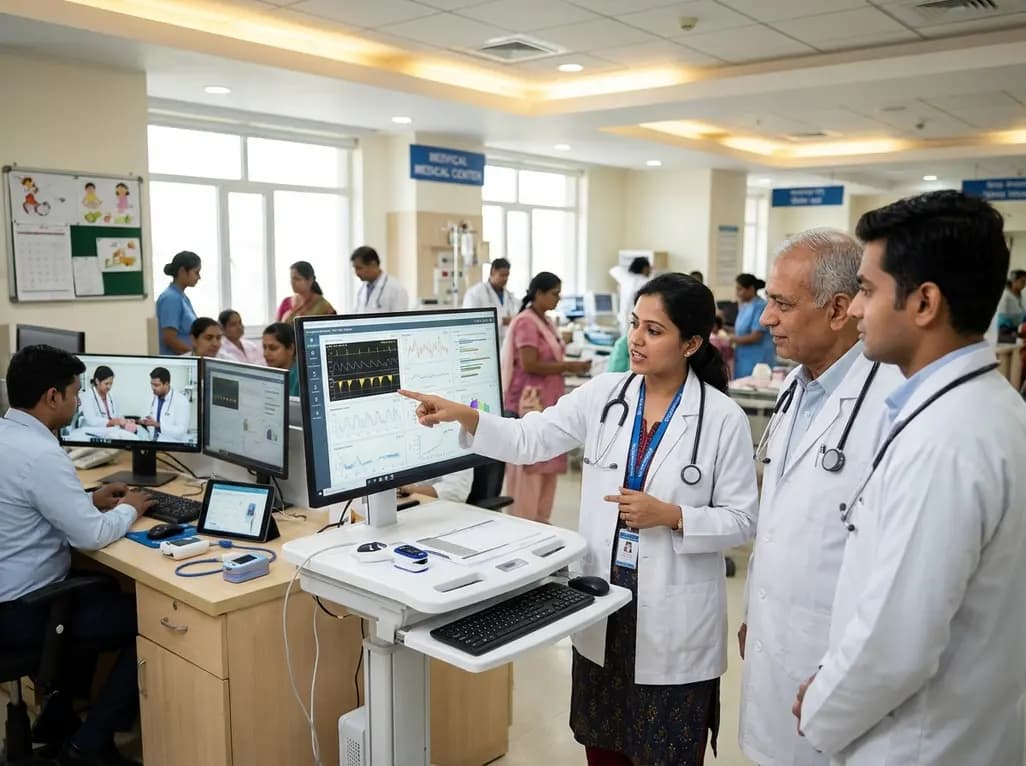
A landmark study details how an enterprise pediatric remote patient management model expanded from a single cardiology pilot to 16 diverse specialty programs by combining centralized digital operations with specialty clinical leadership.
Today

A comparative review of tension band wiring and intramedullary screw fixation in thumb metacarpophalangeal arthrodesis, evaluating union rates, hardware complications, and clinical outcomes.
Yesterday

A breakthrough ultrathin multimodal sensor decouples physical hemodynamic monitoring from disposable electrochemical calibration, achieving long-term wearable glucose prediction with 81.36% accuracy and a 9.12% MARD. This offers a robust, drift-free solution for outpatient metabolic surveillance.
Yesterday
