.webp&w=384&q=75)

Loading, please wait...
Loading, please wait...

Pediatric neuro-oncology has achieved remarkable progress in prolonging overall survival, yet clinicians face mounting challenges regarding long-term therapy-induced late effects. In infant and toddler cohorts, curative approaches often employ dose-dense systemic chemotherapy alongside focal proton or photon radiotherapy. Unfortunately, treatment-related ototoxicity remains one of the most debilitating and pervasive complications encountered during these crucial neurodevelopmental windows. While clinicians previously established connections between sensorineural hearing loss and academic struggles in school-age survivors, empirical data evaluating children under three years of age have historically remained limited. A landmark prospective study published in Neuro-Oncology now illuminates how early auditory insults uniquely influence core cognitive trajectories, adaptive skills, and behavioral functioning.
Infants and toddlers diagnosed with malignant brain tumors undergo therapy precisely when their cerebral architecture rapidly develops. Systemic platinum-based chemotherapy regimens and cranial irradiation frequently induce permanent inner ear damage. Platinum agents trigger cellular apoptosis within the outer hair cells of the cochlea, whereas radiation therapy promotes microvascular fibrosis in the cochlear apparatus. Consequently, treatment-related ototoxicity deprives the developing brain of essential acoustic inputs during prime linguistic acquisition windows. Without crisp auditory stimulation, children struggle to build fundamental speech patterns, phonemic parsing networks, and receptive language circuits. Because neural plasticity peaks during early childhood, sensorineural hearing loss disrupts broader downstream executive systems. Clinicians often observe that affected infants cannot effectively interact with their physical environments, which subsequently impedes exploratory play and incidental social learning. Therefore, therapy-induced hearing loss represents far more than an isolated sensory deficit; it acts as a primary catalyst for systemic cognitive disruption in vulnerable pediatric survivors.
To rigorously examine these developmental cascades, investigators spearheaded a multisite, prospective, longitudinal trial designated as SJYC07. The cohort enrolled 135 very young children who presented with newly diagnosed malignant central nervous system tumors. The cohort had a striking mean age of only 1.7 years at diagnosis, reflecting an exceptionally young patient population. Researchers administered risk-adapted chemotherapy protocols, supplemented with or without focal proton beam or photon radiotherapy. Over a comprehensive five-year surveillance window, participants underwent serial audiological tracking and standardized neuropsychological assessments. Clinicians classified sensorineural hearing loss using the validated Chang ototoxicity grading scale, dichotomizing results into intact hearing versus verified impairment. Concurrently, certified neurocognitive specialists assessed intellectual functioning, attention indices, and parental reports of adaptive behavioral competence. Because investigators obtained baseline metrics before initiating antineoplastic treatments, the protocol uniquely isolated how newly acquired hearing deficits shifted cognitive trajectories over time.
The longitudinal findings demonstrated that 67% of young patients experienced mild-to-severe sensorineural hearing loss following oncologic therapy. Importantly, multivariable mixed models revealed that hearing impairment triggered significant downward inflections in intellectual trajectories. Before therapeutic interventions, higher baseline intelligence quotient correlated with older age and elevated socioeconomic background. However, once children developed treatment-related ototoxicity, their intellectual scores exhibited pronounced post-impairment declines rather than expected age-appropriate gains. Beyond overall intelligence, investigators recorded sharp worsening in adaptive behavioral performance, encompassing essential daily communication, self-direction, and socialization milestones. Furthermore, parental ratings documented significant surges in attention deficits following the emergence of hearing impairment across the entire cohort. When auditory bandwidth shrinks, children must exert massive compensatory cognitive effort simply to parse speech, leaving inadequate attentional reserves for working memory, environmental orientation, and abstract reasoning.
The investigation identified critical clinical variables that exacerbate post-treatment cognitive vulnerabilities. Younger age at oncologic diagnosis strongly predicted sensorineural hearing loss, demonstrating that the most immature auditory pathways endure the greatest susceptibility to cytotoxic damage. Moreover, patient age at treatment directly influenced functional recovery; children treated at the youngest ages experienced the steepest declines in adaptive functioning. Anatomical tumor location also emerged as a powerful prognostic factor. Children presenting with supratentorial malignancies exhibited significantly worse intellectual trajectories after hearing loss compared to those with infratentorial disease. Supratentorial lesions often disrupt cortical and subcortical pathways directly dedicated to higher-order processing, associative networks, and language mediation. When auditory deprivation co-occurs alongside supratentorial structural disruption, the immature central nervous system lacks the neural redundancy required to preserve intellectual development.
These sobering developmental findings demand decisive modifications to supportive oncology pathways. Pediatric oncologists, audiologists, and neurologists must coordinate aggressive audiological surveillance rather than treating auditory decline as a secondary concern. Clinicians should conduct baseline evaluations and serial high-frequency audiometry throughout platinum infusions and radiation planning. Immediate rehabilitative action remains mandatory as soon as Chang grade ototoxicity emerges. Teams must promptly deploy assistive listening systems, pediatric hearing aids, or cochlear implants to minimize the duration of auditory deprivation. In addition, speech-language pathologists and early childhood intervention specialists should enter the care continuum immediately. Providing timely amplification preserves sensory fidelity, alleviates cognitive fatigue, and safeguards essential communication bridges between young children and their caregivers. Educating parents regarding acoustic enrichment, visual cueing, and early behavioral signs of auditory fatigue further fortifies patient resilience during critical rehabilitative phases.
Mitigating treatment-related ototoxicity also requires substantial innovations within oncologic therapeutics. Researchers are actively investigating selective chemoprotective agents, such as sodium thiosulfate, to neutralize platinum metabolites prior to inner ear uptake without compromising anti-tumor efficacy. Additionally, radiation oncologists increasingly leverage highly conformal proton therapy to significantly reduce radiation scatter toward sensitive cochlear structures. Prospective molecular stratification will also permit clinicians to de-escalate toxic regimens for lower-risk tumor biological profiles. By integrating precise audiological tracking, cytoprotective pharmacological strategies, and rapid post-diagnostic rehabilitation, modern pediatric oncology can successfully reconcile curative targets with sustained long-term cognitive vitality. Protecting sensory capacity in infancy establishes the indispensable bedrock for long-term academic success, emotional wellness, and independent adult functioning.
Very young children have rapidly developing cochlear structures and immature metabolic clearance pathways. Furthermore, their developing auditory cortex depends upon consistent sensory input to construct neural networks for language, which makes any therapy-induced sensory deprivation remarkably disruptive to their overall neurodevelopment.
Auditory impairment forces children to divert extensive mental effort toward decoding degraded acoustic signals. This continuous listening strain depletes processing reserves, precipitating measurable deficits in working memory, sustained attention, spoken vocabulary acquisition, and higher-level executive functions.
Rapid audiological diagnosis paired with prompt fitting of hearing aids or cochlear implants provides immediate acoustic restoration. Combining amplification with early speech-language therapy, adaptive behavioral coaching, and structured caregiver guidance significantly blunts downward cognitive trajectories.
Disclaimer: This content is for informational and educational purposes only. It is not intended to be a substitute for professional medical advice, diagnosis, or treatment. Always seek the advice of your physician or other qualified health provider with any questions you may have regarding a medical condition. Never disregard professional medical advice or delay in seeking it because of something you have read here. Refer to the latest local and national guidelines for clinical practice.
References

Read summarized clinical updates, watch expert medical content, and earn CME certifications right from your smartphone.
Open your smartphone camera to scan and install.





A multisite prospective study shows that treatment-related ototoxicity significantly impairs intellectual trajectory, attention, and adaptive functioning in very young children treated for malignant brain tumors, highlighting the urgent need for early auditory intervention.
Today

A crossover study demonstrates that locally deployed large language models with exact-match knowledge augmentation significantly elevate outpatient prescription review accuracy to 97.2%, curbing hallucinations and securing patient data without requiring complex cloud infrastructure.
Today
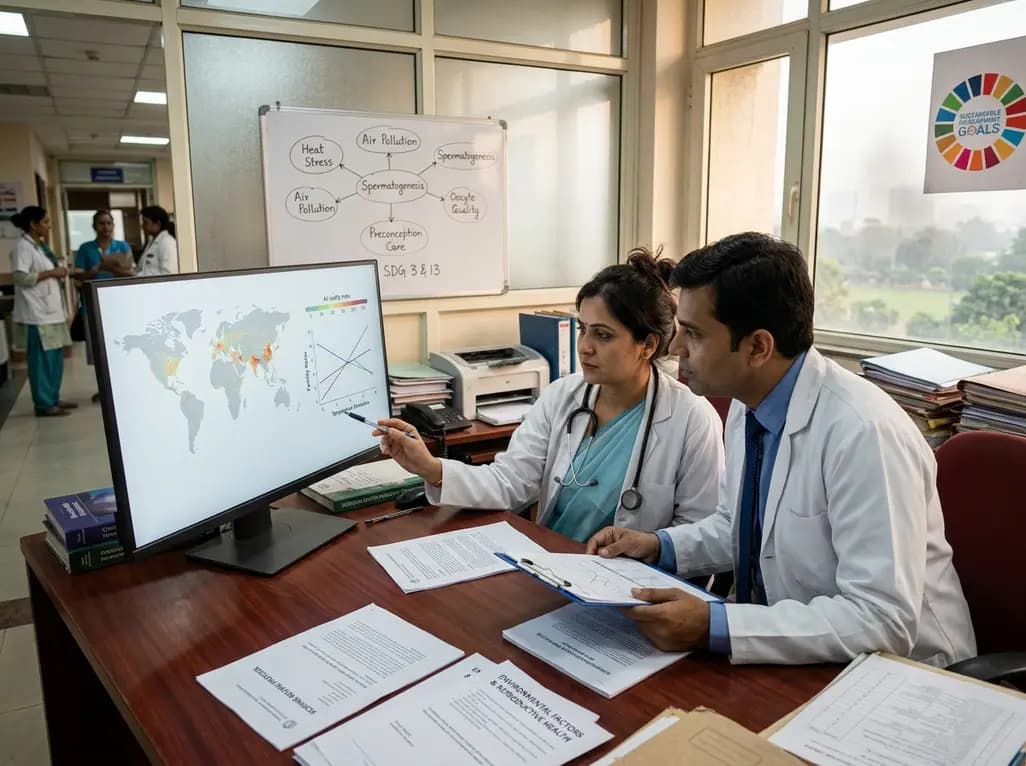
A new scoping review protocol systematically maps global evidence on how climatic shifts, ambient heat, and pollution impact human fertility. Discover key physiological mechanisms, clinical preconception strategies, and critical public health alignments under Sustainable Development Goals 3 and 13.
Today

Pharmacogenomics and artificial intelligence are revolutionizing cardiology by tailoring therapies to individual genetic profiles and clinical data, reducing adverse drug events, and improving cardiovascular patient outcomes.
Today
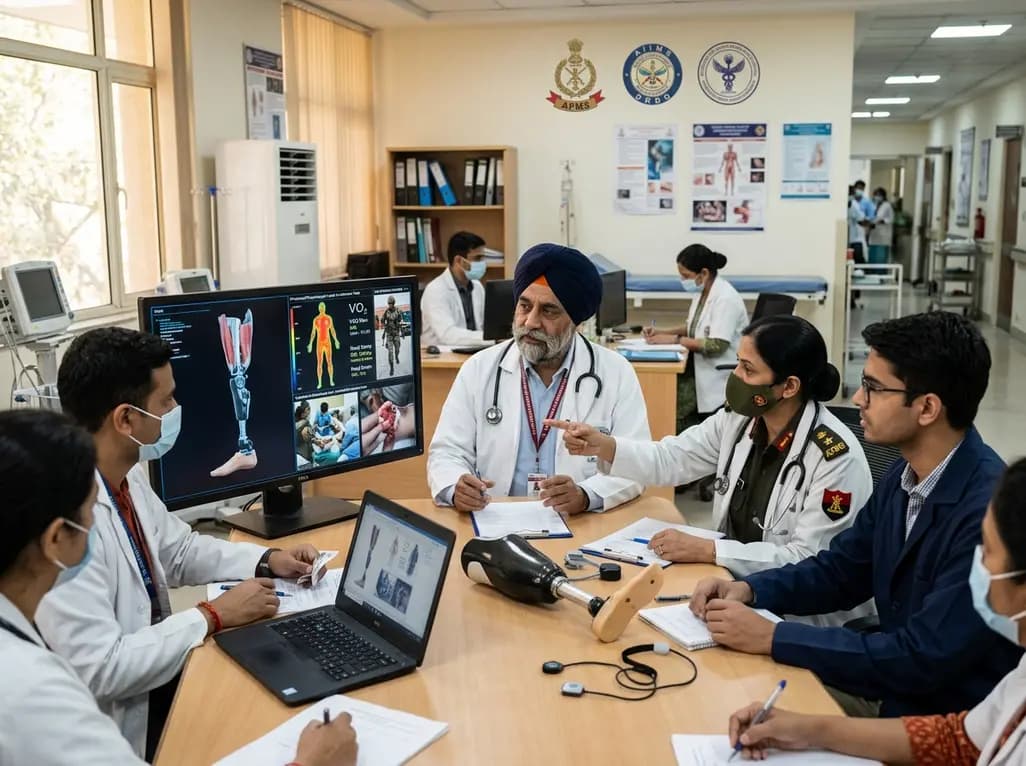
India's premier scientific bodies have joined the Armed Forces Medical Services to solve unique physiological and operational challenges faced by soldiers. The national collaboration covers combat casualty care, artificial intelligence diagnostics, bionic prosthetics, and extreme-environment physiological resilience.
Today

A retrospective cohort study evaluates the short- and long-term impacts of SARS-CoV-2 infection on patients with Graves' disease receiving antithyroid drug therapy, highlighting thyroid status destabilization, clinical symptom exacerbations, and post-viral sequelae.
Today
