.webp&w=384&q=75)

Loading, please wait...
Loading, please wait...
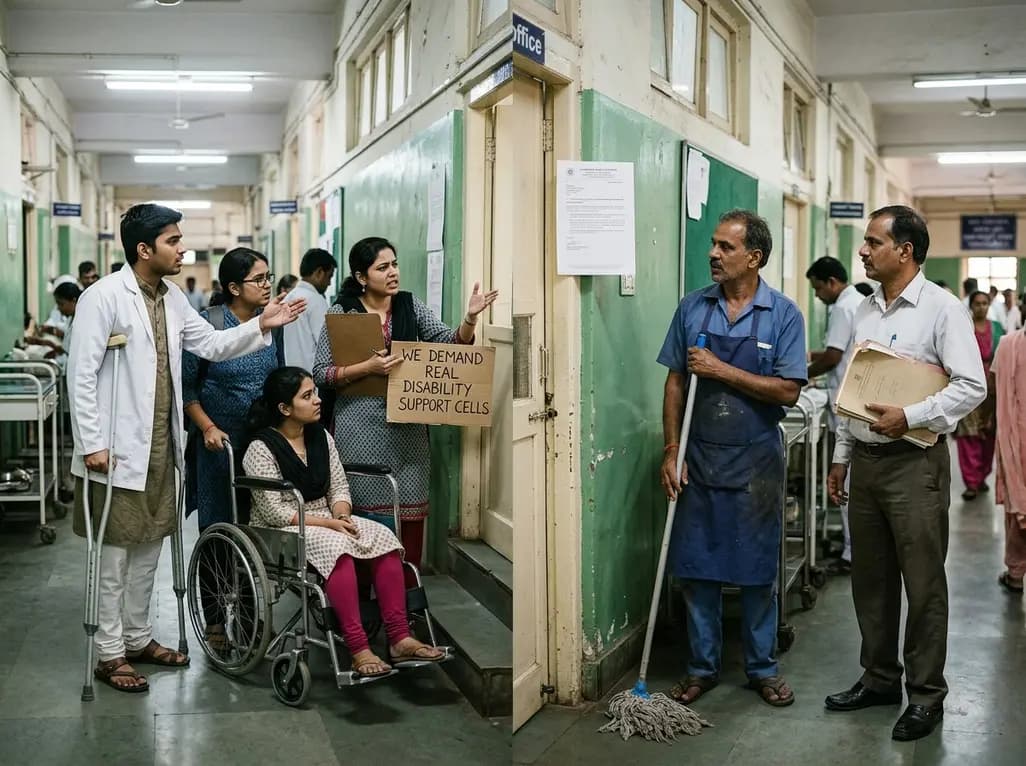
The National Medical Commission recently submitted a startling compliance report to the Supreme Court of India. Consequently, the document revealed severe institutional apathy toward healthcare trainees with benchmark disabilities. Nearly half of the nation's medical colleges have failed to establish functional NMC Enabling Units. Furthermore, several institutions appointed clerks and sanitation inspectors as coordinators. This alarming trend undermines statutory disability rights across undergraduate and postgraduate medical education.
The National Medical Commission issued a binding directive on July 27 to enforce inclusive education across medical colleges. Under this national policy, every approved institution must establish dedicated NMC Enabling Units for disabled students. Specifically, these specialized units serve as institutional single points of contact for students with benchmark physical or sensory disabilities. Educational institutions bear a legal duty under Sections 16 and 17 of the Rights of Persons with Disabilities Act of 2016. Therefore, medical colleges must eliminate physical barriers and facilitate reasonable accommodations in classrooms, laboratories, and teaching hospitals. Furthermore, the commission directed institutional heads to display contact details of these support units conspicuously on official websites. Incoming trainees require immediate awareness of their rights and support systems from their very first day on campus. Additionally, these units must maintain comprehensive records of accommodation requests and preserve student confidentiality. Through this regulatory framework, the commission aimed to construct an equitable academic landscape. Medical training demands rigorous physical and cognitive engagement. Consequently, structured institutional mechanisms remain vital to protect student dignity without compromising medical licensing standards or clinical patient safety.
Despite unequivocal regulatory instructions, medical institutions across the country have mounted an inadequate response. Specifically, the commission filed a comprehensive status affidavit before the Supreme Court outlining dismal progress nationwide. Out of 798 evaluated medical colleges, exactly 355 institutions remain entirely non-compliant with the directive. This figure represents an alarming failure rate of 44.5 percent among registered Indian medical schools. Furthermore, only 515 colleges submitted any formal communication by the extended deadline of September 28. Among those responding institutions, merely 443 colleges reported complete establishment and functional compliance. In contrast, 26 institutions acknowledged partial or ongoing efforts to create support cells. An additional 46 institutions merely submitted preliminary executive orders without demonstrating operational viability. Most egregiously, 283 medical colleges chose to ignore the statutory directives completely. These colleges submitted no data whatsoever despite receiving formal reminders on September 23 and 24. Even designated medical assessment boards and appellate panels have failed to implement these mandated support mechanisms. Consequently, hundreds of prospective and current medical students with benchmark disabilities remain completely without institutional recourse during their challenging professional training.
The compliance data exposed deeply flawed administrative practices among institutions that claimed compliance. Rather than appointing senior faculty members, several colleges designated non-academic personnel to head these critical units. For example, Maharashtra Government Medical College in Nandurbar appointed a municipal sanitation inspector as its primary disability coordinator. Similarly, other medical colleges designated junior residents, tutors, or head clerks as their official points of contact. Disability rights advocates immediately condemned these inappropriate administrative appointments. Dr. Satendra Singh, a prominent activist with Doctors with Disabilities, voiced severe concerns regarding this institutional practice. He noted that sanitation inspectors and clerical workers possess neither academic authority nor clinical training experience. Consequently, non-academic personnel cannot evaluate complex curriculum modifications or understand specialized clinical accommodation requests. Furthermore, resident doctors and tutors represent a transient institutional workforce who frequently relocate after brief tenures. A junior resident in pharmacology lacks the institutional seniority required to negotiate clinical accommodations. Therefore, such personnel cannot direct hospital ward staff or adjust operating theatre protocols for wheelchair-using medical trainees.
Medical education requires extensive practical rotations through ambulatory clinics, operating rooms, and critical care units. Consequently, students with physical impairments encounter complex environmental and procedural barriers during clinical training. A functional accommodation unit must coordinate assistive devices, modified duty rosters, and accessible physical infrastructure. For instance, surgical trainees with mobility impairments may require adjustable operating tables or ergonomic standing wheelchairs. Similarly, candidates with sensory impairments require specialized electronic stethoscopes or modified audiovisual assessment materials. An administrative clerk cannot assess whether an accommodation compromises sterile field integrity or patient safety. In contrast, qualified medical educators can balance clinical competence requirements with individualized technical adaptations. When institutions appoint untrained staff, disabled medical students frequently abandon reasonable requests due to administrative humiliation. Moreover, informal barriers discourage qualified candidates from pursuing challenging clinical specialties like general surgery or emergency medicine. Institutional failure thus perpetuates historical exclusion within the medical fraternity. As a result, modern healthcare systems lose compassionate, skilled clinicians who bring vital lived experiences to patient care.
The Supreme Court of India initiated this rigorous compliance review during proceedings in Anmol vs Union of India. On August 4, the apex court issued an explicit warning to institutional deans and principals nationwide. The court warned that individual non-compliant colleges would face severe regulatory consequences for continued defiance. The National Medical Commission subsequently established a firm compliance deadline of September 10. When hundreds of institutions missed this milestone, the commission dispatched urgent regulatory warnings in late September. Specifically, the commission clarified that late submissions would face summary rejection alongside punitive show-cause proceedings. Regulatory authorities possess the power to withdraw institutional recognition or reduce seat quotas for continuous statutory non-compliance. Furthermore, the Supreme Court has repeatedly affirmed that reasonable accommodation is a fundamental human right. Medical educators must therefore recognize disability inclusion as a legal duty rather than optional charity. Institutional leaders must urgently reconstitute their disability committees with experienced clinical professors. Only decisive administrative leadership can ensure dignified learning spaces for India's future healthcare workforce.
Q1: What are NMC Enabling Units, and why are they mandatory in Indian medical colleges?
NMC Enabling Units are specialized institutional committees established under the Rights of Persons with Disabilities Act, 2016. They serve as a single point of contact for medical students with benchmark disabilities. Specifically, these units facilitate barrier-free physical infrastructure, coordinate clinical assistive devices, process accommodation requests, and provide academic support. Consequently, they ensure that trainees complete medical coursework without facing systemic discrimination.
Q2: Why is appointing non-academic staff as disability coordinators problematic for medical students?
Non-academic personnel, such as clerks or sanitation inspectors, lack clinical training and administrative authority. Consequently, they cannot evaluate complex clinical rotations, patient safety protocols, or examination accommodations. Furthermore, they cannot modify operating theatre schedules, mandate assistive equipment, or direct hospital nursing staff. Effective coordinators must be senior faculty members who comprehend both medical curricula and institutional governance.
Q3: What legal actions can medical colleges face for failing to comply with NMC directives?
The Supreme Court warned that serious punitive measures will target non-compliant colleges under judicial orders. Additionally, the National Medical Commission can issue formal show-cause notices to delinquent institutions. If colleges fail to remedy non-compliance, regulatory authorities can slash annual student admission seats or withdraw official institutional recognition. Therefore, institutional leaders face severe regulatory penalties for ignoring disability rights mandates.
Disclaimer: This content is for informational and educational purposes only. It does not constitute medical advice or replace professional judgment. Refer to the latest local and national guidelines for clinical practice.
References

Read summarized clinical updates, watch expert medical content, and earn CME certifications right from your smartphone.
Open your smartphone camera to scan and install.





An affidavit submitted to the Supreme Court reveals that over 44 percent of Indian medical colleges have failed to implement mandatory disability support cells. Several institutions assigned administrative or sanitation workers as student liaisons, sparking strong protests from disability rights advocates.
Today
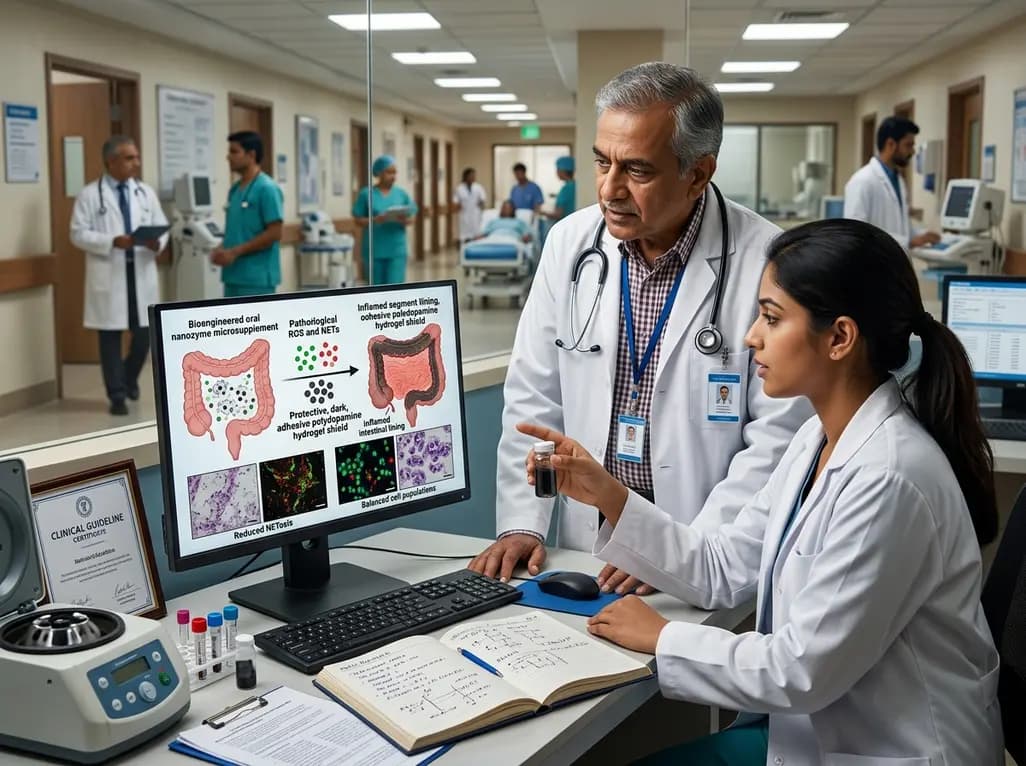
A bioengineered oral nanozyme microsupplement converts pathological ROS into a protective polydopamine hydrogel shield. By curbing neutrophil extracellular traps and balancing T cells, this platform outperforms standard 5-ASA in preclinical colitis models, opening new paths for sustained remission.
Today
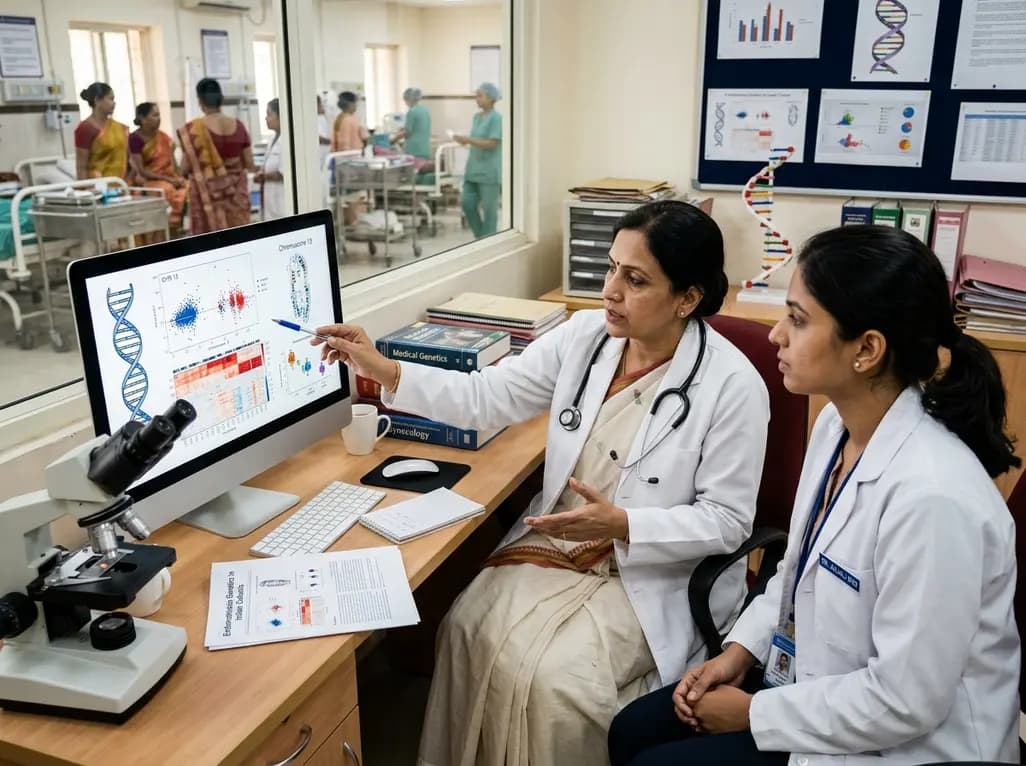
Endometriosis affects millions of women across India, yet diagnostic delays frequently exceed five years. Recent multi-centre genomic research has identified 21 novel genetic regions, notably on chromosome 13, establishing crucial population-specific insights to transform clinical screening and therapeutic strategies.
Today
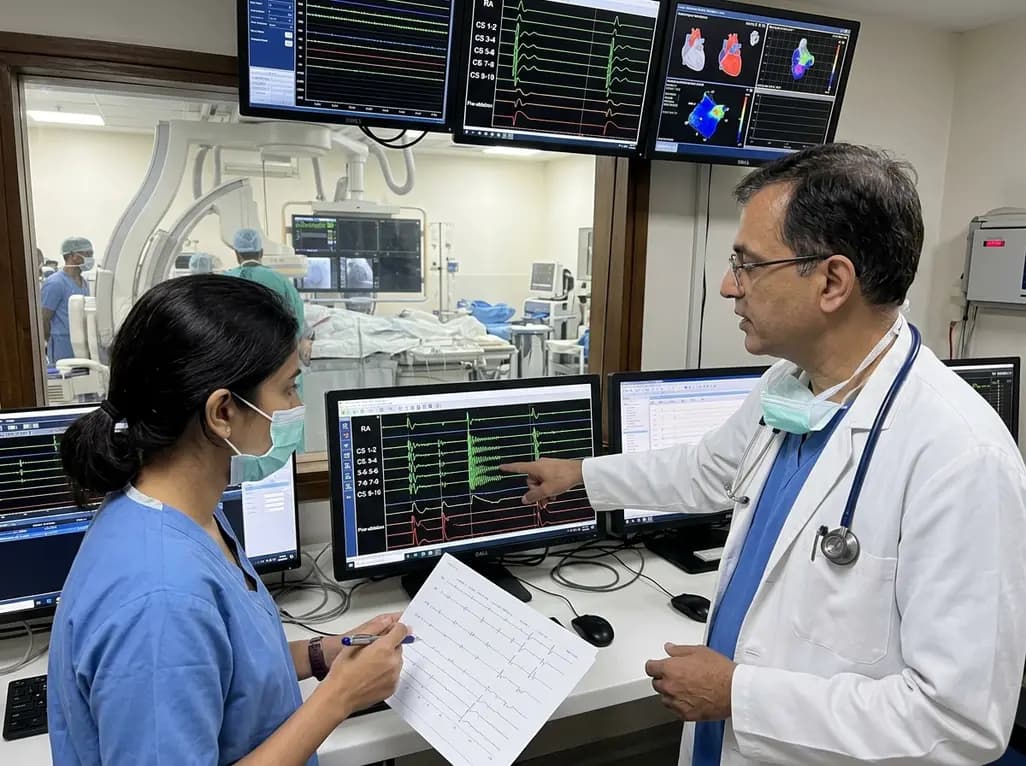
Radiofrequency catheter ablation of the cavotricuspid isthmus successfully terminates typical atrial flutter. This article reviews the mechanisms driving coronary sinus electrogram changes, wavefront activation pathways, and clinical criteria to verify bidirectional block during electrophysiology studies.
Today
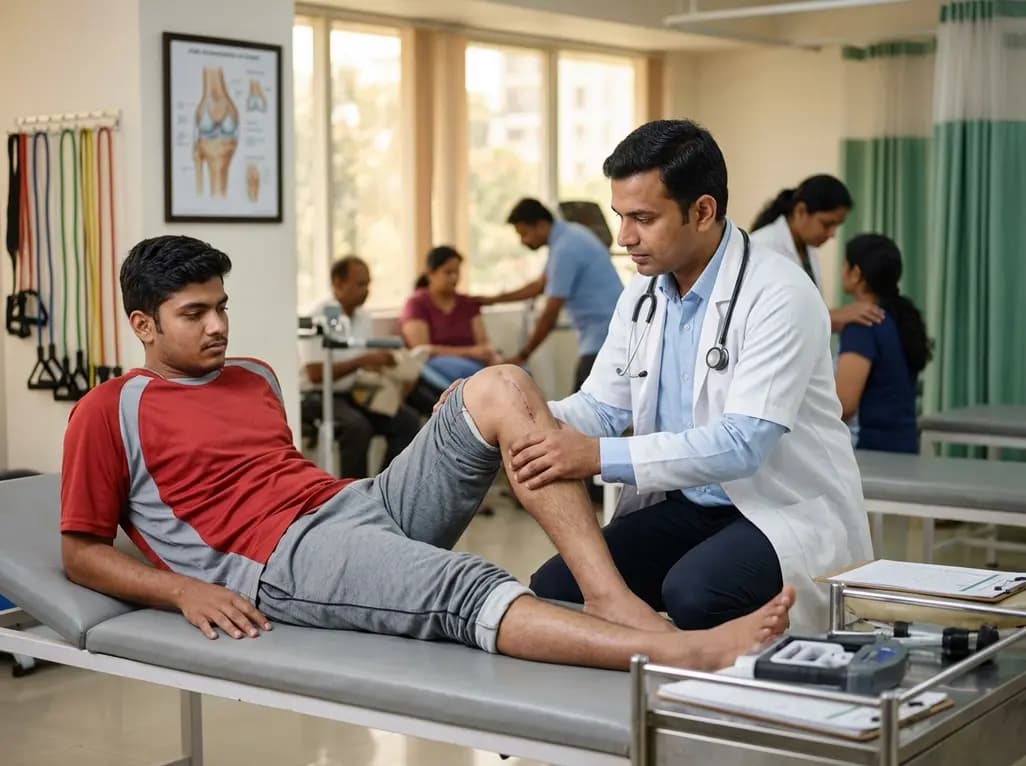
A study comparing four knee flexion strength tests after ACL reconstruction using hamstring tendon autografts reveals marked variability in limb symmetry indices. Clinicians must recognize that different strength testing modalities yield divergent return-to-sport clearance rates.
Today
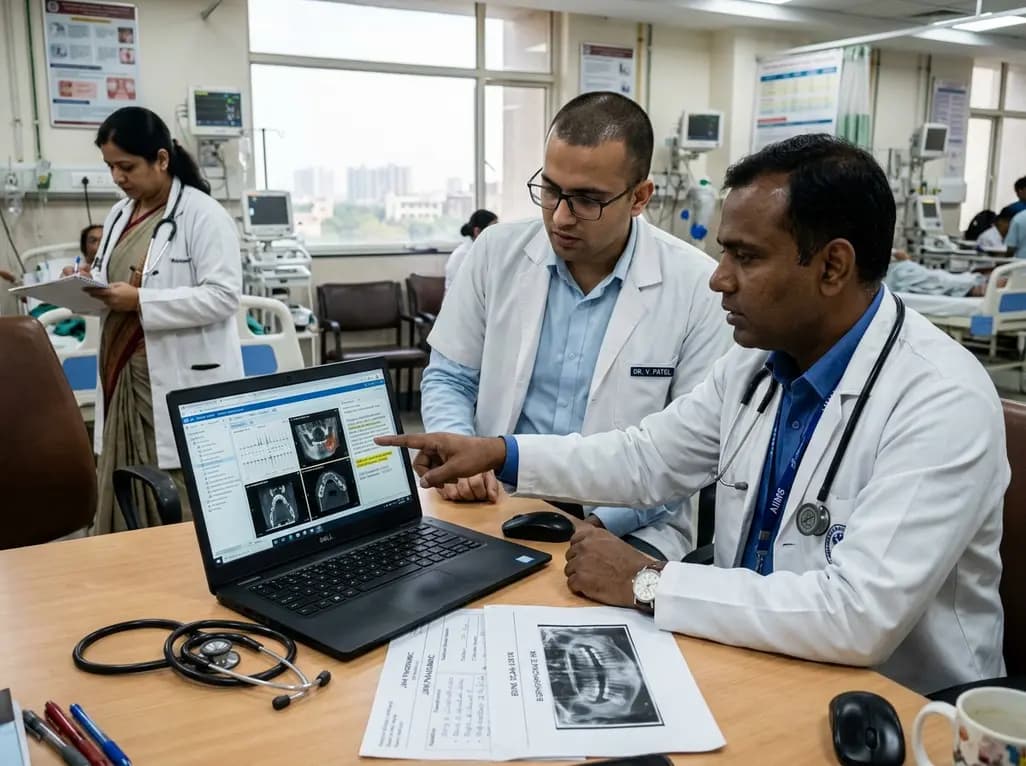
A breakthrough study leverages natural language processing to accurately identify incident medication-related osteonecrosis of the jaw and track antiresorptive drug holidays from clinical narratives in electronic health records, advancing osteoporosis pharmacovigilance and dental safety.
Yesterday
