

Loading, please wait...
Loading, please wait...

Occupational health literacy represents a vital determinant of worker safety, disease prevention, and operational longevity in modern industries. Historically, healthcare initiatives and corporate safety audits treated workplace safety primarily as an individual responsibility. However, current evidence reveals that an individual's capacity to access, evaluate, and act upon protective guidelines depends heavily on surrounding systems. When healthcare practitioners evaluate occupational health literacy, they must recognize that individual comprehension interacts continuously with organizational culture and legislative frameworks. Consequently, bridging clinical practice and occupational welfare requires an integrated, multi-level understanding of hazard communication and safety behaviors.
Recent qualitative investigation by Soltan Arani and colleagues systematically unpacks workplace health awareness. To develop an evidence-informed framework, researchers reviewed 455 records, identifying 48 pivotal studies. Subsequently, the investigators conducted semi-structured interviews with 11 certified occupational safety and health experts. The team achieved theoretical saturation and analyzed transcripts using thematic analysis via the constant comparative method. Through this structured approach, the researchers extracted 63 unique codes, which clustered cleanly into nine overarching domains.
Crucially, the resulting framework spans four distinct tiers: individual, interpersonal, organizational, and policy levels. Rather than viewing safety failures merely as employee negligence, this model shows that worker decisions reflect broader operational environments. Workers continually interpret hazard data through cognitive filters, peer dynamics, corporate policies, and statutory protections. Therefore, the framework provides occupational physicians and safety managers with a robust blueprint for evaluating workplace vulnerabilities.
At the individual level, personal demographics and baseline capabilities heavily influence how employees process hazard warnings. Age, primary education, functional literacy, and prior industry experience dictate an employee's ability to interpret technical instructions. Moreover, practical skills remain just as critical as cognitive understanding. For instance, a technician may know that airborne silica causes silicosis, yet they might lack practical training to achieve a secure respirator seal. Consequently, knowledge alone does not guarantee protective behavior unless accompanied by hands-on competency.
Simultaneously, interpersonal relationships and social determinants shape daily health decisions on the shop floor. Socioeconomic pressures frequently compel casual laborers to prioritize daily output over ergonomic precautions. Furthermore, informal workplace norms dictate whether workers report near-misses. If senior colleagues bypass protective equipment, junior apprentices predictably emulate these risky shortcuts. Therefore, effective workplace interventions must address collective group norms rather than lecturing isolated individuals.
Organizational attributes represent the operational bridge between personal worker skills and physical occupational hazards. A workplace's internal safety culture directly reflects leadership commitment to employee physical integrity. When managerial teams treat occupational safety as a core business value, injury rates drop dramatically. Conversely, environments that reward production speed without maintaining engineering controls systematically erode worker vigilance. In addition, organizations must maintain modern safety equipment and eliminate physical hazards at the source.
Furthermore, communication channels within the enterprise dictate how effectively health messages reach front-line personnel. Standard operating procedures must be clear, legible, and readily accessible in multiple regional languages. Many facilities fail because management relies exclusively on lengthy, text-dense manuals that workers ignore. In contrast, progressive organizations implement participatory safety briefings and transparent reporting systems. Accordingly, a robust organizational infrastructure transforms passive workers into active participants in risk mitigation.
Beyond factory gates, overarching legislative frameworks and national regulatory bodies dictate occupational safety baselines. Statutory requirements mandate ambient air testing, routine occupational medical examinations, and incident reporting. In India, statutory instruments such as the Occupational Safety, Health and Working Conditions Code seek to standardize safety across diverse sectors. However, regulatory formulation represents only the first step. Rigorous enforcement, transparent labor inspections, and prompt penalization of negligent employers determine actual compliance on the ground.
Moreover, regulatory authorities must modernize how they communicate statutory guidelines to small and medium enterprises. In emerging markets, small manufacturing hubs often operate with minimal regulatory oversight, leaving informal laborers vulnerable to severe hazards. When government agencies simplify regulatory standards into actionable checklists, employers implement preventive protocols much more reliably. Thus, comprehensive regulatory enforcement creates an unyielding floor of accountability that protects the vulnerable workforce.
For treating physicians, integrating the nine domains of occupational literacy significantly refines diagnostic and therapeutic precision. General practitioners, internists, and pulmonologists frequently encounter adult patients presenting with chronic cough, skin eruptions, or back pain. Unfortunately, clinicians often overlook workplace exposures during routine clinical history taking. By incorporating questions about work environments, chemical handling, and safety training, doctors uncover underlying etiologies that pharmaceuticals alone cannot resolve. Consequently, clinical inquiry moves beyond symptom management to genuine disease prevention.
Furthermore, physicians should actively evaluate an injured or ailing worker's capacity to comprehend recovery plans. Recommending complete rest or specialized ergonomic modifications proves useless if the patient's job guarantees no statutory sick leave. Doctors must therefore craft pragmatic, context-sensitive recommendations that align with the patient's operational reality. In this manner, healthcare providers act as vital advocates who bridge clinical recovery with safe workplace reintegration.
Applying this multi-level framework enables stakeholders to build targeted safety interventions in hazardous industries. In sectors such as construction, mining, textiles, and chemical processing, generic safety posters produce negligible behavioral change. Instead, safety engineers and occupational health teams should co-design hands-on simulation modules that account for low literacy rates. For example, replacing text-heavy hazard warnings with color-coded pictograms drastically improves safety comprehension among migrant workers. Similarly, mobile audio-visual training delivers clear guidance without requiring advanced reading proficiency.
Additionally, leadership development programs must train shop-floor supervisors to serve as empathetic safety mentors. When frontline supervisors actively model correct safety protocols, peer pressure shifts rapidly toward collective hazard reduction. Concurrently, enterprise management should establish regular, confidential health screenings to detect subclinical occupational morbidities early. Ultimately, multi-level interventions foster resilient workplace ecosystems where sustainable productivity and worker well-being thrive together.
General health literacy focuses broadly on obtaining and processing medical advice in everyday healthcare settings. In contrast, occupational health literacy specifically addresses the dynamic hazards of the work environment. Workers must actively recognize workplace risks, interpret chemical safety data sheets, and use personal protective equipment correctly. Additionally, this specialized literacy requires understanding statutory worker rights and corporate reporting mechanisms. Thus, it bridges clinical self-care with complex industrial safety protocols.
Primary care physicians frequently manage conditions that stem directly from occupational exposures, such as chronic obstructive pulmonary disease, contact dermatitis, and musculoskeletal strain. When clinicians assess a patient's occupational health literacy, they can immediately identify unsafe work habits or missing safety gear. Furthermore, physicians can tailor practical guidance to match the worker's operational environment. Consequently, this targeted counseling improves treatment adherence, accelerates rehabilitation, and prevents recurrent industrial injuries effectively.
Employers should first eliminate language barriers by providing safety manuals in regional dialects and using intuitive pictorial signage. Additionally, supervisors must conduct participatory safety demonstrations rather than relying entirely on text-heavy brochures. Management should also establish supportive, non-punitive reporting channels for hazard notification. Furthermore, companies can partner with local clinics to deliver routine health screenings and practical preventive education. Therefore, workplaces empower vulnerable employees through comprehensive institutional support.
Disclaimer: This content is for informational and educational purposes only and does not constitute medical advice or establish a doctor-patient relationship. Healthcare professionals must use their clinical judgment, while individuals should consult qualified healthcare providers for medical concerns. Refer to the latest local and national guidelines for clinical practice.
References

Read summarized clinical updates, watch expert medical content, and earn CME certifications right from your smartphone.
Open your smartphone camera to scan and install.





A qualitative study establishes a comprehensive framework identifying nine domains of occupational health literacy across individual, organizational, and regulatory levels. This evidence-based model assists healthcare providers and workplace leaders in mitigating hazards and enhancing occupational well-being.
Today
A pilot randomized trial demonstrates that applying intermittent pneumatic compression during hemodialysis sessions significantly enhances 6-minute walking capacity and improves specific quality of life domains, offering a non-invasive supportive therapy for end-stage kidney disease patients.
Today
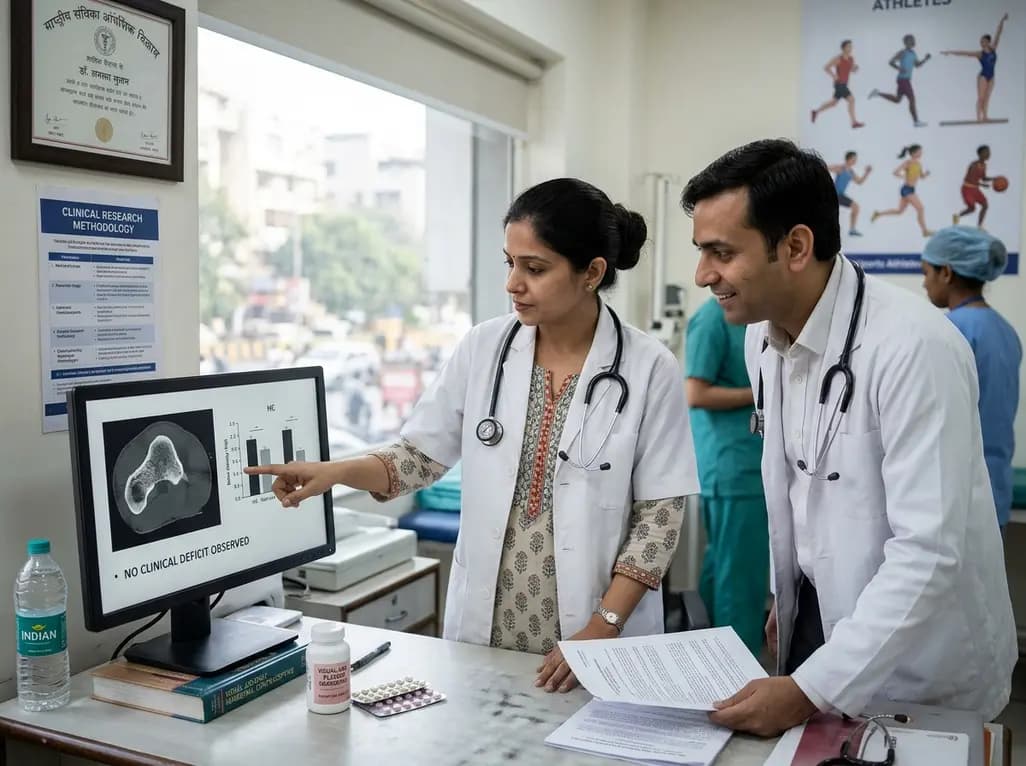
A recent Canadian study evaluates the relationship between hormonal contraceptive use, sport discipline, and volumetric bone density in elite female athletes. Using HR-pQCT, researchers found no clinically meaningful deficits, offering reassuring evidence for sports medicine and gynecology clinicians.
Today

A cross-sectional study of 948 police officers reveals an active-but-sedentary pattern. While 84.4% met WHO activity guidelines, 31.9% sat for ≥6 hours daily. Operational roles had lower sedentary odds, whereas desk assignments heightened sitting risks, emphasizing role-specific occupational health interventions.
Today

A comparative study demonstrates that simple and complex labral tears achieve comparable functional outcomes and low recurrence rates following arthroscopic stabilization for anterior shoulder instability, despite differing clinical presentations and dislocation histories.
Today
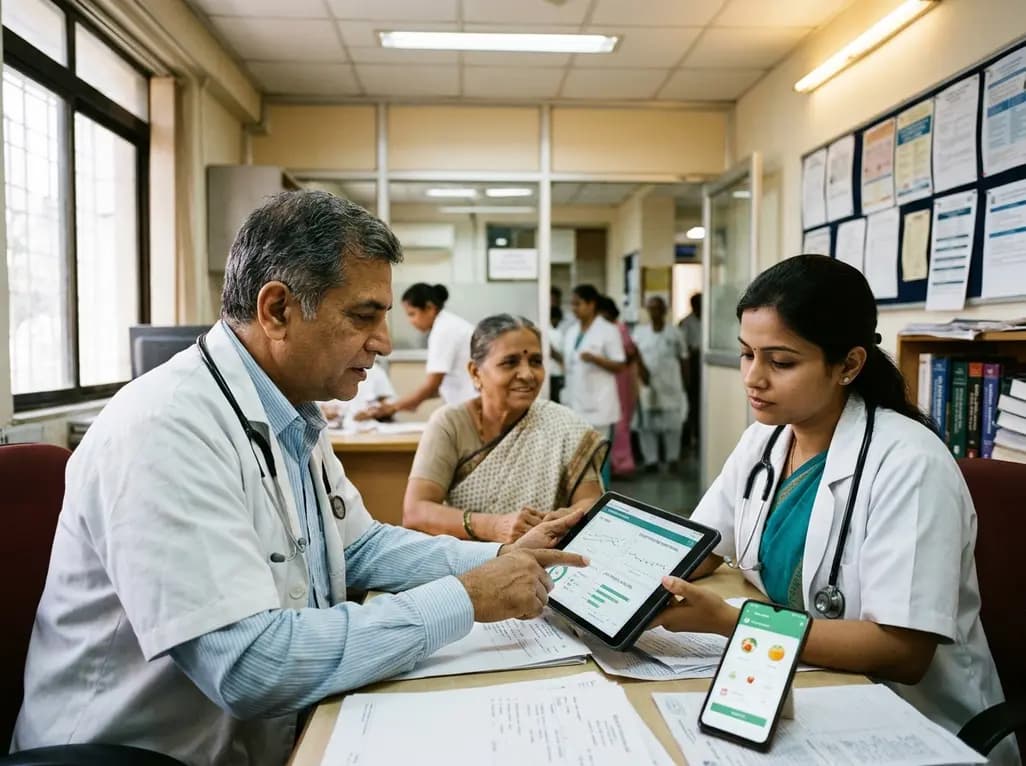
A real-world panel study reveals that an automated diet management app significantly improves BMI, blood pressure, and lipid profiles in employees. Frequent meal self-monitoring yielded distinct sex- and age-specific cardiometabolic benefits, highlighting the clinical potential of digital lifestyle interventions.
Today
