.webp&w=384&q=75)

Loading, please wait...
Loading, please wait...

Vincristine remains a crucial component of curative combination chemotherapy regimens for aggressive lymphomas. However, vincristine peripheral neuropathy frequently compromises treatment continuity and impairs survivor quality of life. This microtubule inhibitor disrupts axonal transport mechanisms, precipitating progressive length-dependent axonal degeneration. Patients commonly report debilitating tingling, numbness, burning dysesthesias, and distal motor weakness. In addition, severe autonomic neuropathy can lead to distressing constipation or paralytic ileus. Routine oncology practice relies heavily on clinician grading systems and subjective patient descriptions to monitor neurotoxicity. Nevertheless, conventional scales like the Common Terminology Criteria for Adverse Events often fail to detect early subclinical nerve damage. Consequently, axonal injury frequently accumulates unnoticed until irreversible physical disability emerges. Oncologists urgently require reliable, minimally invasive biomarkers to objectively track neuroaxonal destruction during active cycles. Early detection would facilitate timely dose modifications or neuroprotective interventions before structural nerve architecture breaks down. Therefore, evaluating circulating biomarkers of neuroaxonal disruption represents a pressing clinical priority in hematologic oncology. Furthermore, recent advances show that blood-based neurofilament proteins reflect immediate neural compromise across diverse conditions. Integrating objective laboratory tests into routine oncology care could transform toxicity management.
To identify objective indicators of nerve damage, researchers conducted a prospective observational cohort study in adults receiving front-line vincristine-based chemotherapy for lymphoma. The investigators enrolled twenty-five participants receiving standard regimens like CHOP or dose-adjusted EPOCH. Furthermore, the clinical team followed a subset of patients for up to forty-two months following treatment completion. Clinicians collected serial plasma samples prior to each infusion cycle to quantify neurofilament light chain concentrations using ultrasensitive immunoassay platforms. Simultaneously, the study team assessed patient-reported neuropathy scores and clinician-graded toxicities throughout the entire treatment course. Longitudinal biomarker trajectories were thoroughly examined using linear mixed-effects models. Notably, obtaining pre-treatment baseline levels allowed researchers to control for individualized patient variation. In contrast to expensive and time-consuming nerve conduction studies, serial blood draws seamlessly integrated into routine pre-cycle clinic appointments. Moreover, this pragmatic trial structure accurately reflected real-world clinical oncology workflows. Consequently, the study provided unique insights into real-time biological responses to neurotoxic vincristine exposure across serial cycles. Additionally, investigators tracked cumulative drug exposures to assess how dosage increments directly influenced biological markers of nerve injury.
The study yielded compelling evidence that plasma neurofilament light chain acts as an exceptionally sensitive marker of vincristine neurotoxicity. Specifically, plasma biomarker concentrations increased significantly compared to pre-cycle baseline values across all measured treatment cycles. Every evaluation demonstrated marked neurofilament release, confirming immediate axonal disruption during therapy. Indeed, median plasma concentrations increased more than threefold by the fourth chemotherapy cycle. Simultaneously, patient-reported outcome measures and clinician ratings demonstrated worsening sensory and motor neuropathic deficits. Exploratory visit-level analyses revealed a statistically significant correlation between circulating neurofilament concentrations and patient-reported neuropathy burdens. Furthermore, biomarker surges reflected ongoing microscopic axonal degeneration before clinicians documented gross physical impairments. However, patient responses exhibited considerable biological variability across identical vincristine doses. Some patients experienced rapid neurofilament spikes, whereas others demonstrated delayed increases. Thus, circulating neurofilaments objectively mirror the evolving burden of axonal damage during lymphoma chemotherapy. Additionally, physician assessments corroborated these patient-reported trends, establishing strong biological validity. These robust associations prove that blood tests can reliably capture chemotherapy-induced neurotoxicity during active oncology care, providing actionable insight for clinical decision-making.
Beyond indicating acute axonal damage, circulating neurofilament concentrations demonstrated meaningful predictive capacity for long-term clinical outcomes. Specifically, lagged and timepoint-specific analyses suggested that early biomarker spikes could anticipate persistent neuropathic symptoms. Patients who experienced higher neurofilament elevations during early chemotherapy cycles frequently reported sustained sensory neuropathy years after treatment cessation. This extended follow-up period provided crucial insights into post-therapy survivorship. Chemotherapy-induced peripheral neuropathy often persists for years, causing chronic pain, loss of independence, and increased fall risks. Unfortunately, clinicians currently lack reliable predictive instruments to determine which patients will develop chronic nerve injury. Therefore, identifying early circulating indicators fulfills a vital prognostic necessity in cancer care. Furthermore, post hoc sensitivity analyses confirmed that baseline factors like age or diabetes could not explain these dramatic surges. Consequently, early neurofilament testing could enable clinicians to identify vulnerable individuals before irreversible neurotoxicity develops. Moreover, risk-stratified patient care could guide targeted physical therapy, early pharmacological interventions, and personalized follow-up regimens. Proactive risk assessment ultimately empowers medical oncologists to intervene promptly, safeguarding neurological recovery without jeopardizing life-saving curative lymphoma treatments.
Translating these biomarker discoveries into daily clinical hematology and oncology practice requires a balanced, multimodal surveillance strategy. Currently, clinical oncologists rely heavily on subjective symptom reporting and periodic physical examinations. However, patients frequently conceal emerging neuropathic symptoms due to anxieties over chemotherapy dose reductions. Implementing routine plasma neurofilament testing provides an objective safety barrier alongside patient narratives. When used in tandem, circulating biomarkers and patient questionnaires create a highly responsive toxicity monitoring framework. For example, a steep neurofilament elevation could alert oncologists to perform detailed neurological assessments. In addition, treating teams could consider timely dose modifications or treatment pauses before debilitating functional impairment manifests. Nevertheless, clinical implementation requires standardized reference ranges, commercially accessible testing platforms, and cost-effectiveness analyses. Furthermore, future prospective clinical trials must determine whether biomarker-directed dose modifications improve long-term neurological outcomes without reducing overall survival. Ultimately, combining objective laboratory biomarkers with patient-centered clinical evaluations offers a promising pathway toward reducing long-term disability among cancer survivors. Similarly, oncologists and neurologists must establish joint protocols to ensure coordinated, multidisciplinary management of complex chemotherapy-induced neuropathies.
Plasma neurofilament light chain increases when vincristine damages the axonal cytoskeleton within peripheral nerves. Vincristine binds tubulin and disrupts axonal transport, triggering axonal degeneration. Consequently, structural neurofilament proteins release into the extracellular space and enter the bloodstream, providing an objective circulating marker of active chemotherapy-induced neurotoxicity.
No, neurofilament testing should complement rather than replace patient-reported outcome measures. While plasma neurofilament provides an objective quantification of structural axonal breakdown, patient questionnaires capture subjective functional disability, neuropathic pain, and quality of life. Therefore, integrating both diagnostic approaches provides the most accurate clinical assessment of evolving neurotoxicity during chemotherapy.
Serial plasma analyses demonstrate that neurofilament light chain concentrations rise significantly relative to baseline at all post-treatment timepoints. Biomarker levels typically increase more than threefold by the fourth chemotherapy cycle. Furthermore, early surges correlate with subsequent clinician-graded neuropathy, offering valuable prognostic capacity to anticipate persistent long-term symptoms.
Disclaimer: This content is for informational and educational purposes only. It is not intended to be a substitute for professional medical advice, diagnosis, or treatment. Always seek the advice of your physician or other qualified health provider with any questions you may have regarding a medical condition. Refer to the latest local and national guidelines for clinical practice.
References

Read summarized clinical updates, watch expert medical content, and earn CME certifications right from your smartphone.
Open your smartphone camera to scan and install.





A prospective cohort study demonstrates that plasma neurofilament light chain rises threefold during vincristine treatment for lymphoma, correlating with patient-reported neuropathy and predicting chronic nerve injury.
Today

A crossover study demonstrates that locally deployed large language models with exact-match knowledge augmentation significantly elevate outpatient prescription review accuracy to 97.2%, curbing hallucinations and securing patient data without requiring complex cloud infrastructure.
Today

A new scoping review protocol systematically maps global evidence on how climatic shifts, ambient heat, and pollution impact human fertility. Discover key physiological mechanisms, clinical preconception strategies, and critical public health alignments under Sustainable Development Goals 3 and 13.
Today

Pharmacogenomics and artificial intelligence are revolutionizing cardiology by tailoring therapies to individual genetic profiles and clinical data, reducing adverse drug events, and improving cardiovascular patient outcomes.
Today
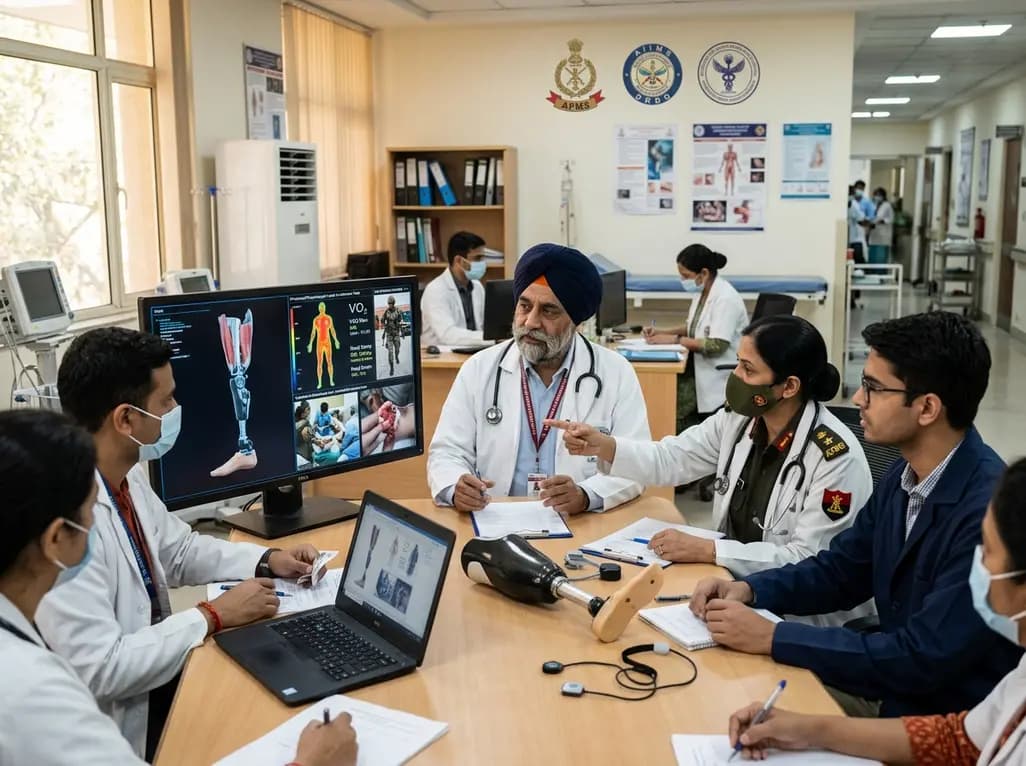
India's premier scientific bodies have joined the Armed Forces Medical Services to solve unique physiological and operational challenges faced by soldiers. The national collaboration covers combat casualty care, artificial intelligence diagnostics, bionic prosthetics, and extreme-environment physiological resilience.
Today

A retrospective cohort study evaluates the short- and long-term impacts of SARS-CoV-2 infection on patients with Graves' disease receiving antithyroid drug therapy, highlighting thyroid status destabilization, clinical symptom exacerbations, and post-viral sequelae.
Today
