.webp&w=384&q=75)

Loading, please wait...
Loading, please wait...

Urological malignancies, such as prostate, bladder, and renal cell carcinoma, impose a significant health burden globally. While immunotherapy has revolutionized cancer management, many patients still experience inconsistent benefits due to tumor resistance. Consequently, nanomedicine in urological immunotherapy has emerged as a transformative platform. This technology extends beyond simple drug delivery to actively modulate antitumor immune responses through precisely engineered nano-bio interactions.
Advanced nanoplatforms enhance treatment efficacy by regulating immunity through multiple pathways. For instance, targeted delivery systems ensure that immunotherapeutic agents accumulate specifically within the tumor site. This localization minimizes systemic side effects while maximizing the impact on the tumor. Moreover, researchers are developing externally activatable photodynamic therapies that trigger immune responses only when exposed to specific light sources. These strategies provide a high degree of spatial and temporal control over cancer treatment.
Furthermore, nanomedicine plays a critical role in reprogramming the tumor immune microenvironment (TME). Many urological tumors create an immunosuppressive TME that protects them from the immune system. Nanoparticles can deliver modulators that turn these \"cold\" tumors into \"hot\" ones, making them more susceptible to immune attacks. Additionally, neoantigen-based vaccinations delivered via nanocarriers offer a personalized approach to stimulate the patient's own immune system against unique tumor markers.
Despite the promising results in preclinical studies, several hurdles remain for clinical adoption. Delivery heterogeneity is a major challenge, as different patients may respond differently to the same nanoplatform. Furthermore, clinicians must consider the long-term biosafety and toxicity of synthetic nanomaterials. Manufacturing scalability also remains a concern, as producing complex nanostructures consistently on a large scale is difficult. Finally, improved patient stratification is essential to identify those who will benefit most from these advanced interventions.
Nanomedicine improves immunotherapy by ensuring targeted delivery to tumor sites, reducing systemic toxicity, and reprogramming the immunosuppressive microenvironment to enhance the body\'s natural immune response.
Research currently focuses on prostate cancer, renal cell carcinoma, and bladder cancer, particularly cases that show resistance to conventional immunotherapies.
Key barriers include the biological heterogeneity of patients, the complexity of manufacturing at scale, and the need for rigorous long-term biosafety evaluations.
Disclaimer: This content is for informational and educational purposes only. It does not constitute professional medical advice, diagnosis, or treatment. Refer to the latest local and national guidelines for clinical practice.
References
Huang W et al. Nanomedicine in immunotherapy of urinary system tumors: advances, synergistic strategies, and translational challenges. J Nanobiotechnology. 2026 Apr 07. doi: 10.1186/s12951-026-04338-w. PMID: 41947122.
"
Read summarized clinical updates, watch expert medical content, and earn CME certifications right from your smartphone.
Open your smartphone camera to scan and install.





A comprehensive review of nanomedicine-enabled immunotherapeutic strategies for prostate, renal, and bladder cancers, focusing on overcoming resistance....
6 months ago
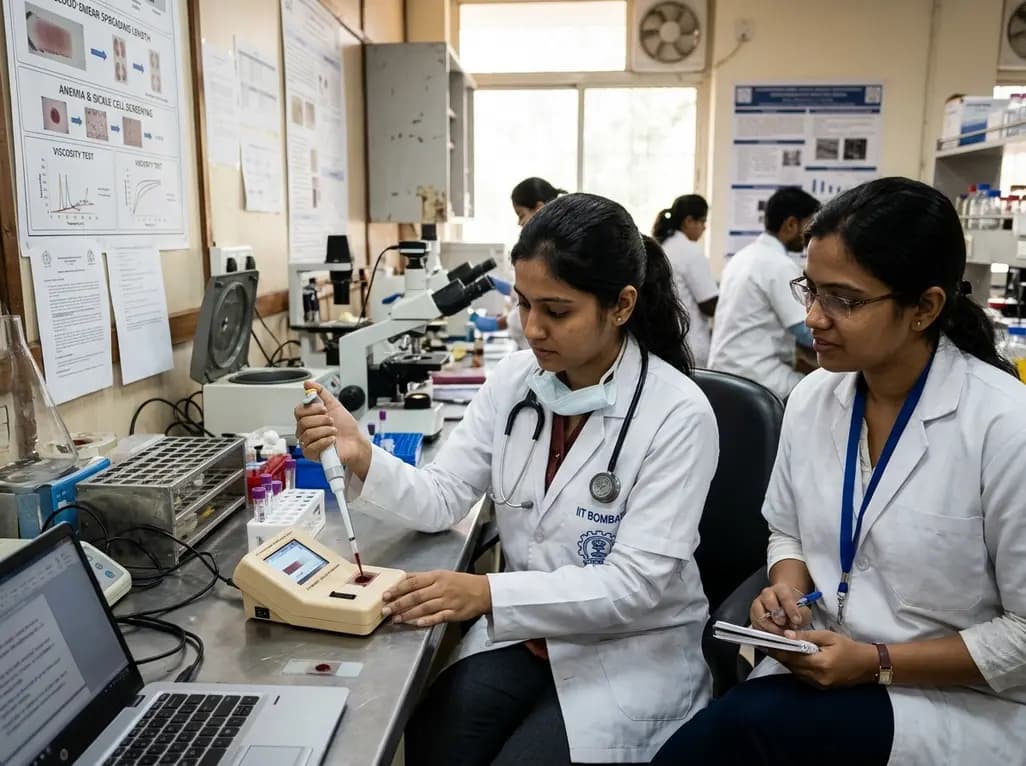
Researchers at IIT Bombay have engineered an automated, cost-effective point-of-care device that diagnoses anaemia and sickle cell disease from a single drop of blood. By measuring blood smear spreading length, this portable tool assesses blood viscosity to offer rapid screening in resource-limited healthcare centers.
Today

A multicenter study evaluates whether standardized simulation training reduces cup detachment during vacuum-assisted vaginal birth. Evidence-based simulation equips obstetricians to improve cup placement, reduce maternal-fetal trauma, and optimize clinical decision-making during operative deliveries.
Today
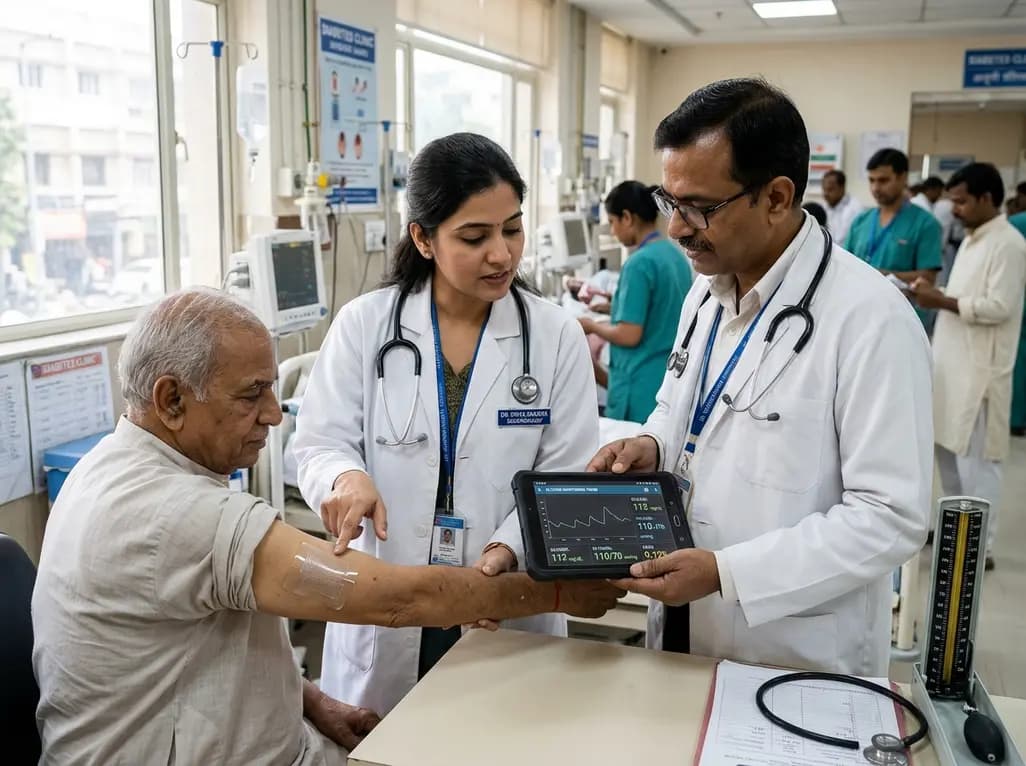
A breakthrough ultrathin multimodal sensor decouples physical hemodynamic monitoring from disposable electrochemical calibration, achieving long-term wearable glucose prediction with 81.36% accuracy and a 9.12% MARD. This offers a robust, drift-free solution for outpatient metabolic surveillance.
Today

A comparative review of tension band wiring and intramedullary screw fixation in thumb metacarpophalangeal arthrodesis, evaluating union rates, hardware complications, and clinical outcomes.
Today

Following regulatory scrutiny from FSSAI regarding promotional representations and lean muscle preservation claims, Dr. Reddy's Laboratories and Nestlé Health Science are currently reviewing the branding and marketing strategy for their joint nutritional supplement Celevida GLP+.
Today
