

Loading, please wait...
Loading, please wait...

Mechanical thrombectomy has transformed acute stroke care by rapidly recanalizing obstructed intracranial arteries. However, neurointerventionalists frequently face secondary distal vessel occlusions when fragmented thrombi migrate into peripheral cerebral branches. Consequently, operators need safe, adaptable endovascular techniques to clear distal occlusions without causing arterial trauma.
Endovascular thrombectomy achieves remarkable reperfusion rates in proximal anterior circulation strokes. Nevertheless, secondary embolization during primary recanalization remains a recognized procedural hazard. When interventionalists retrieve a proximal clot, mechanical fragmentation often dislodges friable thrombus debris. Anterograde blood flow immediately propels these particles into distal middle cerebral artery branches or anterior cerebral artery divisions. Furthermore, collateral vessels can redirect flow and push emboli deeper into tortuous terminal arborizations. As a result, operators observe secondary blockages in M2, M3, A2, or A3 branches in roughly seven to eleven percent of large vessel stroke cases. These distal occlusions present a distinct therapeutic quandary for intervention teams. While the primary vessel appears fully recanalized, persistent distal ischemia impairs neurological recovery and increases long-term disability. Unfortunately, navigating conventional mechanical devices into delicate peripheral vasculature poses formidable risks. Distal intracranial vessels exhibit smaller diameters, thinner adventitial walls, and greater tortuosity. Standard stent retrieval maneuvers exert excessive radial expansion and axial traction, which can induce severe vasospasm, arterial dissection, or life-threatening subarachnoid hemorrhage. Therefore, clinicians urgently need tailored endovascular strategies that balance effective clot extraction with rigorous vessel wall preservation.
Understanding how secondary emboli escape during thrombectomy is essential for optimizing procedural success. Clot composition influences fragmentation propensity significantly. Fibrin-rich or calcified thrombi often resist uniform integration into stent retriever struts, whereas erythrocyte-dense thrombi can fragment under shear forces. During stent deployment and microcatheter retraction, shear stress across the thrombus boundary causes small portions of the clot to shear away. Moreover, high-velocity anterograde flow through newly restored channels sweeps detached fragments into downstream bifurcations. Anatomical factors also contribute to this phenomenon. Specifically, tortuous carotid siphon geometry and acute angular takeoffs of branch vessels create turbulent vortices. These flow dynamics disrupt cohesive clot retention. In addition, using conventional guide catheters without proximal balloon occlusion permits ongoing forward flow during device retrieval. This persistent flow drives fragmented emboli directly into receptive distal vascular beds. Consequently, the interventionalist encounters a new occlusion in an M3 or A3 branch immediately after celebrating a patent M1 trunk. When these fragments lodge into functional cortical vessels, patients face deficits such as aphasia, neglect, or limb apraxia. Therefore, neurointerventionalists must maintain vigilance, continuously evaluating digital subtraction angiograms to detect downstream embolic migration before concluding the procedure.
To overcome the hazards of retrieving clots from delicate distal branches, researchers developed a modified stent retrieval technique. This refined approach carefully controls the microcatheter unsheathing level to modulate radial outward force. Initially, the operator navigates a low-profile microcatheter beyond the distal occluding embolus over a steerable microguidewire. The team then introduces a radiopaque stent retriever through the microcatheter and deploys it across the target thrombus. However, unlike traditional procedures where the device remains fully unsheathed, this technique introduces a vital technical adjustment. After complete initial unsheathing ensures proper clot integration, the operator partially re-sheathes the proximal portion of the stent. By advancing the delivery microcatheter over the proximal struts, the operator reduces the effective working length and confines device expansion solely to the clot zone. Consequently, this maneuver substantially reduces radial tension on adjacent healthy vessel walls. Furthermore, partial re-sheathing straightens the proximal stent profile, minimizing frictional drag during retrieval. The operator then withdraws the partially constrained stent and microcatheter as a single cohesive unit under continuous syringe aspiration. This controlled extraction successfully captures the migrated fragment while protecting delicate distal vasculature from dangerous mechanical strain.
Recent clinical data confirm the efficacy and procedural safety of this modified stent retrieval technique. In a cohort of twenty-four patients presenting with acute anterior circulation stroke, operators applied this rescue maneuver to resolve secondary distal vessel occlusions. The migrated emboli had lodged within M2 branches in twelve patients, M3 branches in six patients, A2 branches in four patients, and A3 branches in two patients. Notably, the procedure demonstrated exceptional recanalization efficiency. Operators achieved a first-pass recanalization rate of 70.8 percent at the secondary occlusion site. Moreover, twenty-three of the twenty-four patients achieved a final revascularization grade of at least TICI 2c, signifying near-complete or complete tissue reperfusion. The mean duration required to resolve these distal blockages was merely 23.2 minutes, illustrating remarkable procedural speed. In addition, the technique exhibited an outstanding safety profile. Operators reported no significant procedural complications, such as arterial rupture, vessel dissection, or symptomatic intracerebral hemorrhage. Because the microcatheter partially covers the stent struts, mechanical friction against fragile endothelial linings decreases substantially. Consequently, this targeted rescue strategy enables rapid, safe restoration of downstream perfusion without subjecting vulnerable distal arteries to unnecessary mechanical stress.
Restoring downstream perfusion directly translates into substantial neurological recovery for acute stroke patients. When secondary branch occlusions persist, patients often experience permanent functional deficits that hinder independent living. However, achieving rapid recanalization through partial stent re-sheathing salvages threatened cortical penumbra effectively. Clinical assessments demonstrated that 66.7 percent of treated patients attained favorable functional outcomes at three months, defined as a modified Rankin Scale score between zero and two. This high rate of functional independence underscores the profound benefit of addressing secondary distal emboli aggressively. Furthermore, achieving excellent recanalization prevents secondary ischemic injury from expanding into neighboring cerebral territories. Patients who achieve early reperfusion demonstrate faster motor recovery, reduced speech impairment, and shorter overall hospital stays. Therefore, neurointerventional teams must establish standardized protocols for identifying and managing secondary distal occlusions during mechanical thrombectomy. Operators should perform meticulous post-recanalization angiograms to inspect peripheral branches systematically. In addition, multidisciplinary collaboration between stroke neurologists, interventional radiologists, and emergency physicians ensures streamlined care pathways. Ultimately, combining meticulous endovascular technique with dedicated multidisciplinary stroke care significantly improves functional survival in complex acute ischemic stroke presentations.
Secondary distal vessel occlusions typically occur when mechanical disruption fragments a primary large vessel thrombus during endovascular retrieval. Anterograde arterial flow, forceful microcatheter manipulation, and collateral pathways drive these dislodged fragments downstream into smaller caliber arteries, creating new branch obstructions that jeopardize functional brain tissue and worsen patient recovery.
Partial resheathing controls stent exposure and radial outward force against the fragile endothelium of distal vessels. By partially advancing the microcatheter over the expanded stent retriever, the interventionalist reduces tractional friction and shear stress during withdrawal. Consequently, this controlled mechanical approach minimizes arterial perforation and dissection risks while maintaining effective clot capture.
Clinicians justify distal rescue when persistent branch occlusions affect eloquent cortex or cause substantial persistent neurological deficits. Moreover, stable systemic hemodynamics, favorable collateral circulation, and accessible vascular anatomy support proceeding with intervention. Neurointerventional teams carefully weigh these procedural benefits against the potential risks of subarachnoid hemorrhage or vessel rupture in narrow, tortuous distal cerebral vessels.
Disclaimer: This content is for informational and educational purposes only... Refer to the latest local and national guidelines for clinical practice.
References

Read summarized clinical updates, watch expert medical content, and earn CME certifications right from your smartphone.
Open your smartphone camera to scan and install.





A modified stent retrieval technique utilizing partial microcatheter re-sheathing provides a safe, effective rescue approach for secondary distal vessel occlusions caused by migrated emboli, achieving high recanalization rates and favorable functional outcomes without procedural complications.
Today

A 2026 cohort study in Turku University Hospital reveals that specialist palliative care for end-stage liver disease dramatically reduces emergency department visits in the final month of life (48.8% vs 74.1%) and prevents deaths in acute tertiary wards, supporting early integration in decompensated cirrhosis.
Today

A recent survey reveals significant gaps in antenatal providers' adherence to pregnancy oral health guidelines despite positive attitudes. Integrating regular oral screenings, clinician education, and interprofessional dental referrals during prenatal care is crucial to prevent adverse pregnancy outcomes.
Today

A cross-sectional study in Bangladesh demonstrates that an explainable stacking ensemble machine learning model achieves 98.37% accuracy in cardiovascular disease detection. Using local clinical and behavioral data, the model highlights cholesterol, rhythm abnormalities, and blood pressure as leading predictors.
Today
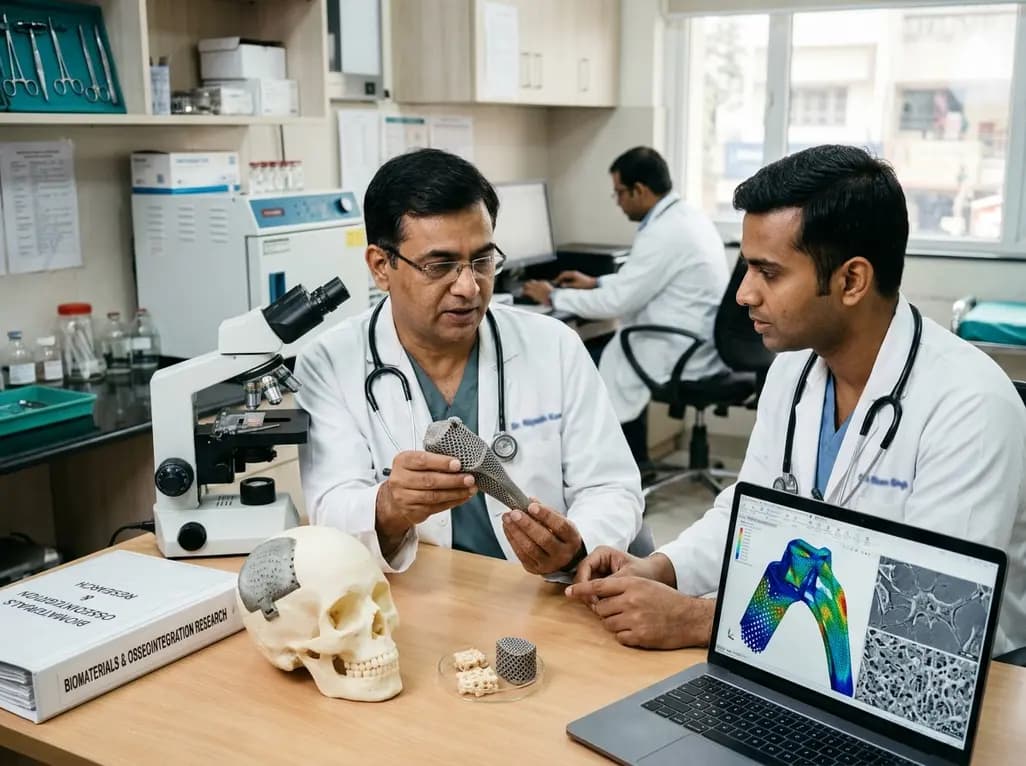
Laser-based powder bed fusion of Ti6Al4V enables custom orthopedic implants. Recent research reveals that heat treatment modulates ductility and wettability, while surface powder morphology drives mesenchymal cell attachment, highlighting crucial design factors for long-term osseointegration.
Today
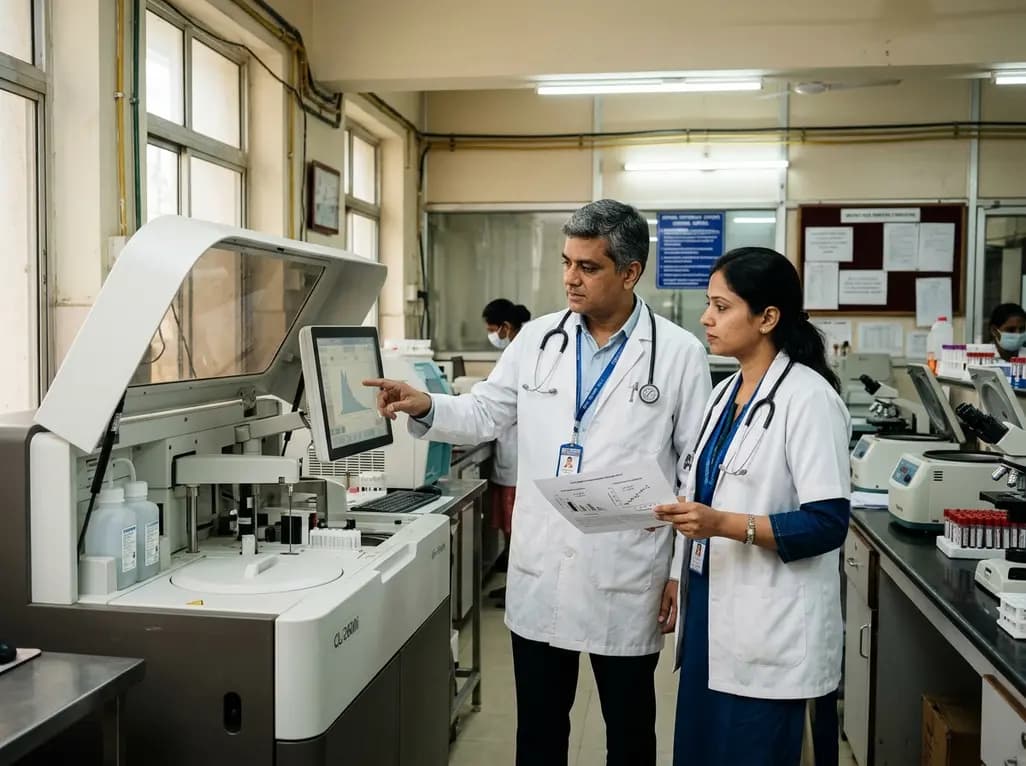
A multicenter study evaluated the CL-2600i immunochemistry analyzer across 640 serum samples, testing endocrinology, infectious disease serology, sepsis markers, and fertility panels. The system demonstrated high analytical trueness, repeatable results with CVs under 5%, and strong correlation with routine platforms.
Today
