.webp&w=384&q=75)

Loading, please wait...
Loading, please wait...
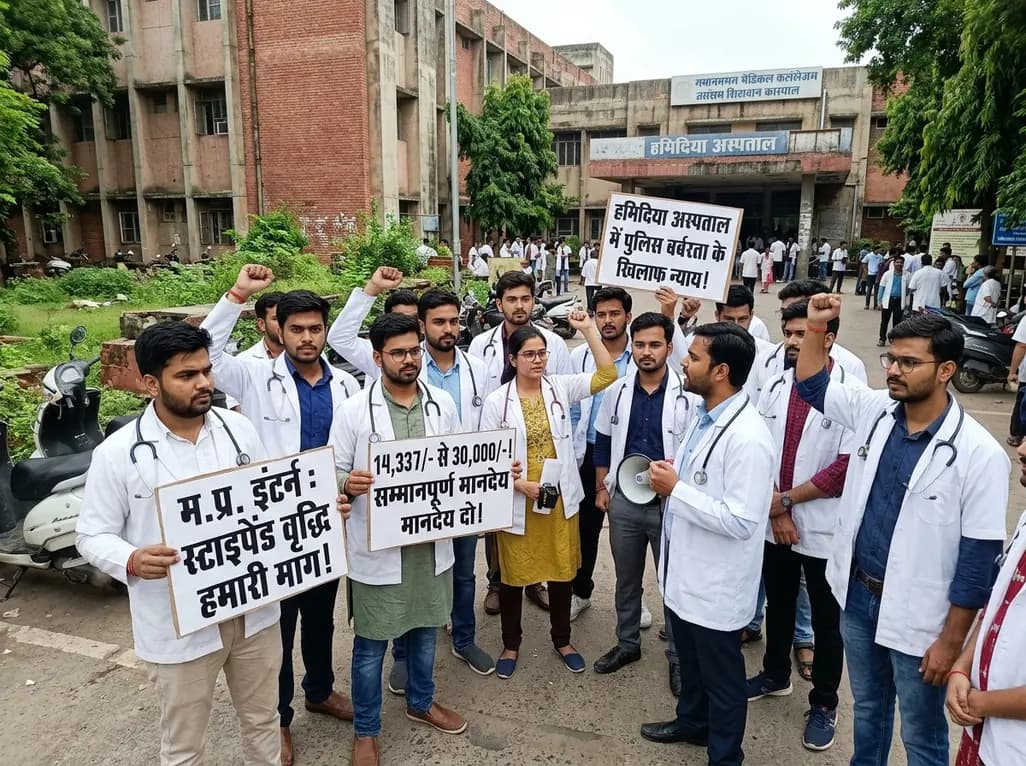
A large medical interns protest erupted across Bhopal as trainee physicians from government and private medical institutions demanded an immediate revision of their monthly allowance. Trainees gathered in significant numbers to demand that authorities increase their remuneration from Rs 14,337 to Rs 30,000 per month. Consequently, the agitation disrupted regular clinical services and vehicular movement near crucial intersections. Furthermore, the demonstrators expressed deep anguish over law enforcement interventions outside Hamidia Hospital. They demanded accountability, formal compensation for injured peers, and equitable compensation matching other Indian states.
The demonstration gained substantial momentum following initial gatherings outside the Government-run Hamidia Hospital. Police personnel deployed water cannons to disperse the assembling trainees, which reportedly caused injuries to several young physicians. Because of this administrative handling, the medical interns protest shifted directly toward the Kamla Park intersection. Medicos in white aprons organized sit-in demonstrations on major arterial roadways. Consequently, traffic congestion affected several key sectors of Bhopal for multiple hours. Meanwhile, resident doctors and senior medical professionals stepped forward to offer solidarity. In addition to demanding a stipend hike, the students sought financial compensation of Rs 1.5 lakh for colleagues injured during the police action. Delegations reiterated that peaceful dialogue had yielded no actionable outcome over preceding months.
Madhya Pradesh currently hosts approximately 3,655 MBBS interns across private and government medical colleges, including 2,055 trainees in state-run hospitals. Nevertheless, these trainees highlight a significant mismatch between their educational investments and monthly stipends. Undergraduates pay approximately Rs 1 lakh annually in academic tuition fees while drawing modest allowances. In contrast, trainees point toward states like Tamil Nadu, Odisha, West Bengal, Jharkhand, Rajasthan, and Gujarat, where trainees receive substantially higher compensation despite lower tuition fees. Therefore, representatives argue that inflation and rising accommodation expenses make the current stipend unsustainable. As living costs escalate, trainees face immense economic pressure during mandatory rotational training. Consequently, representatives maintain that parity across regional jurisdictions remains an urgent necessity rather than an optional privilege.
The intensifying agitation created noticeable ripples through tertiary clinical institutions associated with Gandhi Medical College. Trainees boycotted regular Outpatient Department duties, which caused delays for routine consultations. Nevertheless, protesting representatives confirmed that emergency services remained operational to minimize distress among critically ill patients. Eyewitnesses confirmed that medical teams coordinated skeleton shifts to handle urgent trauma and intensive care cases. However, peripheral health services and ward management experienced logistical delays due to reduced hands-on staffing. Patients traveling from rural districts encountered longer waiting times in ambulatory units. Medical administration officials engaged with senior resident associations to mitigate treatment backlogs. The episode highlights the heavy reliance of tertiary teaching hospitals on junior doctors and intern workforces for day-to-day healthcare delivery.
In response to growing public unrest, senior administrative and police officials initiated formal inquiries into the dispersal methods used outside Hamidia Hospital. Police Commissioner Sanjay Kumar ordered a formal review of the water cannon deployment. Simultaneously, Deputy Commissioner of Police Ayush Gupta confirmed continuous discussions between student representatives and administrative authorities. Addressing media personnel, Deputy Chief Minister Rajendra Shukla affirmed that ministerial discussions were underway in coordination with Chief Minister Mohan Yadav. Shukla highlighted that the state administration viewed both financial enhancement and police conduct with utmost seriousness. In addition, health department officials reviewed interstate compensation frameworks to formulate balanced recommendations. While administrative assurances aimed to calm tempers, representatives demanded structured orders rather than verbal commitments before withdrawing their demonstration.
The ongoing crisis underscores broader systemic issues surrounding physician well-being, safe working environments, and fair remuneration across India. Trainee physicians regularly endure rigorous 24-to-36-hour clinical shifts during clinical rotations in emergency medicine, obstetrics, and general surgery. When financial insecurity accompanies severe physical exhaustion, professional burnout rises sharply among young doctors. Moreover, public confrontations between healthcare professionals and law enforcement diminish morale across the medical fraternity. Healthcare policy specialists continuously emphasize that adequate social protection, transparent working hours, and respectable stipends directly improve clinical outcomes. Therefore, health systems must prioritize institutional support for frontline trainees to build resilient healthcare delivery frameworks across public sector teaching hospitals.
Q1: What are the primary demands driving this healthcare demonstration?
The protesting interns are demanding an increase in their monthly stipend from Rs 14,337 to Rs 30,000. Additionally, they are seeking Rs 1.5 lakh financial compensation for students injured during police action outside Hamidia Hospital, along with an official administrative inquiry into the use of water cannons.
Q2: How many medical interns are affected by the stipend policy in Madhya Pradesh?
According to representative delegations, approximately 3,655 MBBS interns operate across government and private medical institutions within Madhya Pradesh. Among this group, around 2,055 interns serve directly inside state-run government medical college hospitals providing daily frontline clinical care to diverse patient populations.
Q3: Did the protest disrupt critical emergency medical care at Hamidia Hospital?
While routine Outpatient Department services faced significant disruption and delays, protesting doctors ensured that emergency rooms and intensive care units continued functioning. Delegations maintained basic duty rotas to protect critical patients while conducting demonstrations on designated road margins and public plazas.
Disclaimer: This content is for informational and educational purposes only. It does not constitute medical advice or replace professional judgment. Refer to the latest local and national guidelines for clinical practice.
References

Read summarized clinical updates, watch expert medical content, and earn CME certifications right from your smartphone.
Open your smartphone camera to scan and install.





Medical interns across Madhya Pradesh staged demonstrations in Bhopal, demanding an increase in their monthly stipend from Rs 14,337 to Rs 30,000 alongside compensation for peers injured during police action at Hamidia Hospital.
last month
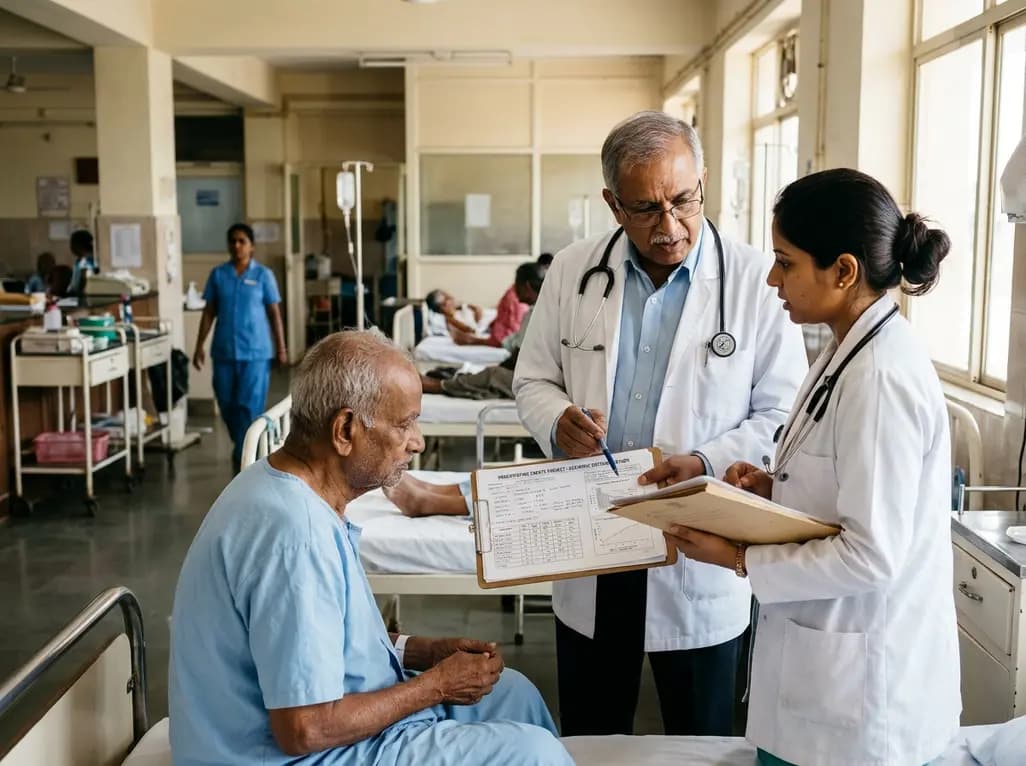
Failing to account for competing events like mortality in longitudinal geriatric studies produces biased risk estimates and misleading inferences. This review highlights key methodological principles, insights from the Precipitating Events Project, and practical approaches for clinical research appraisal.
Today
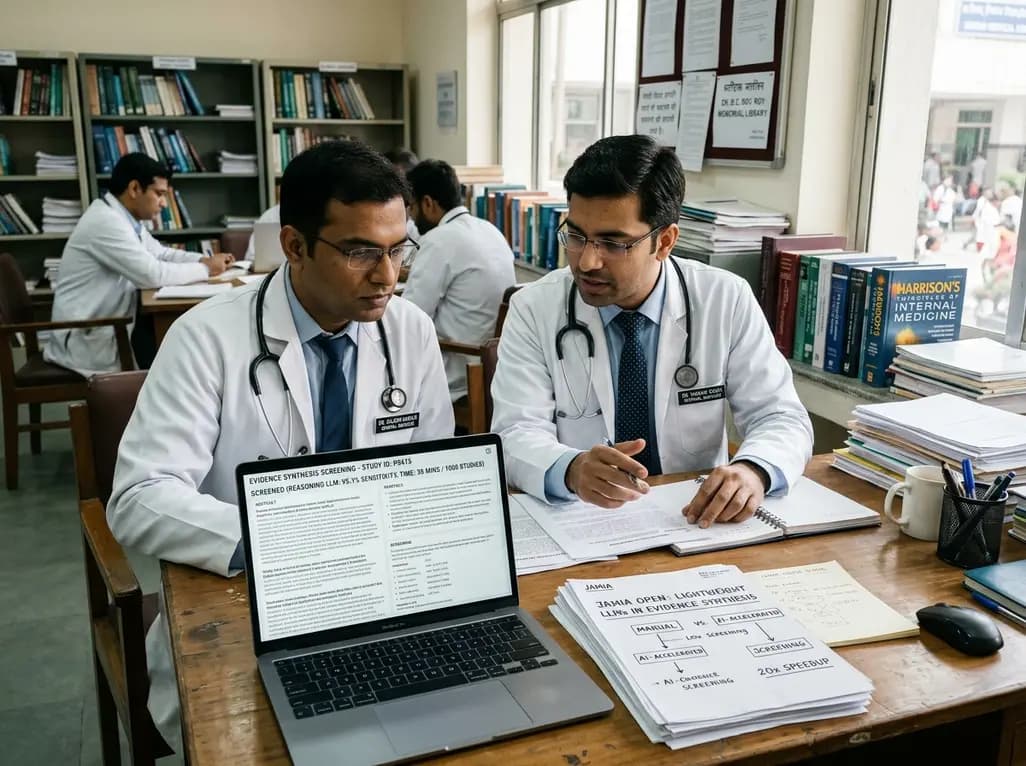
A study in JAMIA Open shows lightweight open-source reasoning LLMs achieve up to 95% sensitivity and accelerate evidence synthesis screening by nearly twentyfold, presenting a cost-effective, scalable AI solution for biomedical research and systematic reviews.
Today
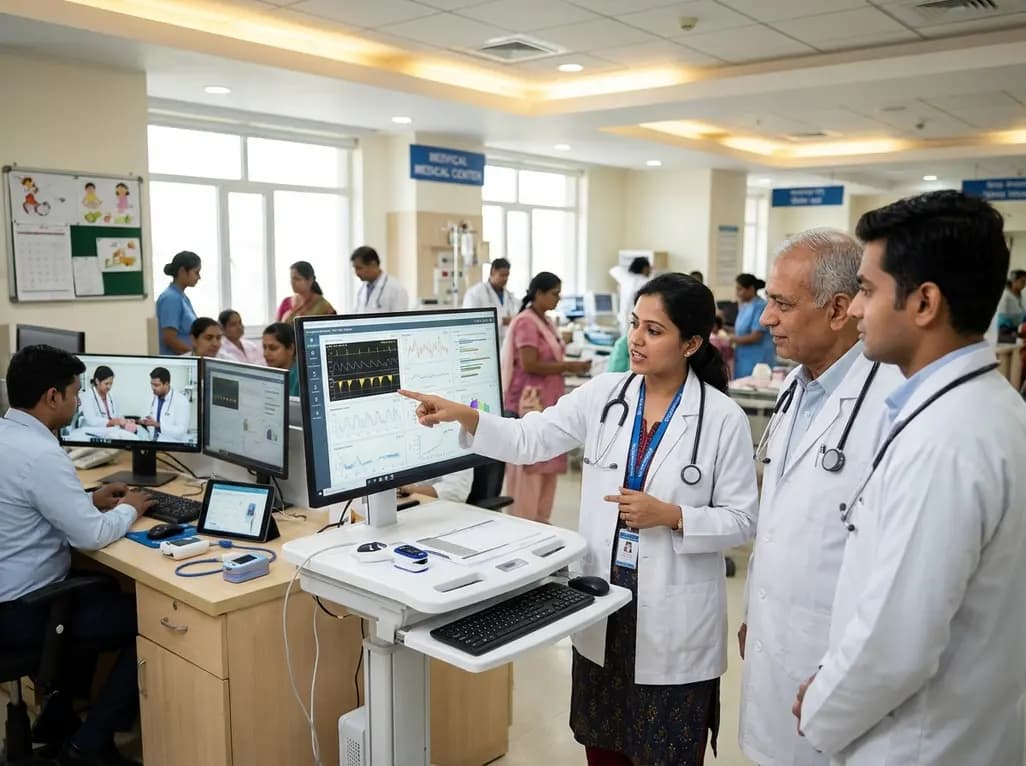
A landmark study details how an enterprise pediatric remote patient management model expanded from a single cardiology pilot to 16 diverse specialty programs by combining centralized digital operations with specialty clinical leadership.
Today
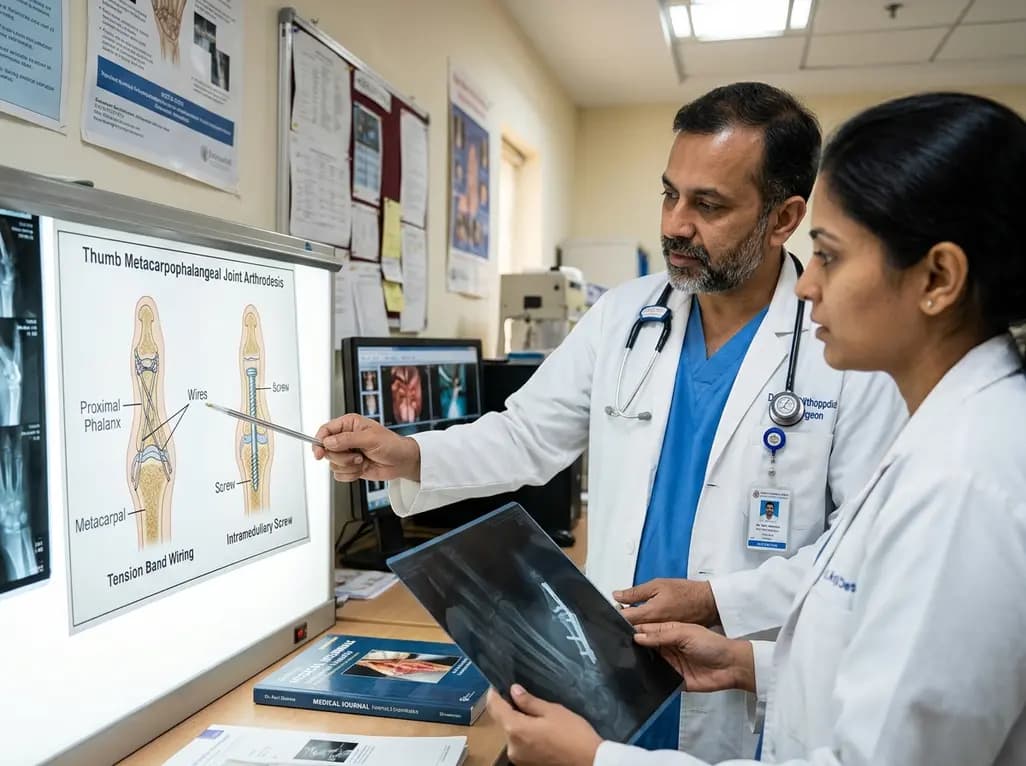
A comparative review of tension band wiring and intramedullary screw fixation in thumb metacarpophalangeal arthrodesis, evaluating union rates, hardware complications, and clinical outcomes.
Yesterday
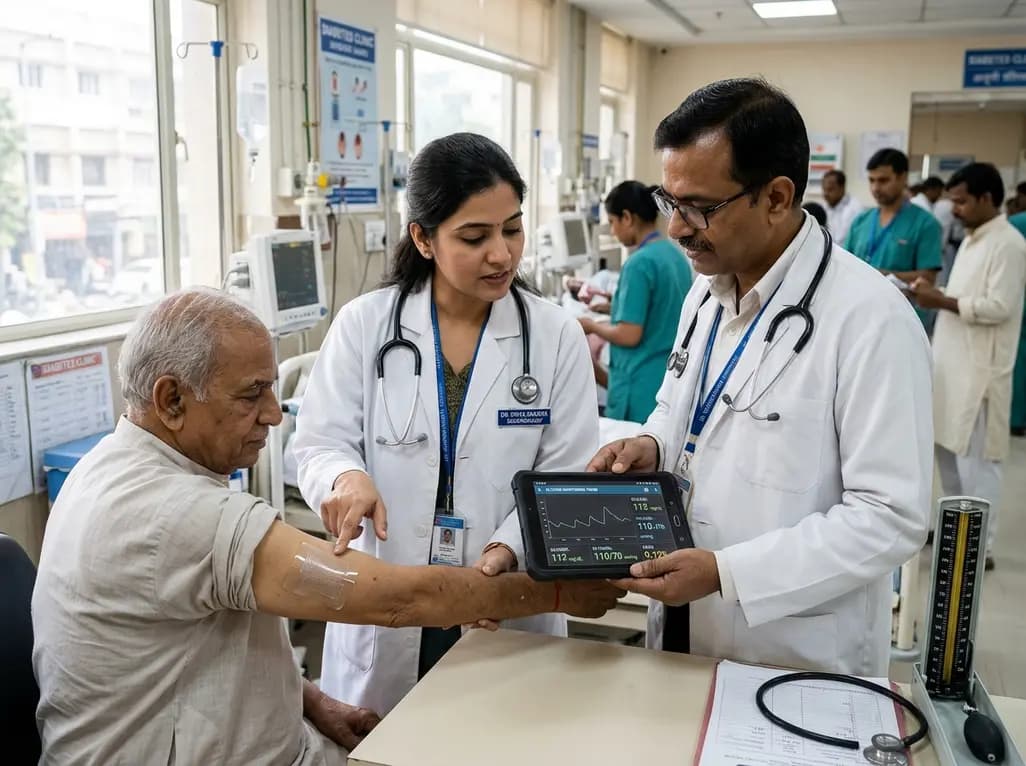
A breakthrough ultrathin multimodal sensor decouples physical hemodynamic monitoring from disposable electrochemical calibration, achieving long-term wearable glucose prediction with 81.36% accuracy and a 9.12% MARD. This offers a robust, drift-free solution for outpatient metabolic surveillance.
Today
