.webp&w=384&q=75)

Loading, please wait...
Loading, please wait...
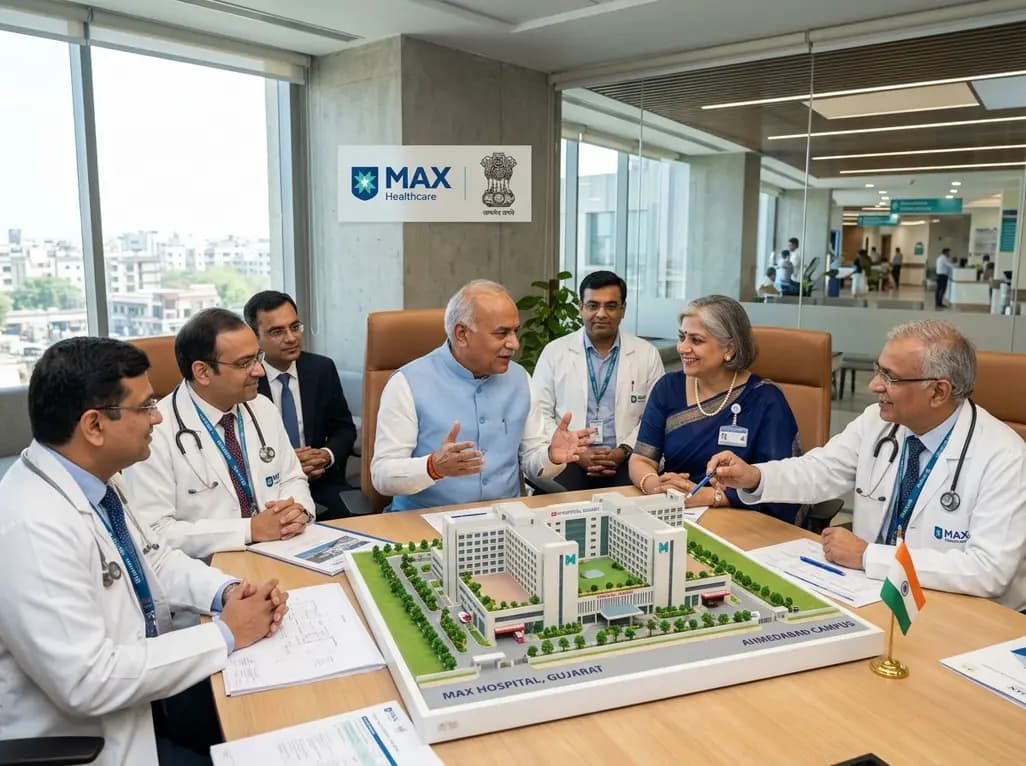
Gujarat is preparing for a major enhancement in its healthcare ecosystem as Chief Minister Bhupendra Patel recently announced the new Max Healthcare Gujarat expansion. The premier healthcare provider plans to enter the state by constructing a modern 800-bed multispeciality hospital. This major infrastructure development follows a high-level strategic meeting in New Delhi between Chief Minister Patel and Abhay Soi, Chairman and Managing Director of Max Healthcare Institute.
The proposed 800-bed multispeciality hospital marks Max Healthcare's official entry into western India's rapidly growing medical sector. Consequently, this flagship facility will deliver comprehensive tertiary and quaternary medical interventions under one roof. The organization intends to incorporate advanced surgical suites, modern catheterization laboratories, and extensive intensive care units. Furthermore, leadership emphasized that modern clinical architecture will optimize infection control and streamline patient mobility throughout the hospital. Therefore, patients across Gujarat will gain rapid access to specialized multidisciplinary care teams without traveling to distant metropolitan centers. Additionally, the planned hospital integrates digital diagnostic technologies, automated pharmacy distribution, and advanced health informatics systems. This technological backbone will support clinical decision-making and minimize medical errors across inpatient and outpatient services. State administrative leaders believe this milestone facility will serve as an anchor institution for high-complexity treatments across oncology, cardiology, neurology, and solid organ transplantation.
Gujarat's progressive urban development guidelines and supportive Floor Space Index (FSI) regulations played a pivotal role in attracting this substantial private capital investment. During the official announcement, the healthcare network praised the state administration for creating an enabling regulatory framework for massive hospital projects. Favorable FSI policies allow healthcare developers to construct high-density, vertical medical complexes equipped with specialized clinical towers. Consequently, modern hospital builders can maximize bed density and clinical square footage within prime urban locations. Moreover, streamlined administrative clearances and clear zoning guidelines reduce project timelines and lower capital expenditure barriers. In addition, urban planners have designed surrounding municipal infrastructure to ensure rapid ambulance access and smooth transit connectivity. The state government continues to prioritize medical infrastructure development as a cornerstone of its broader public welfare strategy. By fostering strong public-private alignments, Gujarat establishes a benchmark model for rapid, sustainable healthcare infrastructure expansion in modern India.
The establishment of an 800-bed multispeciality facility significantly bridges regional capacity deficits in advanced clinical specialties. Patients requiring complex neurosurgical interventions, complex cardiovascular surgeries, or comprehensive cancer therapies will experience reduced waiting times. Furthermore, the facility will house advanced medical oncology, surgical oncology, and radiation therapy wings with linear accelerators. Critically ill patients will also benefit from dedicated emergency resuscitation bays and specialized critical care units. These critical care floors will feature extracorporeal membrane oxygenation (ECMO) support and continuous renal replacement therapy systems. Consequently, medical specialists can treat severe trauma, multi-organ dysfunction, and sepsis with higher clinical precision. In addition, the hospital plans to establish structured organ transplant programs for liver, kidney, and heart recipients. By recruiting accomplished clinicians and seasoned nursing personnel, the facility will elevate clinical benchmarks and drive superior therapeutic outcomes across western India.
Beyond the primary 800-bed flagship facility, Max Healthcare outlined ambitious plans to extend its presence into Gandhinagar and Surat. These industrial and administrative economic corridors exhibit exponential population growth and rising demands for specialized healthcare. Therefore, expanding clinical operations into these strategic urban hubs creates an integrated regional referral network. Patients diagnosed with complex diseases in regional outreach centers can seamlessly transfer to tertiary hubs for definitive interventions. Moreover, Gandhinagar's proximity to institutional research hubs provides promising opportunities for translational medical research and clinical trials. Meanwhile, Surat represents a vital commercial epicenter that requires robust occupational health and trauma capabilities. Consequently, establishing multi-tiered medical facilities across these cities will ensure equitable access to world-class clinical expertise. This distributed healthcare network will alleviate pressure on existing public district hospitals and strengthen municipal emergency preparedness.
This Gujarat initiative aligns with Max Healthcare's nationwide strategy to scale its overall operational capacity to 10,000 beds over the coming three to four years. The provider currently operates 21 healthcare facilities with over 6,100 operational beds across Delhi NCR, Maharashtra, Punjab, Uttarakhand, Haryana, and Odisha. Furthermore, the company demonstrated solid financial strength, reporting a 16 percent year-on-year rise in gross revenue to Rs 2,982 crore in the first quarter of the current fiscal year. Its network profit after tax grew to Rs 357 crore, reflecting sustained financial health. As a result, the healthcare giant funds its ambitious greenfield and brownfield projects primarily through robust internal accruals. Scaling hospital network capacity unlocks procurement efficiencies for expensive medical equipment and pharmaceuticals. Additionally, it enables centralized digital health records, cross-network clinical consultations, and standardized quality protocols across all participating regional centers.
The construction and commissioning of an 800-bed hospital will generate significant socioeconomic value across the region. The project will create thousands of direct employment opportunities for medical specialists, nursing professionals, allied health workers, and administrative personnel. Furthermore, indirect employment will surge across biomedical logistics, housekeeping services, medical supply manufacturing, and hospitality. In addition, Gujarat has emerged as a preferred destination for domestic and international medical travelers seeking affordable, world-class treatments. A globally accredited hospital network enhances the state's attractiveness for medical tourism, particularly from East Africa, the Middle East, and Central Asia. Consequently, the convergence of top-tier medical talent and cutting-edge infrastructure will solidify Gujarat's status as a leading global healthcare destination.
Q1: What are the key specifications of the proposed Max Healthcare hospital in Gujarat?
Max Healthcare plans to construct a modern 800-bed multispeciality hospital in Gujarat. The facility will feature advanced infrastructure for tertiary and quaternary care, including comprehensive oncology wings, cardiac catheterization laboratories, neurosciences units, organ transplant facilities, and large intensive care departments supported by digital diagnostic technologies.
Q2: Why is Gujarat attracting major private healthcare infrastructure investments?
Gujarat offers progressive urban planning frameworks, streamlined single-window regulatory clearances, and favorable Floor Space Index policies. These advantageous administrative conditions encourage private healthcare organizations to build high-capacity, vertical hospital complexes that maximize clinical floor space while enjoying excellent civic connectivity and municipal support.
Q3: How does this development fit into Max Healthcare's national expansion targets?
Max Healthcare currently operates 21 hospital facilities comprising over 6,100 beds across six states. The Gujarat entry directly supports the provider's strategic vision to scale its nationwide footprint to 10,000 beds within the next three to four years, financed largely through steady internal accruals and strong financial performance.
Disclaimer: This content is for informational and educational purposes only. It does not constitute medical advice or replace professional judgment. Refer to the latest local and national guidelines for clinical practice.
References

Read summarized clinical updates, watch expert medical content, and earn CME certifications right from your smartphone.
Open your smartphone camera to scan and install.





Gujarat Chief Minister Bhupendra Patel announced Max Healthcare's major entry into Gujarat with a flagship 800-bed multispeciality hospital, alongside planned expansions in Gandhinagar and Surat to strengthen clinical capabilities and state-level healthcare infrastructure.
4 weeks back
Discover a synchronized faculty and fellow quality improvement curriculum designed for geriatric and palliative care, strengthening institutional mentorship and clinical outcomes.
Today
Postoperative adhesions cause severe complications, including bowel obstruction and infertility. This review highlights functional biomaterials, evaluating polysaccharide films and hydrogels while addressing retention, tissue conformability, and translational hurdles in clinical surgery.
Today
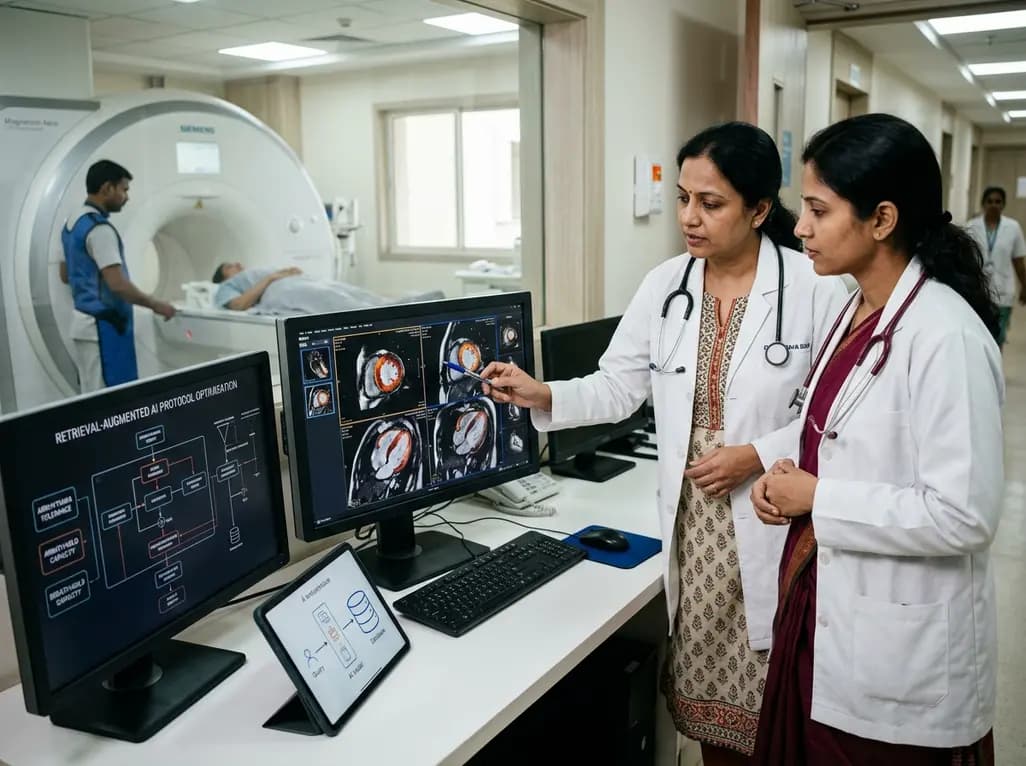
A prospective study demonstrates that an AI framework utilizing a retrieval-augmented LLM personalizes cine cardiac MRI protocols with diagnostic accuracy noninferior to experienced technologists, even in complex clinical scenarios involving arrhythmia and limited breath-holding capacity.
Today
New biomechanical research reveals that foot-strike angle significantly influences knee energy absorption during cutting tasks in female soccer players. Understanding these kinematic patterns offers clinicians valuable pathways for targeted ACL injury prevention and athletic retraining.
Today
A cross-sectional study demonstrates that increased BMI in adolescents significantly enhances mandibular length and alters salivary adipokines like adiponectin and resistin, providing novel insights into craniofacial growth and orthodontic planning.
Today
