.webp&w=384&q=75)

Loading, please wait...
Loading, please wait...
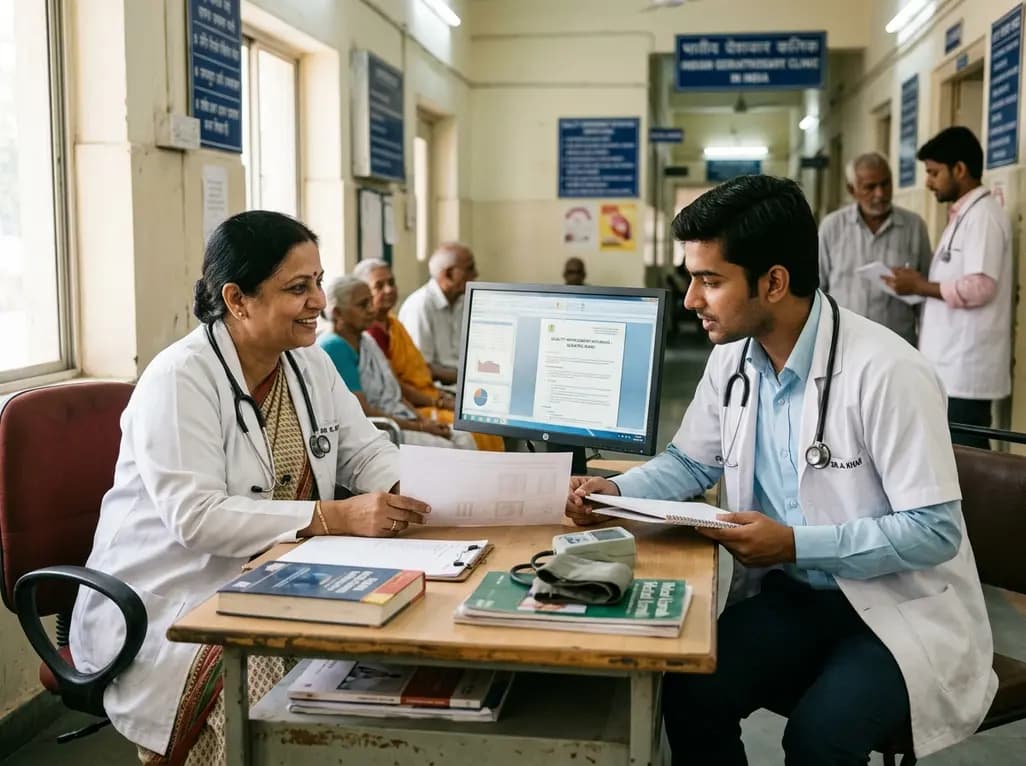
Effective clinical education requires structured systems for teaching quality improvement across modern medical disciplines. Contemporary healthcare systems constantly face intricate challenges regarding clinical errors, care variations, and inefficient resource allocation. In geriatric and palliative care, these challenges become particularly acute. Older adults and chronically ill patients present complex multimorbidities, cognitive vulnerabilities, and frequent polypharmacy. Consequently, standard curative protocols rarely address their individualized, long-term care goals. Medical educators must therefore equip trainees with scientific methods to evaluate clinical processes and lead iterative improvements. Historically, medical training treated systemic quality as an administrative chore rather than an essential clinical competency. However, modern competency-based medical education frameworks globally demand formal training in improvement science. Trainees must master continuous audit cycles, root-cause diagnostics, and workflow modifications alongside standard diagnostic reasoning. When training institutions prioritize these capabilities, clinical teams achieve safer and more patient-centered outcomes. Furthermore, structured education empowers clinicians to convert daily bedside challenges into durable systemic interventions. Ultimately, cultivating these essential capabilities prepares emerging physicians to navigate complex healthcare environments effectively.
Although academic residency programs mandate quality projects for fellows, faculty preparation lags significantly behind. Historically, senior clinical educators completed their postgraduate training before institutions formally integrated improvement science into curricula. As a result, many seasoned clinicians lack formal exposure to standardized quality frameworks. They excel at bedside clinical teaching, yet they struggle to supervise complex process mapping or statistical process control. Moreover, clinical faculty in high-demand subspecialties face immense inpatient volumes and heavy administrative duties. These demanding responsibilities leave minimal protected time for acquiring advanced instructional methods. When supervisors lack self-efficacy in systems analysis, trainee projects frequently devolve into superficial compliance exercises. Fellows may perform brief retrospective chart audits that generate minimal actionable clinical change. Furthermore, traditional faculty development programs rarely offer longitudinal, hands-on mentorship tailored to academic clinicians. Without dedicated institutional sponsorship, educators cannot easily translate theoretical safety principles into pragmatic clinical tools. Therefore, establishing structured faculty development represents the critical foundation for authentic educational reform. Closing this pedagogical gap ensures that mentors can credibly evaluate and steer fellow-led initiatives.
To resolve these educational hurdles, forward-thinking medical centers have developed synchronized, bidirectional educational tracks. This integrated model trains faculty mentors and fellows concurrently through harmonized didactic and practical curricula. Rather than teaching cohorts in isolated silos, the dual-track design builds an interactive, collaborative learning environment. Initially, faculty and fellows participate in joint workshops covering fundamental improvement tools. These sessions examine clear aim statements, process maps, driver diagrams, and run charts. Subsequently, faculty mentors transition into specialized supervisory tracks featuring dedicated coach-the-coach modules. These advanced modules instruct senior educators on providing constructive feedback and overcoming institutional resistance. Meanwhile, fellows design and execute longitudinal improvement projects across wards, outpatient clinics, or hospice settings. Because mentors study the curriculum simultaneously, they understand the exact analytical barriers their trainees experience. Consequently, supervision transitions from distant critique into an active, supportive partnership. In addition, institutions schedule regular peer-review huddles where faculty troubleshoot mentoring challenges together. This synchronized structure expands organizational leadership while improving patient care delivery.
Practical execution depends upon applying Plan-Do-Study-Act (PDSA) cycles directly to clinical workflows. In geriatric wards, frequent hazards involve patient falls, catheter infections, pressure injuries, and missed delirium. Similarly, palliative care units struggle with documentation delays regarding advance care planning and uncontrolled breakthrough pain. Within this parallel curriculum, fellow-faculty pairs select high-impact clinical targets and implement rapid test cycles. For example, a team might target delirium screening adherence in an acute care unit. First, the team maps nursing workflows to pinpoint diagnostic bottlenecks. Next, they introduce a validated screening tool during morning clinical rounds. Simultaneously, the faculty mentor engages hospital leadership to secure interdisciplinary cooperation. They monitor annotated run charts weekly to verify whether workflow adjustments produce measurable gains. Furthermore, the mentor guides the fellow in refining the intervention through repeated testing cycles. By testing small changes iteratively, teams prevent staff fatigue and adapt protocols to clinical reality. Ultimately, this experiential learning embeds rigorous safety behaviors into daily practice.
This dual-track educational approach offers substantial value for India’s evolving medical landscape. Currently, India experiences a rapid demographic transition with an expanding elderly population requiring specialized care. Concurrently, the National Medical Commission (NMC) mandates Competency-Based Medical Education (CBME), emphasizing systems-based practice and clinical audits for postgraduates. In addition, hospital accreditation standards from the National Accreditation Board for Hospitals and Healthcare Providers (NABH) require continuous quality assurance. However, many Indian teaching hospitals lack faculty trained formally in improvement methodology. Adopting a parallel curriculum addresses this gap economically without hiring costly outside consultants. Academic institutions can use existing mortality-morbidity conferences and clinical audit committees to launch targeted departmental projects. For instance, teams can focus on reducing polypharmacy, standardizing palliative pain assessments, or improving end-of-life counseling. Concurrently, senior professors gain valuable supervisory capabilities while fellows satisfy core regulatory audit requirements. Ultimately, this scalable educational paradigm fosters capable clinical leaders across Indian institutions. Developing internal faculty competencies strengthens patient safety, optimizes scarce hospital resources, and advances compassionate elder care nationwide.
Traditional education often creates an awkward pedagogical gap where trainees learn modern improvement science while their supervising faculty lack foundational knowledge. By training faculty and fellows simultaneously, this dual model establishes common terminology and shared analytical frameworks. Supervisors learn effective coaching techniques, project scoping strategies, and run-chart interpretation alongside fellows. Consequently, mentors provide proactive, practical guidance rather than passive oversight, ensuring that trainee-led clinical projects achieve sustainable outcomes.
Institutions evaluate faculty competency through both direct educational assessments and operational healthcare indicators. Academic metrics include objective faculty pre- and post-test scores, validated mentorship evaluation surveys completed by trainees, and project completion rates. Clinically, competency is demonstrated when faculty successfully guide projects that meet target aims, such as reduced medication errors or increased palliative consultations. Furthermore, academic productivity, including peer-reviewed publications, institutional policy adaptations, and regional conference presentations, reflects advanced mentoring capability.
Resource-limited teaching hospitals can implement this curriculum by utilizing open-access quality improvement toolkits from international healthcare bodies. Rather than establishing new administrative divisions, institutions can integrate monthly learning sessions into existing clinical grand rounds or audit meetings. Pairing novice faculty with experienced clinical audit leaders accelerates skill acquisition. Furthermore, programs should focus on low-cost, high-impact clinical targets, such as pressure ulcer documentation or hand hygiene compliance, demonstrating meaningful value before scaling the initiative.
Disclaimer: This content is for informational and educational purposes only... Refer to the latest local and national guidelines for clinical practice.
References

Read summarized clinical updates, watch expert medical content, and earn CME certifications right from your smartphone.
Open your smartphone camera to scan and install.





Discover a synchronized faculty and fellow quality improvement curriculum designed for geriatric and palliative care, strengthening institutional mentorship and clinical outcomes.
Today
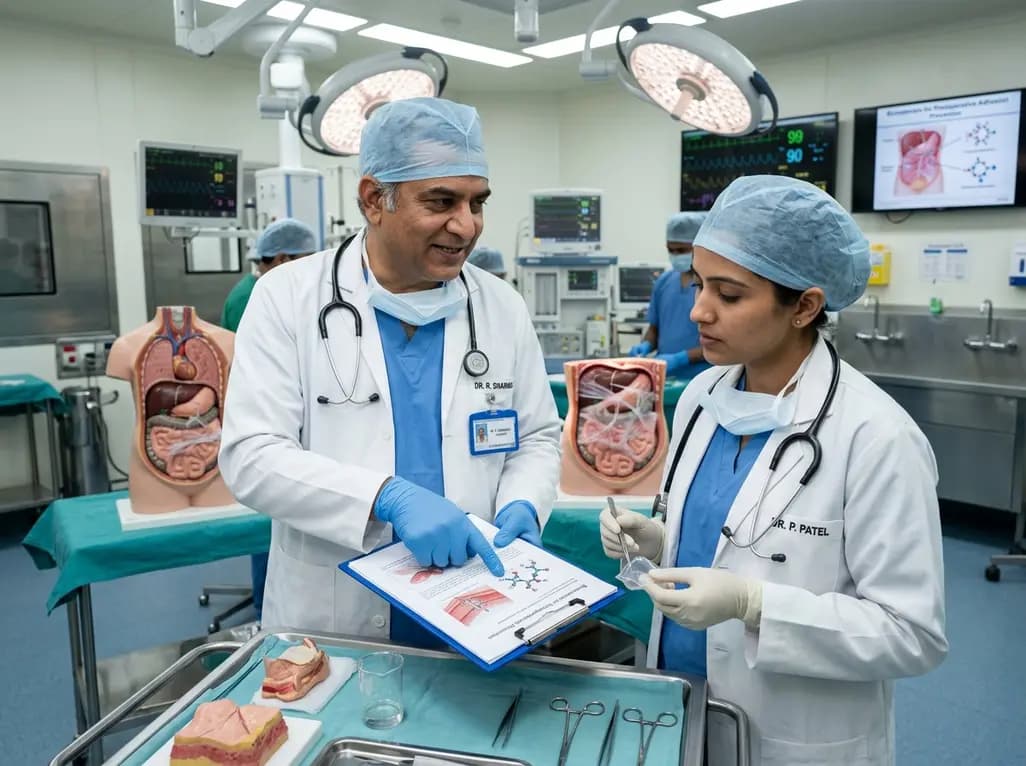
Postoperative adhesions cause severe complications, including bowel obstruction and infertility. This review highlights functional biomaterials, evaluating polysaccharide films and hydrogels while addressing retention, tissue conformability, and translational hurdles in clinical surgery.
Today
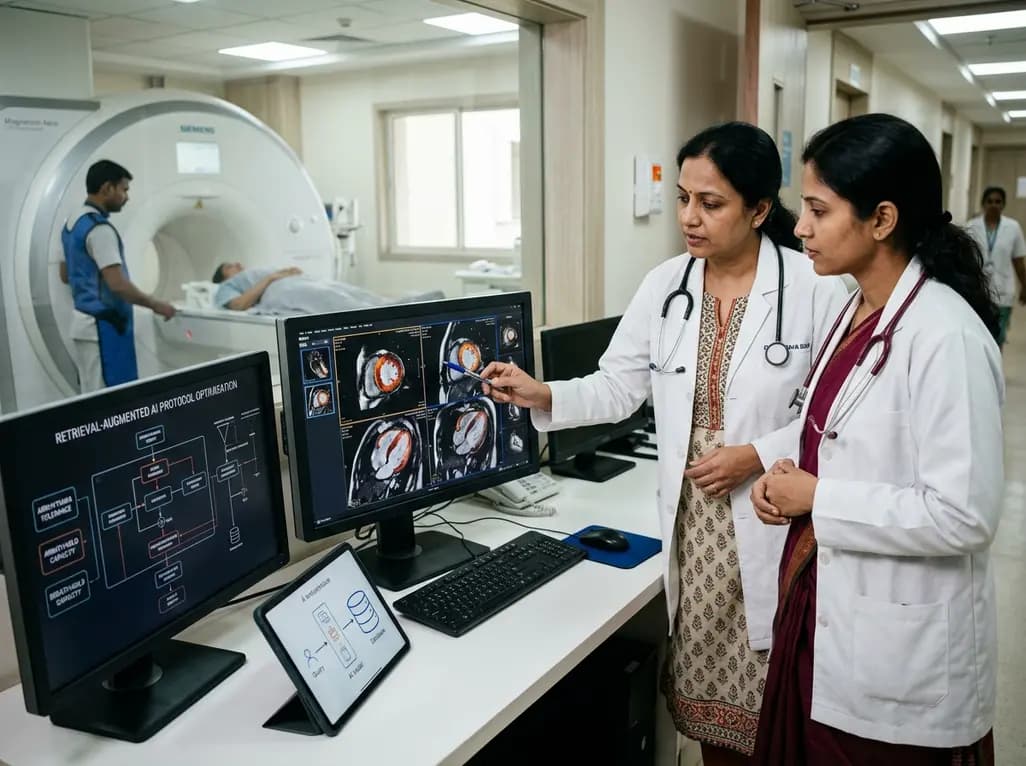
A prospective study demonstrates that an AI framework utilizing a retrieval-augmented LLM personalizes cine cardiac MRI protocols with diagnostic accuracy noninferior to experienced technologists, even in complex clinical scenarios involving arrhythmia and limited breath-holding capacity.
Today
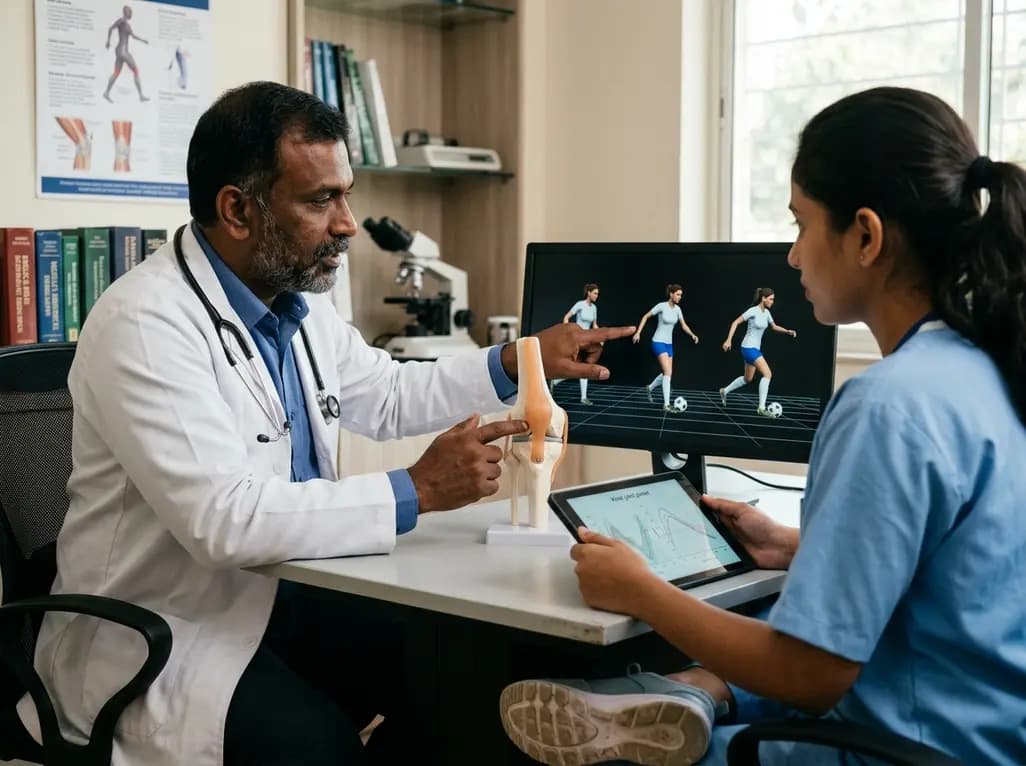
New biomechanical research reveals that foot-strike angle significantly influences knee energy absorption during cutting tasks in female soccer players. Understanding these kinematic patterns offers clinicians valuable pathways for targeted ACL injury prevention and athletic retraining.
Today
A cross-sectional study demonstrates that increased BMI in adolescents significantly enhances mandibular length and alters salivary adipokines like adiponectin and resistin, providing novel insights into craniofacial growth and orthodontic planning.
Today
