.webp&w=384&q=75)

Loading, please wait...
Loading, please wait...

Cardiac magnetic resonance imaging represents the reference standard for noninvasive assessment of myocardial structure and biventricular function. However, executing an optimal cine cardiac MRI protocol frequently challenges technologists when examining patients with irregular rhythms or limited breath-hold capacity. Conventional scanners rely heavily on static vendor templates that fail to account for unique patient limitations. Consequently, technologists must manually modify complex pulse parameters under severe time constraints. A prospective comparative study demonstrates that artificial intelligence frameworks using retrieval-augmented large language models can tailor sequence parameters effectively while maintaining exceptional diagnostic noninferiority.
Standardized imaging sequences deliver exceptional spatial resolution in healthy, cooperative individuals. Nevertheless, everyday clinical workflows frequently encounter patients who cannot sustain prolonged breath-holds. In addition, cardiac arrhythmias distort electrocardiographic gating, which triggers severe phase-ghosting artifacts and myocardial border blurring. When technologists encounter these physiological challenges, they must rapidly adjust views per segment, acceleration factors, and temporal footprints at the console.
Unfortunately, manual parameter adjustments introduce significant diagnostic variability across imaging centers and operators. Less experienced radiologic technologists often struggle to determine the ideal trade-offs between rapid acquisition speed and signal-to-noise ratio. As a result, diagnostic teams frequently face repeated sequence acquisitions, prolonged table times, and significant patient exhaustion. Furthermore, severe motion artifacts occasionally force clinicians to accept suboptimal studies or reschedule examinations entirely. Therefore, automating dynamic protocol adaptation provides a vital safeguard against technical inconsistencies. By personalizing scanner parameters to individual physiological constraints, imaging departments can preserve clinical throughput and deliver reproducible myocardial assessments across heterogeneous patient cohorts.
Artificial intelligence systems often suffer from hallucinations when answering nuanced clinical queries. However, retrieval-augmented generation solves this limitation by tethering large language models to verified institutional sequence libraries and peer-reviewed physics literature. In this prospective investigation, researchers developed an AI framework that retrieves specific physics rules and scanner constraints before generating protocol recommendations.
Specifically, the model ingests real-time patient metadata, including heart rate variability, breath-hold endurance, and existing metallic implants. Next, the retrieval mechanism extracts pertinent sequence adjustment rules from curated technical databases. The language model then synthesizes these clinical inputs into an actionable, tailored pulse sequence configuration. For instance, in patients with severe tachyarrhythmia, the framework shortens the acquisition window and increases parallel imaging acceleration to eliminate motion blur. Meanwhile, for patients with sternal wires or cardiac devices, the algorithm modulates flip angles and bandwidth to suppress susceptibility artifacts. Consequently, the scanner receives safe, optimized instructions without requiring manual trial and error from the operator.
The prospective comparative study enrolled sixty-eight consecutive patients referred for diagnostic 1.5 T cardiac examinations. The cohort included individuals with normal biventricular function as well as challenging subjects presenting with arrhythmias, implants, or reduced breath-hold capacities. Each participant underwent scanning under both a technologist-optimized protocol and an AI-generated protocol within the same imaging session.
Subsequently, two blinded expert radiologists evaluated the resulting image sets using structured four-point Likert scales. The readers systematically assessed overall image clarity, endocardial border delineation, and artifact suppression across short-axis and long-axis orientations. Importantly, the AI-optimized protocols achieved image quality scores that were fully equivalent or noninferior to technologist-directed protocols. Furthermore, quantitative assessments of left ventricular ejection fraction, end-diastolic volume, and stroke volume demonstrated exceptional agreement between methods. Bland-Altman analyses confirmed minimal bias and narrow limits of agreement across all volumetric parameters. Thus, the algorithmic protocol selection preserved vital functional metrics without compromising quantitative diagnostic precision.
Beyond preserving quantitative accuracy, automated protocoling delivered noticeable operational benefits during difficult scanning conditions. In patients with irregular rhythms, technologist adjustments often require repeated trials that extend overall exam duration. In contrast, the retrieval-augmented framework rapidly suggested robust sequence settings tailored specifically to rhythm variability.
Consequently, imaging teams noted fewer repeated sequence acquisitions during the AI-guided scanning phase. Blinded readers also assigned consistently high scores for artifact suppression in patients with compromised breath-holding capacity. Because the automated system prioritized shortened temporal footprints, patients experienced less respiratory distress in the scanner bore. In addition, technologists reported greater confidence during sequence selection, particularly when managing patients with non-ferromagnetic thoracic implants. These findings indicate that generative AI can function as an intelligent co-pilot at the scanner console. Ultimately, the framework standardizes imaging quality across varied skill levels, reducing operator burden and optimizing costly scanner utilization in demanding clinical environments.
Cardiovascular disease represents a massive clinical burden across India, driving an exponential demand for advanced diagnostic imaging. However, modern cardiac MRI availability remains concentrated in tertiary academic centers and metropolitan hospitals. A persistent shortage of experienced cardiac MRI technologists frequently limits sequence optimization in high-volume Indian diagnostic centers. Under heavy daily patient loads, technologists may rely on default generic sequences, leading to nondiagnostic acquisitions in frail patients.
Integrating retrieval-augmented AI systems into domestic imaging equipment offers a scalable solution to bridge this operational gap. Specifically, an automated protocol assistant allows community hospitals and tier-2 diagnostic chains to maintain tertiary-level image quality. Moreover, reducing scan durations and repeat acquisitions lowers operational expenses and enhances overall patient comfort. Indian centers can also integrate local scanner hardware specifications into the retrieval database, ensuring seamless compatibility across multi-vendor fleets. Nevertheless, regulatory oversight, data privacy protections, and rigorous technologist training must accompany any real-world deployment. Through deliberate integration, automated protocoling can democratize access to high-fidelity cardiac imaging nationwide.
The framework combines a large language model with an external knowledge retrieval database containing pulse sequence physics and scanner parameters. When a technologist inputs patient-specific data, such as heart rate variability or breath-hold limitations, the system retrieves pertinent optimization rules. It then synthesizes these guidelines into adjusted flip angles, temporal resolutions, and parallel imaging factors. This automated approach ensures safe, noninferior sequence tailoring without operator hallucination.
No, the artificial intelligence framework functions as an assistive co-pilot rather than an autonomous replacement for human staff. Technologists remain essential for patient positioning, coil placement, safety screening, and acute patient monitoring during examinations. Instead of replacing staff, the AI system relieves cognitive burden and minimizes manual sequence trial and error. Consequently, it elevates scanning consistency and reduces operator variability across diverse clinical and imaging settings.
The retrieval system cross-references verified safety constraints and sequence adjustments designed specifically for irregular rhythms or metallic implants. For tachyarrhythmias, it shortens acquisition windows and modifies views per segment to prevent motion artifacts. When managing sternal wires or cardiac devices, the system adjusts bandwidths and flip angles to reduce magnetic susceptibility distortions. As a result, the protocol maintains diagnostic image quality without compromising clinical patient safety.
Disclaimer: This content is for informational and educational purposes only and should not be taken as medical advice. Clinical decisions must rely on independent professional evaluation. Refer to the latest local and national guidelines for clinical practice.
References

Read summarized clinical updates, watch expert medical content, and earn CME certifications right from your smartphone.
Open your smartphone camera to scan and install.





A prospective study demonstrates that an AI framework utilizing a retrieval-augmented LLM personalizes cine cardiac MRI protocols with diagnostic accuracy noninferior to experienced technologists, even in complex clinical scenarios involving arrhythmia and limited breath-holding capacity.
Today
Findings from the CHRIS study show that higher adherence to healthy plant-rich diets is associated with superior olfactory function and lower rates of hyposmia. Conversely, unhealthy plant-based diets show inverse trends, emphasizing that dietary quality governs neurosensory preservation in adults.
Today

Postoperative adhesions cause severe complications, including bowel obstruction and infertility. This review highlights functional biomaterials, evaluating polysaccharide films and hydrogels while addressing retention, tissue conformability, and translational hurdles in clinical surgery.
Today
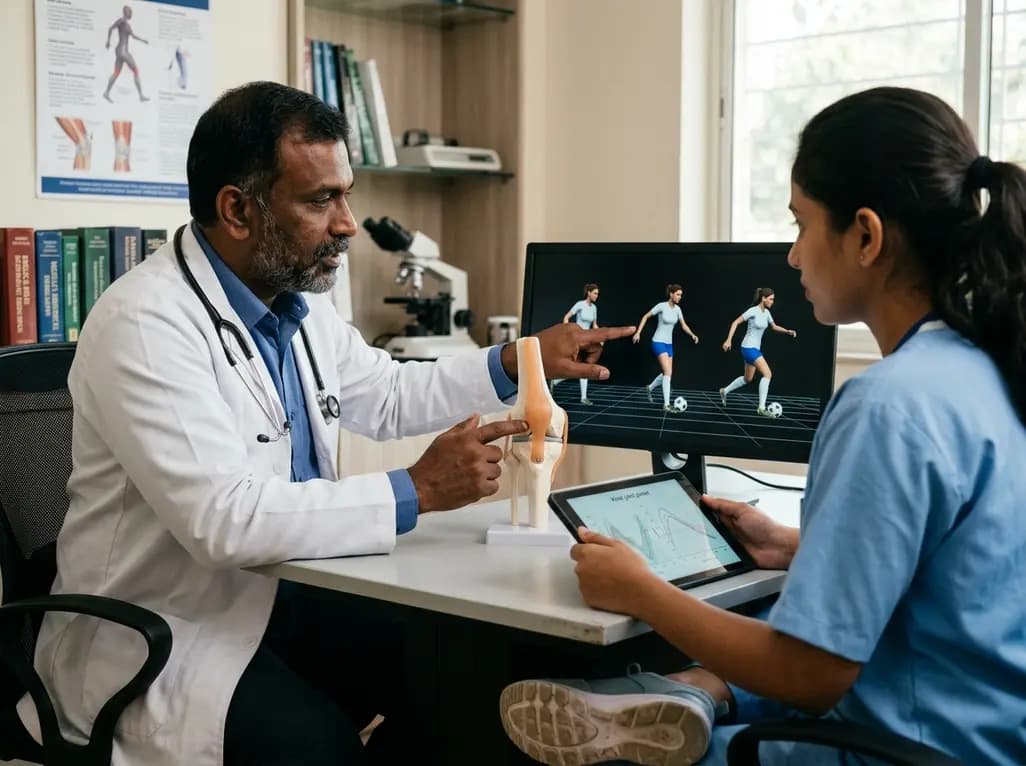
New biomechanical research reveals that foot-strike angle significantly influences knee energy absorption during cutting tasks in female soccer players. Understanding these kinematic patterns offers clinicians valuable pathways for targeted ACL injury prevention and athletic retraining.
Today

A cross-sectional study demonstrates that increased BMI in adolescents significantly enhances mandibular length and alters salivary adipokines like adiponectin and resistin, providing novel insights into craniofacial growth and orthodontic planning.
Today
