.webp&w=384&q=75)

Loading, please wait...
Loading, please wait...

A new study highlights significant variations in mandibular morphometry in India. Specifically, it contrasts healthy joints with those affected by temporomandibular joint (TMJ) ankylosis. Researchers conducted a retrospective analysis using clinical CT scans from 367 Indian subjects. For instance, they examined 199 healthy individuals and 168 patients with ankylosis at a tertiary hospital. Furthermore, the team analyzed mandibular parameters across various age groups. Consequently, this helps establish a regional baseline. Additionally, the study compared these findings with international standards.
Using 3D reconstructions, the researchers measured key parameters like ramus length and condyle width. As a result, the data revealed that patients with TMJ ankylosis exhibit markedly different dimensions. In particular, ramus length showed high sexual dimorphism in healthy individuals. However, mean ramus length in the ankylosis group was substantially smaller. Moreover, these findings are crucial for Indian surgeons. This is because standardized global implants often fail to fit the unique anatomy of Indian patients. Therefore, customized designs are necessary. Similarly, age-based analysis showed that puberty plays a vital role. Consequently, clinicians must consider developmental stages during reconstruction. Finally, the study provides a robust reference for future research and clinical practice.
Morphometric data ensures that alloplastic implants and surgical reconstructions fit the patient's unique anatomical structure. This reduces the risk of fit discrepancies and functional failure.
Ankylosis typically reduces the ramus length and alters the condyle width. It often leads to a significant reduction in dimensions compared to healthy subjects, especially in younger patients.
Disclaimer: This content is for informational and educational purposes only. It does not constitute professional medical advice, diagnosis, or treatment. Always seek the advice of your physician or other qualified healthcare provider with any questions you may have regarding a medical condition. Refer to the latest local and national guidelines for clinical practice.
References
Chandra G et al. Morphometric variations of human mandible in the Indian population: comparison between healthy and ankylosed temporomandibular joints. J Craniomaxillofac Surg. 2026 May 20. doi: undefined. PMID: 42160802.
Gupta S et al. Anthropometric Analysis of the Human Mandibular Cortical Bone in Indian Population as Assessed by Dental Computed Tomography. World J Dent. 2021;12(1):37-41.
Narwani R et al. Analysis of Morphologic and Morphometric Parameters of Human Mandible. Asian J Med Res. 2019;8(2):1-3.

Read summarized clinical updates, watch expert medical content, and earn CME certifications right from your smartphone.
Open your smartphone camera to scan and install.





A study of 367 Indian subjects reveals significant mandibular morphometry variations between healthy and ankylosed TMJs, crucial for surgical planning....
5 months ago
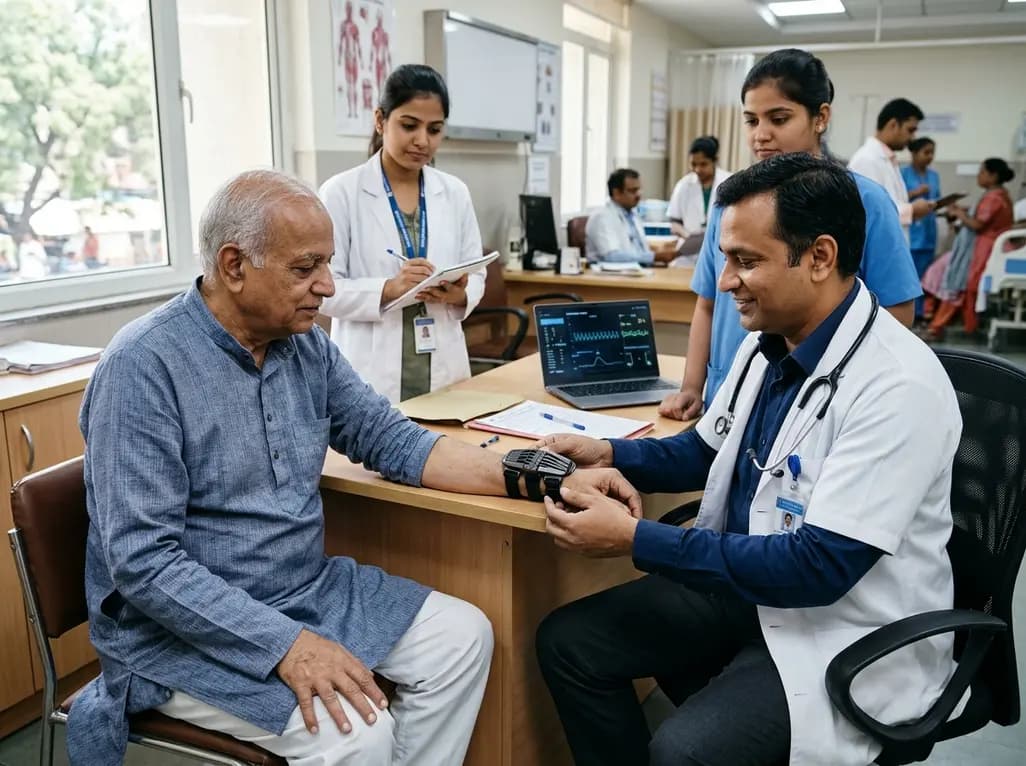
The TREM-AB open-label pilot study evaluated a wearable passive nonlinear vibration absorber for essential tremor. The Nonlinear Energy Sink bracelet reduced clinical Fahn-Tolosa-Marin tremor scores by 32.1% and electrophysiological tremor power by 49.2% with no adverse effects reported.
Today

A study in JAMIA Open shows lightweight open-source reasoning LLMs achieve up to 95% sensitivity and accelerate evidence synthesis screening by nearly twentyfold, presenting a cost-effective, scalable AI solution for biomedical research and systematic reviews.
Today
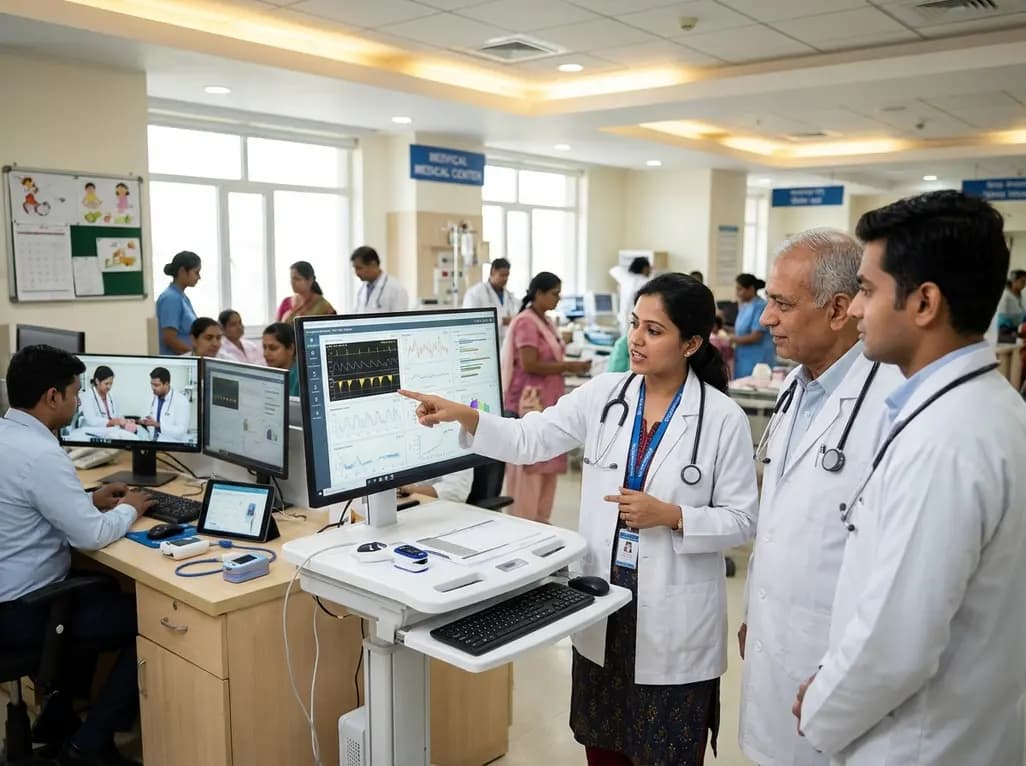
A landmark study details how an enterprise pediatric remote patient management model expanded from a single cardiology pilot to 16 diverse specialty programs by combining centralized digital operations with specialty clinical leadership.
Today
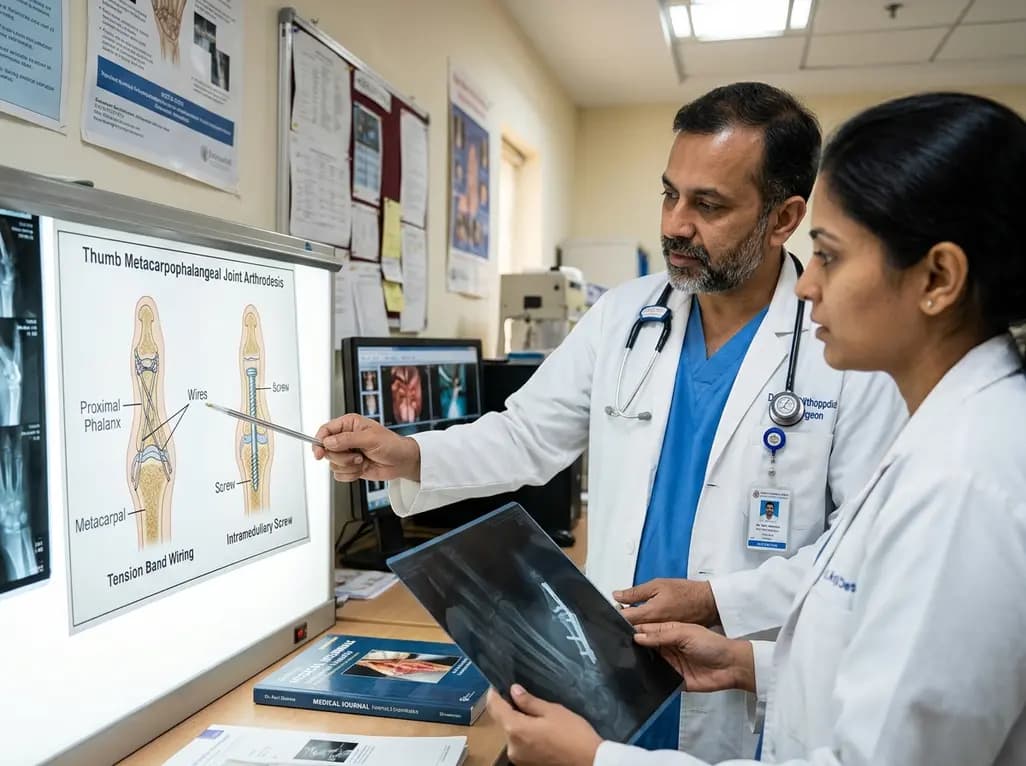
A comparative review of tension band wiring and intramedullary screw fixation in thumb metacarpophalangeal arthrodesis, evaluating union rates, hardware complications, and clinical outcomes.
Today
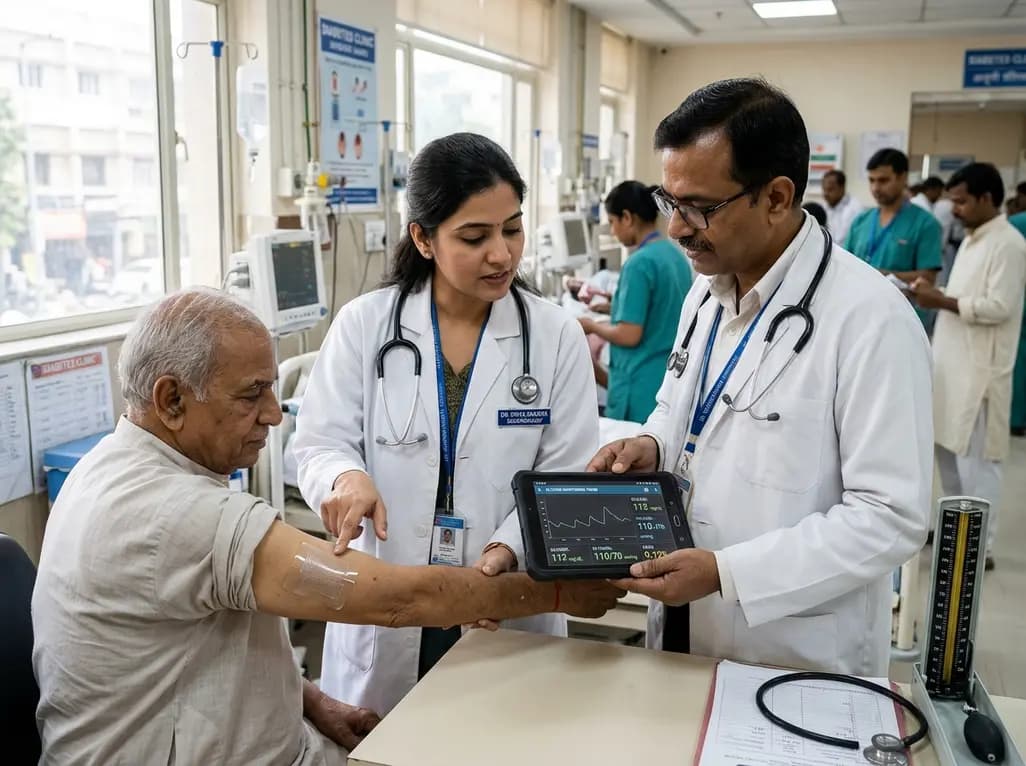
A breakthrough ultrathin multimodal sensor decouples physical hemodynamic monitoring from disposable electrochemical calibration, achieving long-term wearable glucose prediction with 81.36% accuracy and a 9.12% MARD. This offers a robust, drift-free solution for outpatient metabolic surveillance.
Today
