

Loading, please wait...
Loading, please wait...
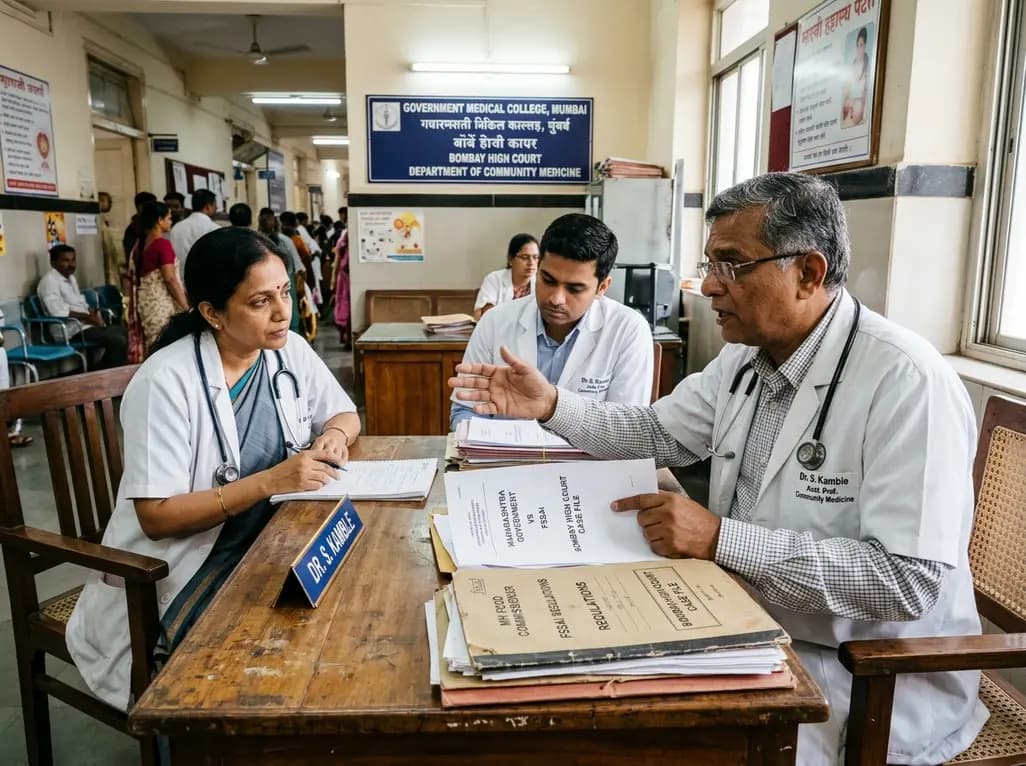
The governance of food safety in India faces a critical judicial test before the Bombay High Court. Recently, the Maharashtra government challenged central food safety regulations in court. Officials argue that the Food Safety and Standards Authority of India (FSSAI) created a parallel enforcement structure. Consequently, state officials contend that central directives undermine the federal division of public health responsibilities. The petition filed by the State Commissioner of Food Safety highlights vital statutory concerns. Therefore, this legal development demands close attention from healthcare administrators, public health experts, and regulatory professionals across India.
The Food Safety and Standards Act of 2006 originally consolidated multiple fragmented food laws into a single statutory framework. Historically, the legislation sought to establish uniform national benchmarks while maintaining decentralized ground enforcement. Under this original design, state commissioners and designated field officers retained primary authority to inspect premises, draw samples, and suspend permits. However, successive amendments have gradually shifted operational power away from provincial bodies toward central authorities. Specifically, the state government argues that central notifications effectively dismantle this decentralized statutory architecture. The petition submitted to the Bombay High Court asserts that Parliament never intended to disempower state authorities. In contrast, the central authority has expanded its operational footprint through multiple administrative notifications. Because state agencies possess intimate knowledge of local distribution networks, restricting their jurisdiction may compromise rapid public health responses. Moreover, local officers often identify regional contamination patterns long before national registries record them. Consequently, Maharashtra seeks judicial intervention to restore its independent oversight powers. The Division Bench comprising Chief Justice Mahesh Chandra Tripathi and Justice Advait Sethna scheduled the formal hearing for late November. Ultimately, this legal contest underscores an enduring tension between centralized national administration and regional public health autonomy.
At the core of the controversy lies the creation of novel regulatory posts that the state views as statutory overreach. According to the petition, the central chief executive officer unlawfully created posts like the Central Food Safety Officer. Furthermore, the authority established the Central Licensing Authority without explicit backing from the parent statute. State authorities contend that the Food Safety and Standards Act envisioned central leadership primarily for imported goods and policy formulation. Thus, domestic enforcement on Indian soil was meant to remain firmly within state jurisdiction. Additionally, the petition challenges licensing regulations implemented in 2011, recruitment guidelines from 2018, and subsequent amendments notified in 2026. Maharashtra asserts that these statutory changes systematically strip provincial food safety commissioners of their core executive mandate. As a result, the centralized digital compliance system now funnels large food business operators directly into federal oversight channels. When national bodies centralize licensing, state authorities lose instantaneous visibility over critical food manufacturing processes within their own borders. Consequently, local inspectors cannot act immediately when hygiene discrepancies arise at major processing hubs. The petition therefore asks the High Court to declare these central regulatory interventions unconstitutional and void.
Operational friction between central and state regulators intensified sharply following an administrative directive issued on May 12, 2023. This central order prohibited state food safety officers from independently inspecting any commercial facility holding a central license. Currently, enterprises reporting an annual turnover of fifty crore rupees or more fall exclusively under central jurisdiction. Therefore, whenever municipal or state inspectors wish to audit large food business operators, they must seek prior written approval. Alternatively, state teams must request central officers to accompany them during field investigations. This bureaucratic bottleneck hinders spontaneous surprise inspections, which serve as the cornerstone of rigorous food hygiene maintenance. For example, state officials recently inspected a major hotel property in Navi Mumbai following urgent consumer complaints. The state commissioner sanctioned the raid, leading to the prompt suspension of the establishment's license due to critical violations. However, officials emphasize that this intervention represented a rare operational exception rather than routine practice. In most circumstances, state officers cannot enter centrally licensed facilities without formal central clearance. Consequently, rapid containment of potential foodborne contamination risks significant bureaucratic delay. Maharashtra argues that immediate inspection rights are vital to curb public health hazards effectively.
Effective food safety regulation operates as the primary defense against foodborne illnesses and systemic dietary toxins. When regulatory frameworks become overly centralized, ground-level monitoring often suffers from delayed responses. State food inspectors possess localized expertise regarding regional supply chains, local culinary practices, and municipal storage vulnerabilities. Therefore, maintaining immediate state-level inspection capability ensures that adulterated batches face prompt confiscation. Furthermore, foodborne outbreaks require rapid epidemiological containment to prevent widespread morbidity. If field officers must await federal paperwork before entering commercial food kitchens, contaminated products may reach thousands of consumers. In addition, prompt microbiological sampling remains essential during suspected bacterial or chemical food poisoning episodes. Delays of even twenty-four hours can permit pathogens like Salmonella or norovirus to dissipate, obscuring evidence and stalling contact tracing. Decentralized enforcement also deters unscrupulous commercial operators who might exploit bureaucratic friction between administrative tiers. When local inspectors hold clear authority to enter any kitchen, hygiene compliance naturally improves across the food industry. Consequently, preserving state regulatory autonomy directly safeguards community health and supports primary healthcare infrastructure across urban and rural settlements. Moreover, rapid administrative action helps healthcare systems identify hazardous culinary sources before local emergencies escalate into regional crises.
Healthcare practitioners frequently encounter the direct clinical consequences of deficient food sanitation and industrial chemical adulteration. Gastrointestinal infections, chronic enteropathy, and acute toxin ingestion burden hospital emergency departments daily. Therefore, robust surveillance by regional food authorities provides essential preventive support to clinical medicine. Clinicians rely on regulatory bodies to enforce standards for nutritional labeling, artificial additives, and microbiological limits. Moreover, recent medical literature emphasizes that unmonitored food additives and adulterants exacerbate metabolic disorders and gastrointestinal malignancies. When inspection regimes face legal or jurisdictional gridlock, public health vigilance inevitably falters. State authorities argue that centralized portals cannot substitute for physical, unannounced visits by dedicated field inspectors. Additionally, healthcare institutions require transparent communication channels with local food safety commissioners during sudden gastroenteritis outbreaks. If central agencies monopolize regulatory authority, coordination between treating physicians and food safety officers becomes far more cumbersome. Thus, clear jurisdictional demarcation is crucial not only for administrative convenience but also for clinical risk mitigation. Medical professionals will watch the Bombay High Court proceedings closely as judges evaluate the constitutional balance of preventive health governance.
Q1: Why did the Maharashtra government challenge the central food safety regulations in court?
The Maharashtra government filed a petition before the Bombay High Court arguing that central food safety regulations usurp state authority. Specifically, state officials contend that FSSAI created parallel enforcement positions like Central Food Safety Officers without statutory backing. Furthermore, the petition challenges central directives that prevent state officers from independently inspecting large commercial facilities, arguing this dismantles the decentralized regulatory structure established under the Food Safety and Standards Act.
Q2: How does the turnover threshold of fifty crore rupees affect state food inspections?
Under current central rules, food enterprises with an annual turnover exceeding fifty crore rupees fall under the Central Licensing Authority. Consequently, state food inspectors cannot inspect these large food business operators or three-star hotels without prior written permission from central authorities. Maharashtra officials argue that this restriction delays emergency investigations during consumer complaints, impedes routine hygiene audits, and limits state oversight over major commercial kitchens operating within provincial borders.
Q3: What are the public health implications of this regulatory conflict for consumers?
This jurisdictional conflict directly impacts public health because delayed inspections can allow contaminated or substandard food products to enter circulation. When state officers cannot conduct surprise audits of centrally licensed food processors, local outbreak detection slows down significantly. Furthermore, resolving this dispute will clarify regulatory accountability, ensuring that food safety enforcement remains prompt, transparent, and capable of protecting communities from foodborne diseases across both state and national jurisdictions.
Disclaimer: This content is for informational and educational purposes only. It does not constitute medical advice or replace professional judgment. Refer to the latest local and national guidelines for clinical practice.
References

Read summarized clinical updates, watch expert medical content, and earn CME certifications right from your smartphone.
Open your smartphone camera to scan and install.





The Maharashtra government has approached the Bombay High Court against FSSAI enforcement rules, asserting that centralized licensing limits the state food safety commissioner's oversight. This jurisdictional conflict holds widespread implications for public health inspection standards across food businesses.
Today
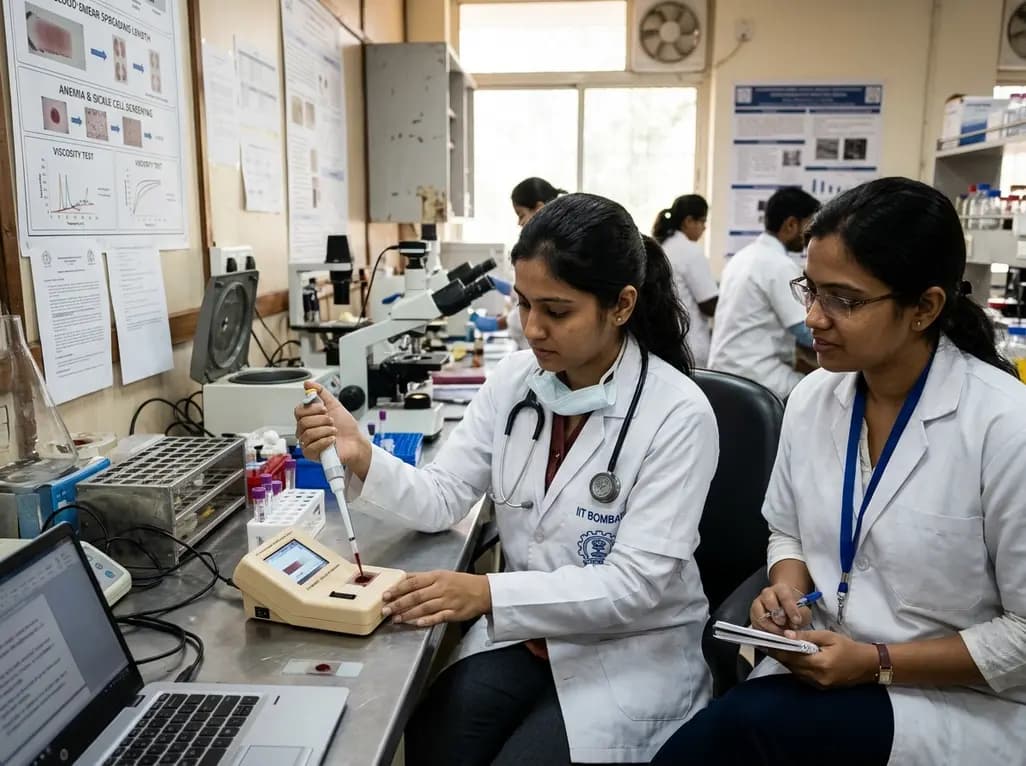
Researchers at IIT Bombay have engineered an automated, cost-effective point-of-care device that diagnoses anaemia and sickle cell disease from a single drop of blood. By measuring blood smear spreading length, this portable tool assesses blood viscosity to offer rapid screening in resource-limited healthcare centers.
Today
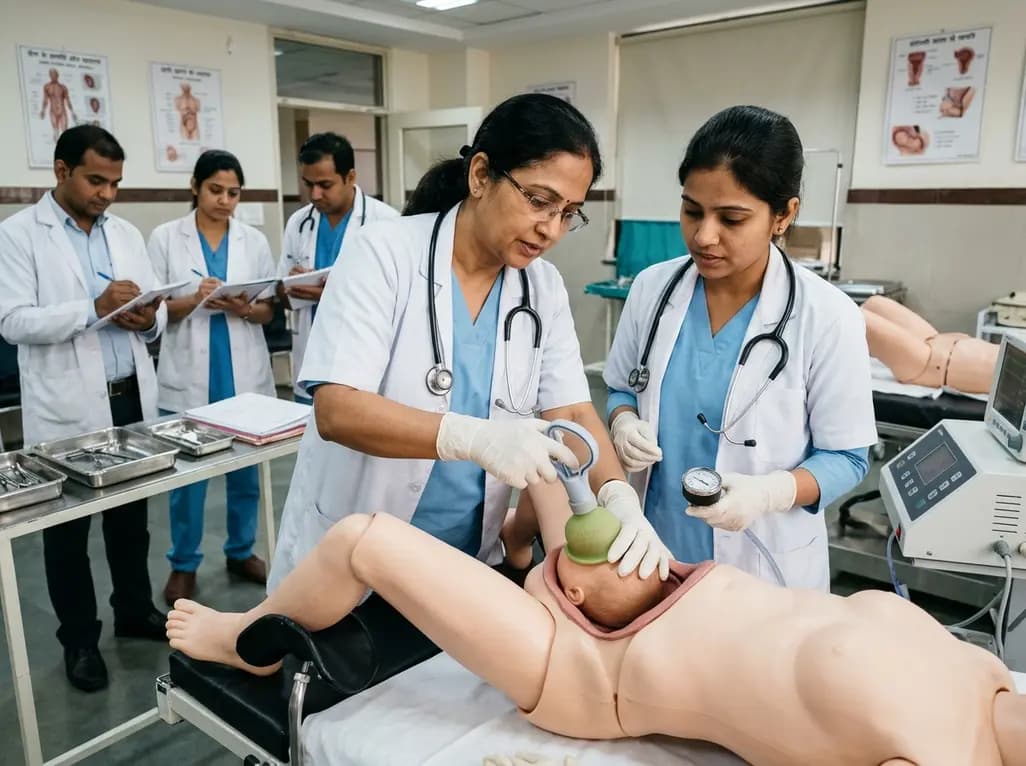
A multicenter study evaluates whether standardized simulation training reduces cup detachment during vacuum-assisted vaginal birth. Evidence-based simulation equips obstetricians to improve cup placement, reduce maternal-fetal trauma, and optimize clinical decision-making during operative deliveries.
Today
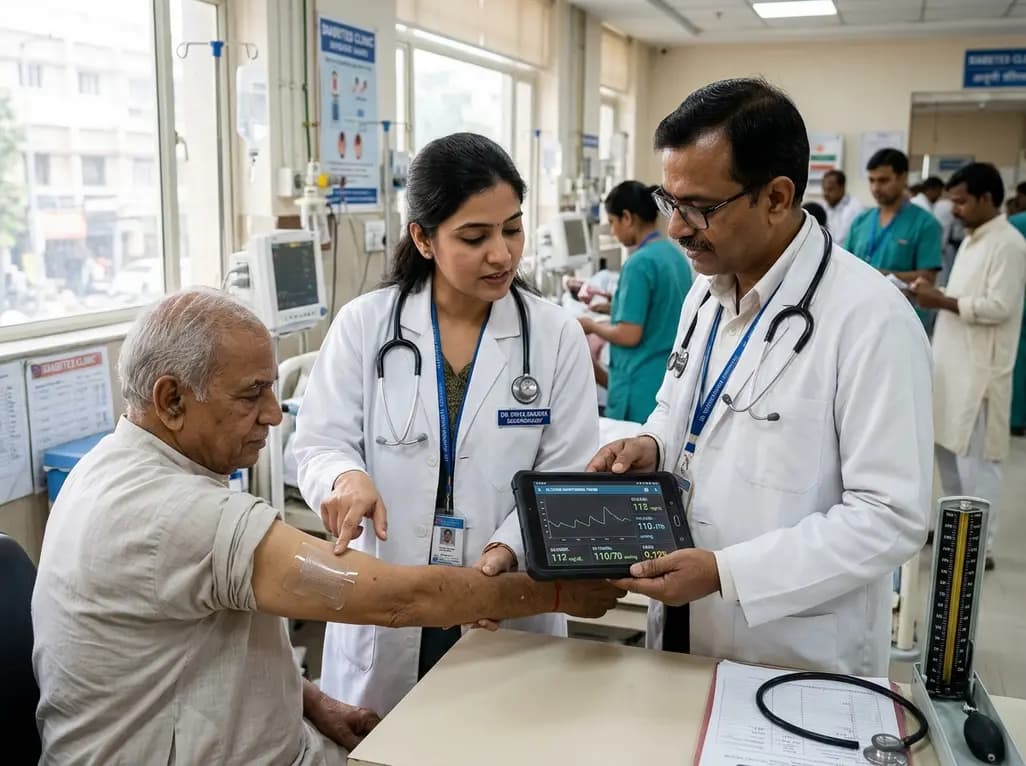
A breakthrough ultrathin multimodal sensor decouples physical hemodynamic monitoring from disposable electrochemical calibration, achieving long-term wearable glucose prediction with 81.36% accuracy and a 9.12% MARD. This offers a robust, drift-free solution for outpatient metabolic surveillance.
Today

A comparative review of tension band wiring and intramedullary screw fixation in thumb metacarpophalangeal arthrodesis, evaluating union rates, hardware complications, and clinical outcomes.
Today
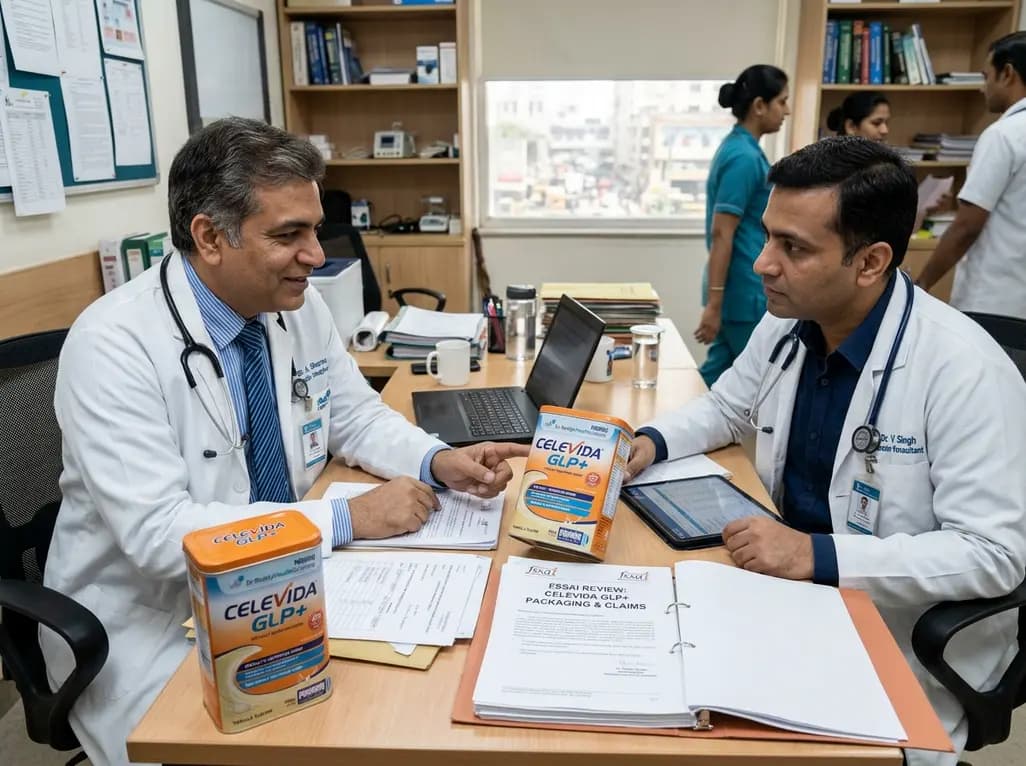
Following regulatory scrutiny from FSSAI regarding promotional representations and lean muscle preservation claims, Dr. Reddy's Laboratories and Nestlé Health Science are currently reviewing the branding and marketing strategy for their joint nutritional supplement Celevida GLP+.
Today
