

Loading, please wait...
Loading, please wait...

Acute ischemic stroke affecting medium-sized intracranial vessels presents complex therapeutic dilemmas. Neurointerventionalists increasingly perform endovascular procedures in distal branches beyond the main arterial trunk. Specifically, optimizing M2 occlusion mechanical thrombectomy remains vital for salvaging eloquent cerebral tissue without inducing catastrophic vascular trauma. Recent clinical evidence directly compares traditional retrieval methods with permanent stenting strategies. This comparative evaluation highlights emerging procedural paradigms that enhance patient safety and speed up arterial recanalization.
The middle cerebral artery divides into M2 branches that supply critical motor and sensory cortices. Therefore, prompt vessel recanalization strongly predicts functional independence following acute arterial occlusion. However, navigating endovascular devices through distal intracranial branches presents formidable technical hurdles. Because M2 branches possess smaller diameters and thinner muscular layers, mechanical manipulation carries heightened perforation risks. Historically, standard stent-retriever thrombectomy served as the primary revascularization tool for these challenging lesions. During this standard procedure, operators deploy a retrievable stent and forcefully pull the captured clot toward the proximal catheter. Unfortunately, repeated pulling cycles often create dangerous shear stress against fragile branch endothelium. To address these mechanical risks, interventional specialists introduced first stenting without retrieval, termed the FRESH technique. Instead of extracting the clot through aggressive traction, FRESH permanently deploys a self-expanding neurovascular stent across the occlusion site. A recent single-center study analyzed thirty-five consecutive patients presenting with acute M2 occlusions between 2019 and 2023. The investigators compared procedural efficiency and safety outcomes between standard retriever thrombectomy and the FRESH approach.
The mechanical differences between retriever extraction and permanent stenting directly influence arterial integrity. Standard stent retrievers require several minutes of dwell time to incorporate the thrombus into their strut architecture. Subsequently, the neurointerventionalist pulls the expanded device backward through tortuous insular anatomy under suction. This forceful retraction straightens natural vascular curves and strains branching bifurcations. Consequently, standard retrieval maneuvers can induce arterial vasospasm, vessel dissection, or perforator avulsion. In contrast, the FRESH technique fundamentally shifts the mechanical objective toward immediate endoluminal remodeling. The operator navigates a microcatheter through the occlusion and deploys a permanent self-expanding stent. Instead of dragging the stent through the vessel, the operator detaches the device across the obstruction. As a result, radial outward expansion secures the thrombus against the arterial wall. This immediate expansion opens a central lumen and restores downstream blood flow within seconds. Furthermore, avoiding physical device extraction eliminates longitudinal shear forces against vulnerable endothelial surfaces. Clinicians thereby preserve fragile branch vessels while bypassing the procedural trauma of multiple retrieval passes.
Every minute of persistent cerebral ischemia accelerates neuronal apoptosis within the ischemic penumbra. Therefore, reducing puncture-to-reperfusion intervals represents a cornerstone of effective acute stroke management. In the comparative clinical study, researchers observed a significant difference in procedural duration between both techniques. Specifically, patients in the FRESH cohort experienced a markedly shorter puncture-to-recanalization time compared to the stent-retriever group. The FRESH approach achieved successful arterial revascularization in a median of 35 minutes. Conversely, standard stent-retriever thrombectomy required a median of 41.5 minutes, demonstrating a statistically significant operative delay. This six-minute benefit stems directly from the streamlined nature of the single-pass stenting protocol. Conventional stent retrieval frequently requires multiple passes when initial attempts fail to capture the entire clot. Each subsequent pass demands catheter re-advancement, repeated angiographic checks, and prolonged operative manipulations. Consequently, secondary passes inflate procedure times and increase the likelihood of distal embolization. In contrast, the FRESH technique achieves immediate canalization through single-stage stent release. By restoring microvascular flow rapidly, this method effectively curtails ischemic core expansion.
Procedural safety remains the defining metric when treating delicate medium vessel occlusions. Because distal vessels have delicate walls, repeated mechanical friction elevates hemorrhagic transformation risks. Notably, the clinical trial revealed substantial differences in hemorrhagic complications between the two treatment cohorts. Specifically, asymptomatic intracranial hemorrhage occurred in 18.8 percent of patients who underwent traditional stent-retriever thrombectomy. In striking contrast, zero percent of patients in the FRESH cohort experienced intracranial hemorrhagic events. This marked discrepancy reached statistical significance, demonstrating superior vascular preservation with the permanent stenting strategy. When an operator pulls an expanded stent retriever through curved arteries, the nitinol struts scrape endothelial layers. This friction disrupts the internal elastic lamina and increases vessel permeability upon arterial reperfusion. Furthermore, excessive traction can tear microscopic perforating branches along the insular cortex. The FRESH technique eliminates these risks entirely by avoiding device retrieval. By holding the thrombus firmly against the vessel wall, the permanent stent stabilizes the lesion without mechanical traction. As a result, patients avoid microvascular injury and experience fewer post-procedural hemorrhagic complications.
Favorable angiographic results must ultimately deliver meaningful functional independence for stroke survivors. In this comparative investigation, clinicians assessed 90-day neurological recovery using the modified Rankin Scale. Patients treated with the FRESH technique demonstrated impressive superiority across key functional benchmarks. Specifically, favorable functional recovery, defined as a modified Rankin Scale score of 0 to 2, occurred in 86.7 percent of FRESH patients. Meanwhile, only 55 percent of stent-retriever patients achieved this favorable functional milestone. Furthermore, excellent clinical outcomes, representing a score of 0 to 1, occurred in 66.7 percent of the FRESH group compared to just 25 percent in the retriever cohort. These robust outcomes highlight the dual benefits of faster recanalization and lower hemorrhagic transformation. However, implementing permanent stenting requires careful clinical deliberation and dedicated medical management. Because permanent implants remain inside the vessel, patients require subsequent dual antiplatelet therapy to prevent in-stent thrombosis. In Indian clinical practice, neurointerventionists must verify post-procedure CT scans before initiating antiplatelet regimens. When stroke centers maintain rigorous imaging protocols and careful patient selection, first stenting provides a powerful alternative for distal occlusions.
The FRESH technique involves deploying a permanent intracranial stent across an occluded artery without retrieving the device. Instead of dragging the clot outward, the self-expanding stent compresses the thrombus against the vessel wall. This action rapidly restores arterial perfusion while avoiding endothelial traction and arterial perforation during medium vessel recanalization.
M2 segment occlusions involve smaller branch diameters, thinner arterial walls, and acute branch angulations compared to proximal trunks. Consequently, dragging stent retrievers through these delicate vessels increases the risk of vessel rupture, branch avulsion, and intracranial hemorrhage. Operators must therefore balance recanalization efficacy against procedural vessel trauma.
Permanent intracranial stent placement mandates post-procedural dual antiplatelet therapy to prevent acute in-stent thrombosis. Neurointerventionalists typically administer aspirin alongside clopidogrel or ticagrelor. Clinicians must first perform post-treatment neuroimaging to rule out intracranial hemorrhage before initiating intensive antiplatelet regimens, ensuring both stent patency and systemic safety.
Disclaimer: This content is for informational and educational purposes only and should not be taken as professional medical advice. Always consult a qualified healthcare provider for specific clinical decisions, diagnosis, or treatment strategies. Refer to the latest local and national guidelines for clinical practice.
References
Kim J Safety first: A comparative study of mechanical thrombectomy techniques for M2 occlusions - stent-retriever thrombectomy (SRT) vs. first stenting without retrieval (FRESH). Clin Neurol Neurosurg. 2025 Jul. doi: 10.1016/j.clineuro.2025.108956. PMID: 40378815.
Goyal M, Menon BK, van Zwam WH, et al. Endovascular thrombectomy after large-vessel ischaemic stroke: a meta-analysis of individual patient data from five randomised trials. Lancet. 2016;387(10029):1723-1731.
Saver JL, Goyal M, van der Lugt A, et al. Time to treatment with endovascular thrombectomy and outcomes from ischemic stroke: a meta-analysis. JAMA. 2016;316(12):1279-1288.

Read summarized clinical updates, watch expert medical content, and earn CME certifications right from your smartphone.
Open your smartphone camera to scan and install.





A comparative study reveals that first stenting without retrieval (FRESH) significantly shortens recanalization time, lowers intracranial hemorrhage rates, and improves functional recovery compared to stent-retriever thrombectomy in patients with acute M2 middle cerebral artery occlusions.
Today

A validated natural language processing pipeline leverages clinical notes and intermediate annotations to identify risky alcohol use across surgical patients, offering automated preoperative risk stratification.
Today

The GESS-AEEM consensus establishes a clear clinical implementation framework for testosterone therapy in postmenopausal women with hypoactive sexual desire disorder, focusing on transdermal dosing, precise laboratory monitoring, and safety communication.
Yesterday
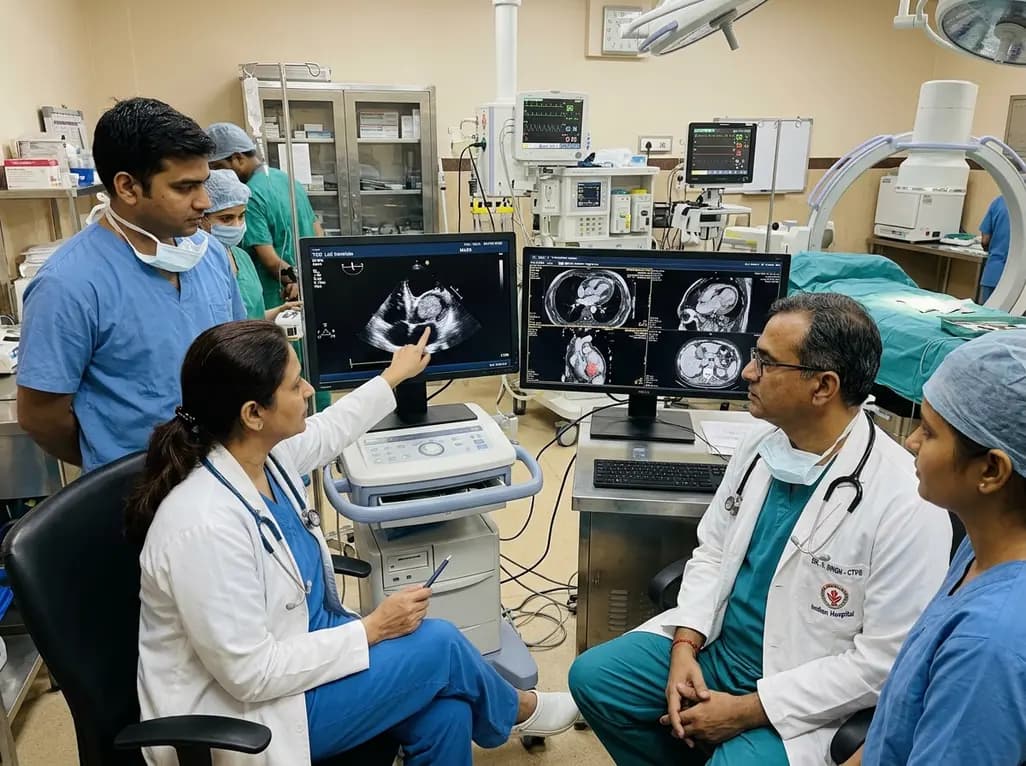
A rare case of an asymptomatic left ventricular hemangioma highlights the vital role of multimodal imaging in differentiating vascular tumors from thrombus. Complete surgical resection under transesophageal echocardiography guidance prevents thromboembolism and delivers optimal outcomes.
Today

A landmark study evaluates long-term quality of life in adolescents and adults with brachial plexus birth injury. Severe functional limitation and limited access to care significantly worsen outcomes, underscoring the urgent need for persistent, multidisciplinary management across adult healthcare transitions.
Today

An analysis of 1,000 posts by macro- and mega-influencers on Instagram and TikTok revealed that 78.5% contained nutrition misinformation, while only 24% of creators held valid credentials. This article examines the clinical risks of viral dietary fads and provides actionable guidance for healthcare professionals.
Today
