.webp&w=384&q=75)

Loading, please wait...
Loading, please wait...
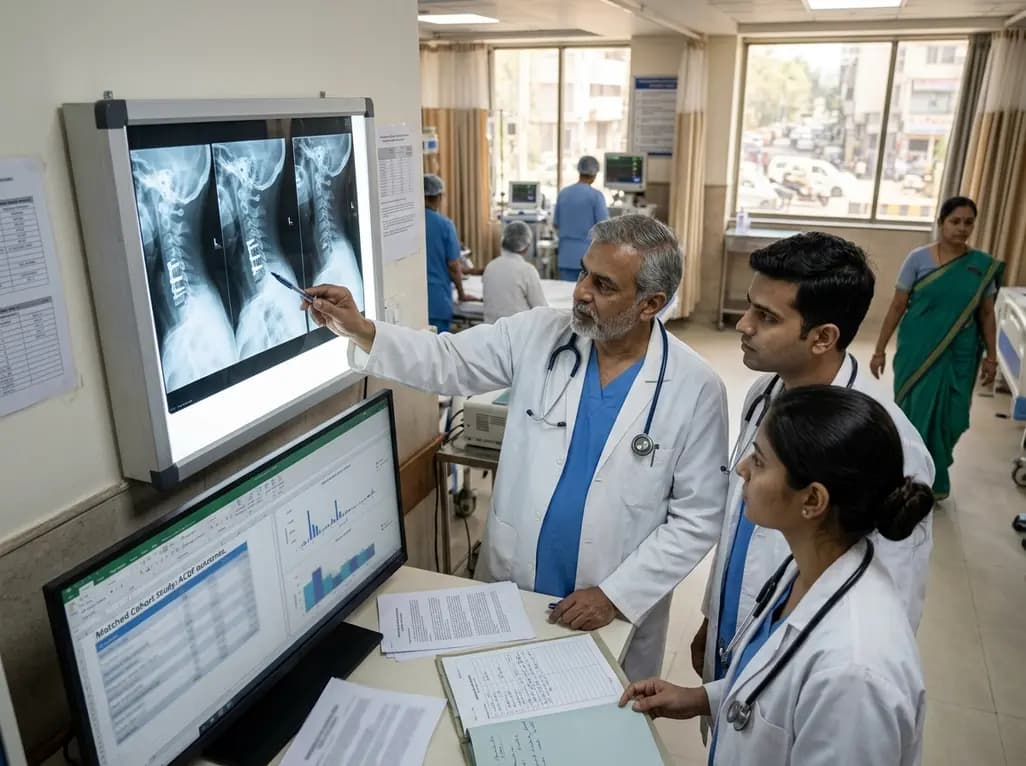
Anterior cervical discectomy and fusion (ACDF) represents one of the most widely performed surgical interventions for degenerative cervical spine disease, radiculopathy, and myelopathy. Managing acute postoperative discomfort effectively remains a primary clinical objective for spine surgeons and anesthesiologists. Nonsteroidal anti-inflammatory drugs (NSAIDs) provide potent, non-sedating analgesia by suppressing peripheral and central inflammatory cascades. However, spine specialists have historically approached these agents with caution due to enduring concerns regarding impaired bone healing. Specifically, clinicians have debated the potential link between ketorolac and pseudoarthrosis during the critical early postoperative period. Theoretical inhibition of cyclooxygenase enzymes can suppress osteoblastic differentiation, microvascular ingrowth, and endochondral ossification. Consequently, many institutions have strictly avoided early ketorolac administration following cervical arthrodesis.
Despite these widespread theoretical concerns, robust clinical evidence directly examining this relationship in cervical spine surgery has remained limited. Implementing effective opioid-sparing multimodal analgesia is essential to reduce opioid-related complications such as nausea, ileus, respiratory depression, and long-term dependency. Therefore, clarifying the true safety profile of early parenteral ketorolac in anterior cervical fusion is vital for contemporary spine care. A comprehensive retrospective cohort study published in Spine investigated whether early postoperative ketorolac compromises long-term arthrodesis rates. This multi-year real-world analysis provides crucial evidence to guide surgical pain protocols.
The researchers conducted a large retrospective cohort investigation using the global TriNetX federated health research network. This extensive electronic health record platform captures real-world longitudinal data from millions of surgical patients across diverse health organizations. The study cohort included adult patients aged 18 years and older who underwent primary ACDF between 2004 and 2020. The investigators divided patients into two distinct comparison groups based on their immediate postoperative pharmacotherapy. The ketorolac cohort received parenteral or oral ketorolac within forty-eight hours after the surgical procedure. In contrast, the active control cohort received postoperative acetaminophen without ketorolac during the identical forty-eight-hour hospital window.
To eliminate confounding variables, the authors conducted rigorous 1:1 propensity score matching. They successfully matched 3,475 patients in the ketorolac cohort to 3,475 patients in the acetaminophen control cohort. The propensity matching algorithm controlled for key demographic characteristics and known risk factors for pseudoarthrosis. These critical covariates included patient age, sex, race, active nicotine dependence, diabetes mellitus, osteoporosis, body mass index, and systemic corticosteroid use. The mean patient age across both matched groups was 53 years. By establishing well-balanced cohorts, the investigators minimized baseline disparities and facilitated a reliable four-year comparative analysis of surgical outcomes.
The primary clinical outcome of the study was the risk ratio (RR) for developing pseudoarthrosis across four years of follow-up. In the propensity-matched analysis, the cumulative four-year incidence of pseudoarthrosis reached 14.8% in the ketorolac cohort compared to 16.4% in the acetaminophen control cohort. This comparison yielded a risk ratio of 0.90 with a 95% confidence interval ranging from 0.81 to 1.01. Because the p-value was 0.069, the data demonstrated no statistically significant increase in pseudoarthrosis among patients receiving early ketorolac. In fact, fusion rates remained clinically equivalent between both patient groups throughout the extended observation period.
Additionally, the researchers evaluated secondary surgical endpoints to evaluate whether potential nonunion led to higher rates of subsequent interventions. The four-year reoperation rate was 7.8% in the ketorolac group compared to 7.6% in the control group. This produced a risk ratio of 1.03 with a 95% confidence interval of 0.88 to 1.21 (p = 0.719). Therefore, early postoperative ketorolac administration did not increase the need for revision arthrodesis, hardware removal, or secondary decompressive procedures. These long-term real-world findings challenge the conventional assumption that short-course perioperative ketorolac compromises structural fusion integrity in cervical spine surgery.
Beyond bone healing, perioperative clinicians must carefully evaluate other potential adverse drug effects associated with nonsteroidal anti-inflammatory agents. Reversible platelet dysfunction and gastrointestinal mucosal injury represent well-known clinical concerns with nonselective cyclooxygenase inhibitors. However, the study results showed that severe postoperative bleeding occurred in only 0.5% of patients in both the ketorolac and acetaminophen cohorts. This finding yielded an identical risk ratio of 1.00 with a 95% confidence interval of 0.52 to 1.92 (p = 1.000). Thus, short-term ketorolac therapy did not increase the risk of cervical hematoma or hemorrhagic complications.
Interestingly, the investigation demonstrated subtle patterns regarding subsequent oral opioid utilization. Patients in the ketorolac cohort had a slightly higher probability of filling an outpatient oral opioid prescription compared to controls (79.3% vs. 74.2%). This difference yielded a statistically significant risk ratio of 1.07 with a 95% confidence interval of 1.04 to 1.10. Although ketorolac provides potent acute analgesia during the immediate forty-eight-hour inpatient stay, outpatient pain management pathways require ongoing clinical vigilance. Surgical teams must maintain structured multimodal tapering strategies upon discharge to limit prolonged opioid reliance.
The traditional avoidance of NSAIDs following spinal arthrodesis stems largely from preclinical animal models and cell culture experiments. Cyclooxygenase-2 (COX-2) plays a fundamental role in converting arachidonic acid into prostaglandin E2 (PGE2). During the physiological phases of bone healing, PGE2 promotes mesenchymal stem cell differentiation into osteoblasts, stimulates local angiogenesis, and regulates vascular endothelial growth factor. When pharmacological agents suppress COX-2 activity, they temporarily inhibit these critical osteogenic cellular signals. Consequently, high doses and prolonged exposure to NSAIDs can disrupt early hard callus formation and delay mechanical stability in laboratory settings.
However, clinical human physiology often demonstrates meaningful differences from animal models. In humans, the duration and timing of drug exposure represent critical determinants of clinical outcomes. Short-term ketorolac administration limited to forty-eight hours provides potent anti-inflammatory analgesia without permanently suppressing osteogenesis. Once the medication is eliminated, normal osteoblast recruitment and bone remodeling proceed without hindrance. Furthermore, anterior cervical fusions benefit from rich vascular supply, robust compressive biomechanical forces, and rigid anterior plate fixation. These mechanical and anatomical factors collectively mitigate the transient enzymatic suppression caused by brief perioperative ketorolac exposure.
These clinical findings provide strong reassurance for surgical teams implementing enhanced recovery after surgery (ERAS) protocols for cervical spine procedures. Spine surgeons and neuroanesthesiologists can confidently utilize brief courses of ketorolac during the initial forty-eight hours post-surgery to control intense acute pain. By optimizing early inflammatory pain control, clinicians enhance patient comfort, accelerate functional mobilization, and facilitate early hospital discharge. Furthermore, reducing reliance on high-dose perioperative opioids minimizes common opioid-related adverse events, including nausea, sedation, urinary retention, and postoperative ileus.
Nevertheless, clinicians must maintain individualized clinical judgment when prescribing perioperative nonsteroidal analgesics. Patients with significant baseline risk factors for nonunion, such as active cigarette smoking or severe metabolic bone disease, warrant careful clinical evaluation. Additionally, practitioners should avoid extended outpatient NSAID regimens beyond the acute forty-eight-hour inpatient window. Future prospective randomized trials will further refine optimal dosing schedules and patient stratification. For standard adult patients undergoing primary ACDF, short-term postoperative ketorolac represents an effective, safe analgesic adjunct that does not increase long-term pseudoarthrosis risk.
No, clinical evidence demonstrates that early postoperative ketorolac does not increase pseudoarthrosis rates. In a large matched cohort study spanning four years of follow-up, patients receiving ketorolac within forty-eight hours of ACDF experienced fusion failure rates comparable to matched controls receiving acetaminophen.
No, the study showed no significant increase in severe bleeding complications. Both the ketorolac and acetaminophen cohorts experienced an identical 0.5% rate of severe postoperative bleeding. Short-course administration within forty-eight hours appears safe regarding surgical site hematoma risk.
Surgeons traditionally avoided NSAIDs because cyclooxygenase inhibition suppresses prostaglandin E2 synthesis, which plays an essential role in osteoblast activity and angiogenesis. However, clinical studies show that brief exposure limited to forty-eight hours does not compromise long-term bone healing.
Disclaimer: This content is for informational and educational purposes only. It is not intended to substitute for professional medical advice, diagnosis, or treatment. Always seek the advice of your physician or other qualified health provider with any questions you may have regarding a medical condition. Refer to the latest local and national guidelines for clinical practice.
References

Read summarized clinical updates, watch expert medical content, and earn CME certifications right from your smartphone.
Open your smartphone camera to scan and install.





A 4-year matched cohort study of 6,950 patients shows early postoperative ketorolac after ACDF does not increase pseudoarthrosis, bleeding, or reoperation risk.
last month

A comprehensive integrative multi-omic study combines NHANES epidemiology, Mendelian Randomization, and transcriptomic analysis to uncover complex causal associations, metabolic pathways, and novel machine learning diagnostic biomarkers linking gastric cancer and diabetes.
Today

India's national digital health service achieved a historic milestone of fifty crore virtual consultations. Notably, female patients account for over fifty-seven percent of utilisation, demonstrating improved healthcare accessibility for remote communities, chronic disease management, and primary triage.
Today

The phase II DAPA-AIC trial demonstrates that dapagliflozin 10 mg daily significantly preserves left ventricular ejection fraction compared to placebo over four months in adults undergoing anthracycline chemotherapy, highlighting a potential preventive strategy in cardio-oncology.
Today

Dual-nanofiber interpenetrating network scaffolds combining silica and PLLA/gelatin nanofibers with sodium alginate achieve complementary mechanical stability, immunomodulatory M2 macrophage polarization, and enhanced osteogenesis for advanced bone repair.
Today
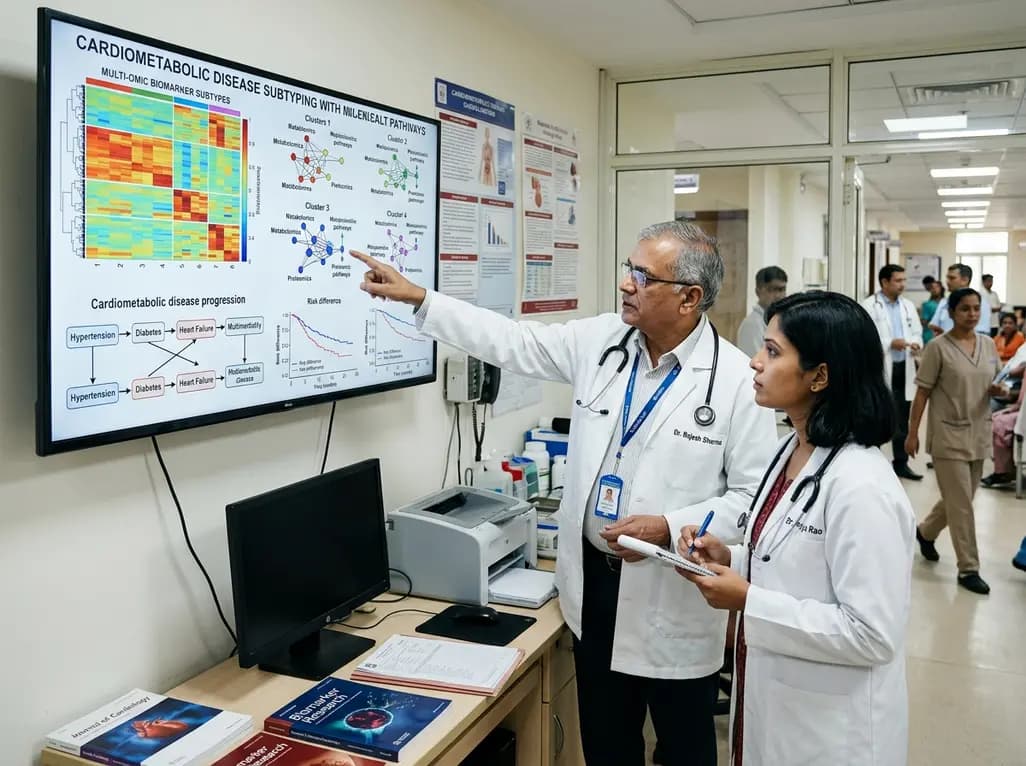
A large UK Biobank study identified four routine biomarker subtypes that predict cardiometabolic disease progression to multimorbidity. Integrating multi-state modelling, metabolomics, and proteomics revealed distinct biological pathways, offering new avenues for tailored clinical risk stratification.
Today
