

Loading, please wait...
Loading, please wait...

Karnataka has introduced its multi-sectoral antibiotic resistance action plan to curb the rapid spread of antimicrobial resistance across the state. Health authorities unveiled the Karnataka State Action Plan for Containment of Antimicrobial Resistance (K-SAPCAR) 2026–2030 during a state workshop in Bengaluru. Consequently, public and private healthcare facilities must prepare for extensive clinical and regulatory adjustments. Antimicrobial resistance threatens decades of progress in clinical medicine, surgical care, and intensive therapy. Therefore, state leaders are enacting stricter prescription audits, robust laboratory surveillance, and cross-sectoral governance. This strategic framework establishes transparent benchmarks for prescribers, pharmacies, and agricultural operations.
The urgency behind K-SAPCAR stems from concerning microbiological evidence documented in recent statewide health assessments. Specifically, the Karnataka AMR Surveillance Network Annual Report 2025 revealed severe drug resistance among routine clinical specimens. Laboratory evaluations indicated that nearly 75 percent of tested Gram-negative isolates exhibited resistance to ceftriaxone. Ceftriaxone represents a foundational third-generation cephalosporin used daily for systemic infections. Furthermore, nearly three out of four Gram-positive bacteria demonstrated resistance to ciprofloxacin, an essential fluoroquinolone. Additionally, the report highlighted that 62 percent of tested Staphylococcus aureus isolates displayed methicillin resistance. Meanwhile, over 35 percent of Gram-negative pathogens showed resistance to meropenem, a crucial reserve carbapenem. Because carbapenems serve as critical defenses against multidrug-resistant pathogens, this finding alarms clinical specialists. Consequently, practitioners frequently encounter common infections that fail standard empiric antimicrobial regimens. Patients subsequently suffer prolonged hospitalizations, secondary complications, and substantial financial strain. Without rapid containment, routine surgical procedures and cancer chemotherapy will carry severe infectious risks. Thus, state authorities recognized that voluntary stewardship alone cannot halt this worsening therapeutic crisis.
State health leaders organized the antibiotic resistance action plan around five core operational priorities. First, the framework emphasizes comprehensive educational initiatives regarding antimicrobial resistance for clinicians, pharmacists, and the public. Second, the policy finances laboratory upgrades and modern digital health platforms across districts. These connected digital systems link public health facilities and private tertiary hospitals into a unified surveillance network. Third, the strategy mandates rigorous infection prevention and control practices across all clinical settings. Hospitals must prevent healthcare-associated infections to decrease initial demand for broad-spectrum agents. Fourth, K-SAPCAR optimizes antimicrobial usage across human healthcare, veterinary medicine, and food animal production. Stricter regulation of over-the-counter sales forms a primary component of this regulatory pillar. Pharmacists may no longer dispense systemic antibiotics without verifying a valid medical prescription. Fifth, the roadmap fosters sustained investments into diagnostic infrastructure, local research, and clinical trials. As a result, Karnataka establishes a structured containment model that aligns with national action goals. Coordinated execution across these domains will safeguard essential antimicrobials for future generations.
A pivotal regulatory dimension of K-SAPCAR directly affects daily clinical documentation and outpatient dispensing practices. Under this framework, prescribers must record their official state medical council registration numbers on every prescription. This mandate enhances professional accountability and curtails unauthorized antibiotic dispensing by unqualified individuals. Furthermore, state drug inspectors will conduct unannounced inspections at retail pharmacy outlets. Regulatory teams will vigorously enforce legal bans on over-the-counter antibiotic sales without legitimate documentation. Authorities will also audit compliance with Schedule H1 regulations. These statutory rules mandate distinct register maintenance capturing patient identification, prescriber details, and exact quantities dispensed. Additionally, healthcare facilities must establish internal committees to conduct regular prescription audits. Clinical auditors will verify whether antimicrobial choices align with established hospital guidelines and culture findings. When physicians initiate broad-spectrum agents, they must record clear diagnostic rationale and plan prompt de-escalation. Healthcare administrators will review audit findings during regular clinical quality meetings. Consequently, these systematic audits will discourage inappropriate antibiotic courses, defensive prescribing habits, and unindicated combination therapies.
Hospital-level interventions represent another critical foundation of the state five-year containment initiative. The health department mandates that every hospital establish an active multidisciplinary antimicrobial stewardship committee. These specialized teams include clinical microbiologists, infectious disease physicians, clinical pharmacologists, and nursing representatives. Moreover, healthcare institutions must generate and publish facility antibiograms semi-annually or annually. Antibiograms display local microbiological isolates and corresponding susceptibility profiles across distinct inpatient wards. Therefore, clinicians can formulate empirical treatment protocols based on local ecology rather than empirical guesswork. Importantly, the framework establishes stringent pre-authorization protocols for reserve-category antibiotics. Critical last-resort therapeutics, such as colistin and polymyxin B, require prior clearance from stewardship leaders. When intensive care teams start reserve agents during septic emergencies, the committee must review therapy within 48 hours. This mandatory review ensures timely de-escalation once final laboratory reports confirm pathogen sensitivity. In addition, hospitals must track antimicrobial utilization rates through standardized metrics like Defined Daily Doses. Through these structured institutional mechanisms, facilities can curb the emergence and propagation of multidrug-resistant pathogens.
Recognizing that bacterial pathogens readily cross environmental barriers, K-SAPCAR integrates a comprehensive One Health methodology. Human clinical settings account for only a portion of total antimicrobial volume consumed statewide. Agricultural sectors, commercial poultry farms, and aquaculture operations frequently utilize antibiotics for animal growth promotion. Therefore, the action plan expands monitoring programs beyond human hospitals into livestock and food processing. Authorities will implement routine laboratory testing of meat, poultry, and egg samples for antimicrobial residues. Furthermore, the policy strictly prohibits non-therapeutic antibiotic use in animal feeds. Simultaneously, environmental monitoring serves as an indispensable pillar of this unified regulatory initiative. Wastewater from pharmaceutical facilities, municipal sewage plants, and hospital drains often introduces resistant genes into natural water systems. Consequently, environmental agencies will regularly test municipal effluents, river water, and soil samples across industrial corridors. Upgrading laboratory infrastructure across veterinary and environmental laboratories represents a major funding priority under the plan. Thus, cross-departmental collaboration between medical doctors, veterinarians, and environmental scientists provides comprehensive oversight against resistant pathogens.
Q1: What is the primary objective of Karnataka's K-SAPCAR 2026–2030?
The primary objective of K-SAPCAR is to contain antimicrobial resistance across Karnataka through coordinated multi-sectoral actions. Specifically, the plan curtails irrational antibiotic prescribing in hospitals and eliminates illegal over-the-counter drug sales. Furthermore, it institutes mandatory prescription audits, institutional stewardship programs, and regular antibiogram publication. By incorporating a One Health strategy, the policy simultaneously tracks antibiotic usage across animal husbandry, agriculture, and municipal water environments.
Q2: Why does K-SAPCAR require doctor registration numbers on prescriptions?
Mandating physician registration numbers ensures clear accountability and legal traceability for every prescribed antimicrobial agent. Consequently, regulatory inspectors can readily verify authentic medical orders and eliminate unauthorized dispensing by unqualified practitioners. Additionally, this requirement enables effective prescription audits within healthcare facilities and enforces Schedule H1 sales recordkeeping at retail pharmacies. Prescribers must justify broad-spectrum choices, effectively curbing defensive prescribing for viral infections.
Q3: How will mandatory hospital antibiograms assist practicing physicians?
Hospital antibiograms provide clinicians with objective, localized data reflecting pathogen susceptibility trends within their specific facility. Therefore, physicians can prescribe targeted empiric therapies rather than relying on guesswork or generic international guidelines. By consulting recent antibiogram reports, doctors can select effective narrow-spectrum agents to manage acute infections safely. Moreover, this surveillance data guides rapid therapeutic de-escalation once microbiological culture and sensitivity results become available.
Disclaimer: This content is for informational and educational purposes only. It does not constitute medical advice or replace professional judgment. Refer to the latest local and national guidelines for clinical practice.
References

Read summarized clinical updates, watch expert medical content, and earn CME certifications right from your smartphone.
Open your smartphone camera to scan and install.





Karnataka has unveiled K-SAPCAR 2026–2030 to contain rising antimicrobial resistance. The five-year policy mandates doctor registration numbers on prescriptions, enforces Schedule H1 sales records, requires institutional antibiograms, and implements One Health surveillance across food, animal, and water systems.
Today

Mayo Clinic trials and real-world datasets show GLP-1 receptor agonists improve left ventricular remodeling, reduce intracardiac filling pressures, decrease hospitalizations by 34%, and lower geriatric fall risks in patients with obesity and heart failure, delivering notable clinical and economic benefits.
Today

A usability study evaluated CareCheck, an mHealth caregiver risk screening tool for gynecologic oncology settings. Demonstrating high usability with a MAUQ score of 6.49 out of 7, the digital tool helps clinicians identify physical, psychological, and social risks among family caregivers to improve support.
Today
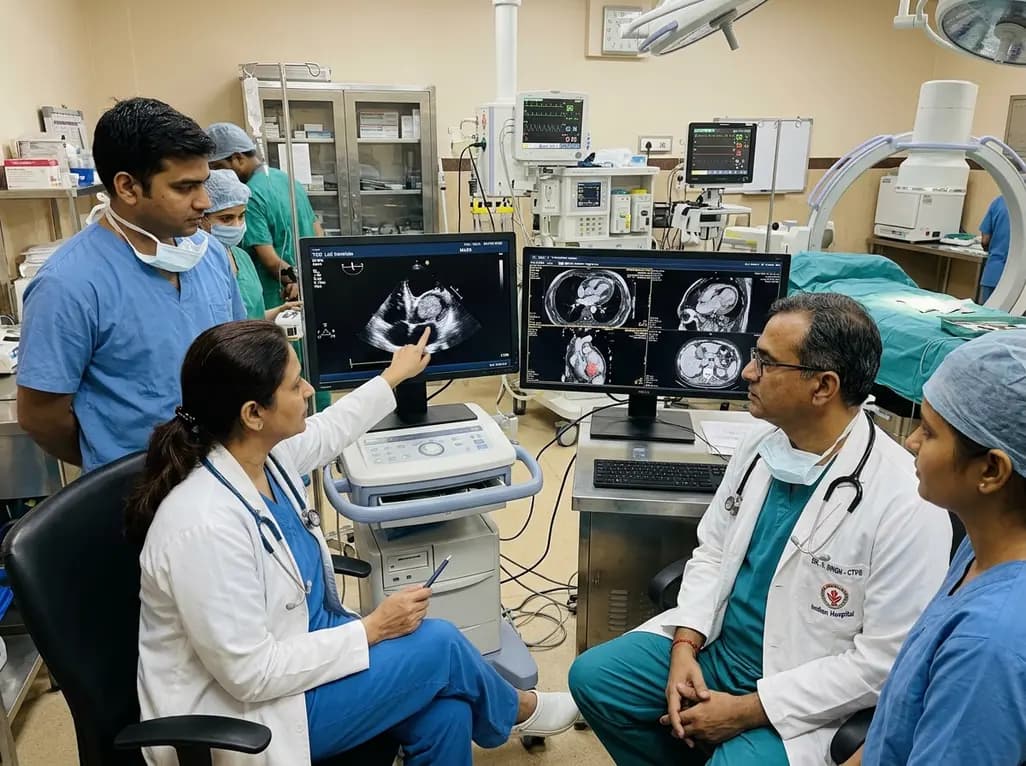
A rare case of an asymptomatic left ventricular hemangioma highlights the vital role of multimodal imaging in differentiating vascular tumors from thrombus. Complete surgical resection under transesophageal echocardiography guidance prevents thromboembolism and delivers optimal outcomes.
Today

A landmark study evaluates long-term quality of life in adolescents and adults with brachial plexus birth injury. Severe functional limitation and limited access to care significantly worsen outcomes, underscoring the urgent need for persistent, multidisciplinary management across adult healthcare transitions.
Today

An analysis of 1,000 posts by macro- and mega-influencers on Instagram and TikTok revealed that 78.5% contained nutrition misinformation, while only 24% of creators held valid credentials. This article examines the clinical risks of viral dietary fads and provides actionable guidance for healthcare professionals.
Today
