.webp&w=384&q=75)

Loading, please wait...
Loading, please wait...

As populations age across the globe, maintaining functional independence and oral health represents a crucial priority for healthcare systems. Consequently, researchers increasingly investigate the relationship between intrinsic capacity and edentulism in middle-aged and older adults. Intrinsic capacity encompasses the composite of all physical and mental attributes an individual can deploy over a lifetime. Specifically, the World Health Organization defines this framework across five core domains: locomotion, cognition, vitality, sensory function, and psychological capacity. In contrast, edentulism reflects the complete loss of natural teeth. Clinicians historically viewed edentulism as an isolated consequence of poor dental hygiene. However, modern evidence indicates that tooth loss mirrors cumulative physiological exhaustion and systemic vulnerability. When older adults experience diminished functional reserves, their ability to perform daily self-care diminishes significantly. Furthermore, systemic inflammatory pathways and nutritional deficiencies accelerate tissue breakdown within the oral cavity. Therefore, evaluating systemic capacity provides indispensable insights into oral disease progression. Recognizing this interconnected relationship helps healthcare professionals anticipate oral deterioration and protect systemic vitality.
A recent prospective cohort study examined data from the China Health and Retirement Longitudinal Study to clarify this vital connection. Specifically, the investigators analyzed 9,110 participants aged 45 years and older across four evaluation waves between 2011 and 2018. The researchers evaluated intrinsic capacity across its five established clinical domains, calculating total scores ranging from zero to six points. Higher scores indicated superior functional capacity, whereas lower scores signified substantial physiological deficits. During the multi-year follow-up, participants reported complete tooth loss through standardized national surveys. After rigorous adjustment for sociodemographic factors and medical comorbidities, participants with the highest intrinsic capacity exhibited a 39.1% lower risk of edentulism compared to the lowest category. Furthermore, dichotomizing participants using a five-point threshold confirmed that intact capacity significantly reduced edentulism hazard. In addition, restricted cubic spline analysis revealed a persistent linear negative association across all score tiers. Subgroup analyses demonstrated remarkable consistency, showing no significant interactions across age or gender groups. Consequently, these robust data confirm that functional decline directly precedes extensive tooth loss.
Multiple biological and behavioral mechanisms link diminished intrinsic capacity with the acceleration of complete tooth loss. First, motor decline and diminished manual dexterity impair daily toothbrushing efficiency. Consequently, pathogenic dental biofilm accumulates rapidly along gingival tissues, triggering destructive periodontal inflammation. In addition, cognitive impairment and depressive disorders reduce personal motivation and adherence to preventive dental visits. At the biological level, chronic systemic inflammation acts as a shared underlying driver. Elevated circulating pro-inflammatory mediators such as interleukin-6 stimulate osteoclast activity, which accelerates alveolar bone resorption around vulnerable teeth. Furthermore, sensory deficits, including progressive vision loss, prevent older individuals from identifying early gingival bleeding and dental decay. Reduced vitality also coincides with chronic malnutrition, which deprives periodontal structures of essential micronutrients and protein. As a result, weakened oral tissues fail to withstand bacterial insults, promoting rapid disease progression. Thus, functional exhaustion and localized oral pathology exacerbate each other in a continuous, detrimental biological cycle.
To enhance risk assessment at the point of care, researchers developed a prognostic nomogram utilizing an extreme gradient boosting algorithm. This advanced machine learning framework analyzed multiple demographic and functional parameters to pinpoint the strongest predictors of tooth loss. Ultimately, the model selected five critical variables: chronological age, educational level, nocturnal sleep duration, intrinsic capacity, and residential location. The resulting predictive nomogram demonstrated strong discriminatory capability for estimating individual edentulism risk over time. Clinicians can employ this visual scoring tool during routine preventive assessments to stratify older patients into precise risk tiers. For instance, rural residents exhibiting shortened sleep duration and reduced intrinsic capacity face the highest probability of total dental loss. Therefore, identifying these synergistic risk factors allows healthcare practitioners to initiate targeted prophylactic measures before irreversible oral destruction occurs. Moreover, integrating functional measurements alongside conventional demographic variables provides far greater predictive precision than examining oral cavity symptoms in isolation. Consequently, algorithmic modeling bridges the gap between complex longitudinal research and proactive bedside decision-making.
These longitudinal findings deliver critical clinical insights for physicians and dental specialists practicing in India. India currently undergoes rapid demographic aging, accompanied by a rising burden of chronic lifestyle diseases and severe periodontal disorders. However, conventional medical practice in India frequently separates dental surgery from general geriatric and internal medicine. Physicians rarely evaluate dentition during routine chronic disease consultations, whereas dentists seldom screen for systemic functional decline. Therefore, healthcare systems must actively promote interprofessional collaboration between primary care doctors and dental surgeons. Indian physicians should screen older adults for functional deficits using the World Health Organization Integrated Care for Older People framework. When doctors observe declines in mobility, cognition, or sensory capacity, they must promptly refer patients for comprehensive dental examinations. Similarly, dental practitioners encountering progressive periodontal breakdown should evaluate systemic frailty and nutritional status. Furthermore, public health initiatives such as the National Programme for Health Care of the Elderly should integrate routine oral health screenings into community clinics. Ultimately, this collaborative approach preserves functional autonomy and quality of life.
The World Health Organization defines intrinsic capacity as the totality of an individual's physical and mental attributes. This clinical model evaluates five distinct domains: cognitive functioning, locomotor performance, psychological well-being, sensory capacity, and overall vitality. By systematically assessing these interrelated functional components, clinicians can identify early physiological vulnerabilities. Consequently, healthcare providers can intervene proactively to support healthy aging and prevent irreversible disability before major functional deterioration occurs.
Diminished intrinsic capacity accelerates edentulism through interconnected behavioral, biomechanical, and immunological pathways. Reduced locomotor dexterity and impaired vision hinder regular toothbrushing, which accelerates aggressive plaque accumulation and gingival infection. Furthermore, cognitive decline diminishes treatment adherence, while systemic low-grade inflammation stimulates alveolar bone loss around compromised teeth. In addition, chronic malnutrition impairs periodontal repair. Together, these combined factors cause progressive periodontal destruction, ultimately culminating in complete tooth loss.
Clinicians in India can operationalize intrinsic capacity by utilizing rapid screening tools during outpatient geriatric evaluations. Practitioners should evaluate gait speed, memory, mood, vision, and grip strength alongside standard vital signs. Furthermore, medical doctors must routinely inspect the oral cavity for tooth mobility and mucosal lesions. Detecting functional deficits prompts timely referrals to dental colleagues, while dentists can simultaneously refer frail patients for comprehensive systemic geriatric care.
Disclaimer: This content is for informational and educational purposes only and does not constitute medical advice. Consult qualified healthcare professionals for diagnosis and treatment decisions. Refer to the latest local and national guidelines for clinical practice.
References

Read summarized clinical updates, watch expert medical content, and earn CME certifications right from your smartphone.
Open your smartphone camera to scan and install.





A longitudinal CHARLS cohort study shows that preserving intrinsic capacity significantly reduces edentulism risk in middle-aged and older adults. An XGBoost-based nomogram highlights critical risk factors, emphasizing interprofessional care between geriatricians and dental specialists.
Today
The Food Safety and Standards Authority of India has issued draft regulations prohibiting the sale and manufacture of non-dairy imitation substitutes as paneer. This nationwide regulatory action aims to eliminate consumer deception, protect dietary protein quality, and curtail lipid-related metabolic risks.
Today
A novel green-synthesized nanocarrier uses ellagic acid to crosslink chitosan for localized cisplatin delivery in cervical cancer. Preclinical results demonstrate extended vaginal retention, potent cytotoxicity, ROS-driven apoptosis, and superior tumor regression compared with traditional crosslinkers.
Today
Managing refractory hypoxemia after cardiothoracic surgery becomes perilous when prolonged air leak limits positive-pressure ventilation. This case-based review details how high-flow nasal cannula, paired with awake rehabilitation, enabled successful extubation and avoided invasive re-intubation.
Today
A longitudinal study reveals that patients undergoing staged bilateral hip arthroscopy experience progressive contralateral labral deterioration during surgical intervals. However, structural degradation does not compromise 2-year postoperative clinical outcomes or patient-reported satisfaction scores.
Today
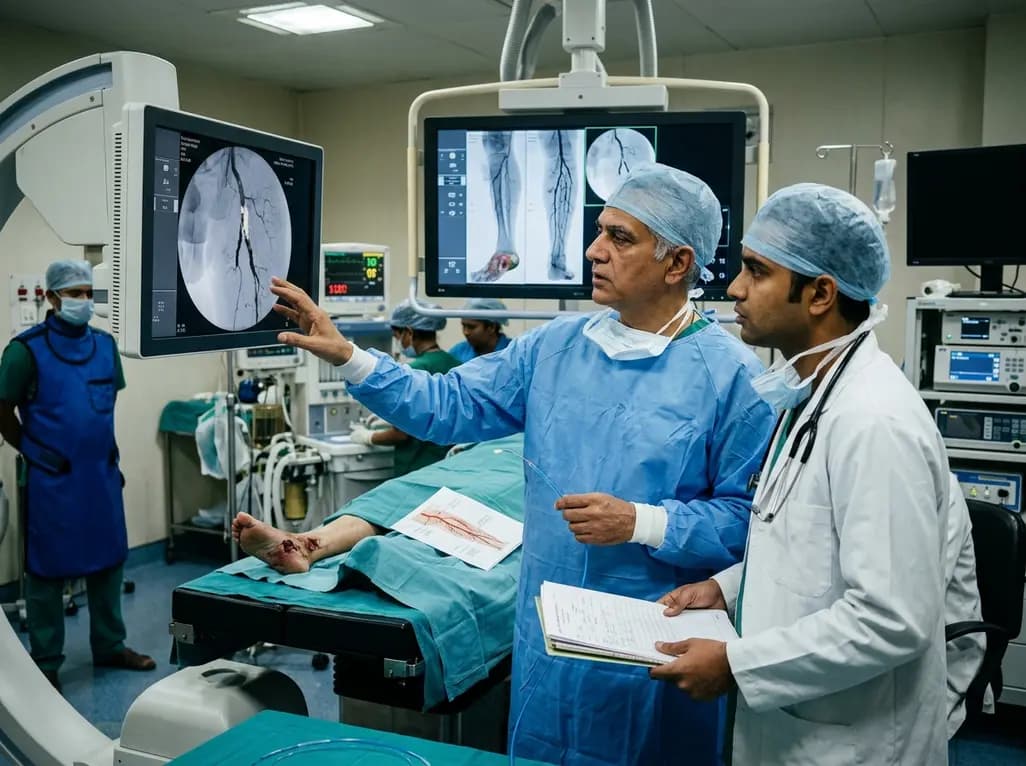
SWEDEPAD-1 trial insights show paclitaxel-coated devices do not improve long-term limb salvage in patients with chronic limb-threatening ischemia and tissue loss. While one-year reinterventions decreased, the devices were linked to a higher risk of major amputation at three months.
Today
