.webp&w=384&q=75)

Loading, please wait...
Loading, please wait...

Locoregional recurrence remains a significant challenge in modern oncology. Conventional treatments often fail because they lack selectivity and harm healthy surrounding tissues. Consequently, researchers are now focusing on injectable breast cancer therapy using dual-stimuli platforms. These advanced drug delivery systems respond to specific environmental triggers, such as pH levels and temperature changes within the tumor microenvironment.
Smart hydrogels are a leading technology in this specialized field. These materials change their physical state when they encounter the acidic environment of a tumor. Furthermore, temperature-responsive formulations allow for easy administration during clinical procedures. Doctors can inject the liquid formulation directly into the targeted site. Once injected, the material turns into a stable gel at body temperature. This process ensures a sustained and controlled release of the therapeutic agent.
Hybrid constructs, such as liposomes embedded within hydrogel matrices, show great promise. These platforms can effectively encapsulate lipophilic drugs that are otherwise difficult to deliver. Moreover, these hybrid systems improve the overall stability of the formulation. They also help streamline the manufacturing process for localized treatments. Researchers emphasize that these platforms offer superior spatial control over drug release. Therefore, they could significantly reduce the risk of local cancer recurrence after surgery.
Biological and mechanical characterization studies are still necessary for full clinical translation. Scientists must evaluate how these materials behave inside the human body over long periods. Additionally, they must ensure that the platforms are safe for patients during various stages of recovery. Nevertheless, these dual-stimuli platforms represent a significant step forward in personalized medicine. They provide a precise way to target malignant cells while sparing healthy tissues from toxic effects.
These systems respond to both pH and temperature changes. This dual-responsiveness ensures the drug is released only in the tumor environment, which reduces side effects in healthy tissues.
These are advanced delivery platforms where drug-loaded liposomes are placed inside a hydrogel. This combination allows for better stability and more precise control over how the medicine is released over time.
Localized therapy targets residual cancer cells at the surgical site. This approach minimizes the need for high-dose systemic chemotherapy and reduces the risk of the cancer returning in the same area.
Disclaimer: This content is for informational and educational purposes only. It does not constitute medical advice or a substitute for professional healthcare. Refer to the latest local and national guidelines for clinical practice.
References
Nieto C et al. Dual-Stimuli Injectable Platforms for Localized Breast Cancer Therapy. Nano Lett. 2026 Apr 26. doi: 10.1021/acs.nanolett.6c00777. PMID: 42035486.
Thambi T et al. Injectable hydrogels for sustained release of therapeutic agents. J Control Release. 2016. doi: 10.1016/j.jconrel.2016.03.001.
Feng W & Wang Z. Tailoring the Swelling-Shrinkable Behavior of Hydrogels for Biomedical Applications. Adv Sci. 2023. doi: 10.1002/advs.202301014.

Read summarized clinical updates, watch expert medical content, and earn CME certifications right from your smartphone.
Open your smartphone camera to scan and install.





This review explores pH- and temperature-responsive injectable systems, like liposome-in-hydrogel hybrids, for localized breast cancer recurrence therapy....
5 months ago

Researchers at IIT Bombay have engineered an automated, cost-effective point-of-care device that diagnoses anaemia and sickle cell disease from a single drop of blood. By measuring blood smear spreading length, this portable tool assesses blood viscosity to offer rapid screening in resource-limited healthcare centers.
Today

A multicenter study evaluates whether standardized simulation training reduces cup detachment during vacuum-assisted vaginal birth. Evidence-based simulation equips obstetricians to improve cup placement, reduce maternal-fetal trauma, and optimize clinical decision-making during operative deliveries.
Today
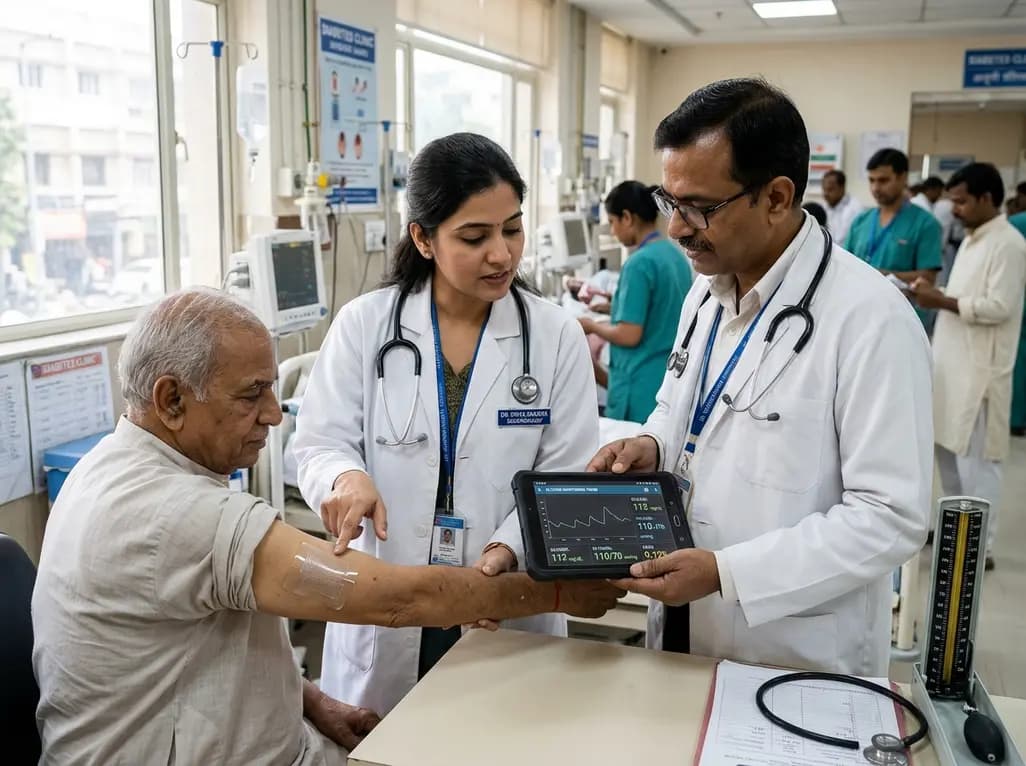
A breakthrough ultrathin multimodal sensor decouples physical hemodynamic monitoring from disposable electrochemical calibration, achieving long-term wearable glucose prediction with 81.36% accuracy and a 9.12% MARD. This offers a robust, drift-free solution for outpatient metabolic surveillance.
Today

A comparative review of tension band wiring and intramedullary screw fixation in thumb metacarpophalangeal arthrodesis, evaluating union rates, hardware complications, and clinical outcomes.
Today

Following regulatory scrutiny from FSSAI regarding promotional representations and lean muscle preservation claims, Dr. Reddy's Laboratories and Nestlé Health Science are currently reviewing the branding and marketing strategy for their joint nutritional supplement Celevida GLP+.
Today
