.webp&w=384&q=75)

Loading, please wait...
Loading, please wait...

Currently, recent data reveals a concerning trend regarding Indian schoolchildren fitness. Only one in three children possesses adequate stamina, with aerobic fitness being the weakest indicator. This finding comes from a massive report evaluating 1.4 lakh children across 333 schools in India.
Aerobic capacity is the most alarming weakness identified in the survey. Consequently, only 34% of students met healthy standards for cardiovascular endurance. Experts link this decline primarily to rising obesity levels among the youth. Moreover, upper and lower body strength remains consistently poor across most age groups.
Urban children face significant challenges in maintaining physical health. For instance, a lack of open spaces and limited access to sporting facilities prevents regular movement. Therefore, families and institutions must integrate exercise into daily routines rather than treating it as an afterthought. Interestingly, flexibility and core strength show better outcomes compared to endurance metrics.
The report highlights a notable disparity between school types. Public school students generally outperform their private school counterparts in five out of seven fitness parameters. This gap is most evident in aerobic and anaerobic capacity. Such results suggest that public school students likely engage in more free play and daily physical movement.
Dietary habits significantly influence muscle development and strength. However, many children lack adequate protein intake, particularly those on vegetarian diets. Regular physical education (PE) sessions provide a effective solution. Children who attend more than 80 PE sessions annually perform significantly better across all health parameters. Structured sports are critical for long-term preventive healthcare.
Q1: Why is aerobic fitness low among Indian children?
Rising obesity and a lack of open spaces for play are the primary factors contributing to low aerobic capacity. Additionally, increased screen time has reduced the time spent on vigorous physical activity.
Q2: How does school type affect fitness levels?
Public school students often show higher endurance levels than private school students. This is likely due to more opportunities for unstructured movement and daily physical activity in public school environments.
Disclaimer: This content is for informational and educational purposes only. It does not constitute medical advice or replace professional judgment. Refer to the latest local and national guidelines for clinical practice.
References

Read summarized clinical updates, watch expert medical content, and earn CME certifications right from your smartphone.
Open your smartphone camera to scan and install.





A new report reveals only 34% of Indian schoolchildren meet aerobic fitness standards, highlighting concerns over rising obesity and low cardiovascular endu...
6 months ago

Failing to account for competing events like mortality in longitudinal geriatric studies produces biased risk estimates and misleading inferences. This review highlights key methodological principles, insights from the Precipitating Events Project, and practical approaches for clinical research appraisal.
Today

A study in JAMIA Open shows lightweight open-source reasoning LLMs achieve up to 95% sensitivity and accelerate evidence synthesis screening by nearly twentyfold, presenting a cost-effective, scalable AI solution for biomedical research and systematic reviews.
Today
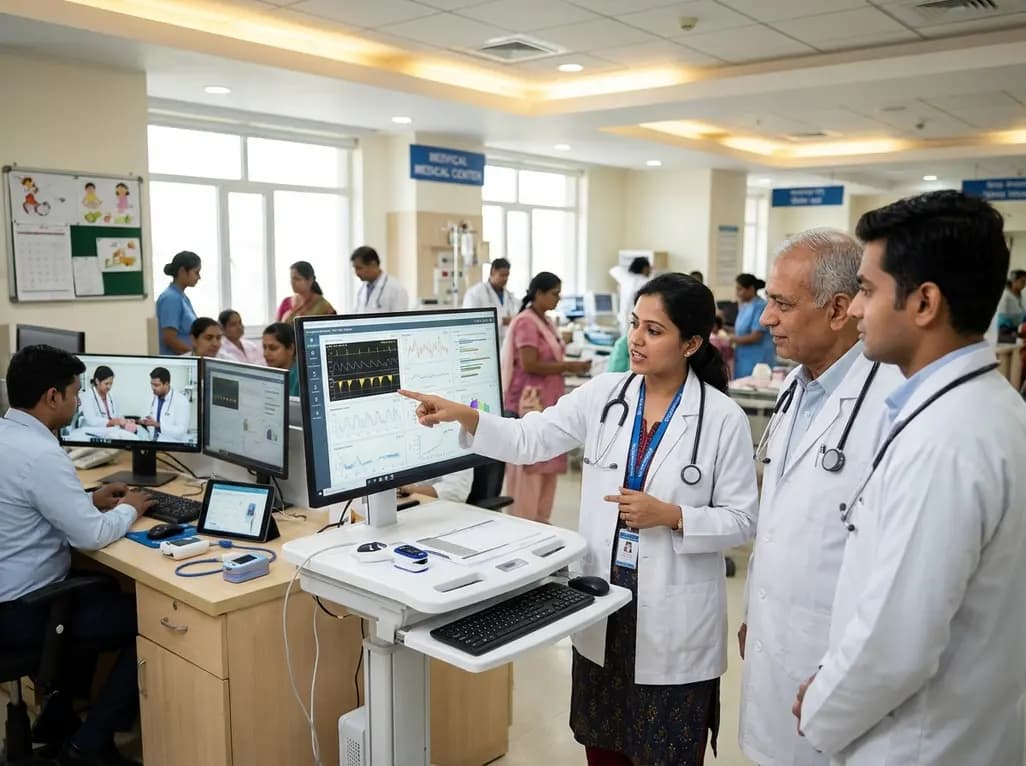
A landmark study details how an enterprise pediatric remote patient management model expanded from a single cardiology pilot to 16 diverse specialty programs by combining centralized digital operations with specialty clinical leadership.
Today

A comparative review of tension band wiring and intramedullary screw fixation in thumb metacarpophalangeal arthrodesis, evaluating union rates, hardware complications, and clinical outcomes.
Yesterday
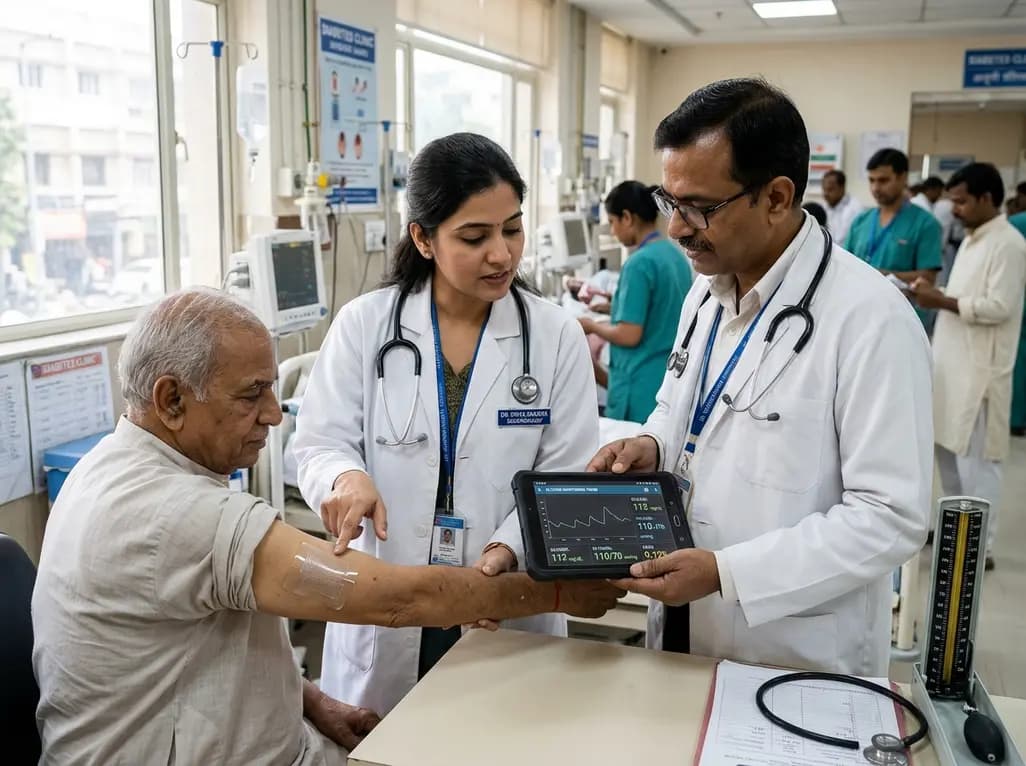
A breakthrough ultrathin multimodal sensor decouples physical hemodynamic monitoring from disposable electrochemical calibration, achieving long-term wearable glucose prediction with 81.36% accuracy and a 9.12% MARD. This offers a robust, drift-free solution for outpatient metabolic surveillance.
Yesterday
