.webp&w=384&q=75)

Loading, please wait...
Loading, please wait...

The incremental step test COPD provides a practical and cost-effective alternative for assessing exercise capacity in individuals with chronic obstructive pulmonary disease. While the cardiopulmonary exercise test (CPET) remains the gold standard, its high cost and technical requirements often limit its availability in many clinical settings. Consequently, medical professionals are increasingly turning to field tests to evaluate cardiorespiratory health. A recent study compared the cardiorespiratory responses between the IST and CPET to determine if the step test can effectively measure peak physiological capacity.
Researchers discovered that peak oxygen uptake (VO2) was remarkably similar between the IST and the CPET. Furthermore, heart rate responses and perceived dyspnea levels at peak effort showed no significant differences between the two modalities. Specifically, the IST achieved a mean VO2 of 15.6 ml/kg/min compared to 14.7 ml/kg/min during the CPET. However, certain metabolic markers like the respiratory exchange ratio (RER) and leg fatigue were slightly lower during the step test. These results suggest that while the IST effectively captures peak aerobic capacity, it may induce less peripheral muscle fatigue than cycle ergometry.
The IST is particularly valuable because it requires minimal space and equipment, making it highly suitable for busy hospitals and primary care clinics. Moreover, the test mimics daily activities such as climbing stairs, providing a more functional assessment of a patient's physical status. Therefore, integrating this test into pulmonary rehabilitation programs can help clinicians prescribe accurate exercise intensities. This is especially relevant in resource-constrained environments where advanced laboratory testing is often unavailable.
While the IST provides similar peak VO2 and dyspnea results, CPET offers more detailed metabolic data. Therefore, clinicians should use the IST when CPET is unavailable or when functional capacity is the primary focus of the assessment.
Interestingly, the study found that oxygen desaturation and leg fatigue were significantly lower during the IST compared to the cycle-based CPET. This suggests the step test might be better tolerated by certain patients while still reaching peak effort.
Disclaimer: This content is for informational and educational purposes only. It does not constitute professional medical advice, diagnosis, or treatment. Always seek the advice of your physician or other qualified health provider with any questions you may have regarding a medical condition. Refer to the latest local and national guidelines for clinical practice.
References
Cardoso AL et al. Comparison of cardiorespiratory responses between the incremental step test and the cardiopulmonary exercise test in people with chronic obstructive pulmonary disease. Rehabilitacion (Madr). 2026 May 12. doi: undefined. PMID: 42119299.
Singh SJ, Morgan MD, Scott S, Walters BC, Hardman AE. Development of a shuttle walking test of disability in patients with chronic airways obstruction. Thorax. 1992;47(12):1019-1024.
American Thoracic Society; American College of Chest Physicians. ATS/ACCP Statement on cardiopulmonary exercise testing. Am J Respir Crit Care Med. 2003;167(2):211-277.

Read summarized clinical updates, watch expert medical content, and earn CME certifications right from your smartphone.
Open your smartphone camera to scan and install.





A study comparing the cardiorespiratory responses of the incremental step test (IST) and CPET in COPD patients, showing similar peak VO2 and dyspnea....
5 months ago

Researchers at IIT Bombay have engineered an automated, cost-effective point-of-care device that diagnoses anaemia and sickle cell disease from a single drop of blood. By measuring blood smear spreading length, this portable tool assesses blood viscosity to offer rapid screening in resource-limited healthcare centers.
Today
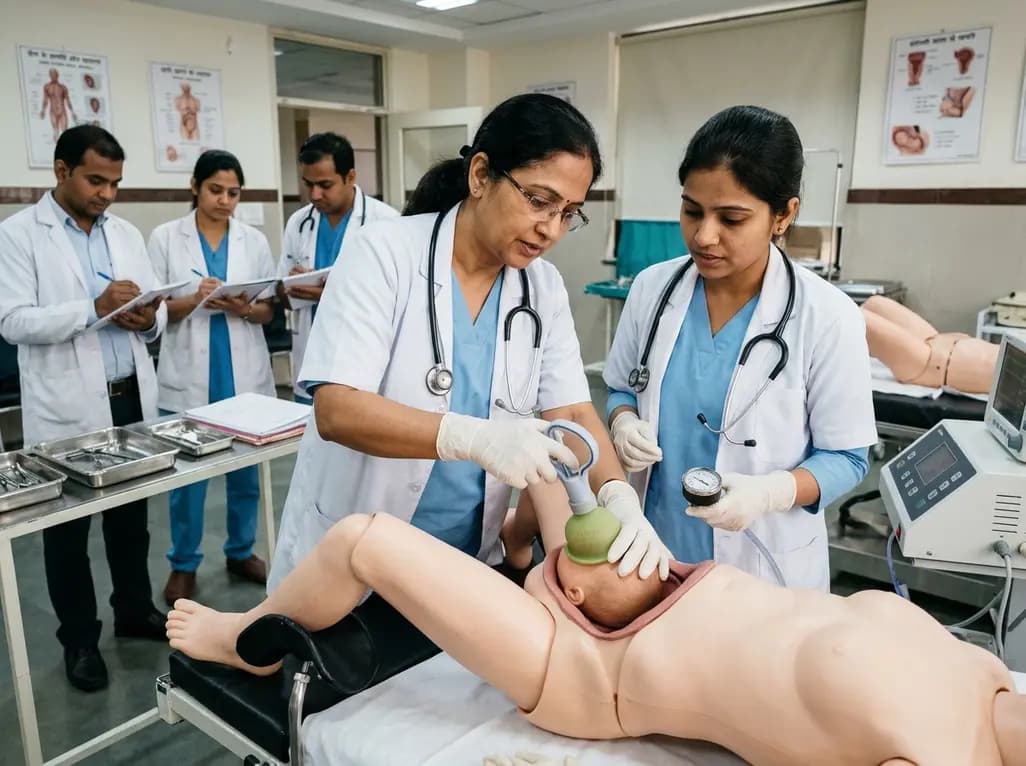
A multicenter study evaluates whether standardized simulation training reduces cup detachment during vacuum-assisted vaginal birth. Evidence-based simulation equips obstetricians to improve cup placement, reduce maternal-fetal trauma, and optimize clinical decision-making during operative deliveries.
Today
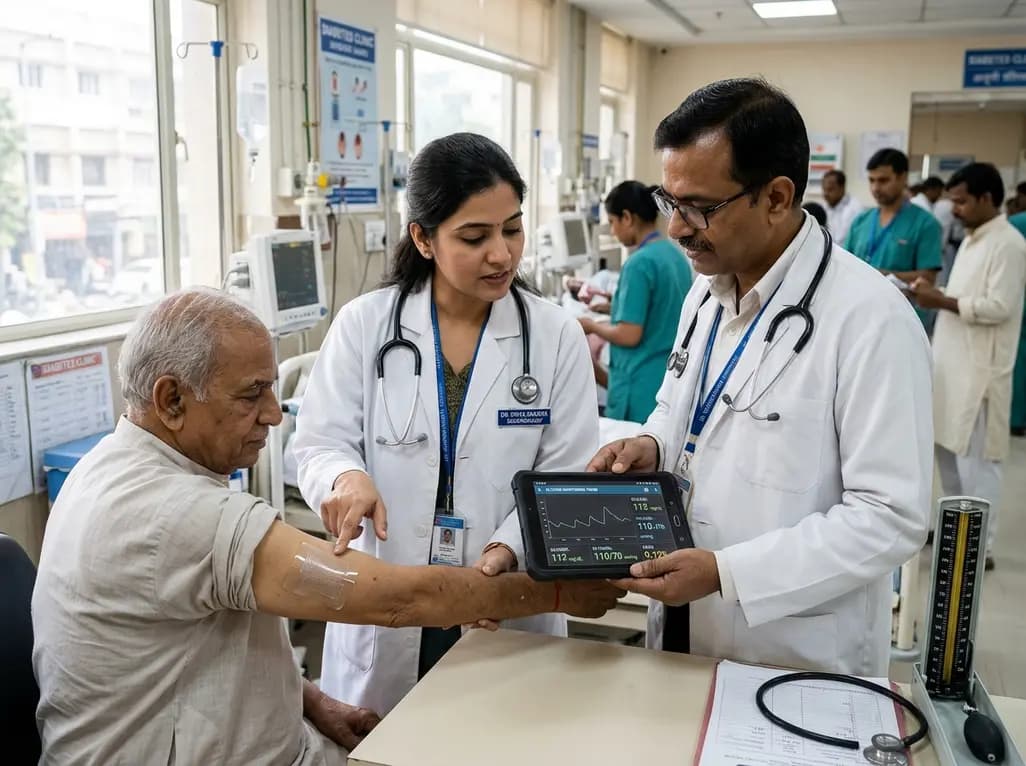
A breakthrough ultrathin multimodal sensor decouples physical hemodynamic monitoring from disposable electrochemical calibration, achieving long-term wearable glucose prediction with 81.36% accuracy and a 9.12% MARD. This offers a robust, drift-free solution for outpatient metabolic surveillance.
Today

A comparative review of tension band wiring and intramedullary screw fixation in thumb metacarpophalangeal arthrodesis, evaluating union rates, hardware complications, and clinical outcomes.
Today

Following regulatory scrutiny from FSSAI regarding promotional representations and lean muscle preservation claims, Dr. Reddy's Laboratories and Nestlé Health Science are currently reviewing the branding and marketing strategy for their joint nutritional supplement Celevida GLP+.
Today
