.webp&w=384&q=75)

Loading, please wait...
Loading, please wait...
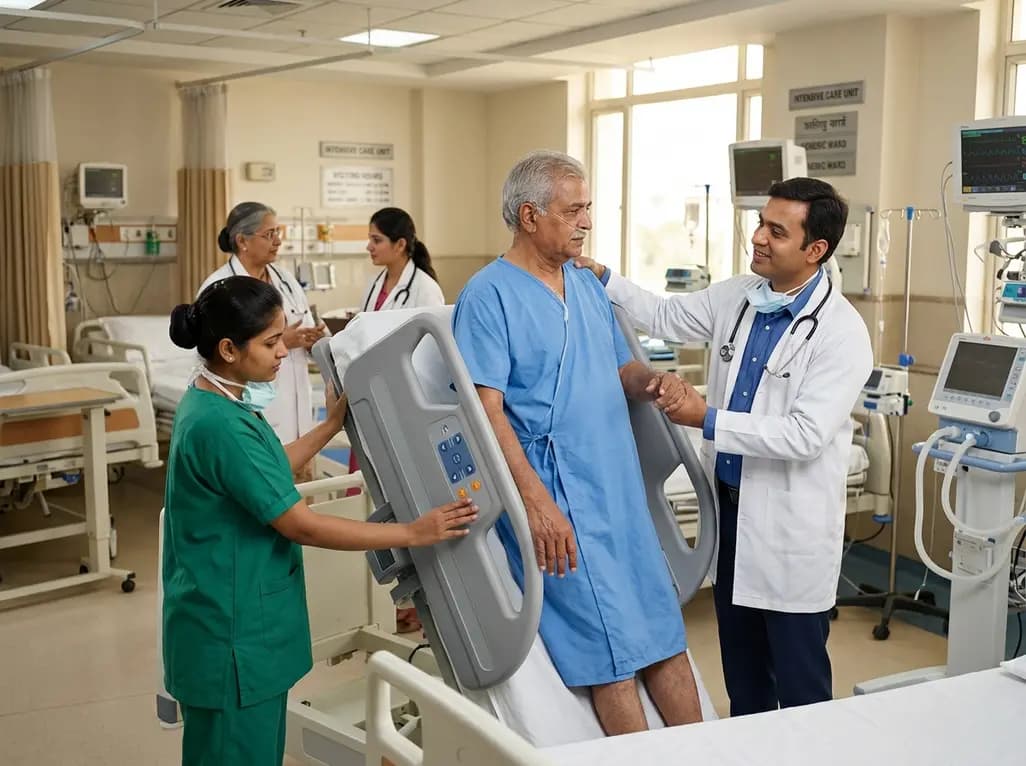
Critical care medicine in India is experiencing a paradigm shift from focusing solely on survival to optimizing functional recovery. Yashoda Medicity recently partnered with Paramount Bed to introduce the VitalGo Total Lift Bed in Delhi-NCR. This technology provides advanced In-Bed Verticalization Therapy through an integrated weight-bearing control system. Consequently, intensive care teams can now initiate progressive weight-bearing and vertical positioning early in a patient's critical illness. Prolonged immobility in intensive care units remains a major driver of muscle atrophy and extended hospital stays. By enabling safe standing without transferring patients out of bed, this technology redefines critical care rehabilitation.
Prolonged bed rest in critically ill patients triggers rapid physical deconditioning and muscle atrophy. Research indicates that ICU patients lose significant skeletal muscle mass within the first week of immobility. Furthermore, continuous supine positioning impairs normal physiological homeostasis. As a result, patients often develop critical illness polyneuromyopathy and persistent weakness. Therefore, clinical guidelines emphasize early mobilization as a core standard of care.
However, mobilizing high-acuity patients poses immense practical challenges for multidisciplinary teams. Traditional mobilization methods require multiple staff members, increasing risks of line displacement or caregiver injury. Moreover, traditional methods are often impossible for patients receiving mechanical ventilation or continuous vasoactive infusions. Consequently, early rehabilitation is often delayed until physiological stability is achieved. Modern verticalization beds effectively solve these operational barriers. They allow clinical staff to initiate gradual standing protocols safely at the bedside. Thus, healthcare teams can prevent physical deconditioning while maintaining uninterrupted monitoring.
The core innovation behind the VitalGo Total Lift Bed lies in its patented weight-bearing control system and adjustable Foot Lifter technology. Unlike traditional tilt tables or standard hospital beds, this system offers seamless In-Bed Verticalization Therapy from a fully supine position up to an angle of eighty-two degrees. Therefore, clinicians can precisely calibrate the exact percentage of body weight the patient supports during tilting.
When the verticalization feature is engaged, the motorized footboard automatically advances until it contacts the patient's feet. Digital sensors integrated into the sleep deck and footboard measure real-time weight distribution. Consequently, the clinical team can monitor exact weight-bearing ratios displayed on the digital screen. Furthermore, flexible safety straps secure the patient across the chest, pelvis, and knees, ensuring postural stability throughout movement. Consequently, caregivers can progressively increase weight-bearing milestones in controlled increments. This gradual loading activates anti-gravity muscles and maintains joint mobility while protecting nursing staff from physical strain.
Upright positioning profoundly alters pulmonary mechanics and cardiovascular physiology in mechanically ventilated patients. In a continuous supine position, abdominal contents exert upward pressure against the diaphragm, reducing functional residual capacity. Consequently, dependent lung regions suffer from atelectasis, impaired secretion clearance, and ventilation-perfusion mismatching. Verticalization therapy counteracts these restrictive mechanical forces by allowing gravity to pull abdominal organs downward.
As a result, diaphragm excursion improves, lung compliance increases, and posterior lung recruitment is facilitated. Furthermore, transitioning to an upright posture enhances mucociliary clearance, making airway management more effective. Clinical evidence demonstrates that regular vertical positioning reduces ventilator dependency and decreases ventilator-associated pneumonia risks. Simultaneously, orthostatic stress during gradual verticalization challenges the cardiovascular system in a controlled manner. It improves autonomic vascular tone, prevents orthostatic intolerance, and reduces venous stasis. Consequently, the risk of deep vein thrombosis is significantly diminished, supporting overall systemic stability.
The versatility of total lift bed technology expands its clinical utility across a broad spectrum of medical and surgical disciplines. Critically ill patients undergoing major cardiothoracic, abdominal, organ transplant, or complex spinal surgeries benefit greatly from early vertical positioning. Postoperative immobility in these cohorts frequently leads to pulmonary complications, paralytic ileus, and delayed wound healing. By facilitating safe upright posture without straining surgical incisions, this technology accelerates functional recovery.
Furthermore, total lift technology provides therapeutic value for patients receiving extracorporeal membrane oxygenation or mechanical circulatory support. Historically, patients cannulated for femoral ECMO were restricted to strict bed rest due to cannula dislodgement risks. However, verticalization beds allow these complex patients to achieve upright weight-bearing safely within the bed. Consequently, neuromuscular conditioning and diaphragmatic strength are preserved throughout long bridges to recovery. Additionally, neurocritical care patients experience improved cerebral perfusion pressure during controlled tilt sessions. Thus, intensive care units can standardize early mobility across diverse patient populations.
ICU-acquired weakness remains one of the most debilitating long-term complications following critical illness. It contributes directly to prolonged intensive care stays, extended overall hospitalization, and long-term disability. Implementing total lift bed technology directly targets the underlying pathophysiology of neuromuscular deconditioning. By initiating weight-bearing therapy within forty-eight hours of admission, clinical teams preserve muscle fiber architecture and metabolic function.
Moreover, upright positioning provides critical sensory and psychological stimulation to critically ill patients. Re-establishing an upright perspective improves circadian rhythm regulation, reduces delirium duration, and boosts patient morale. Furthermore, early physical recovery translates into significant health-economic advantages for acute care institutions. Studies show that structured early mobility protocols decrease mechanical ventilation days and reduce intensive care unit length of stay. Additionally, automating the standing process reduces physical workload and lifting hazards for healthcare staff. Ultimately, integrating advanced verticalization beds shifts intensive care focus toward comprehensive, patient-centered functional restoration.
Q1: What is the primary difference between a Total Lift Bed and a standard ICU bed?
A standard ICU bed offers limited head elevation and chair positioning, which do not provide true weight-bearing capability. In contrast, the VitalGo Total Lift Bed features an integrated footboard scale and motorized tilting mechanism. This enables safe, controlled transition from lying to a full standing angle of up to eighty-two degrees. Consequently, patients receive progressive weight-bearing therapy while remaining fully supported within their bed.
Q2: How does In-Bed Verticalization Therapy benefit mechanically ventilated patients?
Verticalization therapy relies on gravity to lower abdominal pressure on the diaphragm, expanding lung volumes and enhancing functional residual capacity. Consequently, upright positioning improves ventilation-perfusion matching, facilitates secretion clearance, and aids lung re-expansion. Furthermore, regular verticalization reduces the risk of ventilator-associated pneumonia and promotes faster liberation from mechanical ventilation, leading to shorter intensive care stays and improved functional recovery outcomes for patients.
Q3: Which patient groups are candidates for Total Lift Bed technology in critical care?
This technology benefits a wide range of high-acuity patients, including those on mechanical ventilation, continuous renal replacement therapy, ECMO, or intra-aortic balloon pumps. It is also highly effective for post-operative surgical cases, such as cardiothoracic, organ transplant, complex orthopedic, and neurosurgical procedures. By providing stable support, it allows severely ill or weak patients to begin early weight-bearing rehabilitation safely at the bedside.
Disclaimer: This content is for informational and educational purposes only. It does not constitute medical advice or replace professional judgment. Refer to the latest local and national guidelines for clinical practice.
References

Read summarized clinical updates, watch expert medical content, and earn CME certifications right from your smartphone.
Open your smartphone camera to scan and install.





Yashoda Medicity has introduced the VitalGo Total Lift Bed in partnership with Paramount Bed to advance intensive care. This bed enables early in-bed verticalization therapy with integrated weight-bearing control, reducing ICU-acquired weakness, enhancing lung recovery, and shortening acute care hospital stays.
2 months ago
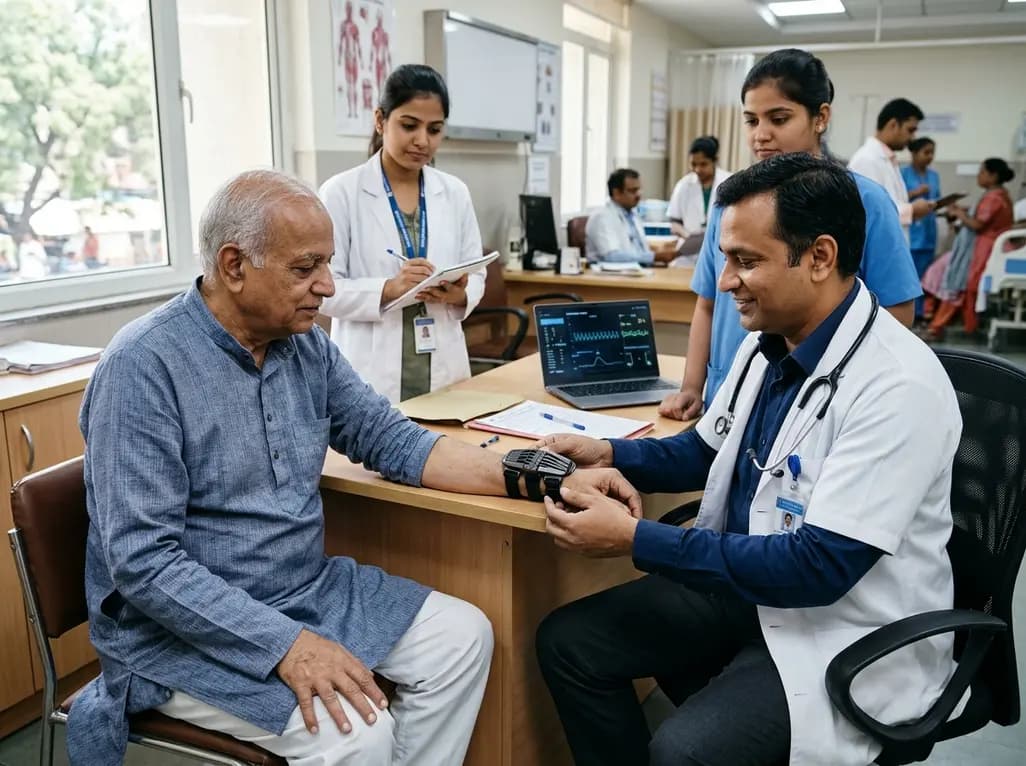
The TREM-AB open-label pilot study evaluated a wearable passive nonlinear vibration absorber for essential tremor. The Nonlinear Energy Sink bracelet reduced clinical Fahn-Tolosa-Marin tremor scores by 32.1% and electrophysiological tremor power by 49.2% with no adverse effects reported.
Today

A study in JAMIA Open shows lightweight open-source reasoning LLMs achieve up to 95% sensitivity and accelerate evidence synthesis screening by nearly twentyfold, presenting a cost-effective, scalable AI solution for biomedical research and systematic reviews.
Today
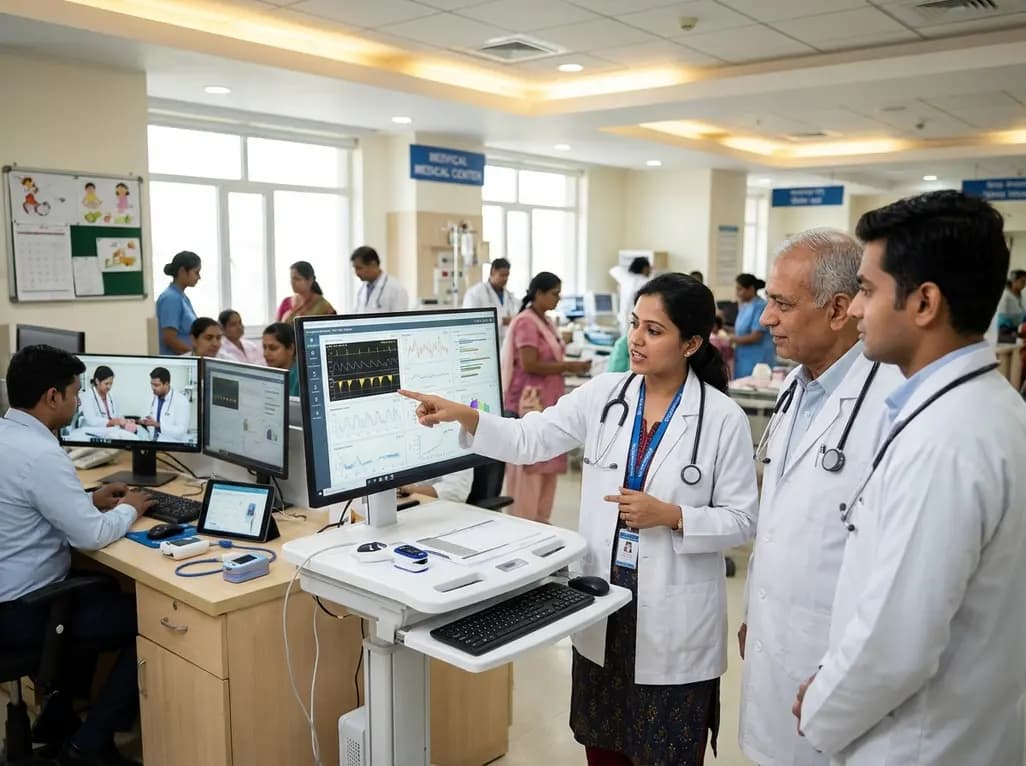
A landmark study details how an enterprise pediatric remote patient management model expanded from a single cardiology pilot to 16 diverse specialty programs by combining centralized digital operations with specialty clinical leadership.
Today
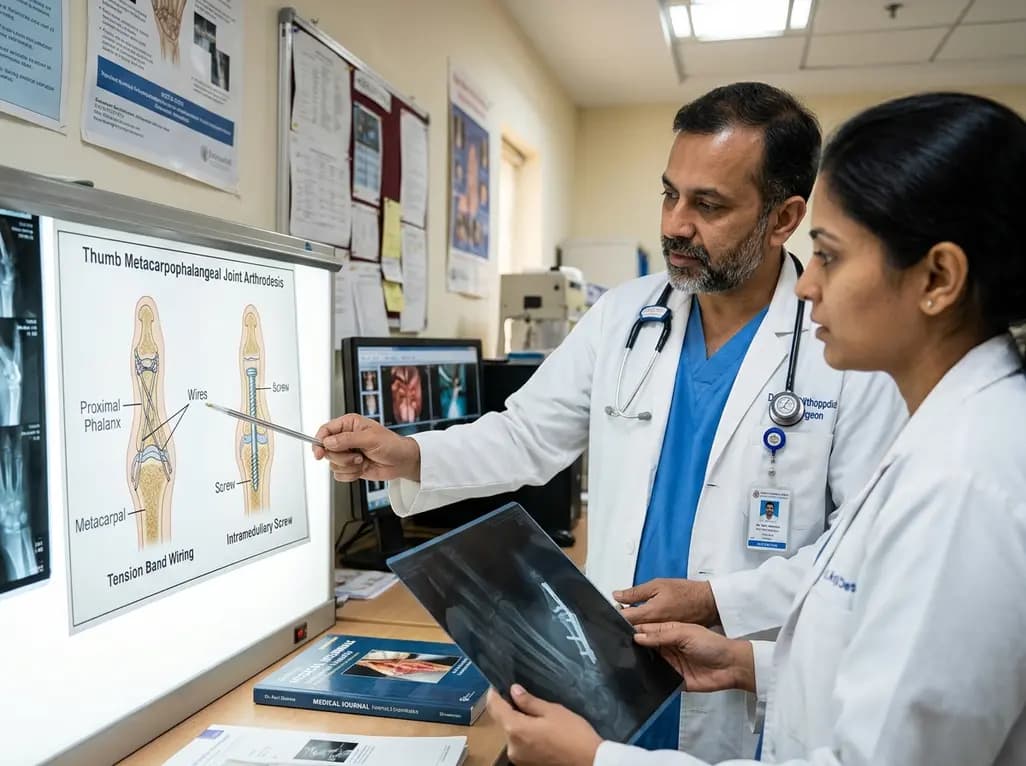
A comparative review of tension band wiring and intramedullary screw fixation in thumb metacarpophalangeal arthrodesis, evaluating union rates, hardware complications, and clinical outcomes.
Today
A breakthrough ultrathin multimodal sensor decouples physical hemodynamic monitoring from disposable electrochemical calibration, achieving long-term wearable glucose prediction with 81.36% accuracy and a 9.12% MARD. This offers a robust, drift-free solution for outpatient metabolic surveillance.
Today
