.webp&w=384&q=75)

Loading, please wait...
Loading, please wait...
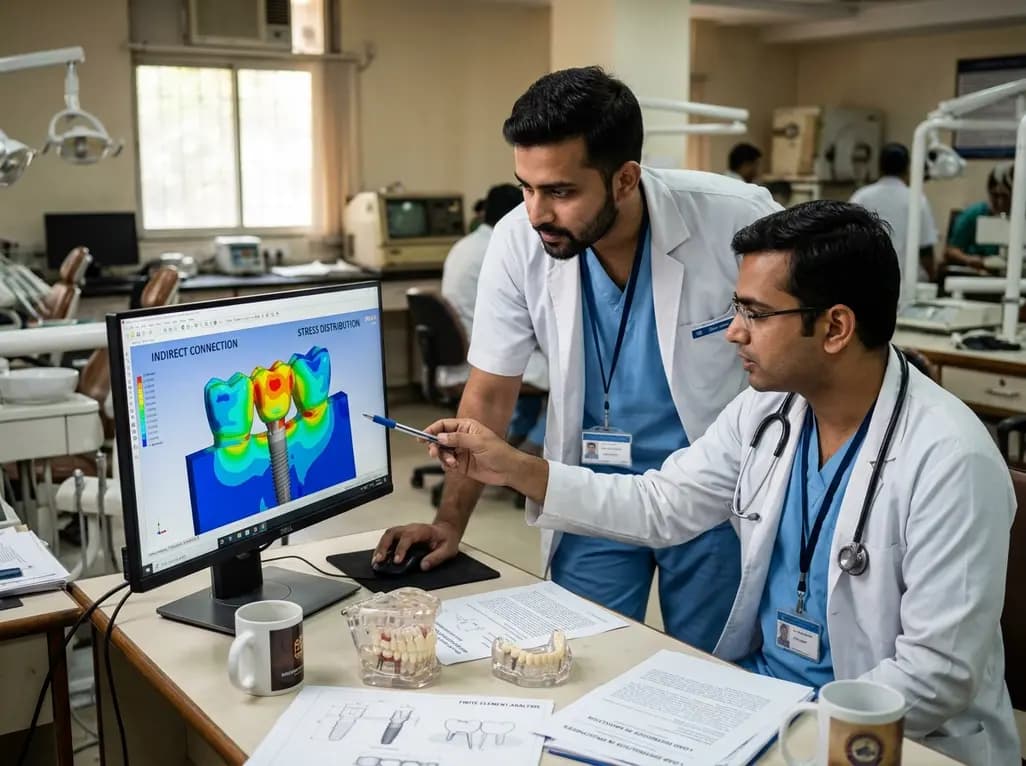
Modern restorative dentistry relies heavily on predictable biomechanics to prevent prosthetic and structural failures. Achieving long-term clinical success requires an optimal implant-abutment connection that withstands complex masticatory forces. When clinicians design screw-retained fixed dental prostheses, load distribution across mechanical interfaces becomes a primary concern. Cantilever extensions often intensify stress concentrations at the supporting structures. Consequently, mechanical complications such as screw loosening, component fracture, and peri-implant bone resorption frequently arise. Finite element analysis provides an indispensable computational method to evaluate these internal stresses under simulated oral conditions. By analyzing nonlinear friction contacts between mating components, researchers can accurately predict micro-movements and strain patterns. Furthermore, biomechanical stability directly correlates with tissue preservation and restorative longevity. Therefore, evaluating different connection designs remains essential for refining contemporary prosthodontic protocols.
Prosthodontists routinely choose between direct and indirect restoration connections when fabricating multi-unit restorations. In a direct connection system, the framework engages the dental implant directly with a single retention screw. Conversely, an indirect connection incorporates an intermediate abutment, a protective cap, and separate occlusal screws. This structural difference fundamentally alters the mechanics of load transmission throughout the entire assembly. Direct systems offer simplicity and reduced component inventory. However, they transfer occlusal loads directly to the implant fixture and its primary retention screw. In contrast, indirect configurations introduce additional contact interfaces that distribute mechanical energy more broadly. Consequently, the frictional resistance across multiple mating surfaces can absorb and dissipate functional strains. Therefore, understanding these interface dynamics is critical for minimizing clinical failures.
Advanced computational evaluations utilize nonlinear finite element analysis to assess complex prosthetic assemblies. Recent engineering studies created detailed three-dimensional models of three-unit distal cantilevered restorations supported by two implants. Researchers simulated both indirect and direct connection types within anisotropic bone blocks. Furthermore, investigators defined realistic nonlinear friction contact parameters among all mating components. These components included the dental implant, intermediate abutment, coping, and occlusal retaining screws. The computational protocol applied vertical and oblique forces across four distinct clinical loading conditions. Oblique forces represent lateral chewing cycles, which generate significant bending moments. By measuring Von Mises stress magnitudes, researchers identified localized areas prone to yield deformation. As a result, finite element modeling bridges the gap between mechanical engineering and clinical practice.
The computational findings demonstrate that loading direction profoundly impacts stress concentration in implant assemblies. Specifically, oblique load conditions caused substantial increases in both stress values and displacement magnitudes. When lateral vectors act on cantilevered prostheses, bending moments amplify mechanical forces at the restorative interface. The direct connection design exhibited notably higher Von Mises stresses in the retaining screws and implant bodies. Because the direct configuration lacks intermediate shock-absorbing interfaces, functional strains concentrate heavily around the primary screw threads. In contrast, the indirect connection dissipated lateral forces more effectively across its multi-component framework. Consequently, indirect assemblies reduced peak stress concentrations within the underlying implant collar and crestal bone. Therefore, controlling lateral contacts during occlusal adjustment remains critical for protecting components.
Displacement analysis revealed distinct kinematic behaviors between the two connection philosophies. In the indirect connection models, the highest displacement values occurred predominantly within the occlusal retaining screws. Conversely, the direct connection models demonstrated maximum displacement within the abutments. This difference indicates that intermediate abutments in indirect systems shield the main implant assembly by acting as mechanical buffers. As a result, the smaller prosthetic screw absorbs displacement forces, making it the primary sacrificial element. Clinicians can easily replace a loose or deformed occlusal screw in an indirect setup without damaging the fixture. On the other hand, high stresses in direct connections risk compromising the main implant fixture. Ultimately, selecting an indirect design may protect critical structural components from catastrophic mechanical breakdown.
Biomechanical data provide valuable guidance for dental practitioners designing implant-supported fixed dental prostheses. Although direct connections offer streamlined laboratory workflows and reduced component costs, their mechanical stress profile requires caution. Clinicians treating patients with parafunctional habits or extended cantilevers should consider indirect connection systems. Intermediate abutments help mitigate peak stresses on the supporting bone and preserve the primary implant body. Furthermore, prosthodontists must meticulously refine occlusal schemes to eliminate detrimental lateral interferences on cantilever extensions. Narrow occlusal tables and reduced cusp inclinations can significantly reduce damaging oblique forces. Therefore, selecting the appropriate implant-abutment connection represents a vital step toward achieving lasting restorative success.
An indirect connection incorporates an intermediate abutment and separate occlusal screws, creating multiple contact interfaces. These additional frictional surfaces distribute and dissipate functional masticatory forces before they reach the main fixture. Consequently, peak stress concentrations within the dental implant and surrounding crestal bone decrease substantially. This structural buffering protects critical components from excessive mechanical strain, especially during demanding lateral or oblique loading cycles.
Oblique occlusal forces generate non-axial bending moments that concentrate mechanical tension and shear stress along one side of the implant assembly. Unlike vertical forces that distribute compressive loads evenly along the long axis, lateral forces amplify strain at the crestal bone and screw joints. This uneven stress distribution increases the likelihood of screw loosening, component fatigue, and micro-displacement within cantilevered restorations.
Direct screw-retained connections eliminate the need for intermediate abutments, which simplifies both restorative procedures and dental laboratory workflows. This direct architecture reduces component inventory and overall treatment costs while maximizing vertical space in patients with limited restorative clearance. However, clinicians must carefully manage occlusal contacts, as direct connections transmit higher mechanical stresses directly to the retaining screws and implant fixture.
Disclaimer: This content is for informational and educational purposes only and does not substitute for professional medical or dental advice, diagnosis, or treatment. Refer to the latest local and national guidelines for clinical practice.
References

Read summarized clinical updates, watch expert medical content, and earn CME certifications right from your smartphone.
Open your smartphone camera to scan and install.





A nonlinear finite element analysis evaluates stress distribution and displacement across direct versus indirect implant-abutment connection designs in screw-retained fixed dental prostheses, highlighting the biomechanical advantages of intermediate abutments.
last month
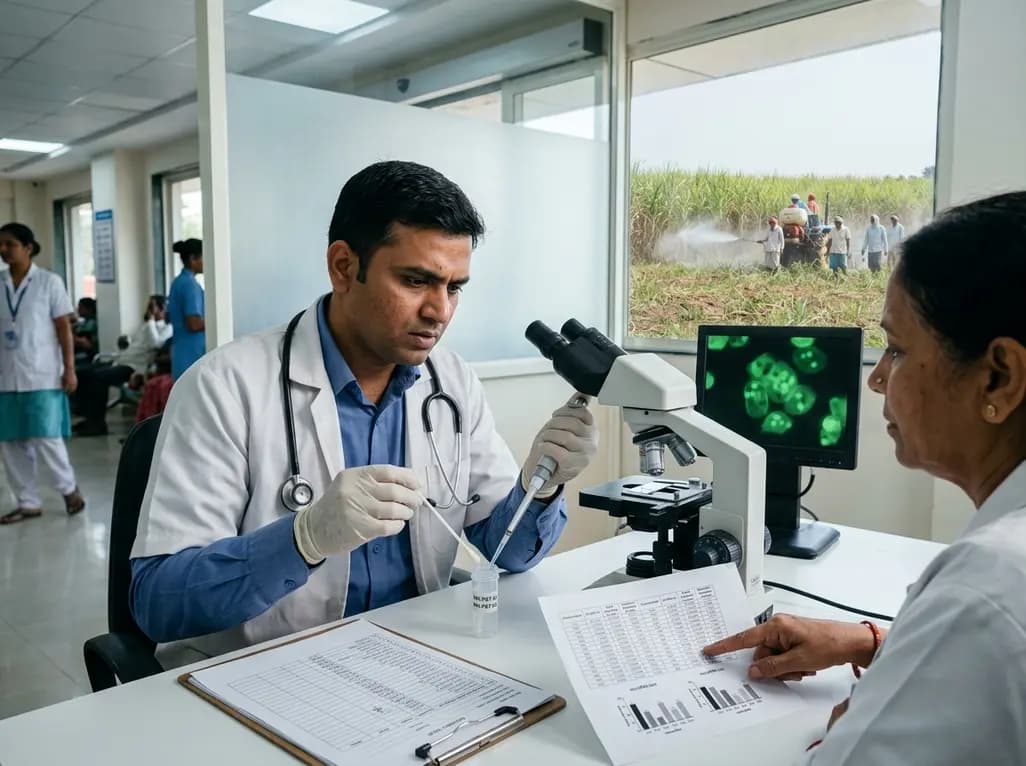
A landmark biomonitoring study reveals that chronic pesticide exposure significantly alters buccal microRNA expression and increases micronucleus frequency in agricultural workers. These findings uncover actionable molecular signatures of oxidative stress, inflammation, and genomic instability.
Today

India's national digital health service achieved a historic milestone of fifty crore virtual consultations. Notably, female patients account for over fifty-seven percent of utilisation, demonstrating improved healthcare accessibility for remote communities, chronic disease management, and primary triage.
Today
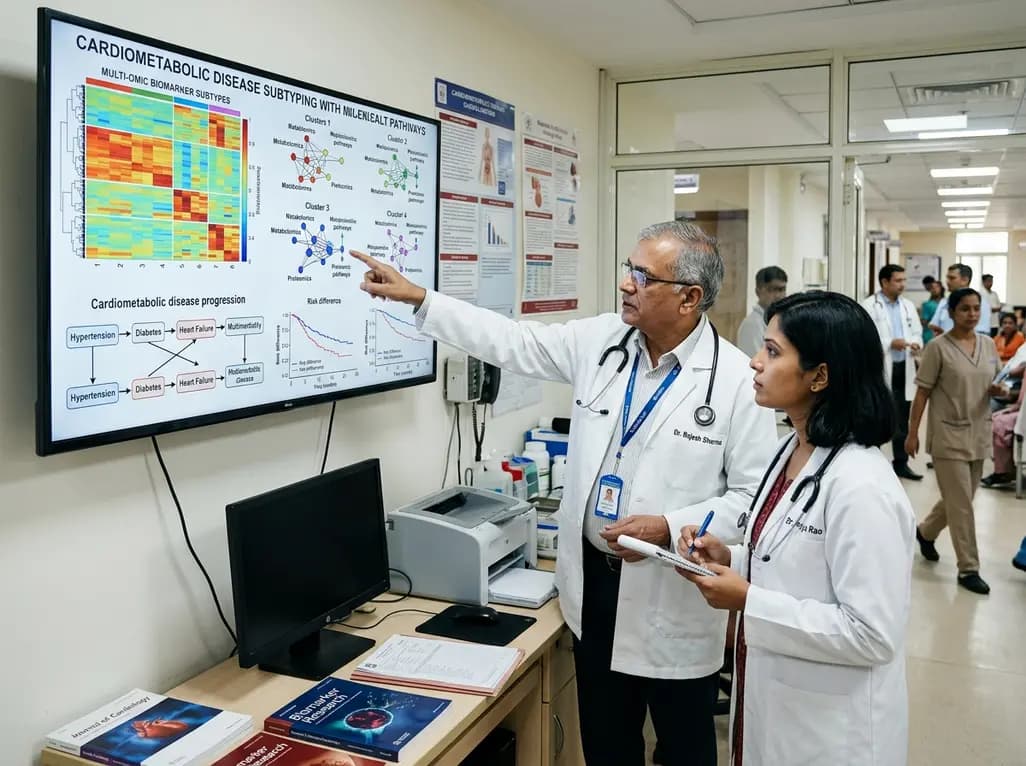
A large UK Biobank study identified four routine biomarker subtypes that predict cardiometabolic disease progression to multimorbidity. Integrating multi-state modelling, metabolomics, and proteomics revealed distinct biological pathways, offering new avenues for tailored clinical risk stratification.
Today
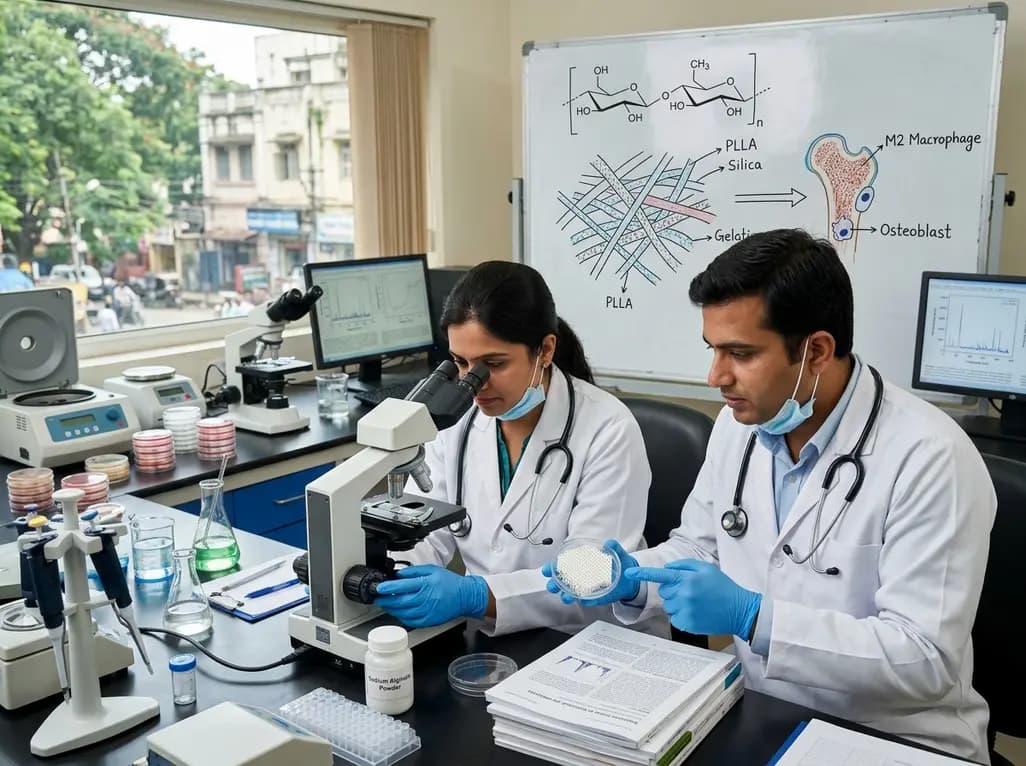
Dual-nanofiber interpenetrating network scaffolds combining silica and PLLA/gelatin nanofibers with sodium alginate achieve complementary mechanical stability, immunomodulatory M2 macrophage polarization, and enhanced osteogenesis for advanced bone repair.
Today
Researchers at IISER Berhampur have engineered a covalent organic framework immunosensor that detects urinary NGAL. This novel nanotechnology platform distinguishes diabetic nephropathy from other renal conditions, enabling rapid, minimally invasive stratification and earlier clinical intervention for patients.
Today
