

Loading, please wait...
Loading, please wait...

Acute myeloid leukemia presents formidable clinical challenges due to pronounced clonal heterogeneity and frequent disease recurrence following initial chemotherapy. Consequently, measurable residual disease surveillance has emerged as a cornerstone of modern post-remission care. Isocitrate dehydrogenase mutations occur in approximately twenty percent of adult patients with acute myeloid leukemia. Therefore, precise IDH mutation monitoring offers an exceptional opportunity to track subclonal dynamics and optimize targeted interventions. However, differentiating true leukemic persistence from clinically benign clonal expansion remains a persistent dilemma for hematologists worldwide.
Effective post-remission management in acute myeloid leukemia demands exact molecular surveillance. Although next-generation sequencing assays provide comprehensive genomic coverage, they frequently fail to detect residual disease below one percent variant allele frequency. In addition, real-time quantitative PCR requires patient-customized assays that prove labor-intensive and difficult to standardize across diagnostic laboratories. Meanwhile, droplet digital PCR provides absolute target quantification without requiring complex reference standard curves. Nevertheless, the presence of clonal hematopoiesis of indeterminate potential frequently complicates post-treatment molecular interpretation. Ancestral mutations can persist in morphologic remission without forecasting imminent leukemic recurrence. Consequently, detecting an isolated mutant allele does not automatically signify impending relapse. Hematologists therefore require clear, clinically validated thresholds to avoid unnecessary therapy intensification while identifying patients genuinely destined to relapse. Establishing reproducible standards for IDH mutation monitoring transforms molecular diagnostics into actionable clinical tools, ensuring that therapeutic decisions reflect true biological risk rather than technical background noise.
To address these diagnostic challenges, Ramil and colleagues evaluated droplet digital PCR in patients with IDH-mutated acute myeloid leukemia receiving curative therapy. Furthermore, the investigators included healthy control donors to characterize baseline technical noise and physiologic background signals. The digital PCR platform demonstrated exceptional analytical sensitivity throughout extensive assay validation. Specifically, the method achieved a robust limit of detection down to 0.01 percent variant allele frequency. Moreover, the assay showed strong concordance with high-throughput next-generation sequencing across both diagnostic and surveillance samples. However, this profound sensitivity exposed a critical biological complication. The researchers frequently detected low-level IDH mutant signals in healthy volunteers as well as in patients maintaining prolonged remission. Therefore, simple qualitative detection of an IDH mutation cannot reliably guide clinical interventions. Accordingly, establishing an outcome-driven threshold became essential to prevent overtreatment, unnecessary anxiety, and clinical misinterpretation.
The investigators methodically analyzed follow-up data to distinguish clinically meaningful residual leukemia from non-pathogenic background signals. Through this correlation, the authors identified 0.2 percent variant allele frequency as the optimal discriminant cutoff for IDH measurable residual disease. Importantly, this threshold successfully filters out low-level non-leukemic background while retaining high prognostic sensitivity. In addition, this specific value effectively accommodates low-level clonal hematopoiesis commonly observed in aging hematopoiesis. Clinicians adopting this cutoff gain an objective criterion to evaluate molecular remission status. As a result, patients with negligible mutant burdens below 0.2 percent can continue standard observation without invasive or toxic interventions. Conversely, individuals exhibiting persistent clonal burden above this cutoff require close monitoring and proactive treatment planning. Thus, the 0.2 percent benchmark converts digital PCR findings into actionable clinical directives, harmonizing laboratory reporting and therapeutic benchmarks across tertiary hematology centers.
Stratifying patients using the 0.2 percent threshold revealed striking disparities in clinical outcomes. Specifically, patients with post-treatment IDH levels at or above 0.2 percent experienced a two-year cumulative incidence of relapse of 63.6 percent. In sharp contrast, patients clearing their residual disease below this cutoff showed a relapse rate of only 20 percent. This substantial difference achieved clear statistical significance with a p-value of 0.019. Furthermore, overall survival curves mirrored these recurrence trends. Patients with residual burden above the cutoff demonstrated an inferior two-year overall survival rate of 70.6 percent, compared to 92.9 percent in molecularly negative individuals. Therefore, residual clonal burden above this specific limit represents a potent indicator of disease progression. Clinicians can utilize these risk distinctions to identify candidates requiring prompt salvage strategies before morphological disease emerges, establishing a clear link between molecular depth, relapse prevention, and long-term survival.
Multiparameter flow cytometry currently serves as the widespread standard for measurable residual disease assessment in acute myeloid leukemia. Nevertheless, immunophenotypic shifts during intensive chemotherapy frequently conceal residual leukemic blasts from antibody panels. In this study, droplet digital PCR identified persistent IDH mutations exceeding 0.2 percent in 56 percent of cases classified as flow cytometry negative. Moreover, these molecularly positive patients experienced markedly inferior clinical courses. Specifically, these discordant patients suffered a two-year relapse rate of 50 percent, whereas patients negative by both modalities experienced zero relapses. Consequently, relying exclusively on flow cytometry leaves clinicians vulnerable to false reassurance in over half of IDH-mutated cases. Integrating digital PCR into standard surveillance protocols provides a vital molecular safety net. Furthermore, identifying patients above 0.2 percent enables timely intervention with targeted IDH inhibitors or preparation for allogeneic stem cell transplantation before overt hematological relapse occurs.
The analytical limit of detection for droplet digital PCR reaches 0.01 percent, but ultra-low levels often reflect benign clonal hematopoiesis or technical background noise. In the study, healthy controls and long-term remission patients frequently exhibited trace signals. Applying an outcome-validated cutoff of 0.2 percent eliminates these non-leukemic background artifacts. Consequently, this specific threshold cleanly separates patients at high risk of leukemic relapse from those experiencing durable disease remission.
Multiparameter flow cytometry evaluates immunophenotypic aberrancies, whereas droplet digital PCR quantifies recurrent driver mutations with high precision. In this investigation, digital PCR identified persistent IDH mutations above 0.2 percent in 56 percent of flow-negative patients. These discordant individuals experienced a 50 percent relapse rate compared to zero percent among double-negative patients. Thus, digital PCR provides essential complementary sensitivity, detecting covert leukemic clones that escape immunophenotypic identification during morphological complete remission.
Detecting IDH measurable residual disease above 0.2 percent alerts hematologists to impending leukemia relapse before morphological failure occurs. Clinicians can use this early molecular warning to expedite allogeneic stem cell transplantation donor searches and schedule cellular therapy promptly. Alternatively, oncologists may initiate targeted IDH inhibitors or hypomethylating agent combinations to preempt overt hematologic relapse. Conversely, patients with values below 0.2 percent can safely continue standard maintenance while avoiding toxic, premature treatment escalation.
Disclaimer: This content is for informational and educational purposes only and does not constitute medical advice, diagnosis, or treatment. Healthcare professionals should exercise their independent clinical judgment. Refer to the latest local and national guidelines for clinical practice.
References
Ramil G et al. Measurable Residual Disease in IDH-Mutated AML: Identifying a Clinically Relevant Threshold for IDH Mutation Monitoring. Eur J Haematol. 2026 Nov 02. doi: 10.1111/ejh.70351. PMID: 42971929.
Döhner H, Wei AH, Appelbaum FR, et al. Diagnosis and management of AML in adults: 2022 recommendations from an international expert panel on behalf of the ELN. Blood. 2022;140(12):1345-1377.
Ravandi F, Walter RB, Freeman SD. Evaluating measurable residual disease in acute myeloid leukemia. Blood Adv. 2018;2(11):1356-1366.

Read summarized clinical updates, watch expert medical content, and earn CME certifications right from your smartphone.
Open your smartphone camera to scan and install.





A new study in European Journal of Haematology validates droplet digital PCR for IDH mutation monitoring in acute myeloid leukemia, establishing a 0.2% VAF threshold that significantly predicts disease relapse and overall survival to refine risk stratification.
Today

Hyponatremia remains the most frequent electrolyte disorder in hospitalized patients. This updated review highlights critical shifts in treatment, including the preference for hypertonic saline boluses in severe cases, underlying cause correction in mild cases, and emerging therapeutic approaches for SIAD.
Today
A major ABCD study analysis reveals that prenatal co-exposure to cannabis and tobacco significantly impairs fluid cognitive abilities in middle childhood, whereas crystallized intelligence remains unaffected. The findings highlight urgent needs for targeted antenatal screening and intervention.
Today
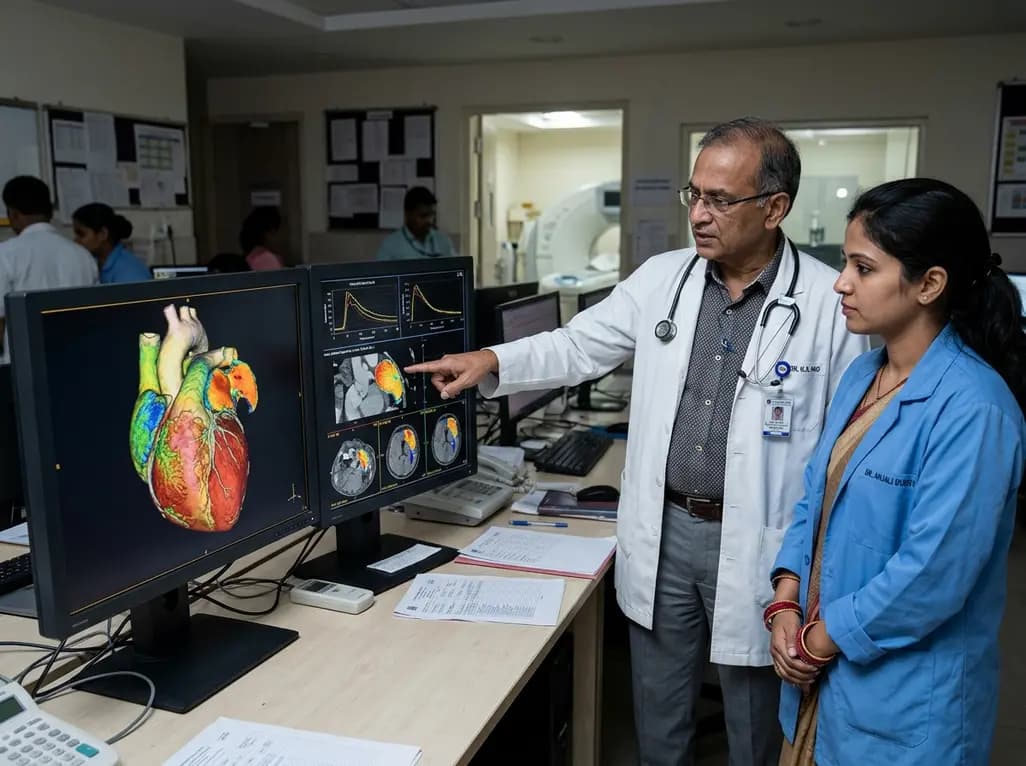
Dynamic contrast 4DCT enables precise mapping of left atrial appendage blood transport in atrial fibrillation. By quantifying regional stasis, wash-in kinetics, and residence time, this imaging advance offers clinician-tailored thromboembolic risk stratification beyond standard clinical scores.
Today

A systematic review and meta-analysis highlights the substantial impact of plyometric jump training on jump performance, reactive strength, and landing kinematics in female team-sport athletes, providing evidence-based programming guidelines for sports medicine and orthopedics.
Today

India is poised to transform chronic disease management through wearable health technology. Discover how continuous remote monitoring and predictive algorithms empower clinicians to detect early cardiovascular signals, personalize metabolic interventions, and deliver equitable preventive care across populations.
Today
