

Loading, please wait...
Loading, please wait...

Hyponatremia represents the most prevalent fluid and electrolyte disorder encountered across inpatient wards and intensive care units worldwide. Because this condition frequently complicates various acute and chronic medical illnesses, timely clinical decision-making remains vital for optimal patient recovery. Clinicians must establish a prompt and structured diagnostic pathway to prevent catastrophic neurologic outcomes. Consequently, modern paradigms emphasize distinguishing acute emergencies from chronic derangements. Contemporary medical literature has reshaped the standard management of hyponatremia, transforming clinical workflows and patient safety profiles across diverse acute care settings.
Hyponatremia occurs when relative water retention dilutes serum sodium concentration below normal physiological thresholds. In hospitalized patients, this imbalance rarely exists in isolation. Instead, non-osmotic stimuli, including surgical stress, severe pain, and inflammatory cytokines, consistently trigger arginine vasopressin release. Therefore, clinicians frequently encounter impaired free-water excretion across many medical wards. In addition, neurohormonal dysregulation in congestive heart failure and cirrhosis leads to secondary hyperaldosteronism and persistent water retention. As a result, effective arterial blood volume diminishes despite significant total body fluid overload. Conversely, hypovolemic states prompt baroreceptor-mediated vasopressin secretion, prioritizing circulatory preservation over osmolar balance. Thus, treating physicians must meticulously categorize volume status before initiating specific interventions. Because clinical examination alone lacks diagnostic precision, physicians require comprehensive laboratory evaluations. Measuring urinary sodium and urine osmolality reliably elucidates the renal response to systemic tonicity changes. Consequently, this targeted biochemical workup prevents misdirected fluid therapies.
Severe symptomatic hyponatremia constitutes a true medical emergency that demands prompt, aggressive therapy. Historically, many centers relied on continuous slow infusions of hypertonic sodium chloride. However, continuous infusions frequently produce unpredictable correction rates and raise the dreaded risk of osmotic demyelination syndrome. Therefore, major international clinical guidelines now strongly endorse intermittent bolus therapy with three percent hypertonic saline. Administering fixed aliquots, typically one hundred to one hundred fifty milliliters over twenty minutes, produces a rapid, controlled rise in serum sodium. Furthermore, repeating this bolus once or twice effectively reverses incipient cerebral edema and terminates seizures. Most importantly, clinicians aim for an initial serum sodium increase of four to six millimoles per liter during the first several hours. This targeted elevation rapidly alleviates intracranial hypertension without exceeding total daily limits. Consequently, the rapid intermittent bolus technique ensures superior safety, predictability, and efficacy during acute resuscitation.
In contrast to acute neurologic crises, mild or minimally symptomatic hyponatremia requires a measured and etiology-directed strategy. For instance, chronic hyponatremia allows brain cells to extrude intracellular organic osmoles, establishing an adaptive equilibrium against cerebral edema. Therefore, overly rapid correction poses severe neurological risks rather than acute clinical benefits. Clinicians must identify and eliminate offending medications, particularly thiazide diuretics, selective serotonin reuptake inhibitors, and antiepileptic agents. Furthermore, correcting underlying endocrine deficits, such as primary adrenal insufficiency or severe hypothyroidism, often completely normalizes serum sodium concentrations. In hypovolemic patients, administering isotonic crystalloids gently restores effective intravascular volume, which subsequently shuts off baroreceptor-driven vasopressin secretion. However, physicians must monitor urinary output vigilantly during volume repletion. Once euvolemia returns, the sudden cessation of vasopressin can induce brisk aquaresis and precipitous overcorrection. Thus, careful fluid titration remains the cornerstone of chronic management.
The syndrome of inappropriate antidiuresis, abbreviated as SIAD, represents the predominant etiology of euvolemic hyponatremia. Fluid restriction serves as the standard first-line intervention in this condition. Specifically, clinicians recommend limiting fluid intake to five hundred milliliters below the daily urine output. However, patient compliance frequently falters, and nearly half of all patients fail to achieve adequate biochemical correction through fluid restriction alone. Consequently, second-line pharmacotherapies play an essential role. Oral urea provides an inexpensive, highly effective osmotic diuretic strategy that promotes renal free-water clearance. Moreover, oral urea simultaneously protects against osmotic demyelination by attenuating rapid intracellular solute shifts. Alternatively, vasopressin receptor antagonists, known as vaptans, selectively block renal V2 receptors to generate pure aquaresis. Because vaptans carry a significant risk of exceeding safe correction velocities, clinicians must administer them under rigorous laboratory surveillance. Therefore, selecting between urea and vaptans hinges on drug availability, tolerability, and monitoring resources.
Recent clinical investigations have highlighted novel pharmacological opportunities for managing refractory hyponatremia, particularly sodium-glucose cotransporter two inhibitors. SGLT2 inhibitors induce glucosuria, which generates sustained osmotic diuresis and promotes net free-water clearance. Furthermore, emerging observational studies demonstrate that these agents steadily raise serum sodium levels in chronic SIAD without provoking abrupt overcorrection. In addition, SGLT2 inhibitors confer extensive cardiovascular and renal protective benefits, making them attractive for multimorbid individuals. While further randomized trials must confirm their long-term efficacy in primary electrolyte disorders, they represent an exciting, safe adjunct. Meanwhile, clinicians must always maintain a robust rescue protocol for accidental overcorrection. If sodium levels rise faster than eight to ten millimoles per liter within twenty-four hours, physicians must promptly administer desmopressin and hypotonic dextrose infusions. Ultimately, systematic risk stratification and therapeutic vigilance ensure optimal clinical outcomes across all patient subsets.
In patients with severe symptomatic hyponatremia, current guidelines recommend administering an intravenous bolus of 100 to 150 mL of 3% hypertonic saline over 20 minutes. Clinicians can repeat this bolus twice at 20-minute intervals until neurological symptoms improve. The primary clinical objective is achieving a rapid initial increase of 4 to 6 mmol/L in serum sodium, which quickly alleviates cerebral edema while avoiding dangerous overcorrection.
Fluid restriction serves as the initial management strategy for the syndrome of inappropriate antidiuresis, but roughly half of all patients fail to respond adequately. Additionally, strict fluid restrictions present significant adherence challenges for hospitalized individuals. Consequently, clinicians utilize second-line agents such as oral urea, which induces safe osmotic aquaresis, or vasopressin V2-receptor antagonists like tolvaptan to directly promote free-water excretion.
SGLT2 inhibitors promote urinary glucose excretion, which produces sustained osmotic diuresis within the renal tubules. Consequently, this mechanism drives electrolyte-free water excretion without disrupting overall sodium handling. Recent clinical evidence indicates that SGLT2 inhibitors provide a gradual, predictable increase in serum sodium concentration, making them a promising off-label therapeutic option for selected patients with chronic, refractory euvolemic hyponatremia.
Disclaimer: This content is for informational and educational purposes only... Refer to the latest local and national guidelines for clinical practice.
References
Gómez Berrocal A et al. Hyponatremia: an updated review. Med Clin (Barc). 2026 Nov 02. doi: undefined. PMID: 42971880.
European Society of Endocrinology / European Renal Association. Hyponatraemia-treatment standard 2024. Nephrol Dial Transplant. 2024;39(10):1570-1582.
Baek SH, Jo YH, Ahn S, et al. Risk of Overcorrection in Rapid Intermittent Bolus vs Slow Continuous Infusion Therapies of Hypertonic Saline for Patients With Symptomatic Hyponatremia: The SALSA Randomized Clinical Trial. JAMA Intern Med. 2021;181(1):81–92.

Read summarized clinical updates, watch expert medical content, and earn CME certifications right from your smartphone.
Open your smartphone camera to scan and install.





Hyponatremia remains the most frequent electrolyte disorder in hospitalized patients. This updated review highlights critical shifts in treatment, including the preference for hypertonic saline boluses in severe cases, underlying cause correction in mild cases, and emerging therapeutic approaches for SIAD.
Today

A major ABCD study analysis reveals that prenatal co-exposure to cannabis and tobacco significantly impairs fluid cognitive abilities in middle childhood, whereas crystallized intelligence remains unaffected. The findings highlight urgent needs for targeted antenatal screening and intervention.
Today
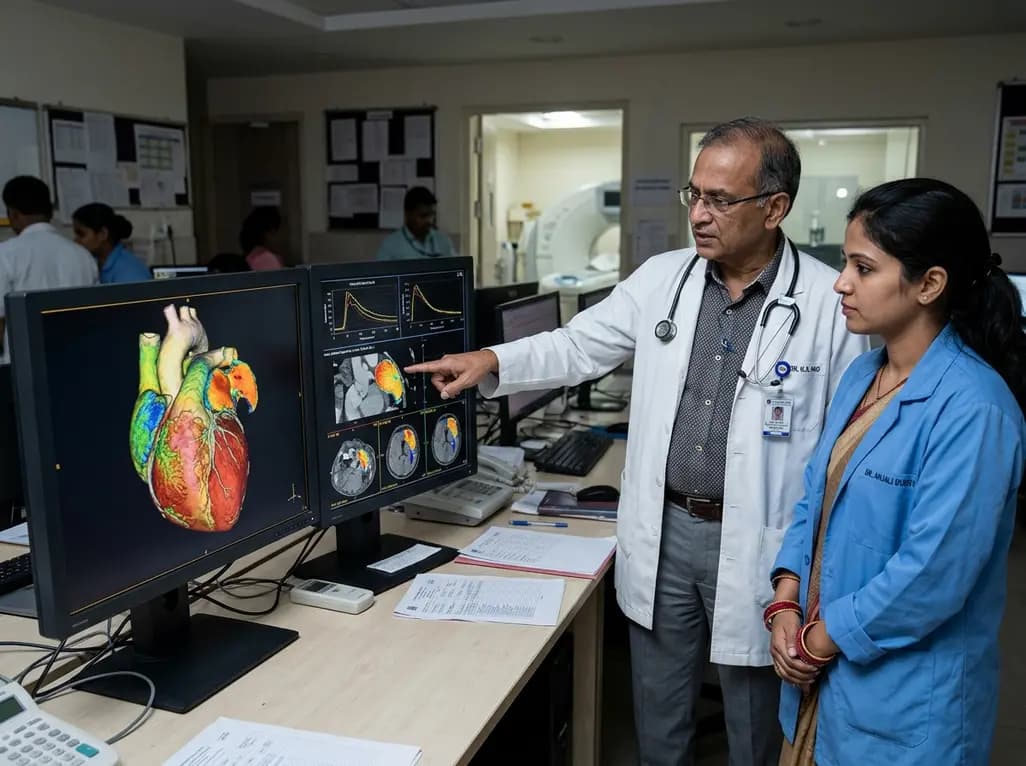
Dynamic contrast 4DCT enables precise mapping of left atrial appendage blood transport in atrial fibrillation. By quantifying regional stasis, wash-in kinetics, and residence time, this imaging advance offers clinician-tailored thromboembolic risk stratification beyond standard clinical scores.
Today

A systematic review and meta-analysis highlights the substantial impact of plyometric jump training on jump performance, reactive strength, and landing kinematics in female team-sport athletes, providing evidence-based programming guidelines for sports medicine and orthopedics.
Today

India is poised to transform chronic disease management through wearable health technology. Discover how continuous remote monitoring and predictive algorithms empower clinicians to detect early cardiovascular signals, personalize metabolic interventions, and deliver equitable preventive care across populations.
Today
