

Loading, please wait...
Loading, please wait...

Modern sports medicine increasingly recognizes that plyometric jump training serves as an essential foundation for athletic development and injury risk reduction. In team sports such as football, basketball, and handball, players continuously execute sudden decelerations, rapid pivots, and maximal vertical leaps. Plyometric drills exploit the stretch-shortening cycle by combining a rapid eccentric elongation of the muscle-tendon complex with an immediate, explosive concentric contraction. Consequently, this training paradigm enhances motor unit recruitment, elevates firing frequencies, and improves intermuscular coordination.
Furthermore, these rapid neurophysiological adaptations allow female athletes to maximize mechanical energy storage within passive tendinous tissues like the Achilles and patellar tendons. Tendon stiffness increases appropriately, which boosts force transmission velocity while simultaneously protecting joint structures. Historically, training programmes often omitted systematic jump progressions for women due to unfounded concerns regarding joint stress. However, contemporary research confirms that structured jumping regimens promote robust osteogenic stimulation and soft-tissue remodeling. Therefore, sports clinicians and conditioning specialists must understand how these neuromuscular stimuli function together to enhance ballistic capabilities. When practitioners implement these exercises systematically, athletes achieve greater explosive efficiency across all phases of match play.
Athletes in team sports depend heavily on vertical leap capacity to contest aerial balls, complete blocks, and secure rebounds. Recent meta-analytic data demonstrate that plyometric jump training produces moderate to large improvements in countermovement jump height and squat jump performance among adult female athletes. Specifically, athletes experience significant gains in peak power output, take-off velocity, and reactive strength index. These ballistic adaptations stem from improved stretch reflex excitability and reduced electromechanical delay during muscle activation.
Moreover, the magnitude of these vertical improvements depends directly on baseline training status and movement specificity. Unilateral and multidirectional jump variations provide neuromuscular stimuli that transfer effectively to dynamic match actions. In addition, plyometric protocols enhance rate of force development during early contraction phases, allowing athletes to generate substantial ground reaction forces within milliseconds. Consequently, players jump higher and reach peak elevation faster than untrained controls. Interestingly, studies show that combining bilateral countermovement jumps with drop jumps yields superior explosive adaptations compared to isolated training modalities. Thus, incorporating diverse jumping drills delivers robust neuromuscular adaptations that elevate vertical power across diverse team sports.
Beyond sheer performance enhancement, optimizing landing kinematics represents a paramount objective for female team-sport athletes. Female competitors experience anterior cruciate ligament tears at rates four to six times higher than their male counterparts. This elevated vulnerability stems largely from anatomical predispositions, hormonal fluctuations, and biomechanical patterns characterized by excessive dynamic knee valgus and stiff landing postures. Fortunately, targeted plyometric jump training directly addresses these kinematic vulnerabilities by retraining landing mechanics.
Meta-analyses reveal that systematic jump regimens significantly increase knee and hip flexion angles during ground contact phases. As a result, athletes dissipate ground reaction forces across larger joint ranges, drastically reducing peak mechanical stress on the anterior cruciate ligament. Furthermore, plyometric conditioning suppresses excessive knee abduction moments and corrects limb asymmetry during bilateral landings. By enhancing preparatory hamstring co-activation prior to initial foot strike, these exercises stabilize the tibiofemoral joint against anterior tibial shear forces. Therefore, sports medicine physicians should view plyometric interventions as potent preventive medicine. Regular exposure to controlled landings fosters resilient neuromuscular pathways that protect female athletes during high-intensity sporting encounters.
Achieving consistent athletic improvements without inducing maladaptive fatigue requires careful manipulation of programming variables. Evidence indicates that plyometric interventions lasting between seven and ten weeks deliver optimal improvements in jump height and reactive strength. When programs extend beyond ten weeks, practitioners must incorporate periodized load reductions to prevent chronic neuroendocrine exhaustion. In terms of frequency, scheduling two to three sessions per week provides sufficient mechanical stimulus while permitting essential tissue recovery.
Additionally, managing session jump volume remains critical for sustained athletic adaptation. Successful protocols typically implement between sixty and one hundred twenty ground contacts per session, with weekly jump volumes progressing gradually. Novice athletes should begin with low-intensity footwork and bilateral hops before progressing to high-impact drop jumps or hurdle bounds. Moreover, clinicians must ensure adequate rest intervals of forty-eight to seventy-two hours between demanding plyometric sessions. This scheduled rest facilitates muscle-tendon recovery, restores glycogen reserves, and allows nervous system regeneration. Consequently, well-structured dosage parameters enable female athletes to achieve peak explosive adaptations while minimizing overuse musculoskeletal complaints.
Integrating plyometric training into real-world athletic environments demands seamless collaboration among sports medicine physicians, physiotherapists, and strength coaches. Clinicians must conduct thorough pre-participation screenings to evaluate baseline strength, joint stability, and foundational movement competency. Specifically, athletes should demonstrate proficient eccentric quadriceps control and adequate core stability before initiating high-velocity plyometric drills. If an athlete exhibits marked lower-limb asymmetry or compromised landing mechanics, therapists should first correct these functional deficits.
Furthermore, practitioners in India and globally should integrate plyometric exercises directly into routine warm-up routines, mirroring successful injury prevention programs like the FIFA 11+. This strategic implementation maximizes athlete compliance without requiring additional specialized gym sessions or costly equipment. Similarly, clinicians must emphasize progressive overload, transitioning athletes from stable grass surfaces to sport-specific courts as biomechanical control improves. Coaches should also monitor subjective fatigue scores and landing quality during every session. In conclusion, evidence-based plyometric prescription provides medical professionals with a reliable, cost-effective tool to elevate female physical fitness while safeguarding long-term joint health.
Plyometric jump training significantly enhances vertical jump height, explosive leg power, and change-of-direction speed in female team-sport athletes. Furthermore, it optimizes the stretch-shortening cycle, enabling faster muscular force production during dynamic movements. Consequently, athletes display superior reactive strength and sprinting acceleration. These adaptations directly elevate on-field performance during critical match actions, including rebounding, rapid defensive shifts, and heading duels across team sports like football and basketball.
Lower-limb kinematics improve through enhanced knee flexion angles and reduced dynamic knee valgus upon landing. Because female athletes face elevated non-contact anterior cruciate ligament injury risks, these neuromuscular corrections offer vital joint protection. In addition, plyometric drills promote symmetrical lower-extremity limb loading and improve hamstring-to-quadriceps co-activation. Therefore, structured jumping exercises reinforce safe movement patterns, mitigating mechanical strain on vulnerable passive ligamentous structures during competitive play.
Evidence indicates that effective protocols require two to three sessions per week over six to ten weeks. Moreover, practitioners should prescribe between sixty and one hundred twenty total jumps per session, progressing gradually. Adequate recovery intervals of forty-eight hours between high-intensity sessions prevent accumulated neuromuscular fatigue. Consequently, this progressive overload framework ensures substantial physiological gains while avoiding overtraining, joint overload, and overuse soft-tissue injuries in athletes.
Disclaimer: This content is for informational and educational purposes only... Refer to the latest local and national guidelines for clinical practice.
References

Read summarized clinical updates, watch expert medical content, and earn CME certifications right from your smartphone.
Open your smartphone camera to scan and install.





A systematic review and meta-analysis highlights the substantial impact of plyometric jump training on jump performance, reactive strength, and landing kinematics in female team-sport athletes, providing evidence-based programming guidelines for sports medicine and orthopedics.
Today
Overexpression of glycoprotein nonmetastatic melanoma protein B (GPNMB) mediates resistance to CDK4/6 inhibitors like abemaciclib and palbociclib in ER+ breast cancer through integrin-driven AKT/ERK signaling. Targeting GPNMB with antibody-drug conjugates like glembatumumab vedotin may overcome this resistance.
Today
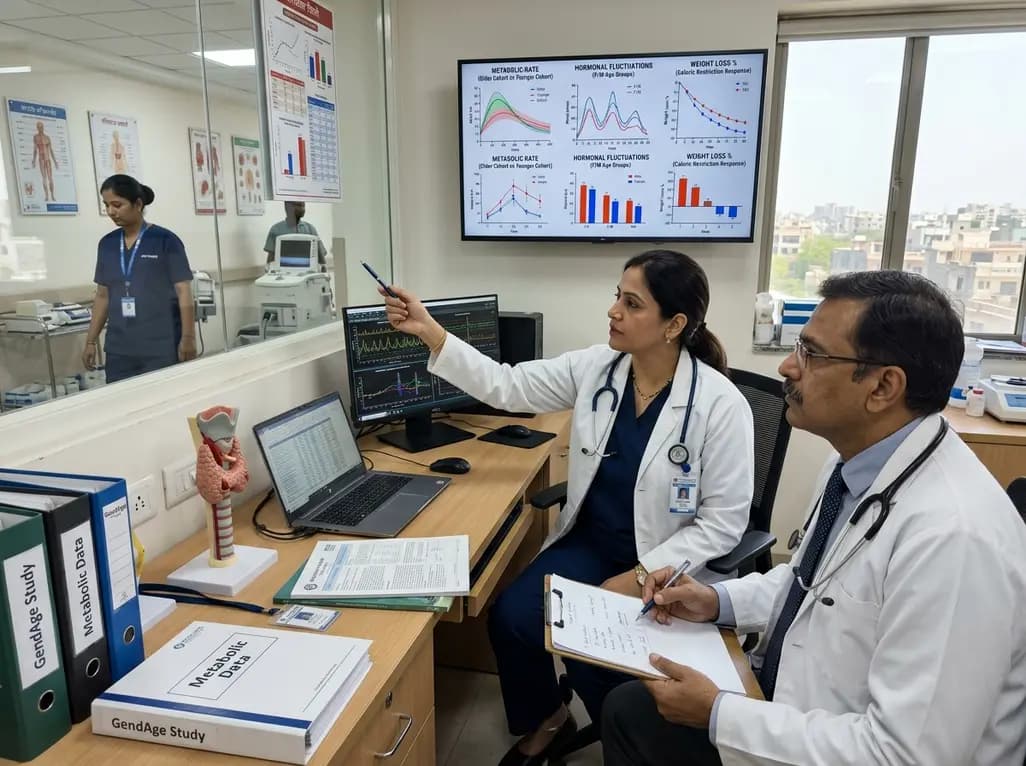
The GendAge weight loss study investigates how sex hormones, age, and menopausal status modulate caloric restriction response. By comparing metabolic adaptations across younger and older cohorts, this controlled feeding trial aims to refine precision dietary guidance for effective obesity management.
Today
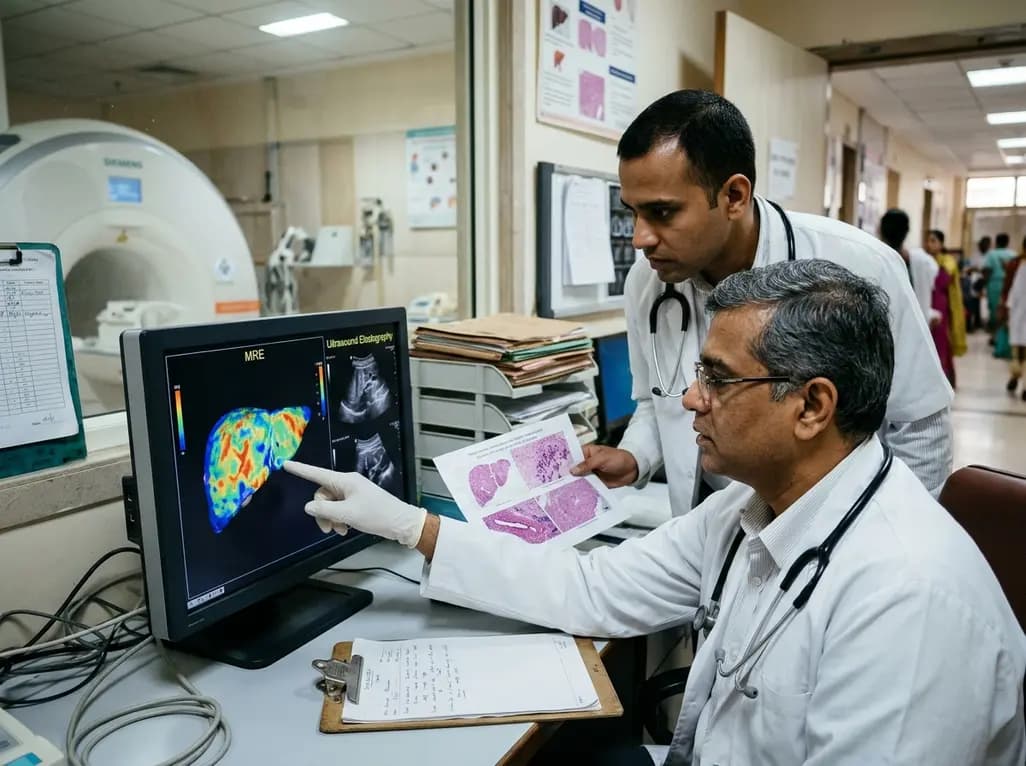
A comparative study reveals magnetic resonance elastography outperforms ultrasound elastography in assessing liver fibrosis in Fontan-associated liver disease, demonstrating stronger histological agreement and superior discrimination.
Today

A comprehensive review of the role of growth hormone in diabetic kidney disease and podocytopathy. Learn how elevated GH activates ZEB2, Notch, and TGF-beta1, driving podocyte loss and glomerulosclerosis, and explore novel targeted therapeutic approaches.
Today
