

Loading, please wait...
Loading, please wait...

Substance use during pregnancy presents substantial public health challenges worldwide. While clinicians understand individual substance risks, the combined impact of prenatal cannabis and tobacco exposure on child neurodevelopment requires urgent clarification. Pregnant individuals frequently consume both nicotine and cannabinoids concurrently, yet historical studies often analyzed them in isolation. Consequently, obstetricians and pediatricians lack nuanced insights into synergistic teratogenic mechanisms. A recent landmark analysis from the Adolescent Brain Cognitive Development (ABCD) study offers critical epidemiological evidence. Specifically, the researchers evaluated how dual exposure influences distinct neurocognitive domains during middle childhood. Their compelling findings illuminate vital cognitive vulnerabilities that demand clinical attention.
The investigators examined cognitive metrics using the validated National Institutes of Health (NIH) Toolbox battery. Specifically, they distinguished between fluid cognition and crystallized cognition. Fluid cognition reflects real-time cognitive capacity, including novel reasoning, working memory, and executive processing speed. In contrast, crystallized cognition captures accumulated educational knowledge and verbal comprehension. Notably, the statistical analysis demonstrated a significant negative interaction between cannabis and tobacco co-exposure on fluid scores. Children with prenatal co-exposure exhibited significantly lower fluid cognitive abilities than peers without substance exposure. Furthermore, co-exposed children performed markedly worse than children exposed exclusively to cannabis. Thus, concurrent maternal use generates distinct neurocognitive decrements that surpass isolated cannabinoid effects.
The ABCD study provides an exceptional foundation for pediatric neurodevelopmental research. Investigators extracted baseline data collected between 2016 and 2018 across twenty-two academic sites in the United States. The researchers evaluated 8,706 children aged nine to eleven years old. They stratified participants into four distinct exposure categories based on caregiver reports. The cohort included 236 co-exposed youth, 195 cannabis-only children, 803 tobacco-only youth, and 7,472 unexposed controls. Additionally, the team applied linear mixed-effects models adjusting for confounders identified through Directed Acyclic Graphs. This rigorous epidemiological methodology controlled for maternal educational attainment, family income, and sociodemographic variations. Consequently, the statistical models isolated drug-specific associations with heightened precision.
The study revealed striking disparities between different neurocognitive domains. The negative statistical interaction specifically altered fluid cognitive capacities. Unexposed children achieved significantly higher fluid cognitive scores compared to the co-exposed cohort. Similarly, children with isolated prenatal cannabis exposure demonstrated superior fluid abilities relative to co-exposed youth. In contrast, researchers observed no statistically significant group differences across crystallized cognition metrics. Vocabulary acquisition and general knowledge scores remained stable across all four participant cohorts. Consequently, while children retain acquired facts effectively, they encounter marked friction when formulating novel, adaptive mental solutions. Therefore, co-exposure does not create global mental retardation or generalized cognitive suppression. Instead, it selectively damages executive networks that manage dynamic information processing. Clinicians must recognize this crucial distinction when evaluating school performance in affected youth.
Biological plausibility strongly supports these clinical findings. Both nicotine and tetrahydrocannabinol cross the human placental barrier with ease. Exogenous cannabinoids readily bind to fetal cannabinoid type 1 receptors throughout the central nervous system. These receptors govern critical neuronal migration, axonal growth, and synaptogenesis during gestation. Meanwhile, nicotine stimulates and desensitizes fetal nicotinic acetylcholine receptors prematurely. Furthermore, nicotine causes acute uteroplacental vasoconstriction, which produces recurrent fetal hypoxia and nutrient deprivation. When mothers combine both substances, multiple harmful cascades converge simultaneously. Additionally, animal models confirm that simultaneous exposure to cannabinoids and nicotine exacerbates hippocampal synaptic reorganization. Consequently, this synergistic molecular toxicity disrupts developing prefrontal-striatal circuits that govern executive function. Thus, biological pathways corroborate the clinical deficits observed in middle childhood.
Although the dataset is exceptionally large, clinicians must interpret these observations cautiously. The authors highlighted several critical methodological limitations inherent to the study design. First, the cross-sectional baseline design precludes definitive causal inference. Second, investigators relied on retrospective maternal self-reports to classify gestational substance exposure. Retrospective reporting introduces potential recall errors and underreporting due to social stigma. Third, shared genetic liabilities between maternal substance use disorders and offspring cognitive outcomes may introduce residual confounding. Similarly, unmeasured post-natal environmental influences, such as passive smoke exposure and parental stress, might affect child development. Nevertheless, the study offers valuable observational signals that warrant ongoing longitudinal tracking as ABCD participants mature.
These findings carry immediate implications for maternal and child healthcare practitioners. Obstetricians and midwives must implement universal, non-stigmatizing screening for both nicotine and cannabis during initial prenatal consultations. Healthcare providers should actively correct the growing misconception that cannabis is benign during pregnancy. Furthermore, clinicians must emphasize that poly-substance use multiplies risks to fetal brain maturation. Multidisciplinary teams should offer evidence-based behavioral interventions and smoking cessation support without delay. In addition, pediatricians caring for co-exposed children should monitor executive function milestones attentively. Early identification of fluid reasoning deficits enables timely educational scaffolding and neurodevelopmental therapies. Therefore, comprehensive antenatal counseling remains our most effective preventive intervention.
Prenatal co-exposure specifically impairs fluid cognition, which governs problem-solving, novel reasoning, and executive processing speed. Children exposed to both substances simultaneously score significantly lower on fluid cognitive batteries compared to peers with cannabis-only exposure or no exposure at all. However, researchers observed no substantial deficits in crystallized cognition, indicating that general vocabulary and acquired knowledge remain relatively preserved despite dual prenatal exposure.
Fluid cognitive abilities depend heavily on dynamic frontal-striatal neural networks and executive functioning circuits. Fetal exposure to exogenous cannabinoids and nicotine disrupts endocannabinoid signaling and nicotinic acetylcholine receptors during critical stages of neurodevelopment. Consequently, this molecular interference impairs real-time information processing and novel problem-solving capacities. In contrast, crystallized intelligence reflects cultural learning and formal education, which supportive environmental interventions and structured schooling can reinforce over time.
Healthcare professionals must routinely screen pregnant patients for both tobacco and cannabis use during early antenatal visits. Clinicians should clearly explain that combining these substances exacerbates neurodevelopmental risks for the fetus. Furthermore, practitioners ought to deliver empathetic, non-judgmental counseling alongside targeted cessation resources. Because public perception often minimizes cannabis harm, providers must emphasize complete abstinence from all nicotine products, smoking devices, and recreational or medicinal cannabis throughout pregnancy.
Disclaimer: This content is for informational and educational purposes only. It should not be taken as medical advice or used as a substitute for professional healthcare guidance, diagnosis, or treatment. Always consult a qualified physician or healthcare provider regarding any medical condition or before making decisions related to patient care. Refer to the latest local and national guidelines for clinical practice.
References

Read summarized clinical updates, watch expert medical content, and earn CME certifications right from your smartphone.
Open your smartphone camera to scan and install.





A major ABCD study analysis reveals that prenatal co-exposure to cannabis and tobacco significantly impairs fluid cognitive abilities in middle childhood, whereas crystallized intelligence remains unaffected. The findings highlight urgent needs for targeted antenatal screening and intervention.
Today

Hyponatremia remains the most frequent electrolyte disorder in hospitalized patients. This updated review highlights critical shifts in treatment, including the preference for hypertonic saline boluses in severe cases, underlying cause correction in mild cases, and emerging therapeutic approaches for SIAD.
Today
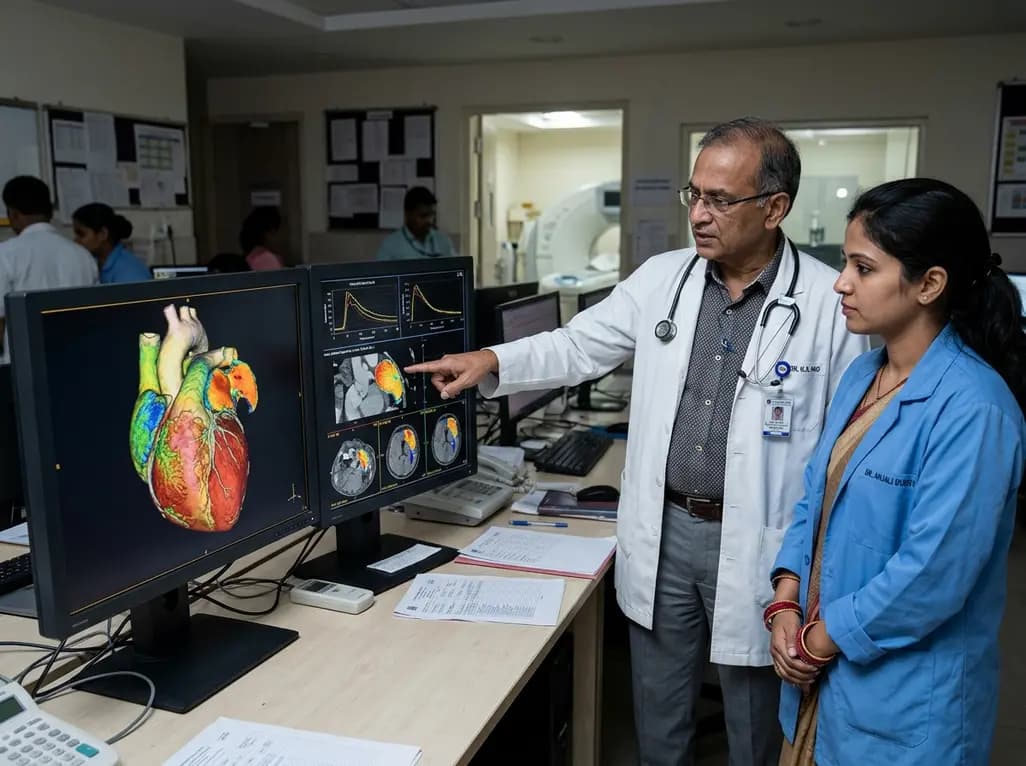
Dynamic contrast 4DCT enables precise mapping of left atrial appendage blood transport in atrial fibrillation. By quantifying regional stasis, wash-in kinetics, and residence time, this imaging advance offers clinician-tailored thromboembolic risk stratification beyond standard clinical scores.
Today

A systematic review and meta-analysis highlights the substantial impact of plyometric jump training on jump performance, reactive strength, and landing kinematics in female team-sport athletes, providing evidence-based programming guidelines for sports medicine and orthopedics.
Today

India is poised to transform chronic disease management through wearable health technology. Discover how continuous remote monitoring and predictive algorithms empower clinicians to detect early cardiovascular signals, personalize metabolic interventions, and deliver equitable preventive care across populations.
Today
