.webp&w=384&q=75)

Loading, please wait...
Loading, please wait...

The ongoing scrutiny surrounding the hospital consumables markup has ignited an intense national debate across the Indian healthcare landscape. Recently, regulatory authorities raised serious concerns regarding the discrepancy between wholesale procurement rates and patient bills. In response, healthcare provider associations have offered substantial counterarguments. They emphasize that managing inpatient medical supplies involves complex logistical and clinical safeguards. Consequently, this regulatory dialogue raises fundamental questions about pricing transparency, institutional viability, and ethical patient care.
The controversy gained momentum after the Maharashtra Food and Drug Administration surveyed commonly used hospital consumables. Commissioner Tukaram Mundhe reported staggering differences between trade procurement prices and printed maximum retail prices. For instance, the investigation revealed an intravenous infusion set procured at ₹11.05 carrying an MRP of ₹325. This difference represents a startling markup of 2,841 percent. Similarly, standard disposable syringes purchased for ₹6.75 retailed at ₹57.20. Furthermore, catheters obtained for ₹29.41 reached consumer bills at ₹310.
Regulators emphasized that hospitalized individuals face acute informational disadvantages during treatment. Specifically, patients cannot easily compare retail costs, evaluate alternative brands, or question printed prices during acute medical emergencies. Manufacturers and distributors often establish elevated maximum retail prices far upstream in the supply chain. Therefore, health authorities argue that this disconnect creates an opaque financial ecosystem. As a result, the regulatory agency has officially petitioned the National Pharmaceutical Pricing Authority. They seek nationwide trade-margin rationalization and structured price monitoring to protect vulnerable patients from sudden medical debt. Ultimately, policymakers hope that standardizing trade margins will make inpatient bills far more predictable.
Public health advocates argue that excessive retail pricing on basic disposables distorts healthcare accessibility. When routine products carry massive markups, out-of-pocket medical expenditures escalate drastically for uninsured families. In addition, health insurance providers frequently dispute inflated consumable line items on reimbursement claims. This practice often causes delayed approvals and substantial co-payment burdens for subscribers. Consequently, watchdog groups insist that essential commodities should not serve as profit generators for institutional healthcare providers.
Nevertheless, analyzing this pricing discrepancy requires an objective examination of statutory frameworks. Currently, the Drugs Prices Control Order strictly regulates scheduled formulation drugs under national price caps. However, many medical consumables and disposable devices remain subject only to declared maximum retail price guidelines. Because manufacturers establish these limits independently, wide gaps between factory pricing and shelf pricing persist. Therefore, regulatory intervention seeks to introduce systematic margin caps across distribution channels. By addressing upstream manufacturing margins alongside retail distribution, authorities aim to curb unjustified inflation without discouraging high-quality device production. Moreover, transparent pricing models could restore public trust while preventing sudden regulatory penalties for healthcare administrators. Additionally, healthcare facilities must navigate varying distributor contracts and storage expenses across disparate geographical regions. Consequently, regulatory policies must balance price restraint with supply chain resilience.
In response to regulatory scrutiny, private healthcare apex body Nathealth mounted a rigorous defense of hospital operations. Secretary General Siddhartha Bhattacharya stated that hospitals cannot be characterized as mere commercial resellers. Instead, healthcare organizations undertake comprehensive clinical stewardship before any medical device touches a patient. For example, clinical engineering departments conduct stringent technological assessments, safety validations, and batch traceability checks. Furthermore, medical institutions must maintain constant temperature controls and sterile-chain integrity for sensitive supplies.
Additionally, hospitals shoulder significant operational overhead to guarantee around-the-clock emergency readiness. Facilities continuously absorb the financial hazards of product obsolescence, unexpected damage, and inventory expiration. Specialized biomedical engineers and certified nursing teams handle complex administration procedures during acute clinical crises. Therefore, equating raw procurement bills directly with patient delivery costs ignores necessary overhead expenses. Nathealth acknowledged that extraordinarily high margins on commoditized items warrant regulatory evaluation. However, the leadership cautioned that crude, blanket margin limits could severely disrupt supply chains and jeopardize overall clinical quality. Consequently, institutional providers urge regulators to acknowledge genuine logistical investments before enacting restrictive price-control mandates. Furthermore, healthcare organizations maintain detailed audit trails and quality assurance protocols to fulfill stringent national accreditation standards. Thus, handling clinical goods involves substantial infrastructure costs.
To resolve this policy deadlock, healthcare leaders advocate for an evidence-based, differentiated regulatory framework. Such a model clearly distinguishes routine, low-risk disposable goods from clinically advanced, high-complexity technologies. Basic items like gauze pads, standard syringes, and surgical gloves involve minimal handling risk. In contrast, advanced interventional implants, drug-eluting balloons, and specialized perfusion circuits require substantial institutional expertise. These sophisticated devices demand dedicated biomedical staff, continuous calibration, and stringent post-procedure monitoring.
Moreover, imposing a uniform margin ceiling across all categories could unintentionally restrict patient access to cutting-edge therapies. If reimbursement ceilings fail to cover clinical handling expenses, hospitals might discontinue stocking innovative medical devices. Thus, industry representatives propose establishing a structured pricing mechanism that reflects genuine handling costs. Under this proposed system, basic consumables would feature standardized, low trade margins to protect patient interests. Meanwhile, complex therapeutic instruments would retain flexible pricing structures that account for specialized handling, safety, and inventory holding expenses. Furthermore, standardizing these classifications helps prevent arbitrary billing disputes between hospitals and third-party payers. Consequently, clinical administrators can allocate capital effectively toward patient safety rather than fighting regulatory ambiguity. Additionally, tiered pricing safeguards clinical freedom by allowing practitioners to select specialized tools tailored to complex patient conditions. Therefore, structured policies offer the best pathway toward balanced healthcare delivery.
The ongoing pricing scrutiny carries vital implications for clinical practitioners and hospital administrators across India. First, medical leadership must review internal procurement practices and eliminate indefensible margins on routine items. Relying heavily on consumable markups to cross-subsidize bed charges or nursing services creates serious reputational vulnerabilities. Instead, hospitals should transition toward transparent, unbundled pricing models where room charges and professional fees reflect actual operating expenditures.
Additionally, healthcare institutions should actively collaborate with health insurers to modernize reimbursement guidelines. Many insurance policies deliberately underfund clinical procedural fees, which historically compelled hospitals to recover costs through consumable markups. Therefore, resolving the billing crisis requires simultaneous reforms in insurance tariff structures. When insurers reimburse the true costs of medical care, hospitals will no longer need inflated retail margins to remain viable. Ultimately, transparent pricing fosters therapeutic trust between clinicians and patients. By embracing regulatory clarity and fair pricing benchmarks, the medical community can safeguard financial sustainability while delivering compassionate, ethical healthcare. Furthermore, hospital quality teams can improve patient satisfaction scores by ensuring billing transparency from admission through discharge. Moreover, adopting digital inventory management systems can enhance operational efficiency and minimize wastage across hospital wards. Consequently, hospitals achieve better fiscal control without relying on inflated retail margins.
Q1: Why did the Maharashtra FDA flag hospital consumables markups?
The Maharashtra FDA surveyed hospital consumables and uncovered price differences reaching 2,841 percent between wholesale procurement rates and declared maximum retail prices. Regulators highlighted that inpatient consumers cannot evaluate prices, choose alternatives, or question billing during emergency hospitalizations. Because manufacturers set inflated retail prices upstream in the supply chain, the authorities recommended that national pricing regulators establish strict trade-margin caps and structured oversight on essential healthcare commodities to prevent excessive financial exploitation.
Q2: Why do private hospitals oppose fixed markup caps on medical supplies?
Private hospital bodies like Nathealth argue that healthcare facilities are not mere commercial retailers. Before any device reaches a patient, hospitals conduct rigorous quality evaluations, maintain sterile cold chains, and deploy specialized biomedical teams. Additionally, institutions absorb significant overhead related to inventory obsolescence, sterile storage, and around-the-clock emergency readiness. Therefore, hospitals contend that raw procurement costs do not represent true clinical delivery expenses, warning that arbitrary margin limits could disrupt medical supply availability.
Q3: How could a differentiated pricing framework resolve this regulatory standoff?
A differentiated pricing framework distinguishes basic, commoditized disposables from complex, high-technology medical devices. Under this proposed approach, standard products like IV sets and simple syringes would face strict margin caps to curb unwarranted retail markups. Conversely, sophisticated technologies requiring specialized clinical handling, calibration, and risk management would maintain flexible pricing structures. Consequently, this balanced regulatory model protects patients from predatory pricing while ensuring hospitals remain financially capable of adopting advanced, life-saving therapeutic technologies.
Disclaimer: This content is for informational and educational purposes only. It does not constitute medical advice or replace professional judgment. Refer to the latest local and national guidelines for clinical practice.
References

Read summarized clinical updates, watch expert medical content, and earn CME certifications right from your smartphone.
Open your smartphone camera to scan and install.





Maharashtra FDA flagged markups up to 2,841% on hospital consumables like syringes and IV sets, sparking debate with Nathealth over procurement pricing versus total clinical delivery costs.
Today

A dual-site study demonstrates that an EEG spatial prior mapping framework (MPW-CSP-SVM) standardizes fNIRS biomarkers in SLE across different optode configurations. The model achieved high classification accuracy (AUC up to 0.839) and correlated with disease activity and emotional distress.
Today

A landmark randomized clinical trial published in NEJM reveals that high maternal intake of eggs and peanuts during pregnancy and lactation does not lower the risk of infant egg or peanut allergy at one year of age, reinforcing existing dietary recommendations for balanced maternal nutrition without restrictions.
Today

A groundbreaking study demonstrates that coronary angiography-derived radial wall strain reflects plaque morphology, predicting future rupture and erosion.
Today

The Delhi Cabinet has cleared an advanced seven-storey critical care expansion at Guru Tegh Bahadur Hospital under PMSSY Phase-IV. Costing Rs 244.87 crore, the new wing features 250 beds, specialized intensive care units, modern operation theatres, and round-the-clock emergency diagnostics for East Delhi.
Today
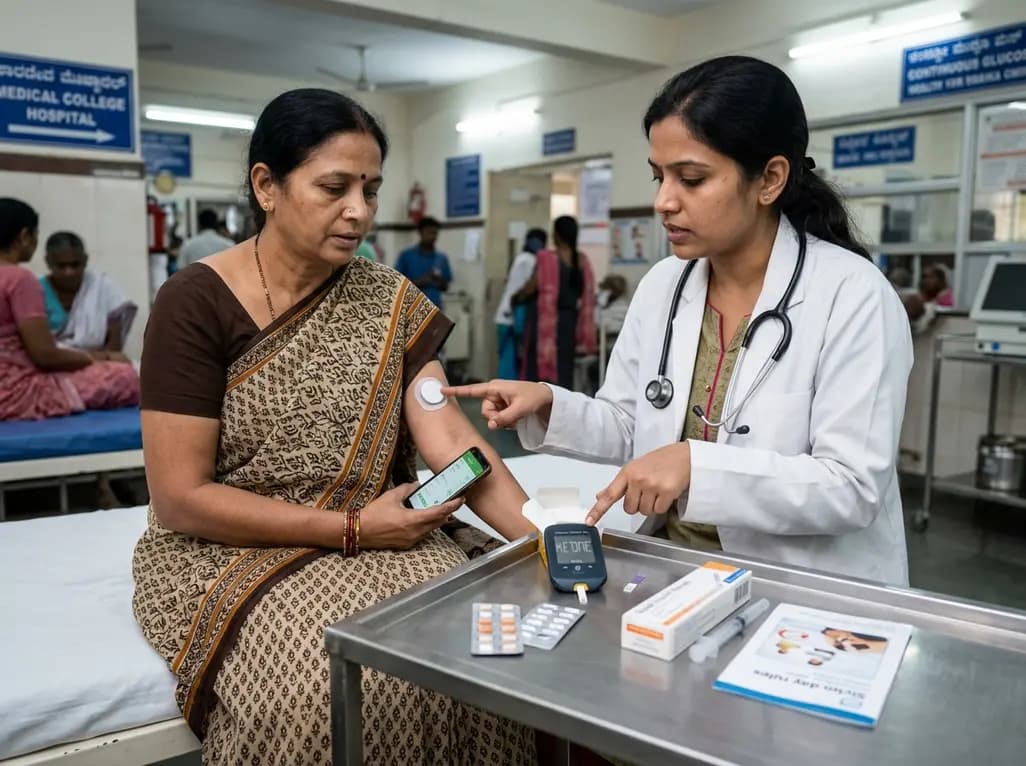
A landmark case demonstrates that favorable continuous glucose monitoring metrics cannot rule out SGLT2 inhibitor-associated euglycemic diabetic ketoacidosis. Clinicians must educate patients on symptom-based sick-day rules, uninterrupted basal insulin therapy, and proactive blood ketone testing.
Today
