.webp&w=384&q=75)

Loading, please wait...
Loading, please wait...

Clinicians frequently face complex metabolic emergencies where standard diagnostic assumptions fail to protect vulnerable patients. Among these emergencies, euglycemic diabetic ketoacidosis represents a uniquely treacherous clinical condition associated with sodium-glucose cotransporter 2 inhibitors. Healthcare providers widely celebrate continuous glucose monitoring for transforming modern diabetes care and enhancing patient safety. Indeed, continuous sensors deliver immediate feedback, lower glycemic variability, and help patients keep blood sugar within ideal targets. However, glucose-centric assessment creates significant vulnerability when clinicians and patients equate normal glucose levels with overall metabolic stability. During intercurrent acute illnesses, SGLT2 inhibitors sustain vigorous urinary glucose excretion despite escalating counter-regulatory hormones. Consequently, serum glucose concentrations often remain near normal or only mildly elevated, completely masking profound intracellular carbohydrate starvation. Patients feel falsely reassured by optimal digital sensor metrics, which may prompt them to reduce or eliminate vital insulin doses. Furthermore, emergency departments frequently overlook the early signs of metabolic ketoacidosis when blood sugar does not display marked hyperglycemia. Therefore, recognizing this paradox requires moving beyond conventional glucose measurements during acute illness. Clinicians must realize that reassuring sensor data can coexist with catastrophic metabolic acid-base collapse.
A recent educational case vividly illustrates how continuous monitoring can conceal life-threatening metabolic failure during acute stress. A 45-year-old man with type 1 diabetes on ipragliflozin developed severe decompensation after contracting a COVID-19 infection. During this acute sick-day phase, he independently discontinued his basal insulin while continuing to take his oral SGLT2 inhibitor. Crucially, his decision stemmed partly from his continuous glucose monitor displaying readings safely inside the standard target range. He subsequently presented to the emergency department suffering from severe nausea, persistent vomiting, and escalating abdominal discomfort. Upon clinical evaluation, his laboratory workup revealed a plasma glucose of 246 mg/dL, accompanied by massive 3+ urinary ketones. Moreover, arterial and venous blood gas analysis demonstrated severe high anion gap metabolic acidosis, with a pH of 7.040 and serum bicarbonate of 9.6 mmol/L. Remarkably, sensor retrospective analysis for the preceding 48 hours revealed a time in range of 71 percent. Furthermore, quantitative assessment demonstrated minimal glycemic variability, exhibiting a coefficient of variation of 15.8 percent and mean amplitude of glycemic excursions of 77 mg/dL. These metrics traditionally signify exemplary outpatient glucose management, yet they occurred concurrently with near-fatal metabolic crisis.
Understanding the biochemical mechanism of SGLT2 inhibitor action clarifies why sensor metrics fail to reflect underlying ketoacidosis. SGLT2 inhibitors block glucose reabsorption in the renal proximal convoluted tubules, which drives persistent urinary loss of carbohydrate calories. Consequently, circulating glucose levels fall independent of insulin availability or physiological cellular uptake. Meanwhile, acute systemic stress triggers massive surges of cortisol, epinephrine, and glucagon, promoting intense lipolysis in peripheral adipose tissue. Free fatty acids pour into hepatic circulation, where beta-oxidation converts them into acetoacetate and beta-hydroxybutyrate. Because the patient had discontinued basal insulin, cellular insulinopenia accelerated unchecked hepatic ketogenesis without restraint. Nevertheless, sustained pharmacologic glycosuria prevented the classic hyperglycemic alarm from ever sounding on the patient's continuous sensor. In addition, volume depletion from osmotic diuresis and fever impairs renal clearance of circulating acidic ketone bodies. Thus, systemic metabolic acidosis rapidly intensifies even while sensor tracings stay remarkably stable. Clinicians must recognize that insulin suppresses lipolysis at much lower concentrations than those required for glucose uptake. Therefore, absolute or relative insulin deficiency rapidly unleashes uncontrolled ketone production despite deceptive euglycemia.
Modern diabetes guidelines increasingly emphasize time in range, coefficient of variation, and ambulatory glucose profiles as primary benchmarks. While these metrics provide outstanding value during steady-state outpatient care, they exhibit dangerous limitations during intercurrent medical illness. Clinicians must understand that continuous sensors measure interstitial glucose, not circulating ketone concentrations or systemic acid-base balance. Consequently, relying exclusively on digital glucose trends creates a dangerous diagnostic blind spot during systemic infection or dehydration. In this reported case, the patient maintained an exemplary time in range above 70 percent until hospital arrival. Nevertheless, severe life-threatening acidosis progressed silently behind the screen of near-normal glucose curves. Point-of-care capillary beta-hydroxybutyrate monitoring provides the necessary physiological assessment to uncover early ketosis before overt acidosis develops. Unfortunately, structural barriers and supply limits restrict the widespread daily adoption of blood ketone testing in many healthcare settings. Furthermore, urine dipsticks can severely underestimate ketosis because they measure acetoacetate rather than beta-hydroxybutyrate, which dominates early ketoacidosis. Therefore, healthcare providers must acknowledge the fundamental technical boundaries of interstitial glucose monitors during acute stress.
Preventing catastrophic decompensation requires clinicians to deliver comprehensive, proactive sick-day education to every patient receiving SGLT2 inhibitors. First, patients must learn the non-negotiable rule that basal insulin should never be stopped during acute illness, regardless of glucose readings. In addition, clinicians must instruct patients to withhold SGLT2 inhibitors immediately upon the onset of fever, vomiting, diarrhea, or planned fasting. Because symptoms of ketoacidosis mimic gastrointestinal infection, patients should prioritize physiological symptoms over reassuring digital numbers. When nausea, vomiting, abdominal pain, or tachypnea appear, patients must immediately suspect metabolic acidosis and seek clinical evaluation. Moreover, healthcare teams should supply patients with capillary blood ketone meters and clear thresholds for proactive clinical escalation. A blood beta-hydroxybutyrate reading above 0.6 mmol/L warrants increased hydration, carbohydrate intake, and supplemental insulin administration. Conversely, levels exceeding 1.5 mmol/L demand immediate emergency medical intervention, irrespective of normal interstitial glucose metrics. Finally, continuous sensor platforms should eventually incorporate multi-analyte continuous ketone monitoring to alert clinicians before metabolic catastrophe strikes. Until such technological integration arrives, strict symptom-based sick-day protocols remain the most dependable defense against silent ketoacidosis.
Euglycemic diabetic ketoacidosis develops when SGLT2 inhibitors promote persistent renal glucose clearance, maintaining near-normal plasma glucose levels. Concurrently, absolute or relative insulin deficiency combined with elevated stress hormones triggers rampant peripheral lipolysis and hepatic ketogenesis. Because continuous urinary glycosuria removes excess glucose independently of insulin, dangerous ketone accumulation and severe metabolic acidosis progress rapidly without the pronounced hyperglycemia that clinicians traditionally anticipate.
Continuous glucose monitoring measures interstitial glucose rather than circulating ketone bodies or systemic blood pH. When patients take SGLT2 inhibitors, sustained glycosuria keeps sensor readings within the target range even during acute illness. Consequently, automated sensors display reassuring metrics and low glycemic variability, providing false reassurance while severe ketoacidosis accelerates silently without any detectable interstitial glycemic warning signals.
Patients receiving SGLT2 inhibitors must immediately discontinue the medication whenever acute illness, dehydration, fever, or reduced food intake occurs. Crucially, individuals must never withhold basal insulin, even if continuous glucose readings remain normal. Furthermore, patients should check capillary ketones when experiencing nausea or abdominal discomfort and seek urgent medical evaluation if ketone levels exceed safe thresholds.
Disclaimer: This content is for informational and educational purposes only and should not be considered medical advice. Healthcare professionals should make clinical decisions based on each patient’s individual circumstances. Refer to the latest local and national guidelines for clinical practice.
References

Read summarized clinical updates, watch expert medical content, and earn CME certifications right from your smartphone.
Open your smartphone camera to scan and install.





A landmark case demonstrates that favorable continuous glucose monitoring metrics cannot rule out SGLT2 inhibitor-associated euglycemic diabetic ketoacidosis. Clinicians must educate patients on symptom-based sick-day rules, uninterrupted basal insulin therapy, and proactive blood ketone testing.
Today

Recent data indicates over 117 million people in India faced prolonged periods of dangerous temperatures driven by climate change. As heatwaves become more frequent and intense, healthcare providers must strengthen clinical triage, manage severe hyperthermia promptly, and protect vulnerable patient populations.
Today

A landmark randomized clinical trial published in NEJM reveals that high maternal intake of eggs and peanuts during pregnancy and lactation does not lower the risk of infant egg or peanut allergy at one year of age, reinforcing existing dietary recommendations for balanced maternal nutrition without restrictions.
Today
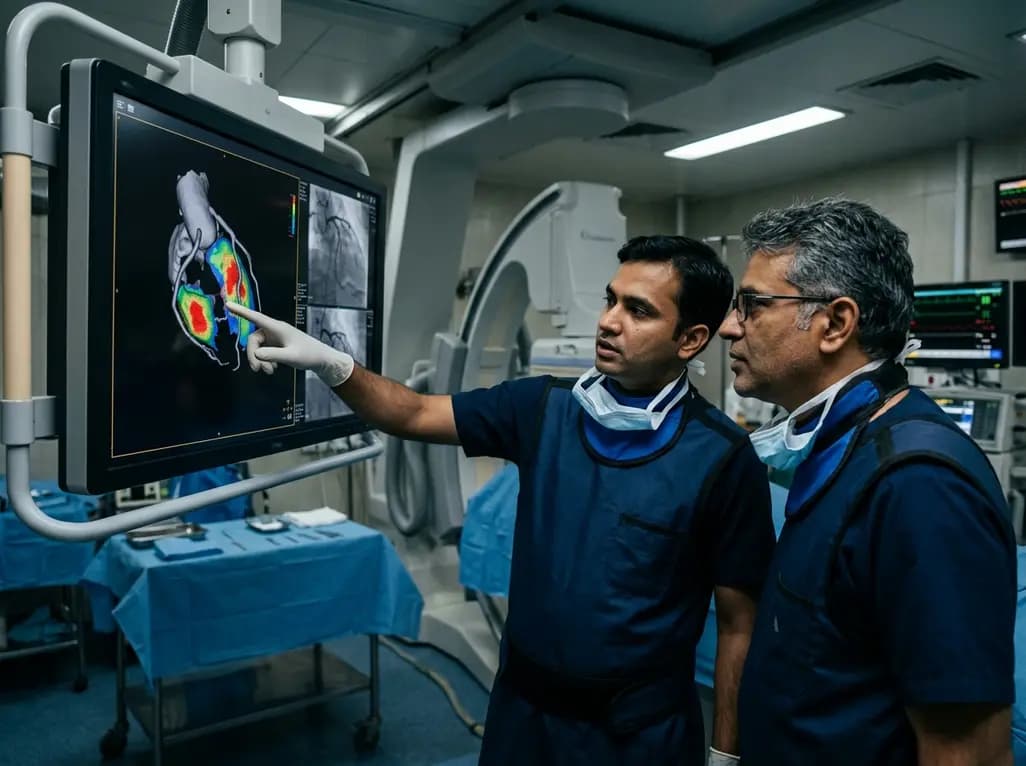
A groundbreaking study demonstrates that coronary angiography-derived radial wall strain reflects plaque morphology, predicting future rupture and erosion.
Today

Kerala is accelerating indigenous biomedical innovation by expanding dedicated infrastructure and single-window industrial clearances. The state aims to scale manufacturing output to over twenty-five thousand crore rupees by 2031, focusing on active medical electronics, in-vitro diagnostics, and orthopaedic implants.
Today
