

Loading, please wait...
Loading, please wait...

Neonatologists frequently utilize rescue mechanical ventilation when conventional respiratory modalities fail to stabilize critically ill infants. Specifically, managing arterial carbon dioxide tensions during high-frequency oscillation remains challenging because rapid fluctuations can injure fragile neonatal organs. Clinicians increasingly implement HFOV with volume guarantee to automate high-frequency tidal volume delivery and stabilize blood gas parameters. However, robust randomized prospective evidence comparing automated volume targeting with meticulous manual adjustment remains scarce. A recent randomized trial evaluated whether automated targeting truly outperforms skilled manual monitoring in preventing dyscarbia.
Modern neonatal intensive care units encounter premature and term neonates with severe respiratory failure who deteriorate despite optimal conventional ventilation. Consequently, teams deploy high-frequency oscillatory ventilation as an effective rescue therapy. Traditional oscillatory ventilation relies on fixed frequency settings while clinicians manually adjust pressure amplitudes to control carbon dioxide elimination. Nevertheless, sudden compliance improvements after surfactant delivery or endotracheal suctioning often cause unintentional hyperventilation. Such rapid changes predispose vulnerable neonates to severe hypocarbia, which triggers cerebral vasoconstriction and periventricular white matter injury.
Conversely, acute reductions in respiratory system compliance can rapidly produce hypercarbia. Severe hypercapnia induces marked cerebral vasodilation, thereby elevating the risk of intraventricular hemorrhage in vulnerable premature infants. Therefore, biomedical engineers developed HFOV with volume guarantee to continuously measure delivered high-frequency tidal volume and automatically modify oscillatory amplitude on a breath-by-breath basis. Theoretical modeling and animal studies suggested this closed-loop feedback loop significantly minimizes carbon dioxide swings. However, bedside clinicians wondered whether this sophisticated algorithm provides clinically superior stability over dedicated bedside nursing and frequent manual ventilator titration in real-world intensive care settings.
To address this clinical question, researchers conducted an open-label, parallel-group randomized controlled pilot trial registered in the Clinical Trial Registry of India. The trial enrolled sixty critically ill neonates who failed conventional mechanical ventilation and required rescue oscillatory support. Investigators randomized these infants equally into two parallel study arms. Specifically, thirty neonates received oscillatory support with automated volume targeting, while thirty neonates received oscillatory ventilation with careful manual tidal volume monitoring.
Furthermore, the clinical protocol defined rigorous standardized management pathways for both groups. In the manual group, trained bedside clinicians closely followed delivered high-frequency tidal volume trends on modern ventilator screens and promptly adjusted pressure amplitude to preserve target tidal volumes. Meanwhile, the automated arm relied on the ventilator software algorithm to modulate oscillatory amplitude automatically. The primary trial outcome evaluated the proportion of neonates developing hypo- or hypercarbia at exactly one hour after commencing rescue support. In addition, secondary outcomes tracked serial carbon dioxide tensions across forty-eight hours, hemodynamic markers, cerebral blood flow velocities, duration of invasive respiratory support, and severe in-hospital morbidities. The investigators conducted all statistical analyses on an intention-to-treat basis using Stata version 18.
The trial demonstrated that automated volume guarantee did not significantly reduce early dyscarbia compared with vigilant manual care. At one hour after initiating intervention, fifteen of thirty neonates (50%) in the automated volume guarantee group developed hypo- or hypercarbia. Similarly, thirteen of thirty infants (43%) in the manual monitoring group experienced dyscarbia during that same initial window. Consequently, statistical analysis showed no significant difference between the two approaches, yielding a p-value of 0.61.
Furthermore, serial assessments demonstrated that the incidence of out-of-target carbon dioxide levels remained comparable across all subsequent observation periods. Investigators evaluated blood gas samples at six, twelve, twenty-four, and forty-eight hours, observing nearly identical rates of normocarbia in both cohorts. Moreover, time-specific trends for mean airway pressure, partial pressure of carbon dioxide, and delivered high-frequency tidal volume showed no statistically meaningful separation. Multivariate regression analysis subsequently revealed that baseline carbon dioxide tension prior to oscillation was the sole independent predictor of one-hour carbon dioxide levels. Neither the mode of volume delivery nor ventilator brand independently altered this outcome. Thus, careful manual monitoring proved equally effective at maintaining physiological carbon dioxide concentrations during acute rescue transitions.
In addition to blood gas values, the investigators meticulously examined vital neurological and cerebral perfusion indicators. Because carbon dioxide directly influences cerebrovascular tone, uncontrolled oscillatory ventilation could theoretically compromise cerebral blood flow. Therefore, the researchers evaluated anterior cerebral artery blood flow velocities and regional cerebral tissue oxygenation using bedside Doppler ultrasound and near-infrared spectroscopy.
Importantly, the trial found no significant differences between the automated and manual groups regarding anterior cerebral artery blood flow velocities. Regional cerebral oxygen saturation levels also remained virtually identical between cohorts throughout the initial forty-eight hours of rescue therapy. Furthermore, the overall duration of invasive mechanical ventilation and post-extubation non-invasive support did not differ between the two arms. Clinicians successfully weaned neonates in both groups according to institutional guidelines without excess delays. Additionally, rates of in-hospital adverse events, such as pulmonary air leaks, severe intraventricular hemorrhage, and overall neonatal mortality, showed no statistically significant discrepancies. Both ventilation strategies demonstrated reassuring safety profiles when managed by experienced intensive care staff.
These findings offer valuable pragmatic lessons for neonatal intensive care units across developing and high-resource nations alike. High-end modern ventilators equipped with advanced closed-loop volume guarantee software carry substantial acquisition and maintenance expenses. Consequently, many public hospitals and resource-limited centers in India cannot immediately transition to fully automated neonatal ventilators. The present study provides reassuring clinical evidence that meticulous bedside titration of tidal volume delivers equivalent arterial blood gas stability and clinical safety.
However, neonatologists should not interpret these results as an indictment of volume guarantee technology. Instead, the findings underscore the indispensable value of skilled, continuous clinical monitoring. When dedicated bedside clinicians actively observe high-frequency tidal volume readouts and modify amplitude settings promptly, manual adjustment matches automated algorithms. In contrast, in settings with higher patient-to-nurse ratios, automated volume guarantee may still provide a useful safety buffer against catastrophic over-ventilation during acute lung compliance changes. Therefore, units possessing this technology should continue using it judiciously, while centers without automated modes can achieve excellent rescue ventilation outcomes through disciplined manual monitoring protocols.
Although this randomized pilot trial answered vital physiological questions, several unresolved questions warrant larger multicenter investigations. For instance, this pilot trial evaluated sixty neonates receiving oscillation specifically as a rescue strategy for refractory respiratory failure. Future clinical trials should evaluate whether starting automated volume guarantee as a primary, upfront elective mode confers distinct pulmonary advantages. Additionally, investigators must examine specific neonatal subgroups, such as extremely low birth weight infants born under twenty-six weeks of gestation, who display exaggerated cerebrovascular reactivity.
Moreover, future studies should correlate continuous transcutaneous carbon dioxide trends with long-term neurodevelopmental evaluations at eighteen to twenty-four months of corrected age. Point-in-time arterial blood gases might occasionally miss transient fluctuations that continuous sensors detect. In addition, investigating automated volume guarantee during surfactant administration or dynamic lung recruitment maneuvers could reveal niche clinical scenarios where automated algorithms outperform human reflexes. Until such comprehensive trials emerge, neonatologists can confidently rely on both automated volume guarantee and rigorous manual tidal volume monitoring to rescue critically ill infants with acute respiratory failure.
Rapid changes in arterial carbon dioxide dramatically alter neonatal cerebral hemodynamics. Severe hypocarbia causes profound cerebral vasoconstriction, which deprives developing brain tissue of oxygen and increases the risk of periventricular leukomalacia. Conversely, sudden hypercapnia causes rapid cerebral vasodilation, significantly increasing capillary pressures and precipitating intraventricular hemorrhage. Therefore, maintaining stable, normocapnic carbon dioxide levels during rescue high-frequency oscillatory ventilation prevents catastrophic neurological morbidities in vulnerable infants.
Automated volume guarantee continuously measures expired tidal volumes and modifies oscillatory amplitude on a breath-by-breath basis without clinical intervention. In contrast, manual monitoring requires bedside staff to track delivered tidal volumes on the ventilator monitor and adjust amplitude manually when values drift. While automated algorithms reduce clinician workload, the trial proved that meticulous manual monitoring achieves equivalent carbon dioxide stability and safety during rescue ventilation.
The randomized pilot trial observed no significant differences in anterior cerebral artery blood flow velocities or regional cerebral oxygenation between automated and manual groups. Furthermore, in-hospital complications, including severe intraventricular hemorrhage and mortality, occurred at similar rates in both arms. However, the study was a pilot trial focused on short-term physiological stability, so long-term neurodevelopmental follow-up studies remain necessary to evaluate subtle neurological outcomes.
Disclaimer: This content is for informational and educational purposes only... Refer to the latest local and national guidelines for clinical practice.
References

Read summarized clinical updates, watch expert medical content, and earn CME certifications right from your smartphone.
Open your smartphone camera to scan and install.





A randomized controlled trial compared automated volume guarantee with manual tidal volume monitoring during rescue HFOV in neonates. Both modalities demonstrated comparable rates of hypo- and hypercarbia, stable cerebral blood flow, and equivalent clinical outcomes, highlighting the value of attentive manual care.
Today
New PEX-NET registry data reveal that the right atrial pressure to cardiac output (RAP/CO) slope during exercise right heart catheterization is an independent predictor of long-term mortality in pulmonary hypertension, outperforming conventional resting measures.
Today

A review of the evolution of maternal and pediatric therapeutics over two decades, examining developmental pharmacokinetics, lactation pharmacology, pediatric formulations, and evidence-based guidance for clinicians managing pregnancy and childhood diseases.
Today

A landmark Nature study reveals that only 27% of individuals with obesity have active clinical disease. By incorporating waist circumference and organ dysfunction, this new diagnostic framework moves beyond BMI to prevent widespread misclassification and guide personalized metabolic intervention.
Today

Chronic nonbacterial osteomyelitis (CNO) is a pediatric autoinflammatory bone disorder. This review covers the French protocol, emphasizing whole-body MRI as the diagnostic gold standard, prudent biopsy avoidance, first-line NSAID treatment, and second-line biologic or bisphosphonate therapies for spinal lesions.
Today
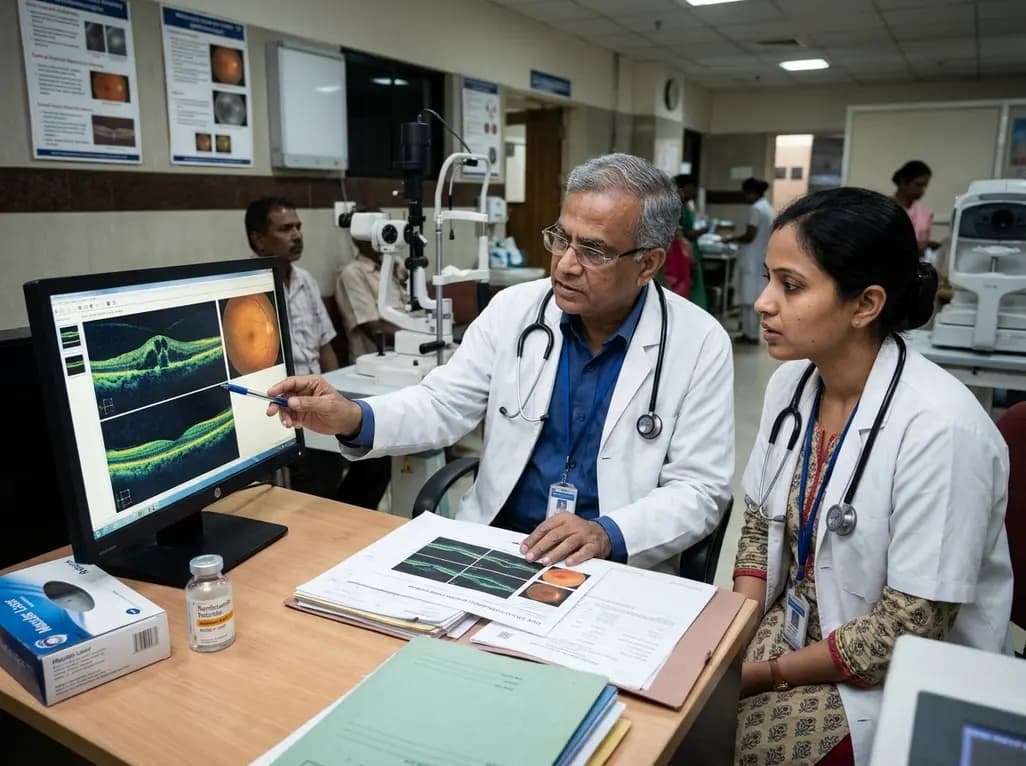
A real-world retrospective study demonstrates that combining intravitreal ranibizumab with focal/grid macular laser significantly improves visual acuity and central macular thickness compared to laser monotherapy in patients with center-involved diabetic macular edema.
Today
