

Loading, please wait...
Loading, please wait...

Road traffic accidents represent an overwhelming global health challenge, causing substantial disability and premature death worldwide. Clinicians routinely witness catastrophic trauma stemming from motorcycle and bicycle collisions, particularly across developing economies and rapidly motorizing low- and middle-income countries. Although public health mandates consistently encourage head protection, the precise clinical relationship between helmet type and TBI remains insufficiently characterized in many resource-limited settings. Recent prospective cohort evidence from Colombia demonstrates that the degree of cranial and facial coverage plays a pivotal role in dictating patient survival. Specifically, trauma teams noted profound protective disparities between open designs and comprehensive full-face headgear among vulnerable riders.
Researchers conducted a rigorous prospective observational study at a high-volume regional referral trauma center in Pereira, Colombia, between July 2024 and January 2025. The investigation enrolled 211 consecutive cyclists and motorcyclists who sustained acute traumatic brain injury during road traffic crashes. Investigators classified headgear into four discrete categories: no helmet, half helmet, open-face helmet, and full-face helmet. Additionally, the research team employed the World Health Organization anatomical coverage framework, utilizing an ordinal scale from zero to three to evaluate progressive impact mitigation. To handle potential observational imbalances and sparse events, researchers applied Firth-penalized multivariable logistic regression modeling. Furthermore, multiple imputation and inverse probability weighting effectively addressed attrition and missing data for six-month functional recovery trajectories.
Among the 211 enrolled trauma patients, 138 individuals, representing 65.4 percent of the cohort, wore a protective helmet at the collision moment. Specifically, 35 riders wore half helmets, 23 utilized open-face styles, and 80 donned full-face helmets, whereas 73 patients wore no protection. Consequently, this naturalistic distribution permitted direct comparative evaluations regarding whether specific structural designs offer superior anatomical defense. As trauma registries illustrate in many low- and middle-income healthcare systems, helmet compliance remains incomplete, and riders often choose open designs for comfort or lower retail costs despite severe risks.
The statistical findings revealed compelling clinical advantages associated with comprehensive cranial enclosure. When compared directly with unhelmeted riders, patients utilizing full-face helmets experienced a dramatic reduction in composite cranial-or-facial fractures, displaying an adjusted odds ratio of 0.41. More strikingly, full-face configurations provided unmatched protection against complex facial skeleton fractures, yielding an adjusted odds ratio of 0.28. In sharp contrast, neither half helmets nor open-face designs exhibited a statistically significant association with reduced facial fractures. Therefore, open-face equipment leaves the vulnerable facial skeleton exposed to high-energy direct road impacts and severe mechanical shearing forces during forward vehicular ejection.
Moreover, the protection against fatal injury was remarkable. In-hospital mortality reached 16.4 percent among unhelmeted individuals, whereas mortality plummeted to merely 1.3 percent among those wearing full-face equipment. This stark contrast translated into an adjusted odds ratio for in-hospital death of 0.08, conferring an absolute adjusted risk reduction of 13.9 percentage points. Furthermore, investigators observed a consistent dose-response protective gradient across the World Health Organization coverage spectrum. Each step up in structural coverage yielded an adjusted odds ratio of 0.43 for mortality. Consequently, greater mechanical surface coverage directly translates into lower death rates during acute hospitalization.
Understanding the interplay between helmet type and TBI severity enables emergency physicians and neurotrauma specialists to anticipate complex injury constellations during initial triage. When emergency departments receive an unhelmeted rider or a patient wearing a partial-coverage helmet, clinicians must maintain a very high suspicion for extensive midface fractures, base of skull fractures, and severe airway compromise. Maxillofacial trauma frequently induces profuse hemorrhage and soft tissue displacement, complicating urgent endotracheal intubation and secondary neurological resuscitation. Therefore, recognizing the crash configuration and protective equipment informs rapid airway decisions and targeted radiologic protocols.
Interestingly, the Colombian cohort analysis noted that structural intracranial lesions identified on computed tomography scans did not differ significantly between helmet designs. Both helmeted and unhelmeted patients demonstrated similar rates of focal contusions, acute subdural hematomas, and traumatic subarachnoid hemorrhage. This radiological finding emphasizes an essential biomechanical principle. While outer rigid shells and expanded polystyrene liners cushion direct linear deceleration, rotational acceleration forces often persist during high-velocity impacts. Thus, clinicians cannot assume that a helmeted patient is free from severe intracranial pathology, necessitating thorough diagnostic computed tomography imaging regardless of helmet use.
Despite equivalent frequencies of focal intracranial lesions on neuroimaging, long-term functional recovery distinctly favored helmeted individuals. After accounting for missing six-month follow-up assessments through inverse probability weighting, any helmet use provided significant protection against unfavorable neurological outcomes. Specifically, helmeted individuals exhibited an adjusted odds ratio of 0.38 for unfavorable six-month Glasgow Outcome Scale-Extended scores. Therefore, wearing protective headgear substantially reduces prolonged functional dependency, cognitive morbidity, and vegetative states among trauma survivors.
This apparent discordance between acute neuroimaging findings and long-term functional recovery points toward important microstructural neuroprotective effects. Certified helmets likely dampen extreme peak intracranial pressure surges and mitigate diffuse axonal injury below macroscopic imaging thresholds. Consequently, secondary neurotrauma cascades, including cerebral edema and cytotoxic metabolic derangements, remain far less aggressive in helmeted patients. Moreover, preventing concomitant severe facial fractures eliminates secondary sources of systemic hypotension, hypoxia, and hemorrhagic shock, which critically worsen secondary brain injury. Thus, structural headgear preservation supports optimal systemic physiology during initial resuscitation.
These international findings offer vital lessons for healthcare systems across India, where motorized two-wheelers represent over seventy percent of registered vehicular traffic. Indian emergency departments and intensive care units routinely treat young, economically productive individuals afflicted with catastrophic road traffic trauma. Although the Indian Motor Vehicles Act mandates protective headgear, compliance remains heterogeneous, and substandard or open-face helmets remain widespread across semi-urban and rural corridors. Therefore, Indian physicians and surgical societies must advocate for rigorous enforcement of certified full-face standards rather than settling for minimal, open half-shell designs.
Furthermore, acute care teams must integrate helmet type verification into standardized trauma intake documentation. Identifying whether a patient wore a full-face or open-face helmet guides critical early assessments regarding cervical spine stability, potential airway distortion, and maxillofacial reconstruction needs. In addition, neurosurgeons and critical care specialists should lead community education initiatives, clearly explaining that open helmets leave the jaw, orbit, and midface completely unprotected against catastrophic pavement impacts. By combining stringent legislative standards with aggressive clinical advocacy, clinicians can substantially mitigate the nationwide burden of trauma-induced mortality and persistent disability.
Full-face helmets incorporate a rigid, energy-absorbing chin bar and extended structural shield covering the midface and mandible. In contrast, open-face and half helmets leave the anterior facial skeleton entirely unprotected, exposing orbital, maxillary, and mandibular structures to severe direct impact and grinding forces against road surfaces during collisions.
Standard computed tomography detects macrostructural focal injuries such as hematomas and bone displacements, which can still occur from violent rotational forces at high vehicular speeds. Nevertheless, full-face helmets attenuate linear kinetic forces, reduce systemic shock, and prevent secondary hypoxemia, which significantly improves ultimate functional neurological survival.
The World Health Organization coverage scale categorizes helmets from zero to three based on anatomical surface protection, spanning unhelmeted to full-face designs. Clinically, each increase in coverage level correlates with a significant reduction in in-hospital mortality, confirming a direct dose-response relationship between headgear enclosure and trauma survival.
Disclaimer: This content is for informational and educational purposes only. It is not intended to substitute for professional medical advice, diagnosis, or treatment. Refer to the latest local and national guidelines for clinical practice.
References
Tafur-Ramírez ME et al. Helmet type and outcomes after road traffic-related traumatic brain injury: A prospective cohort study from regional Colombia. Neurosurg Rev. 2026 Nov 27. doi: 10.1007/s10143-026-04585-3. PMID: 43099190.
Rodriguez-Sanjuan A, Popayan-Hernandez JG, Burgos-Florez FJ. Traumatic Brain Injury Mortality among Colombian Motorcyclists, 2015–2024: Trends and Registry Comparability. Rev Investig Innov Cienc Salud. 2026;8(2):e675.
World Health Organization. Helmets: A Road Safety Manual for Decision-Makers and Practitioners. 2nd ed. Geneva: World Health Organization; 2023.
Gururaj G. Road traffic injury prevention in India: Progress, challenges and the way forward. Indian J Med Res. 2022;156(6):674-686.

Read summarized clinical updates, watch expert medical content, and earn CME certifications right from your smartphone.
Open your smartphone camera to scan and install.





A prospective cohort study demonstrates that full-face helmets significantly decrease cranial and facial fractures as well as in-hospital mortality compared to partial-coverage helmets following road traffic crashes, delivering crucial insights for acute neurotrauma triage, emergency care, and public safety advocacy.
Today

A 2026 cohort study in Turku University Hospital reveals that specialist palliative care for end-stage liver disease dramatically reduces emergency department visits in the final month of life (48.8% vs 74.1%) and prevents deaths in acute tertiary wards, supporting early integration in decompensated cirrhosis.
Today

A recent survey reveals significant gaps in antenatal providers' adherence to pregnancy oral health guidelines despite positive attitudes. Integrating regular oral screenings, clinician education, and interprofessional dental referrals during prenatal care is crucial to prevent adverse pregnancy outcomes.
Today

A cross-sectional study in Bangladesh demonstrates that an explainable stacking ensemble machine learning model achieves 98.37% accuracy in cardiovascular disease detection. Using local clinical and behavioral data, the model highlights cholesterol, rhythm abnormalities, and blood pressure as leading predictors.
Today
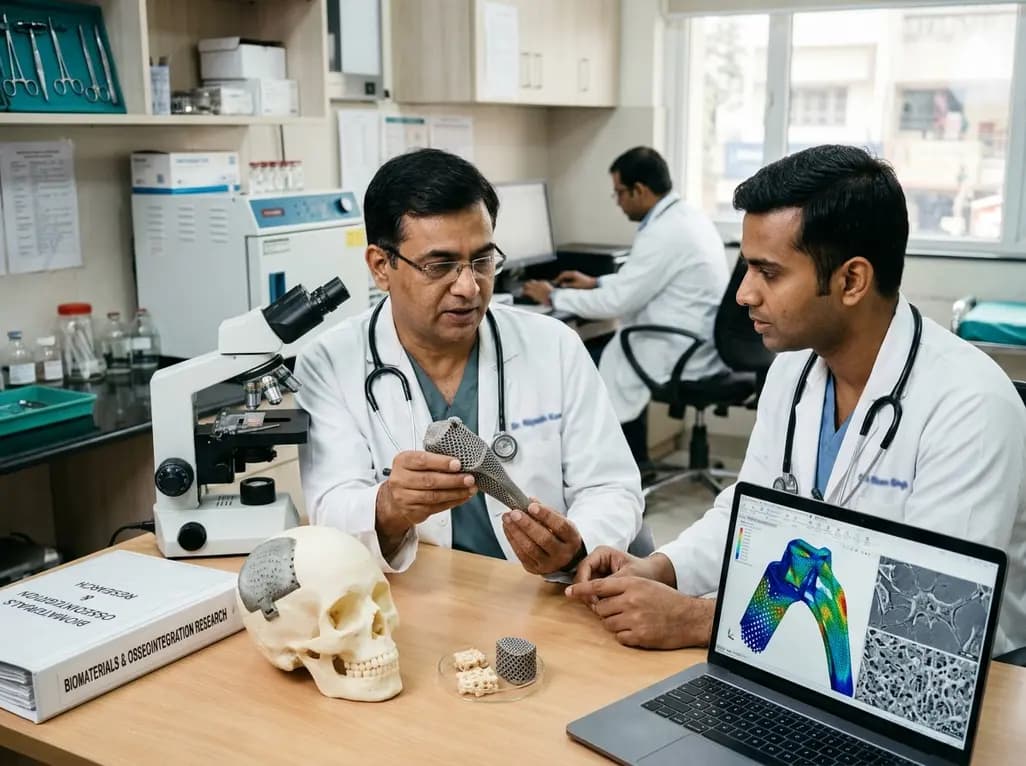
Laser-based powder bed fusion of Ti6Al4V enables custom orthopedic implants. Recent research reveals that heat treatment modulates ductility and wettability, while surface powder morphology drives mesenchymal cell attachment, highlighting crucial design factors for long-term osseointegration.
Today

A multicenter study evaluated the CL-2600i immunochemistry analyzer across 640 serum samples, testing endocrinology, infectious disease serology, sepsis markers, and fertility panels. The system demonstrated high analytical trueness, repeatable results with CVs under 5%, and strong correlation with routine platforms.
Today
