.webp&w=384&q=75)

Loading, please wait...
Loading, please wait...

The Union Health Ministry recently released the National Health Accounts estimates for 2022-23. This report showcases a dramatic transformation in healthcare spending in India. Specifically, public funding for health has nearly tripled over the last decade. It rose from Rs 1.30 lakh crore to Rs 3.85 lakh crore. Consequently, this shift indicates a much stronger government commitment to public health. Furthermore, public health spending as a share of GDP increased from 1.15% to 1.43%.
To begin with, the new GDP series with base year 2022-23 places government spending at 1.48% of GDP. In addition, the per capita government health expenditure grew nearly 2.7 times during this decade. It increased from Rs 1,042 to Rs 2,786. Therefore, citizens now benefit from higher public investment per head. During the pandemic, public spending peaked at 1.84% of GDP because of emergency healthcare responses. Subsequently, this emergency infrastructure has continued to support the overall system.
Importantly, the rise in government allocations has led to a significant drop in household healthcare costs. Indeed, out-of-pocket expenditure (OOPE) placed a heavy financial burden on Indian families. However, the OOPE share in total health expenditure has declined dramatically. It fell from 64.2% in 2013-14 to 43.4% in 2022-23. Consequently, patients are experiencing greater financial protection during medical emergencies. Additionally, during the pandemic, the OOPE share dropped further to 39.4%. As a result, families are less vulnerable to catastrophic health spending.
Moreover, the government has focused heavily on primary healthcare services. Specifically, government expenditure on primary care more than doubled over the decade. It increased from Rs 0.5 lakh crore to Rs 1.4 lakh crore. Similarly, Social Security Expenditure (SSE) on healthcare saw an impressive rise. The share of SSE in total health expenditure rose from 6% to 9.9%. For instance, this category includes government-funded health insurance schemes like Ayushman Bharat (AB PM-JAY). Meanwhile, private health insurance also expanded from 3.4% to 9.2%. Overall, these developments show that India's health financing is moving toward universal health coverage.
Q1: What is the current share of government health expenditure in India's GDP?
According to the National Health Accounts 2022-23 report, government health expenditure stands at 1.43% of GDP, and 1.48% when calculated using the revised GDP series with base year 2022-23.
Q2: How much did out-of-pocket expenditure on health decrease over the decade?
Out-of-pocket expenditure as a share of total health expenditure fell significantly from 64.2% in 2013-14 to 43.4% in 2022-23, indicating a reduced financial burden on households.
Q3: What was the primary driver of public health spending on primary care?
The government's primary healthcare spending more than doubled over the decade, rising from Rs 0.5 lakh crore in 2013-14 to Rs 1.4 lakh crore in 2022-23, to ensure better access to essential services.
Disclaimer: This content is for informational and educational purposes only. It does not constitute medical advice or replace professional judgment. Refer to the latest local and national guidelines for clinical practice.
References

Read summarized clinical updates, watch expert medical content, and earn CME certifications right from your smartphone.
Open your smartphone camera to scan and install.





The latest National Health Accounts show government health spending has tripled to Rs 3.85 lakh crore, resulting in a major decline in out-of-pocket costs....
4 months ago

Failing to account for competing events like mortality in longitudinal geriatric studies produces biased risk estimates and misleading inferences. This review highlights key methodological principles, insights from the Precipitating Events Project, and practical approaches for clinical research appraisal.
Today

A study in JAMIA Open shows lightweight open-source reasoning LLMs achieve up to 95% sensitivity and accelerate evidence synthesis screening by nearly twentyfold, presenting a cost-effective, scalable AI solution for biomedical research and systematic reviews.
Today
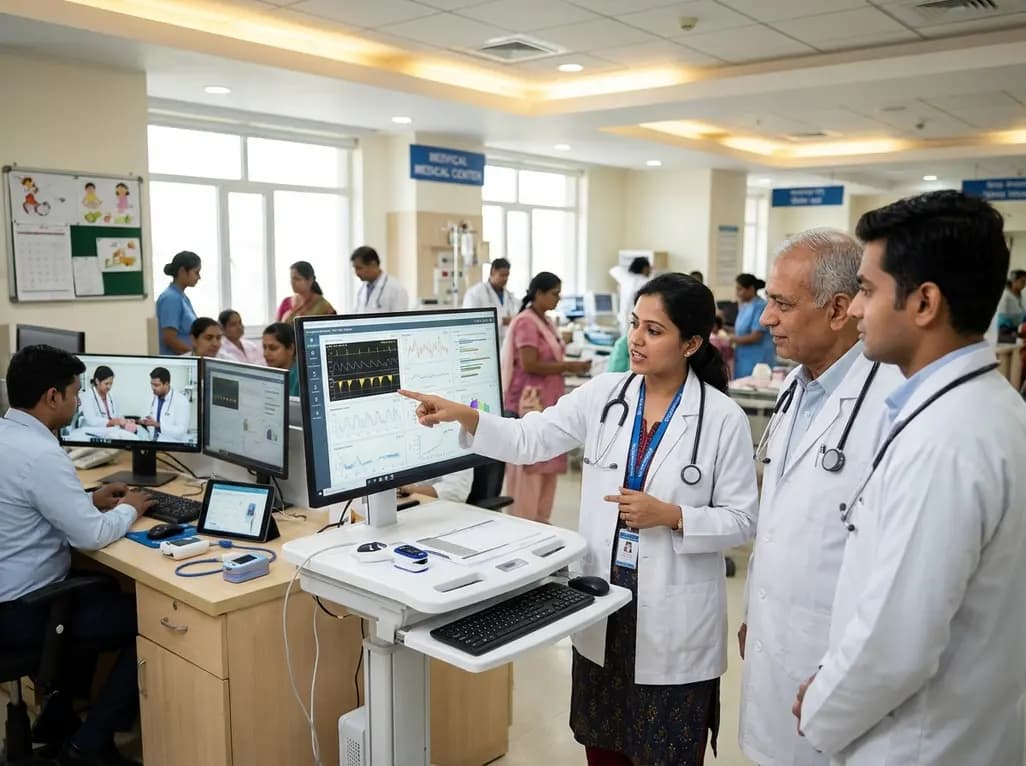
A landmark study details how an enterprise pediatric remote patient management model expanded from a single cardiology pilot to 16 diverse specialty programs by combining centralized digital operations with specialty clinical leadership.
Today
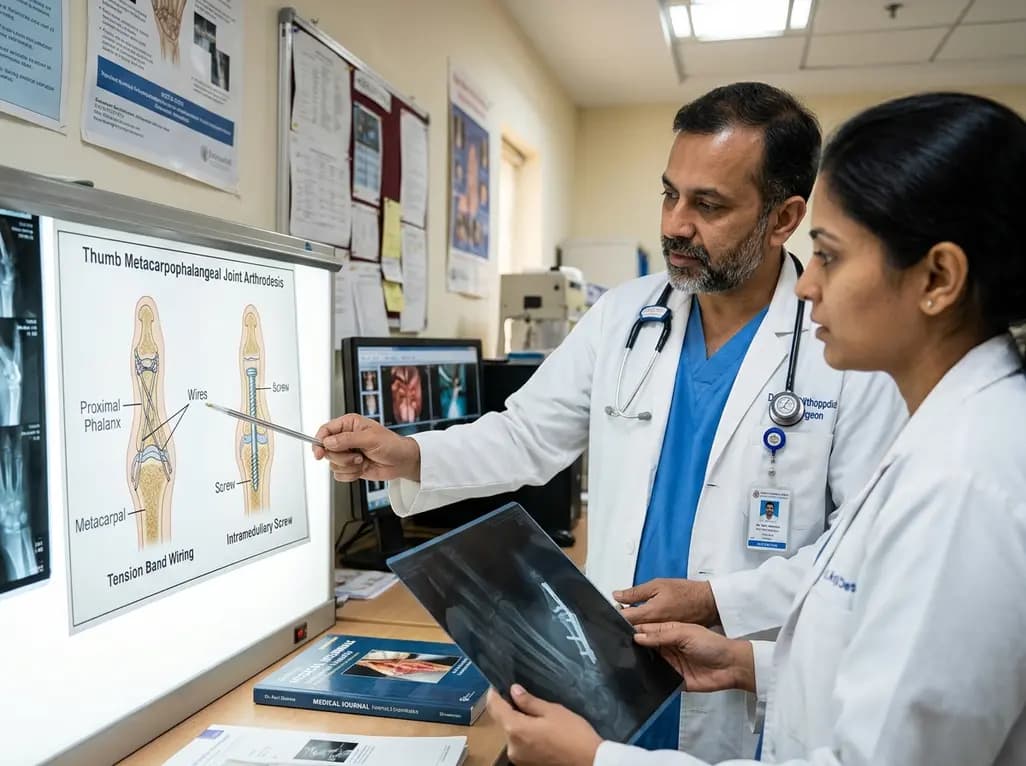
A comparative review of tension band wiring and intramedullary screw fixation in thumb metacarpophalangeal arthrodesis, evaluating union rates, hardware complications, and clinical outcomes.
Yesterday
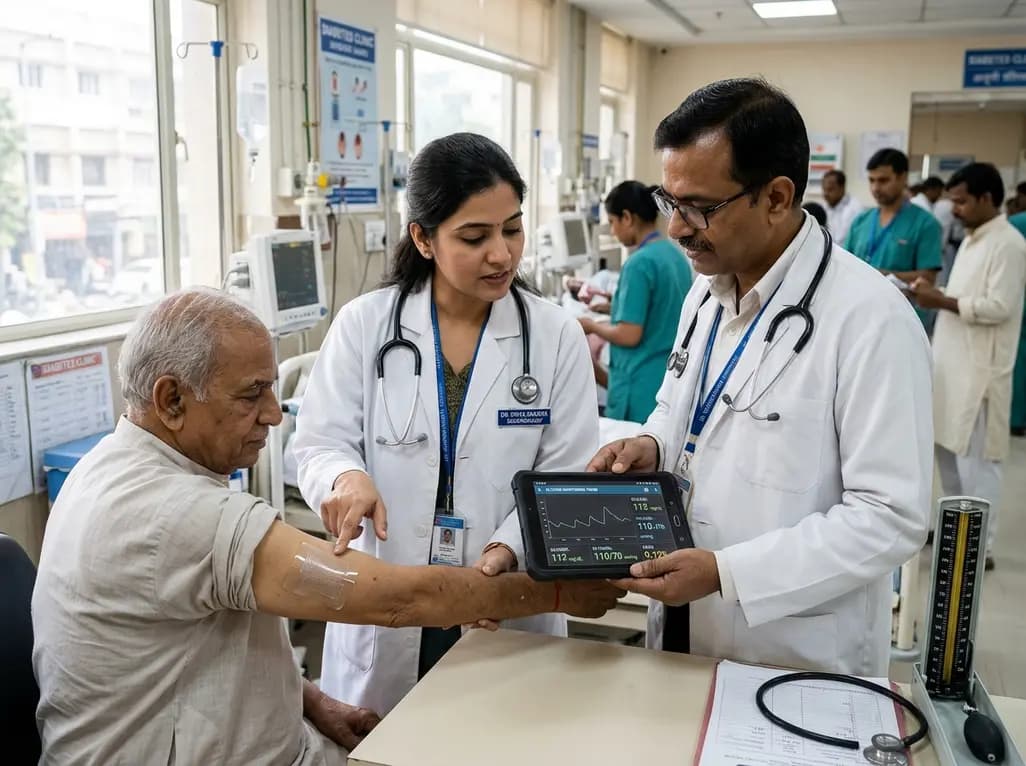
A breakthrough ultrathin multimodal sensor decouples physical hemodynamic monitoring from disposable electrochemical calibration, achieving long-term wearable glucose prediction with 81.36% accuracy and a 9.12% MARD. This offers a robust, drift-free solution for outpatient metabolic surveillance.
Today
