

Loading, please wait...
Loading, please wait...
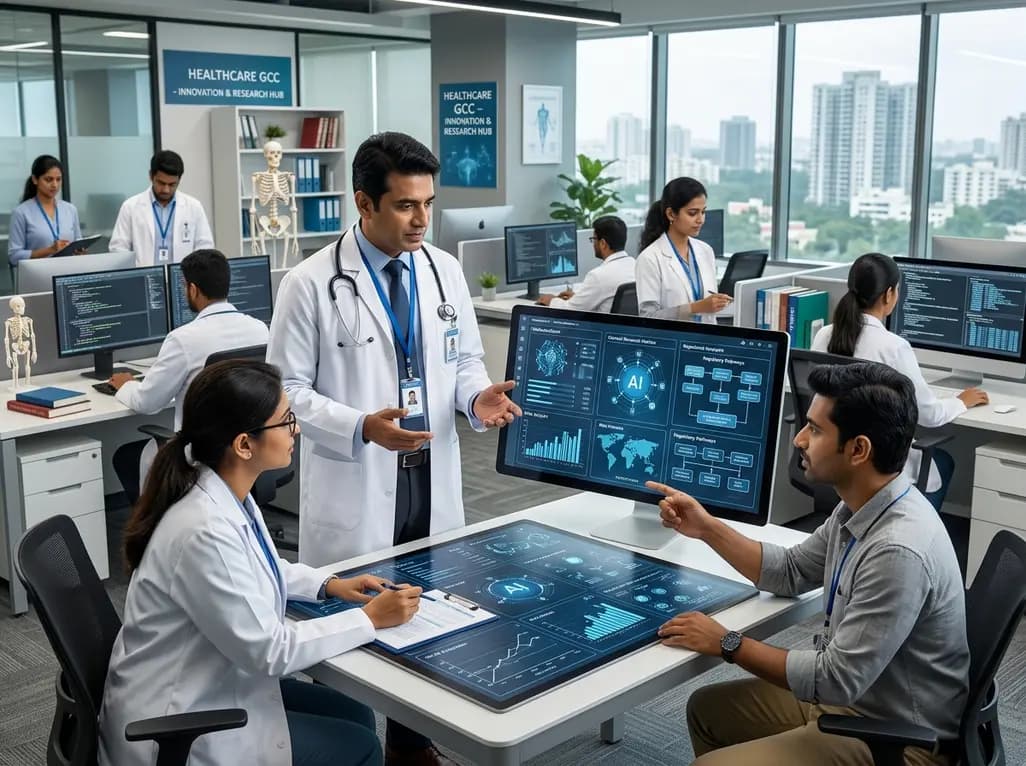
The landscape of healthcare GCC hiring is undergoing a rapid structural transformation across India. As multinational medical and life sciences corporations mature, their offshore facilities are no longer functioning as simple operational back-offices. Instead, these capability centres are aggressively establishing core innovation hubs. Recent workforce analyses show that the sector will generate approximately 67,000 new job openings in 2026. Crucially, mid-career professionals with three to twelve years of experience account for nearly 93 per cent of this aggregate hiring demand.
India has solidified its reputation as a strategic destination for global healthcare enterprises. At present, the nation hosts approximately 155 healthcare global capability centres. These specialized organisations employ around 3.2 lakh skilled professionals. Furthermore, overall recruitment across these centres nearly doubled during the previous calendar year. Demand surged by 97.5 per cent, rising from 32,000 positions in 2024 to 63,200 openings in 2025. Global pharmaceutical, biotechnology, and medical technology enterprises rely heavily on Indian talent to manage mission-critical international pipelines.
However, the character of this ongoing expansion has evolved dramatically. Earlier recruitment cycles prioritized routine administrative operations, business process management, and basic software engineering. In contrast, contemporary enterprises pursue higher-value clinical development. Today, global capability centres contribute directly to drug discovery programs, clinical data management, and bio-statistical modeling. They also lead patient digital health platform development. Consequently, multinational corporations view their Indian operations as indispensable engines of commercial innovation and scientific excellence. Because therapeutic development demands rapid digital transformation, global firms invest heavily in proprietary technology infrastructure within their Indian campuses. This structural evolution explains why enterprise leadership continuously expands domestic headcount throughout 2026.
The decisive shift toward mid-career hiring reflects the intricate realities of modern healthcare product lifecycles. Specifically, 38,391 of the 67,000 projected openings in 2026 target professionals with three to seven years of relevant industry experience. Meanwhile, another 23,856 openings specifically demand seasoned talent possessing seven to twelve years of experience. Together, these two mid-level tiers represent roughly 93 per cent of the aggregate recruitment volume. In sharp contrast, entry-level recruitment dropped by 12.4 per cent year-on-year during recent quarters.
Several critical factors explain this overwhelming preference for experienced personnel. First, global healthcare capability centres increasingly undertake complex assignments that require autonomous decision-making and cross-functional leadership. Mid-career specialists understand therapeutic terminology, good clinical practice standards, and international reporting frameworks without requiring lengthy orientation programs. In addition, these seasoned professionals translate raw data insights into actionable regulatory submissions for international health authorities. Because project timelines remain tight in drug development, enterprise leaders strongly favor candidates who deliver immediate operational impact. Consequently, recruitment managers consistently allocate the vast majority of their available talent budgets to secure battle-tested practitioners across life sciences domains.
As enterprise mandates expand, the nature of job creation has pivoted toward advanced technical and scientific specialties. Most notably, demand for data science, big data analytics, and artificial intelligence professionals jumped by an astonishing 147.3 per cent between 2023 and the 2026 projections. Total openings in these domains increased from 1,781 to 4,404 positions. These specialists build automated machine learning workflows, optimize electronic health record processing, and develop predictive diagnostic models. Similarly, recruitment demand across regulatory affairs, compliance, and quality assurance more than doubled, increasing by 108.4 per cent to reach 6,147 dedicated roles.
Furthermore, research and development functions, clinical development, biometrics, and statistical programming experienced an 82.5 per cent expansion, generating 5,421 specialized job openings. Multidisciplinary healthcare teams within these capability centres now design decentralized clinical trials and execute real-world evidence analytics. In addition, experts in medical affairs, pharmacovigilance, and health economics provide essential analytical support for international commercialization. Therefore, the contemporary talent profile blends computational proficiency with stringent regulatory literacy. Ultimately, this technological integration allows biopharmaceutical sponsors to accelerate molecular discovery timelines while upholding rigorous international safety benchmarks.
Despite employing over 3.2 lakh professionals nationwide, the healthcare capability sector faces a severe and persistent talent deficit. In particular, the ratio of available specialist talent to market demand has tightened dramatically. For instance, the talent pool reveals a supply-to-demand ratio of merely 1.6 qualified professionals for each vacant position in artificial intelligence, advanced analytics, and market access. This sharp disparity contrasts sharply with the broader industry baseline ratio of 4.8 workers per opening. As a result, capability centres face intense recruiting friction and protracted hiring cycles.
Geographically, Bengaluru and Hyderabad continue to serve as the twin epicenters of India's healthcare GCC ecosystem. Together, these two southern hubs account for 62.2 per cent of the existing workforce and 58.4 per cent of projected recruitment in 2026. Although these metropolitan clusters offer established biopharma parks and top-tier scientific institutions, talent availability still struggles to match surging corporate quotas. Consequently, competing organizations frequently engage in aggressive compensation wars to attract seasoned specialists. This trend drives up operational overhead and necessitates novel talent retention models among leading market participants.
The widening mismatch between rapid demand growth and available specialist supply presents a profound long-term risk for India's healthcare capability sector. Because fresher recruitment has decelerated, the conventional talent feeder pipeline is contracting significantly. If organizations fail to nurture junior cohorts today, they will encounter an even steeper mid-career shortfall during the next decade. Industry executives, including Quess IT Solutions leadership, emphasize that capability centres must transition from passive talent acquisition to active talent incubation.
To overcome this impending structural bottleneck, global organizations must establish dedicated internal upskilling academies and continuous learning pathways. For example, enterprises can cross-train traditional IT software engineers in regulatory governance, clinical data formats, and healthcare interoperability protocols. Moreover, strategic academic partnerships with medical universities and biotechnology research institutes can cultivate industry-ready graduates equipped with dual domain expertise. In addition, forward-thinking centres are implementing structured mentorship models where experienced mid-level leaders groom emerging professionals. Ultimately, building a sustainable healthcare innovation engine requires continuous enterprise commitment to comprehensive workforce development across the country.
Q1: Why are healthcare GCCs in India prioritizing mid-career professionals over fresh graduates?
Healthcare global capability centres handle highly regulated operations, such as clinical trial analytics, pharmacovigilance, and health informatics. Consequently, organisations require professionals who possess both technical aptitude and deep regulatory familiarity. Mid-career talent with three to twelve years of experience can manage complex workflows immediately without extensive training. Therefore, companies focus their hiring budgets on experienced specialists to accelerate research initiatives while minimizing costly compliance errors in drug development.
Q2: Which geographical hubs dominate healthcare GCC hiring in India?
Bengaluru and Hyderabad dominate the healthcare GCC ecosystem across India, anchoring more than sixty-two per cent of the existing workforce. Furthermore, these two tech hubs account for over fifty-eight per cent of all projected hiring demand in 2026. Their mature biopharma research clusters, leading technical universities, and robust IT infrastructure create ideal environments for global centers. Consequently, multinational healthcare enterprises continue to expand their advanced clinical operations primarily within these two metropolitan cities.
Q3: How severe is the talent crunch in specialized healthcare data and AI roles?
The talent crunch in specialized healthcare data and artificial intelligence functions remains severe across India. Currently, the industry records an alarming talent supply ratio of only 1.6 qualified professionals for every active job opening in AI domains. Because healthcare analytics requires dual competence in sophisticated algorithms and strict regulatory governance, suitable candidates remain scarce. As a result, capability centres face extended hiring timelines and intense salary competition while recruiting experienced mid-level experts.
Disclaimer: This content is for informational and educational purposes only. It does not constitute medical advice or replace professional judgment. Refer to the latest local and national guidelines for clinical practice.
References

Read summarized clinical updates, watch expert medical content, and earn CME certifications right from your smartphone.
Open your smartphone camera to scan and install.





India's healthcare global capability centres are set to generate 67,000 jobs in 2026. Nearly 93% of hiring demand targets mid-career specialists in AI, clinical research, and regulatory functions, with Bengaluru and Hyderabad leading the expansion amid a tightening talent crunch across specialized domains.
Today
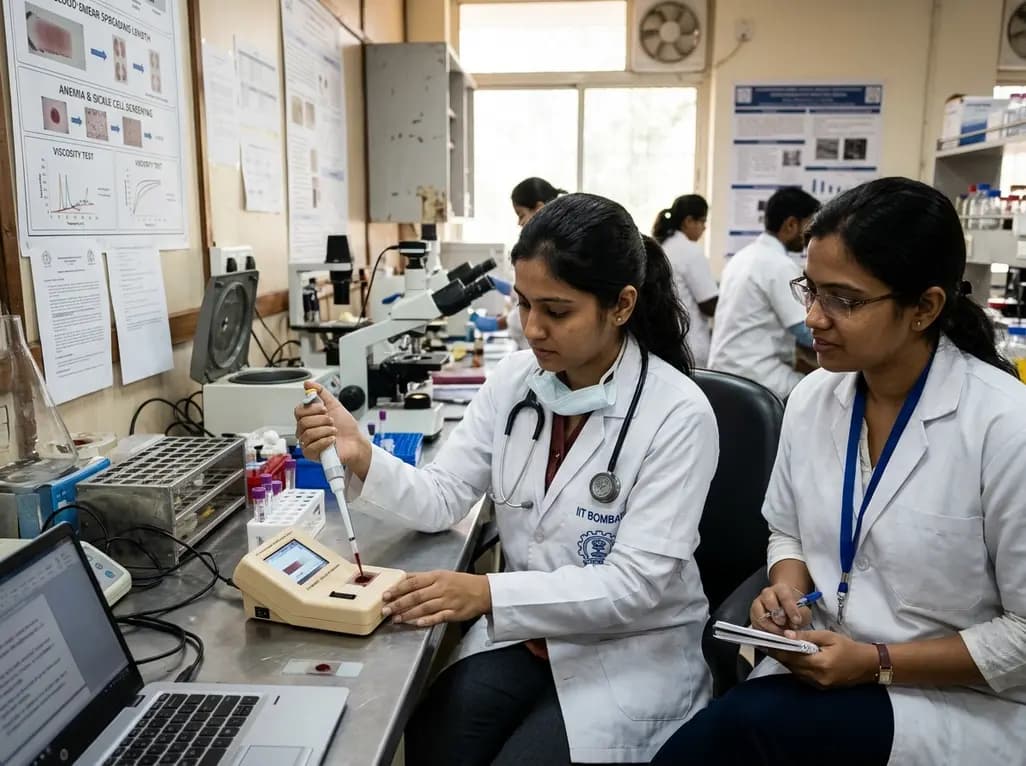
Researchers at IIT Bombay have engineered an automated, cost-effective point-of-care device that diagnoses anaemia and sickle cell disease from a single drop of blood. By measuring blood smear spreading length, this portable tool assesses blood viscosity to offer rapid screening in resource-limited healthcare centers.
Today
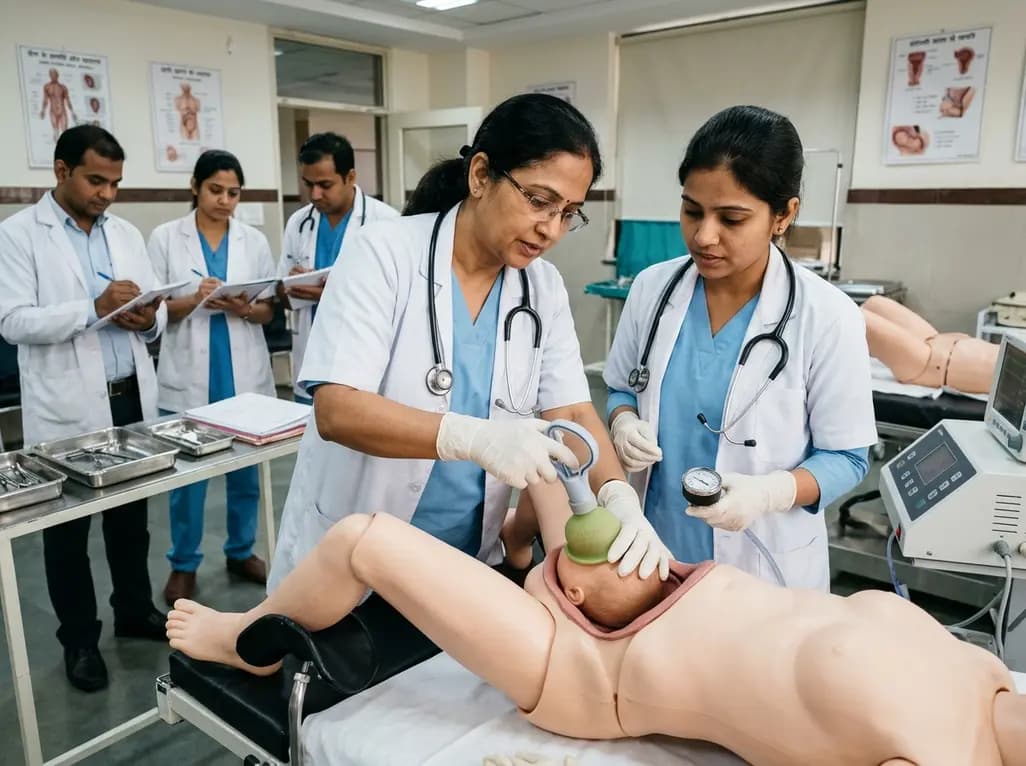
A multicenter study evaluates whether standardized simulation training reduces cup detachment during vacuum-assisted vaginal birth. Evidence-based simulation equips obstetricians to improve cup placement, reduce maternal-fetal trauma, and optimize clinical decision-making during operative deliveries.
Today

A breakthrough ultrathin multimodal sensor decouples physical hemodynamic monitoring from disposable electrochemical calibration, achieving long-term wearable glucose prediction with 81.36% accuracy and a 9.12% MARD. This offers a robust, drift-free solution for outpatient metabolic surveillance.
Today

A comparative review of tension band wiring and intramedullary screw fixation in thumb metacarpophalangeal arthrodesis, evaluating union rates, hardware complications, and clinical outcomes.
Today
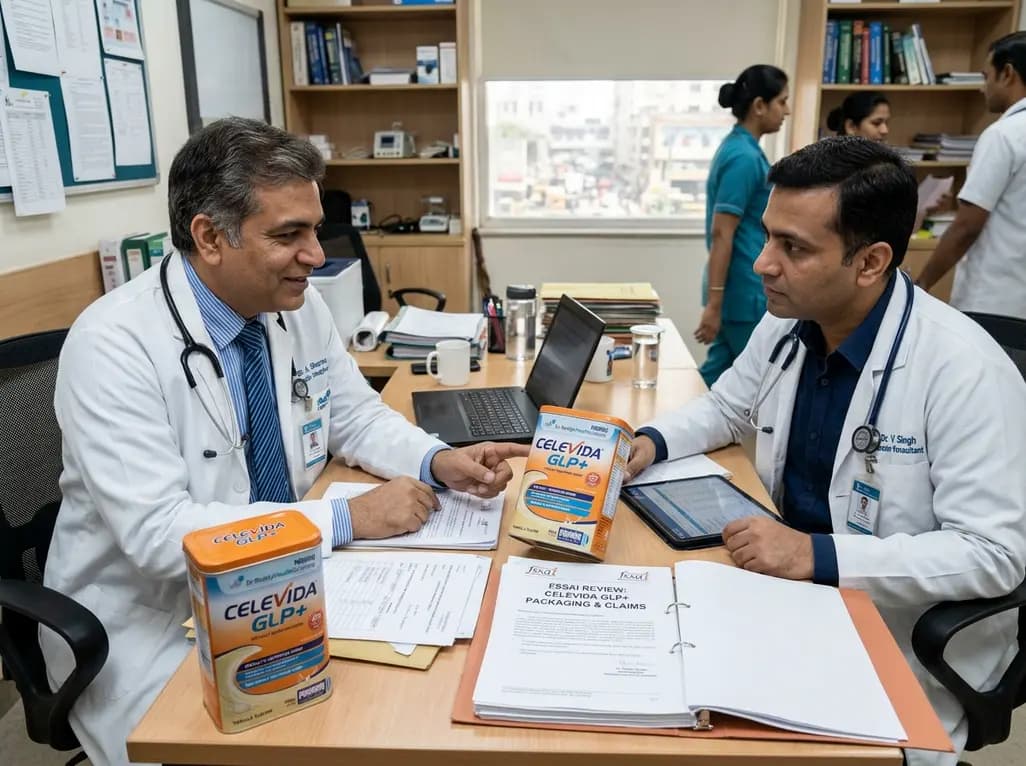
Following regulatory scrutiny from FSSAI regarding promotional representations and lean muscle preservation claims, Dr. Reddy's Laboratories and Nestlé Health Science are currently reviewing the branding and marketing strategy for their joint nutritional supplement Celevida GLP+.
Today
