.webp&w=384&q=75)

Loading, please wait...
Loading, please wait...

The Town and Country Planning Department in Haryana has released a landmark regulatory update for community healthcare delivery. Specifically, the revised Haryana nursing home policy allows doctors to establish inpatient clinics on residential plots leased for ten years. This significant amendment supersedes previous directives issued in February, which had restricted establishment strictly to doctor-owned land parcels. Consequently, the administration addressed persistent demands raised by the Indian Medical Association to expand urban neighborhood clinical infrastructure. Furthermore, the reform bridges critical care gaps by bringing regulated clinical facilities much closer to urban families.
The regulatory framework introduces vital flexibilities for healthcare providers seeking to build local medical facilities. Previously, steep urban land acquisition costs prevented many aspiring doctors from founding private clinics. Under these updated guidelines, qualified clinicians can enter long-term lease contracts lasting at least a decade. However, the operational permission remains strictly co-terminus with the underlying lease tenure. Therefore, clinicians must renew land leases in a timely fashion to maintain uninterrupted legal validity. Additionally, the state government crafted this update to prevent unauthorized clinics from proliferating without structural oversight. Regulators now permit these facilities exclusively within licensed plotted colonies that possess verified completion or part-completion certificates. Furthermore, developers must have completed all internal services, including municipal water supply, sewerage networks, and paved access roads. The policy also permits clinical facilities to provide structured indoor admission, day care, and therapeutic interventions. Moreover, administrative orders establish clear legal accountability for all medical operators. Officials require prospective practitioners to submit building blueprints to the competent urban planning authority prior to commencing modifications. Subsequently, operators must obtain a formal occupation certificate before admitting any patients. As a result, the state guarantees that nursing homes balance neighborhood convenience with robust patient safety.
The revised regulation outlines stringent eligibility parameters to ensure that only qualified professionals manage these residential nursing centers. Specifically, the framework invites applications from both modern allopathic practitioners and registered AYUSH medical professionals. Permitted disciplines include Ayurveda, Yoga, Naturopathy, Unani, Siddha, and Homeopathy. Consequently, the government champions an integrative healthcare ecosystem that serves diverse public wellness needs. Nevertheless, the state maintains uncompromising credential verification standards. An applicant must possess a valid registration number issued by their respective state or national professional council. In addition, the practitioner must actively engage in clinical practice at the time of submission. Crucially, the physician must hold verified registration with the local branch of the Indian Medical Association. Every candidate must submit a sworn legal affidavit attesting to their active registration and unblemished professional conduct. Furthermore, these qualification filters shield patients against unqualified charlatans and substandard facilities. The government emphasizes that permissions attach directly to the licensed professional rather than functioning as speculative real estate permits. Hence, unauthorized subletting or lease transfers will immediately invalidate government sanction. As an added safeguard, regional medical bodies collaborate with local administrative bodies to monitor ongoing physician compliance and professional conduct.
To prevent urban congestion, the state department instituted rigorous zoning criteria and density restrictions across residential sectors. First, the guidelines establish tiered minimum plot sizes categorized by urban real estate potential. In hyper-potential and high-potential zones such as Gurgaon and Faridabad, plots must measure at least 350 square yards. Conversely, in medium-potential and low-potential zones, the minimum threshold drops to 250 square yards. Therefore, doctors must verify municipal zone designations prior to entering formal lease negotiations. Additionally, planners imposed precise geographical limitations on where clinics may operate. The policy mandates that nursing homes must face service roads running parallel to sector roads or master roads. This strategic placement ensures that arriving ambulances and visitor vehicles avoid choking narrow interior residential lanes. In contrast, clinics cannot establish operations on interior colony streets. Furthermore, the government capped the total number of clinical establishments per sector to maintain civic equilibrium. The rules permit only a single nursing home site on service roads abutting or dividing a sector. Moreover, the administration permits a maximum ceiling of four nursing home sites across any single residential sector. Consequently, these numerical caps prevent commercial saturation while safeguarding calm neighborhood environments and smooth traffic flow.
Healthcare operators must align all physical facility constructions with the strict mandates of the Haryana Building Code 2017. Under this framework, residential building norms govern critical structural parameters, including floor area ratio, setbacks, and maximum height. However, authorities require tailored modifications to accommodate clinical operations safely. Most notably, developers must incorporate mandatory stilt parking into their architectural designs. The rules require that staff, visitors, and emergency ambulances park entirely within the private plot boundary. Additionally, the revised directive strictly prohibits the construction of any front boundary wall. This design choice guarantees unobstructed entry and exit access for emergency responders and transit vehicles. Practitioners can also utilize basement levels for specific clinical purposes under monitored building safety parameters. Permissible basement activities include outpatient consulting chambers, diagnostic laboratories, and X-ray imaging units. Meanwhile, the government strictly forbids unrelated commercial activities within these residential healthcare plots. The single non-clinical exception permits an on-site pharmacy dedicated exclusively to serving indoor and registered outdoor patients. Consequently, doctors cannot lease internal commercial spaces to external retail shops or food vendors. Through these architectural boundaries, regulators protect neighborhood aesthetics while fulfilling vital medical functions and maintaining safety.
To legalize clinical operations on residential land, doctors must pay predetermined land-use conversion charges to the state treasury. Specifically, the department instituted a transparent four-tier fee structure aligned with local land potential. Authorities charge 10,000 rupees per square yard in hyper-potential zones and 8,000 rupees in high-potential zones. For properties in medium-potential and low-potential zones, the rates drop to 6,000 rupees and 4,000 rupees, respectively. Importantly, the government exempts applicants from additional external development charges, significantly lowering initial financial hurdles. In addition to financial clearance, healthcare facilities must establish rigorous ecological and infection control protocols. The policy mandates full compliance with statutory biomedical waste management regulations. Facilities must segregate infectious materials, install effluent treatment systems, and contract authorized waste disposal agencies. Therefore, clinics prevent hazardous clinical runoff from entering public municipal drainage networks. Furthermore, state health officials will execute regular site inspections to guarantee continued operational compliance. Inspectors review hygiene maintenance, patient safety protocols, fire exits, and statutory environmental clearances during periodic reviews. If an establishment violates environmental or municipal standards, authorities will immediately revoke operating permissions. Thus, these stringent measures uphold community health while modernizing decentralized healthcare infrastructure across the state.
Q1: What are the minimum lease tenure and eligibility requirements under the revised policy?
Under the revised policy, practitioners must hold a registered lease for at least ten years or own the residential plot. Additionally, applicants must hold a valid registration certificate with their respective state Medical Council or AYUSH Council. Furthermore, doctors must actively practice medicine and maintain current membership with the local branch of the Indian Medical Association. Finally, applicants must confirm their credentials through a formal legal affidavit.
Q2: What plot sizes and sector caps apply to nursing homes in residential zones?
The policy establishes minimum plot dimensions based on designated urban development zones across Haryana. Specifically, hyper-potential and high-potential zones require a minimum plot size of 350 square yards. In contrast, medium-potential and low-potential zones require at least 250 square yards. Moreover, facilities must sit on service roads along sector or master arteries. Planners restrict nursing home density to only one site along any sector-dividing road. Furthermore, the rules cap total clinical sites at four per sector.
Q3: What conversion fees and environmental regulations must doctors satisfy before opening?
Clinicians must pay specific one-time conversion fees scaling by zone. The rates range from 4,000 rupees in low-potential zones to 10,000 rupees in hyper-potential zones. Fortunately, authorities levy no additional external development charges on these plots. However, operators must implement comprehensive biomedical waste disposal arrangements and functional effluent treatment plants. Health department teams conduct routine regulatory inspections to confirm environmental compliance, patient safety systems, and building code adherence.
Disclaimer: This content is for informational and educational purposes only. It does not constitute medical advice or replace professional judgment. Refer to the latest local and national guidelines for clinical practice.
References

Read summarized clinical updates, watch expert medical content, and earn CME certifications right from your smartphone.
Open your smartphone camera to scan and install.





Haryana has updated its urban healthcare norms, enabling allopathic and AYUSH practitioners to operate indoor clinical facilities on residential plots with a minimum 10-year lease. Discover the revised zoning thresholds, infrastructure mandates, conversion fees, and municipal compliance standards.
Today

Emerging evidence shows that even dim night-time light exposure alters cardiac geometry and weakens contractility. In a landmark cohort study, nocturnal light above 3 lux triggered concentric left ventricular hypertrophy and subclinical dysfunction, highlighting nocturnal illumination as a modifiable cardiac risk factor.
Today
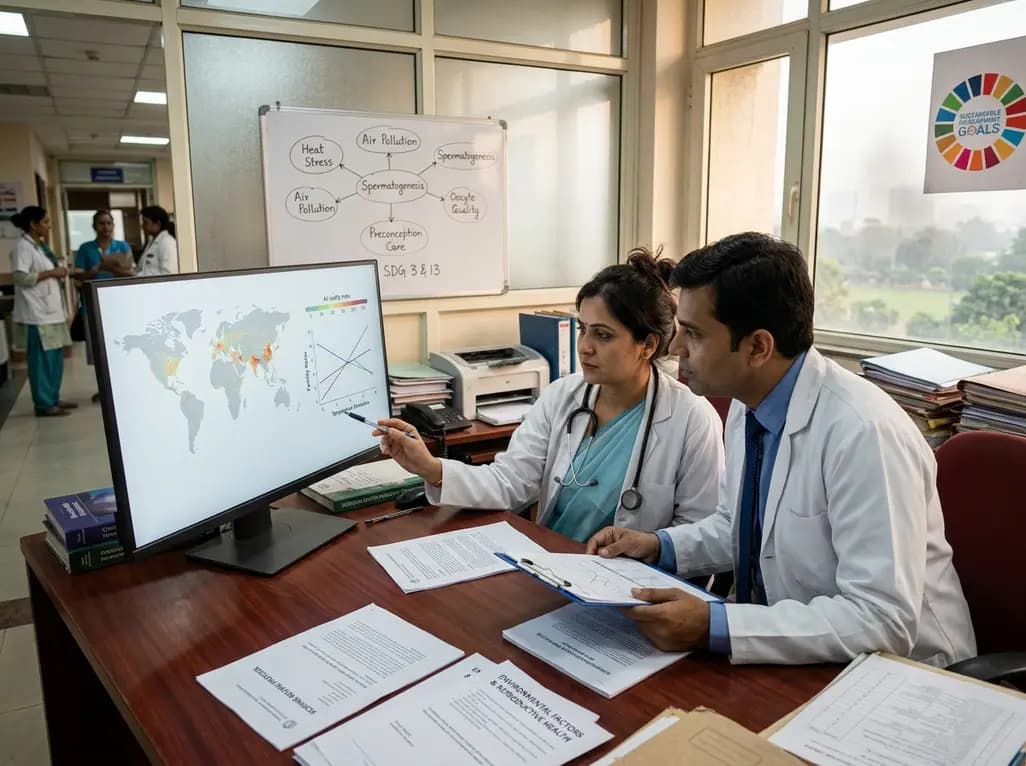
A new scoping review protocol systematically maps global evidence on how climatic shifts, ambient heat, and pollution impact human fertility. Discover key physiological mechanisms, clinical preconception strategies, and critical public health alignments under Sustainable Development Goals 3 and 13.
Today

Pharmacogenomics and artificial intelligence are revolutionizing cardiology by tailoring therapies to individual genetic profiles and clinical data, reducing adverse drug events, and improving cardiovascular patient outcomes.
Today
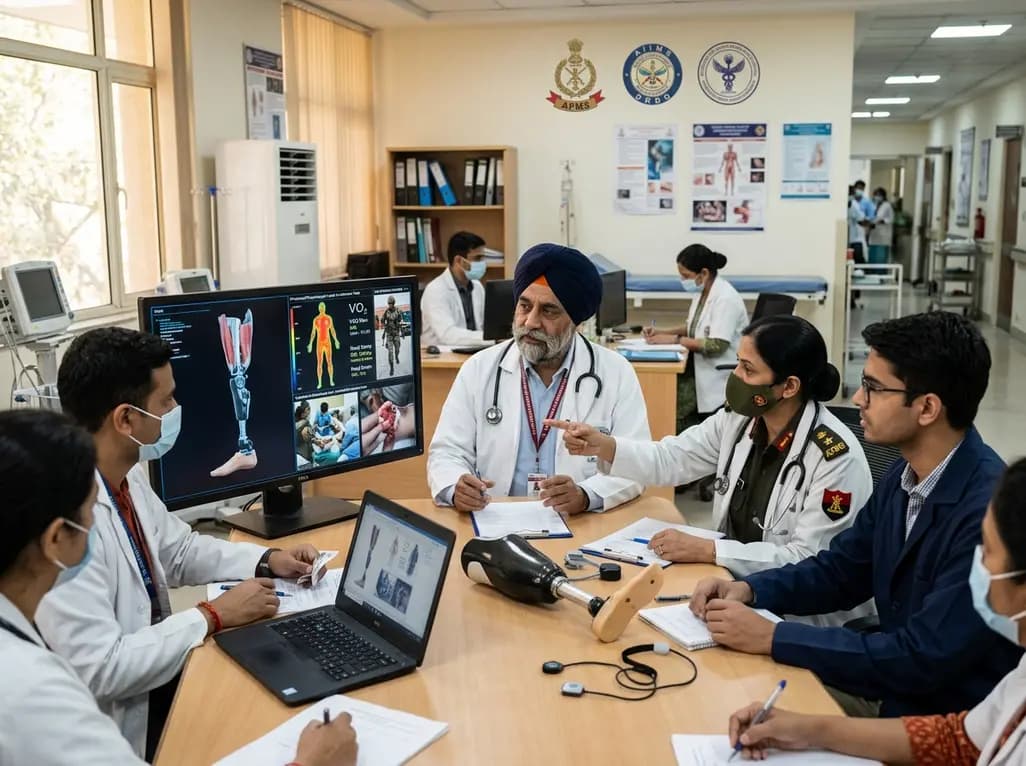
India's premier scientific bodies have joined the Armed Forces Medical Services to solve unique physiological and operational challenges faced by soldiers. The national collaboration covers combat casualty care, artificial intelligence diagnostics, bionic prosthetics, and extreme-environment physiological resilience.
Today
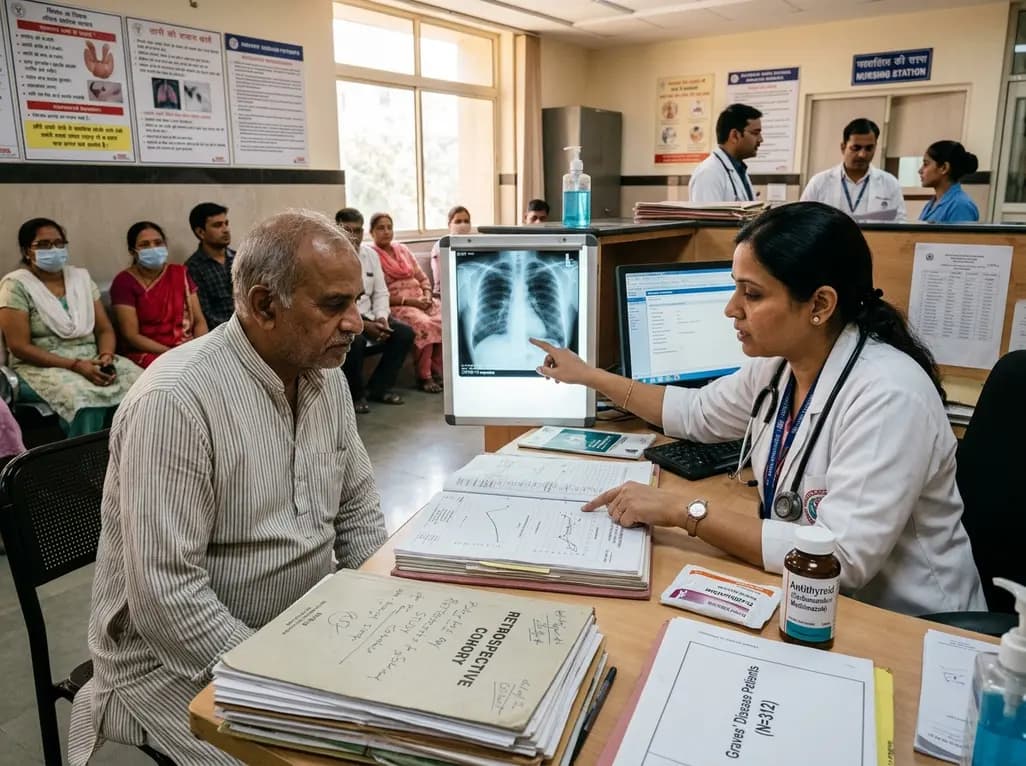
A retrospective cohort study evaluates the short- and long-term impacts of SARS-CoV-2 infection on patients with Graves' disease receiving antithyroid drug therapy, highlighting thyroid status destabilization, clinical symptom exacerbations, and post-viral sequelae.
Today
