.webp&w=384&q=75)

Loading, please wait...
Loading, please wait...

The extracellular matrix provides essential structural integrity and biochemical cues that govern cellular behavior within human tissues. During malignant progression, extensive extracellular matrix remodeling dramatically alters tissue architecture and biomechanics. Tumors actively deposit excess fibrillar collagen, crosslink fibrous networks, and construct dense collagenous tracks that facilitate local invasion. However, conventional biomaterial models often fail to capture the complex architecture of interstitial spaces. Traditional hydrogels inadvertently link matrix stiffness directly to scaffold porosity, which constrains our understanding of cellular adaptation. A pioneering biomaterial design utilizing fragmented granular GelMA now overcomes this longstanding challenge. By effectively decoupling substrate stiffness from interstitial pore size, researchers can systematically investigate how physical forces direct cancer cell migration and metastatic plasticity.
Engineering physiologically relevant in vitro models requires an accurate representation of the interstitial microenvironment. In standard monolithic hydrogels, increasing polymer concentration elevates mechanical stiffness but simultaneously reduces pore size. Consequently, encapsulated cells encounter artificial spatial entrapment that restricts their spontaneous spreading and phenotypic transition. Researchers resolved this biophysical dilemma by creating fragmented granular GelMA microgels through controlled fragmentation. When packed and crosslinked together, these microgel fragments establish an interconnected network of interstitial microcavities. This innovative structural arrangement preserves generous porous conduits while permitting independent tuning of hydrogel stiffness. As a result, non-metastatic and malignant cells experience continuous fluid-filled pathways that closely mimic native stroma. Furthermore, scientists can adjust ultraviolet crosslinking parameters or polymer density without restricting interstitial diffusion. This granular hydrogel platform empowers investigators to isolate matrix stiffness from spatial confinement during cellular mechanosensation assays. Ultimately, the granular architecture accurately reflects the irregular fibrous landscapes found across metastatic tumor boundaries.
Cancer metastasis represents a complex cascade that demands remarkable cellular plasticity at every distinct phase. Malignant cells routinely switch between diverse phenotypes to survive harsh extracellular pressures and navigate dense matrices. Classically, carcinoma cells undergo epithelial-to-mesenchymal transition to dismantle epithelial cell junctions, acquire migratory traits, and penetrate basement membranes. In addition, recent investigations highlight the adherent-to-suspension transition as an equally critical event for vascular dissemination. During this transition, adherent tumor cells loosen focal adhesions and detach from matrix fibers without triggering apoptosis. Therefore, studying how extracellular architecture regulates phenotypic transitions is essential for translational oncology. The fragmented granular GelMA model provides the permissive spatial geometry required for single cells to modulate their adhesion dynamics. Unconstrained by tight physical barriers, tumor cells can readily demonstrate their intrinsic mechanical plasticity and deformability. Consequently, researchers can observe how mechanical signals trigger downstream transcriptional cascades that govern metastatic competence.
Tumor cells exhibit highly divergent behavioral patterns depending on their intrinsic metastatic potential and mechanical responsiveness. When non-metastatic breast cancer cells remain encapsulated within granular matrices, they proliferate continuously without spatial restriction. However, pre-engineered metastatic breast cancer cells display striking differences in mechanosensitivity and directional motility. Specifically, metastatic phenotypes recognize subtle changes in granular matrix stiffness, which actively enhances their migratory persistence and speed. These aggressive cells reorganize their actomyosin cytoskeleton to navigate tortuous interstitial spaces between adjacent microgel fragments. Furthermore, metastatic cells dynamically generate protrusions into porous voids, effectively exploiting matrix alignment to guide directional translocation. Non-malignant cells, in contrast, remain localized because they lack the necessary mechanotransductive machinery. Therefore, the granular GelMA scaffold cleanly differentiates metastatic phenotypes based solely on physical interactions with the microenvironment. These discoveries confirm that mechanical stiffness directly instructs metastatic motility when spatial confinement does not impede cell locomotion.
Traditional bulk hydrogels, such as standard collagen lattices and uniform GelMA monoliths, present substantial biophysical limitations. While bulk hydrogels offer stable three-dimensional environments, their dense polymer meshes inevitably impede physiological cell migration. When researchers increase hydrogel concentration to simulate dense, fibrotic tumor stroma, the mesh size drops to mere nanometers. Consequently, cells cannot migrate unless they secrete significant quantities of matrix metalloproteinases to degrade surrounding polymers. In contrast, native tissue matrices contain pre-existing interstitial channels that allow both protease-dependent and protease-independent amoeboid invasion. The fragmented granular GelMA platform circumvents this limitation by presenting macro-porous void spaces between jammed microparticles. Because these interstitial voids accommodate cellular dimensions, cells migrate efficiently through physical sliding and squeezing mechanisms. Moreover, granular scaffolds facilitate rapid nutrient exchange, efficient gas diffusion, and uniform biochemical signaling throughout deep hydrogel layers. This platform bridges the historical divide between rigid two-dimensional culture substrates and overly restrictive three-dimensional encapsulation hydrogels.
Understanding matrix-driven mechanobiology opens transformative avenues for precision oncology and anti-metastatic drug discovery. Standard cytotoxic chemotherapies predominantly target rapidly proliferating cells, often failing to eliminate non-proliferative, migratory metastatic clones. By employing biomimetic granular scaffolds, translational researchers can establish high-throughput drug screening platforms that target mechanosensing pathways. For example, clinicians and scientists can evaluate therapeutic inhibitors against focal adhesion kinase, Rho-associated protein kinase, and mechanosensitive ion channels. Furthermore, granular scaffolds enable patient-derived tumor organoids to preserve native stromal interactions, facilitating personalized drug response profiling. In addition, studying the adherent-to-suspension transition in realistic microenvironments could yield therapeutic strategies that prevent circulating tumor cell formation. As cancer therapy moves toward targeting the tumor microenvironment, these engineered biomaterials will prove invaluable for preclinical drug development. Ultimately, deciphering the mechanical cues that dictate cancer dissemination will accelerate the creation of therapies that halt metastatic recurrence.
Fragmented granular GelMA hydrogels consist of jammed microgel particles that create continuous, interconnected interstitial void spaces. Unlike conventional monolithic hydrogels that directly link matrix stiffness to reduced porosity, granular scaffolds decouple these two physical properties. Consequently, researchers can independently alter substrate stiffness without causing spatial confinement. This unique biomimetic architecture allows cells to migrate and adapt their phenotypes naturally, closely replicating in vivo extracellular matrix dynamics.
Cellular plasticity enables malignant cells to dynamically switch between epithelial, mesenchymal, and suspension-like states during metastatic progression. Through epithelial-to-mesenchymal and adherent-to-suspension transitions, cancer cells detach from primary tumors, invade surrounding tissues, and survive within the bloodstream. Granular hydrogels provide the necessary spatial architecture to observe these phenotypic transitions without artificial spatial entrapment, helping researchers understand matrix-regulated cancer dissemination.
Granular hydrogel platforms provide physiologically realistic three-dimensional microenvironments that replicate native tissue mechanics and interstitial migration tracks. Consequently, translational researchers can test novel pharmaceutical compounds against mechanotransduction pathways, cellular plasticity, and invasive migration phenotypes. This biomimetic approach facilitates more predictive high-throughput drug screening and supports personalized medicine through patient-derived organoid testing under realistic mechanical conditions.
Disclaimer: This content is for informational and educational purposes only. It is not intended to substitute for professional medical advice, diagnosis, or treatment. Always seek the advice of your physician or other qualified health provider with any questions you may have regarding a medical condition. Refer to the latest local and national guidelines for clinical practice.
References

Read summarized clinical updates, watch expert medical content, and earn CME certifications right from your smartphone.
Open your smartphone camera to scan and install.





Researchers introduce fragmented granular GelMA scaffolds to decouple stiffness from porosity. This biomimetic matrix sheds light on cellular plasticity, mechanosensitivity, and cancer metastasis dynamics.
4 weeks back

A bioengineered oral nanozyme microsupplement converts pathological ROS into a protective polydopamine hydrogel shield. By curbing neutrophil extracellular traps and balancing T cells, this platform outperforms standard 5-ASA in preclinical colitis models, opening new paths for sustained remission.
Today

India experiences an exponential rise in robotic-assisted procedures, with Delhi NCR leading system installations and clinical volume. Discover how multidisciplinary surgical adoption, remote telesurgery breakthroughs, and standardized international consensus guidelines are shaping surgical care nationwide.
Today
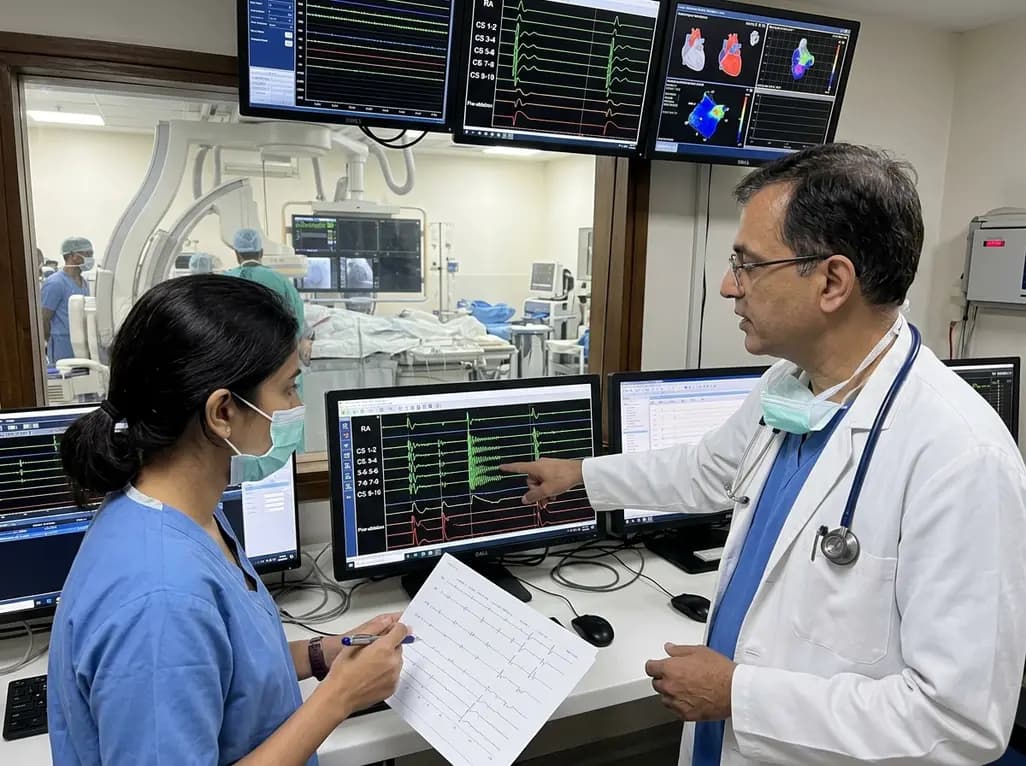
Radiofrequency catheter ablation of the cavotricuspid isthmus successfully terminates typical atrial flutter. This article reviews the mechanisms driving coronary sinus electrogram changes, wavefront activation pathways, and clinical criteria to verify bidirectional block during electrophysiology studies.
Today
A study comparing four knee flexion strength tests after ACL reconstruction using hamstring tendon autografts reveals marked variability in limb symmetry indices. Clinicians must recognize that different strength testing modalities yield divergent return-to-sport clearance rates.
Today

A breakthrough study leverages natural language processing to accurately identify incident medication-related osteonecrosis of the jaw and track antiresorptive drug holidays from clinical narratives in electronic health records, advancing osteoporosis pharmacovigilance and dental safety.
Yesterday
