

Loading, please wait...
Loading, please wait...
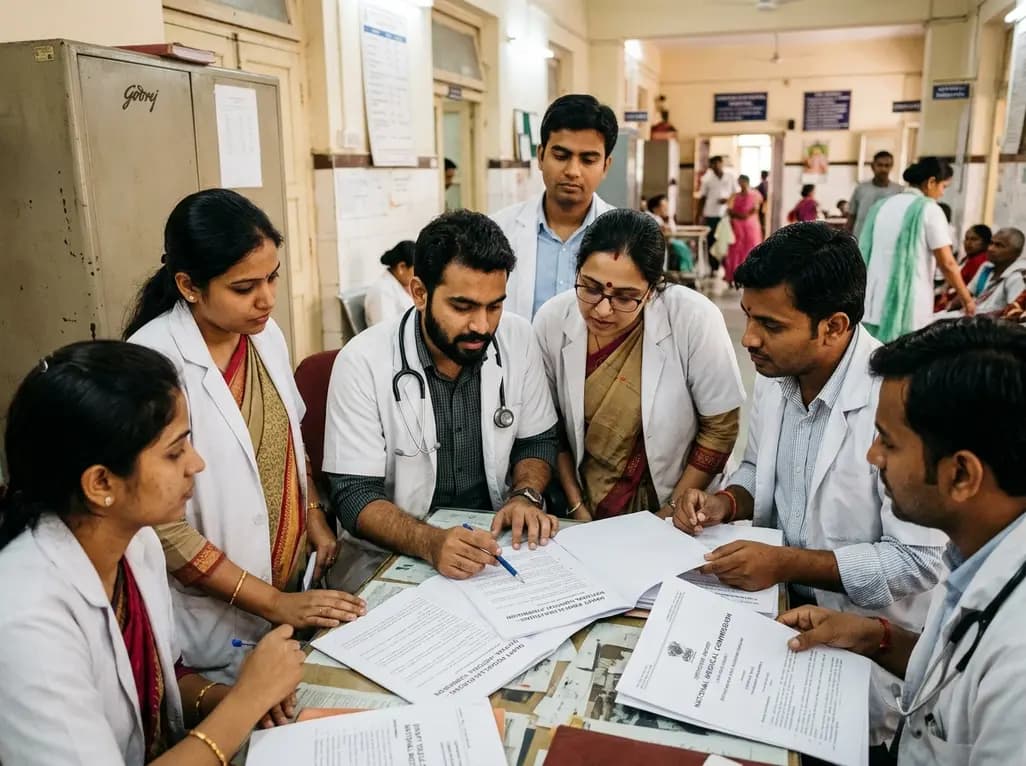
The National Medical Commission has recently announced a major regulatory draft that could reshape Indian healthcare human resources. Specifically, the apex medical authority intends to simplify foreign medical graduate licensing pathways across the country. For several years, thousands of Indian medical aspirants pursuing primary medical qualifications abroad have faced formidable administrative roadblocks. These obstacles often prevented them from obtaining provisional registration and completing their mandatory internships back home. Therefore, this proposed draft amendment seeks to resolve long-standing ambiguities surrounding overseas medical practice parity. In doing so, the commission aims to create a more pragmatic and streamlined pathway for international medical scholars returning to India.
Under the National Medical Commission (Foreign Medical Graduate Licentiate) Regulations, 2021, stringent criteria previously governed overseas medical licentiates. Sub-clause (b) of Clause 4 mandated that graduates must secure a licence equivalent to the licence granted to local citizens in the host country. Consequently, students often found themselves trapped in an impossible administrative dilemma. Many host nations issue educational completion diplomas to international students but restrict full domestic practice rights exclusively to their own citizens. Therefore, Indian graduates encountered insurmountable legal barriers, despite successfully completing rigorous academic curricula abroad.
To resolve this crisis, the commission published the draft National Medical Commission (Foreign Medical Graduate Licentiate) (Amendment) Regulations, 2026. The new proposal completely removes the troublesome requirement regarding citizen-parity licensure. Instead, the amended clause simply requires candidates to be registered with the respective professional regulatory body in that foreign nation. Thus, this regulatory pivot eliminates unfair foreign citizenship conditions. Furthermore, it shifts regulatory oversight toward verified institutional credentials rather than domestic labour market permissions. Additionally, medical education advocates have commended this modification as an overdue reform. By detaching foreign immigration barriers from academic competence, the commission establishes an equitable framework for all returning doctors.
This fundamental revision brings meaningful relief to young doctors navigating foreign medical graduate licensing challenges in India. Historically, countries such as Russia, Ukraine, the Philippines, Georgia, and China accommodated numerous Indian MBBS students. However, each foreign jurisdiction maintains distinct domestic regulations regarding full independent medical licences for non-citizens. Consequently, Indian students frequently completed their theoretical curriculum and hospital rotations but could not secure domestic practice licences abroad. Therefore, they faced severe regulatory friction when returning to India to sit for their screening evaluations.
Under the proposed framework, graduates only need active registration with the relevant foreign statutory authority. This streamlined criterion ensures that valid international qualifications receive appropriate institutional validation without unfair hurdles. Moreover, medical graduates can redirect their energy toward clearing the Foreign Medical Graduate Examination or the forthcoming National Exit Test. In addition, healthcare facilities across India stand to benefit directly from this administrative clarity. By removing redundant paperwork hurdles, the nation can expedite the induction of trained physicians into the healthcare delivery network. Ultimately, this reform addresses ongoing physician shortages across semi-urban and rural public healthcare establishments.
Regulatory transitions require comprehensive stakeholder evaluation before final statutory gazette publication. Accordingly, the National Medical Commission has initiated an open public consultation window lasting thirty days from the official gazette publication date. During this statutory period, medical professionals, institutional bodies, parents, and prospective foreign candidates can submit their valuable recommendations. Furthermore, the commission established a formal digital channel for feedback via the Undergraduate Medical Education Board.
Interested parties must formulate their submissions according to the structured proforma specified by the regulatory authorities. Consequently, this collaborative process guarantees that all institutional viewpoints receive appropriate consideration before final notification. Stakeholders can also highlight ancillary operational nuances, including verification procedures and documentation standards. In addition, regulatory clarity will help foreign universities tailor their curricular disclosures to Indian candidates accurately. Consequently, broad public feedback fosters regulatory transparency and trust between the national statutory body and future healthcare practitioners. Once the consultation period expires, the commission will thoroughly evaluate every comment before notifying the final rules.
This regulatory proposal does not exist in isolation. Rather, it aligns with a broader series of progressive reforms aimed at foreign medical graduates across India. Recently, the Directorate General of Health Services issued significant administrative directives regarding internship stipend parity. Under these instructions, top central government medical institutions must disburse mandatory stipends to foreign graduates at rates equal to Indian medical graduates. Previously, many state authorities and autonomous institutes denied equal remuneration to foreign graduates during their compulsory rotating medical internships.
Therefore, the combination of licensing reform and financial fairness represents a major paradigm shift. For many years, foreign graduates shouldered heavy clinical workloads alongside domestic interns without receiving equitable financial compensation. However, recent Supreme Court rulings emphasized that equal work demands equal remuneration within modern healthcare facilities. Consequently, the latest regulatory amendments acknowledge the invaluable clinical contribution of returning foreign doctors. Furthermore, ensuring financial parity reduces economic stress, allowing interns to concentrate on intensive patient care and clinical skill enhancement. Thus, the medical ecosystem fosters greater professional dignity and clinical excellence across hospital wards.
Modern healthcare delivery systems require a continuous influx of competent, well-trained medical practitioners. India currently grapples with substantial regional variations in doctor-to-population ratios, particularly in primary and secondary healthcare centers. Consequently, facilitating the seamless integration of foreign-trained physicians helps bridge critical human resource voids. When foreign medical graduates enter the national clinical workforce efficiently, public health institutions gain valuable operational reinforcement.
Moreover, foreign-trained doctors often bring diverse clinical exposures and unique epidemiological perspectives from their international studies. As these clinicians complete their mandatory internships, they strengthen emergency departments, rural clinics, and critical care units. In addition, standardizing licentiate criteria prevents protracted legal battles that historically cluttered Indian high courts. State medical councils will now operate with uniform administrative guidelines, minimizing conflicting local interpretations. Therefore, regulatory efficiency protects young clinicians from unnecessary psychological distress and career delays. Furthermore, healthcare administrators can plan rural postings more predictably when legal uncertainties around foreign degrees dissipate. In effect, streamlined accreditation mechanisms ensure that clinical talent serves underserved communities rather than remaining entangled in procedural paralysis.
Q1: What major modification did the National Medical Commission introduce regarding foreign medical graduates?
The commission proposed amending Clause 4(b) of the Foreign Medical Graduate Licentiate Regulations, 2021. Specifically, the amendment removes the requirement that an overseas licence must equal the licence given to local citizens in the degree-awarding country. Consequently, candidates now only require formal registration with the respective foreign regulatory authority, streamlining their eligibility to sit for mandatory screening evaluations in India.
Q2: Does this draft amendment exempt foreign graduates from clearing the FMGE or NExT?
No, the proposed amendment does not exempt foreign medical graduates from passing the mandatory screening examination in India. Candidates must still successfully clear the Foreign Medical Graduate Examination or the future National Exit Test. Furthermore, foreign graduates must complete their mandatory rotating medical internship within recognized Indian teaching hospitals before obtaining permanent registration from the National Medical Commission or state councils.
Q3: How can medical stakeholders submit feedback regarding the proposed draft regulations?
Stakeholders can submit their formal objections and suggestions within thirty days from the official gazette publication date. Specifically, representations must follow the prescribed institutional proforma available on the official commission website. Furthermore, candidates, parents, and healthcare organizations should submit their detailed feedback directly to the designated email address of the Undergraduate Medical Education Board before the consultation period concludes.
Disclaimer: This content is for informational and educational purposes only. It does not constitute medical advice or replace professional judgment. Refer to the latest local and national guidelines for clinical practice.
References

Read summarized clinical updates, watch expert medical content, and earn CME certifications right from your smartphone.
Open your smartphone camera to scan and install.





The National Medical Commission has published draft regulations proposing to remove the requirement that foreign medical graduates must secure an overseas practice licence equivalent to that of local citizens. Under the amendment, graduates only require registration with the host nation's medical regulator.
Today
Mayo Clinic trials and real-world datasets show GLP-1 receptor agonists improve left ventricular remodeling, reduce intracardiac filling pressures, decrease hospitalizations by 34%, and lower geriatric fall risks in patients with obesity and heart failure, delivering notable clinical and economic benefits.
Today

A usability study evaluated CareCheck, an mHealth caregiver risk screening tool for gynecologic oncology settings. Demonstrating high usability with a MAUQ score of 6.49 out of 7, the digital tool helps clinicians identify physical, psychological, and social risks among family caregivers to improve support.
Today
A rare case of an asymptomatic left ventricular hemangioma highlights the vital role of multimodal imaging in differentiating vascular tumors from thrombus. Complete surgical resection under transesophageal echocardiography guidance prevents thromboembolism and delivers optimal outcomes.
Today
A landmark study evaluates long-term quality of life in adolescents and adults with brachial plexus birth injury. Severe functional limitation and limited access to care significantly worsen outcomes, underscoring the urgent need for persistent, multidisciplinary management across adult healthcare transitions.
Today
An analysis of 1,000 posts by macro- and mega-influencers on Instagram and TikTok revealed that 78.5% contained nutrition misinformation, while only 24% of creators held valid credentials. This article examines the clinical risks of viral dietary fads and provides actionable guidance for healthcare professionals.
Today
